Key Takeaways
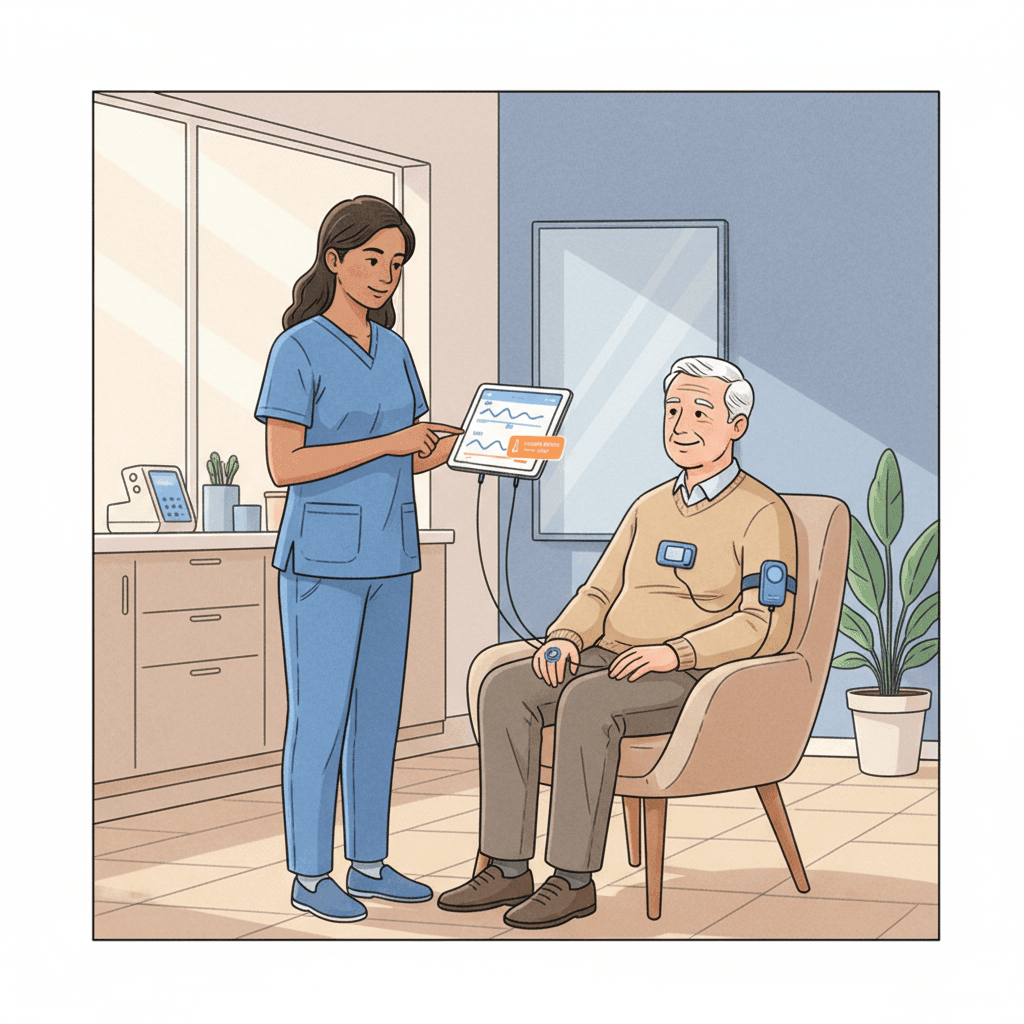
- A single abnormal vital sign reading is clinically ambiguous — automated trend analysis across 72-hour windows catches patterns of deterioration that isolated spot checks routinely miss, enabling earlier intervention for conditions like UTIs, dehydration, and congestive heart failure exacerbation.
- Vital sign thresholds for residential care populations must differ from hospital ICU parameters because elderly and I/DD residents have different baselines — applying acute-care thresholds to long-term care generates excessive false alerts and dangerous alert fatigue.
- A three-tier alerting structure (informational, urgent, critical) with clearly defined escalation pathways and response time expectations balances the competing demands of clinical safety and staff workload.
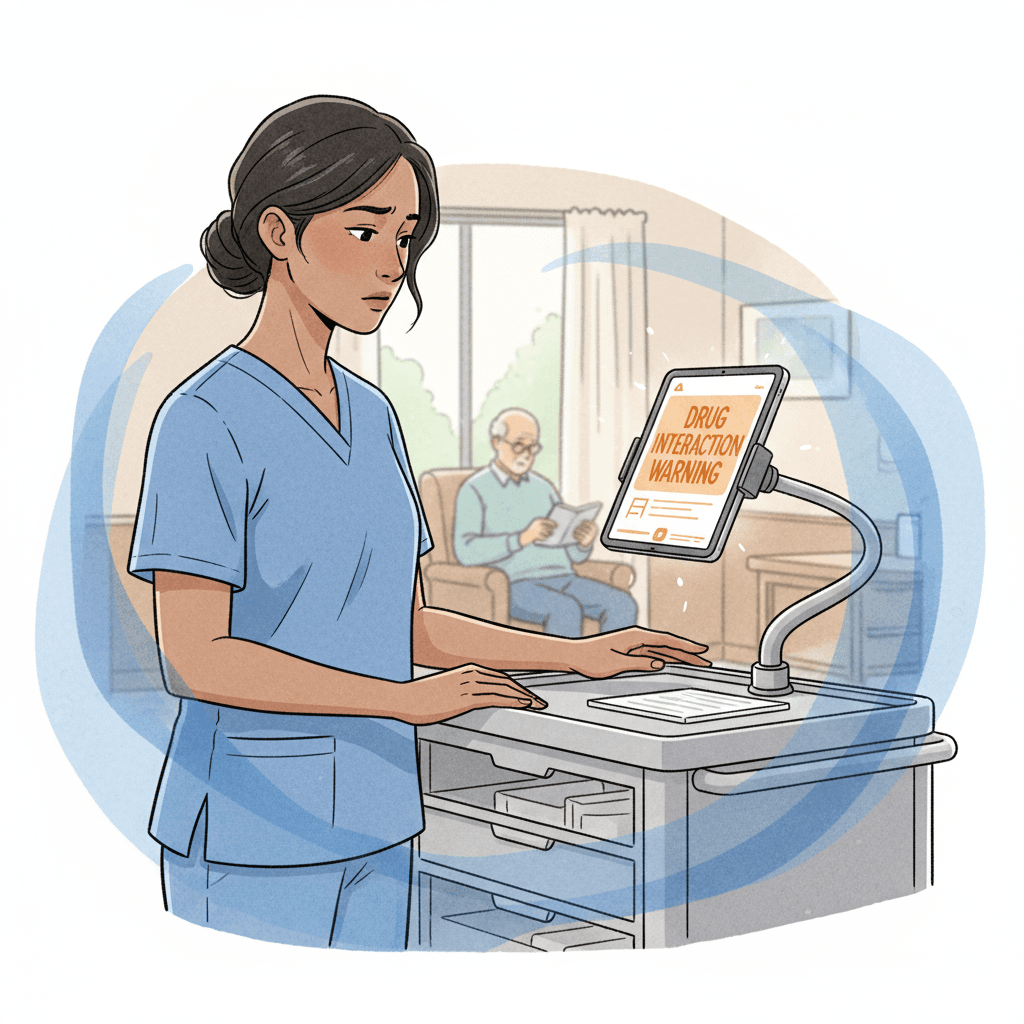
- Alert fatigue is the single greatest threat to automated monitoring programs — facilities that set thresholds too aggressively generate so many notifications that staff stop responding to any of them, including the ones that matter.
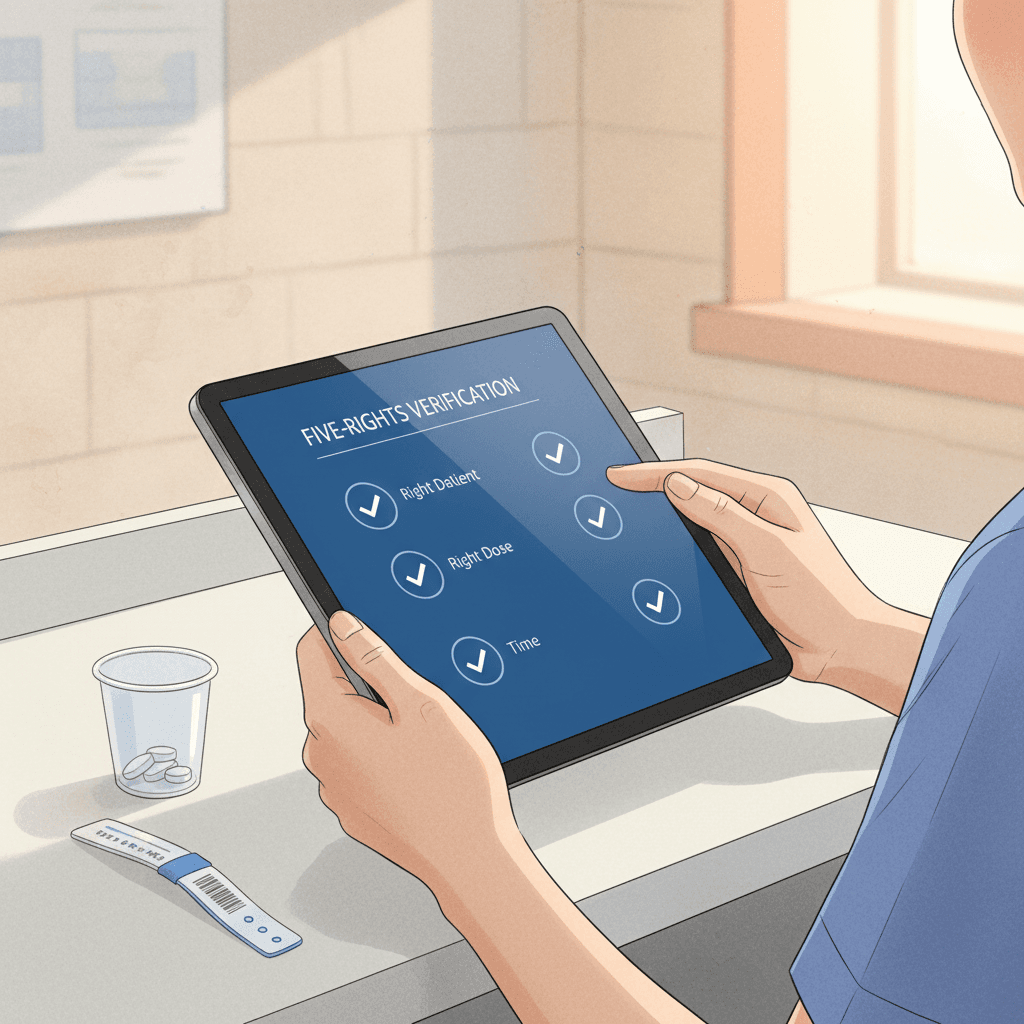
- Connected monitoring devices that write directly to the clinical record eliminate transcription errors, enable real-time threshold checking, and create the longitudinal data sets required for meaningful trend analysis.
- Staff training must cover not only how to take and record vital signs but also how to interpret alerts, when to escalate versus monitor, and how to use clinical decision trees that convert raw data into appropriate care responses.
Introduction
A resident's blood pressure has been trending upward for three weeks. Not dramatically — not the kind of spike that makes a nurse stop and recheck. Just a slow, steady drift: 128/82 on the first of the month, 134/86 a week later, 138/90 the week after that, and 144/94 this morning. Each individual reading, taken in isolation, sits within a range that a direct support professional recording vitals on a paper log might reasonably note without concern. The first reading is unremarkable. The second is a little high but not alarming. The third might prompt a brief mention during shift handoff. The fourth finally catches someone's attention — but by now, three weeks have passed, and the clinical picture is no longer a question of trending. It is a question of response.
The problem is not that nobody cared. The problem is that nobody could see the trajectory. Paper vital sign logs are recorded, filed, and functionally invisible. They sit in binders at the nursing station, organized by date, reviewed when someone has a reason to look. Monthly chart reviews might catch the trend retrospectively — after the resident has already developed symptoms, after the family has already called asking why their mother's blood pressure seems high, after the physician has already ordered medication adjustments that could have been initiated two weeks earlier with better surveillance. The data existed. The pattern was visible in retrospect. But no system was watching in real time.
This is not a hypothetical scenario. It is the operational reality in thousands of residential care facilities worldwide. Vital signs are taken dutifully, documented faithfully, and then stranded in formats that do not support the kind of longitudinal analysis that detects gradual clinical deterioration. The information is captured but not activated. It is data without surveillance, measurement without monitoring.
Automated vital sign monitoring changes this equation fundamentally. When vital signs are documented in a system that applies configurable thresholds, generates alerts when readings cross defined parameters, and visualizes trends across days and weeks rather than displaying them as isolated data points, the clinical team gains something that paper logs can never provide: the ability to see a problem developing before it becomes a problem that demands emergency response. The blood pressure that has been climbing for three weeks triggers an alert on day five, not day twenty-one. The respiratory rate that has been subtly elevated for forty-eight hours generates a notification before the resident develops frank respiratory distress. The temperature that ticks upward a fraction of a degree each shift — too small to alarm anyone looking at a single reading — becomes a visible upward slope on a trend graph that the charge nurse reviews each morning.
The clinical value is clear. The operational value is equally significant. Early identification of clinical deterioration reduces emergency department transfers, reduces hospitalization rates, reduces the severity and cost of acute episodes that could have been managed in place with earlier intervention, and reduces the regulatory and reputational risk associated with adverse events that a retrospective review reveals should have been caught sooner.
This article provides a comprehensive guide to building a vital sign monitoring and automated alerting program in residential care. It covers the evidence-based parameters that should drive threshold configuration, the design of alerting protocols that balance safety with alert fatigue, the difference between spot-check and trend-based monitoring, the technology required to make it work, and the staff training that converts technology into clinical outcomes.
Evidence-Based Vital Sign Parameters for Residential Care
Vital sign thresholds in residential care must be calibrated for the populations being served, not imported from acute-care reference ranges. This distinction matters more than most organizations realize. Hospital-based vital sign parameters are designed for a population that includes post-surgical patients, trauma cases, and acutely decompensating medical patients — populations where the clinical context is fundamentally different from a stable elderly resident living in an assisted living community or a young adult with intellectual and developmental disabilities living in a group home.
Applying ICU-derived thresholds to a residential care population produces one of two outcomes, both of them harmful. If thresholds are set too tight — using the narrow ranges appropriate for monitored acute care — the system generates a volume of alerts that overwhelms staff and desensitizes them to notifications. If thresholds are set too loose — widened arbitrarily to reduce alert volume without clinical basis — the system misses deterioration events that should have been caught. The solution is not to pick a number and hope it works. The solution is to base thresholds on evidence specific to the population being monitored.
Blood Pressure
The American Heart Association and American College of Cardiology guidelines define hypertension stages that apply broadly, but the clinical significance of blood pressure readings in elderly residential care populations requires additional context. Orthostatic hypotension is common in older adults, particularly those on antihypertensive medications, diuretics, or medications with hypotensive side effects. A systolic blood pressure of 100 mmHg in a healthy 30-year-old is unremarkable. The same reading in an 82-year-old resident on lisinopril and furosemide who stood up from a wheelchair may represent a clinically significant drop that warrants immediate assessment for fall risk.
For most residential care settings serving elderly populations, the following blood pressure thresholds provide a clinically appropriate framework:
| Range | Systolic (mmHg) | Diastolic (mmHg) | Response |
|---|---|---|---|
| Normal | 110–140 | 60–85 | Routine documentation |
| Watch | 140–159 or 100–109 | 86–94 or 55–59 | Document, recheck in 1 hour, note position and context |
| Alert | 160–179 or 90–99 | 95–104 or 50–54 | Notify charge nurse, recheck in 30 minutes, document interventions |
| Critical | ≥180 or <90 | ≥105 or <50 | Immediate nurse assessment, notify physician, continuous monitoring |
These ranges are deliberately wider than hospital parameters. A systolic reading of 145 mmHg in an elderly resident is clinically meaningful but is a "watch" event, not an emergency. It should be rechecked, documented with contextual information (position, recent activity, medication timing), and monitored for trend. It should not generate the same alert as a systolic reading of 185 mmHg, which demands immediate clinical response.
For I/DD populations, blood pressure norms vary more widely by age and medical condition. Many individuals with Down syndrome, for example, tend to have lower baseline blood pressures. Thresholds should be individualized based on each resident's established baseline, with alerts triggered by deviation from that individual's norm rather than from population-level reference ranges alone.
Heart Rate
Resting heart rate thresholds for elderly populations must account for the prevalence of medications that alter heart rate. Beta-blockers, calcium channel blockers, and digoxin all lower resting heart rate. A resident on metoprolol with a resting heart rate of 54 beats per minute may be at their pharmacologically expected baseline. The same reading in a resident not on rate-controlling medications is clinically concerning.
| Range | Heart Rate (bpm) | Response |
|---|---|---|
| Normal | 60–100 | Routine documentation |
| Watch | 50–59 or 101–110 | Document, note medications and activity level, recheck in 1 hour |
| Alert | 40–49 or 111–129 | Notify charge nurse, 12-lead ECG if available, assess for symptoms |
| Critical | <40 or ≥130 | Immediate nurse assessment, notify physician, assess hemodynamic stability |
Staff must be trained to record whether the heart rate was measured at rest, after activity, or during a period of agitation or distress — context that fundamentally changes the clinical significance of the number. A heart rate of 112 bpm immediately after a resident has been ambulated down a hallway with a physical therapist has a different meaning than a heart rate of 112 bpm in a resident who has been sitting in a recliner for the past hour. Automated systems that flag based on the number alone will generate false alerts if documentation does not capture context. This is why structured vital sign entry — with required fields for position, activity level, and context — is essential for any automated alerting program.
Respiratory Rate
Respiratory rate is the vital sign most consistently underrecorded and most frequently estimated rather than measured in residential care. Studies across multiple healthcare settings have found that documented respiratory rates are often inaccurate because staff estimate rather than count breaths for a full sixty seconds. This is a significant clinical problem because respiratory rate changes are among the earliest indicators of clinical deterioration — often preceding changes in heart rate, blood pressure, or oxygen saturation by hours.
| Range | Respiratory Rate (breaths/min) | Response |
|---|---|---|
| Normal | 12–20 | Routine documentation |
| Watch | 21–24 or 10–11 | Document, reassess in 1 hour, check oxygen saturation |
| Alert | 25–29 or 8–9 | Notify charge nurse, pulse oximetry, assess for respiratory distress signs |
| Critical | ≥30 or <8 | Immediate nurse assessment, notify physician, prepare for potential transfer |
Training staff to count respiratory rate accurately — by observing chest rise for a full sixty seconds, not by guessing or recording "18" as a default — is a prerequisite for any respiratory rate monitoring program. Some organizations use pulse oximetry devices that also capture respiratory rate, removing the measurement variability that manual counting introduces.
Temperature
Temperature monitoring in elderly populations must account for the well-documented phenomenon of blunted febrile response. Older adults frequently mount a lower peak fever in response to infection than younger adults. A temperature of 99.5°F (37.5°C) in an 82-year-old resident may represent a clinically significant febrile response even though it does not meet the traditional threshold of 100.4°F (38.0°C) that most organizations use to define fever. The Infectious Diseases Society of America has recommended that for nursing home residents, a single oral temperature greater than 100°F (37.8°C), or a rise of 2°F (1.1°C) above baseline, or repeated oral temperatures greater than 99°F (37.2°C), should trigger an evaluation for infection.
| Range | Oral Temperature | Response |
|---|---|---|
| Normal | 97.0–99.0°F (36.1–37.2°C) | Routine documentation |
| Watch | 99.1–99.9°F (37.3–37.7°C) or 96.0–96.9°F (35.6–36.0°C) | Document, recheck in 2 hours, monitor for symptoms |
| Alert | 100.0–101.4°F (37.8–38.6°C) or 95.0–95.9°F (35.0–35.5°C) | Notify charge nurse, initiate infection surveillance, assess hydration |
| Critical | ≥101.5°F (38.6°C) or <95.0°F (35.0°C) | Immediate nurse assessment, notify physician, blood cultures if ordered |
The "watch" tier at 99.1°F is intentionally lower than most traditional fever thresholds because it captures the early, blunted febrile response that older adults commonly exhibit. For I/DD populations, temperature regulation may be affected by certain conditions and medications — individualized baselines should inform threshold configuration wherever possible.
Oxygen Saturation
Pulse oximetry has become standard in many residential care settings, particularly for residents with chronic respiratory conditions, heart failure, or obesity hypoventilation syndrome. Normal oxygen saturation at rest for most adults is 95–100%. However, residents with chronic obstructive pulmonary disease (COPD) may have an established baseline saturation of 88–92%, and alerting on every reading below 95% for these residents would generate constant false alerts.
| Range | SpO2 (%) | Response |
|---|---|---|
| Normal | 95–100 | Routine documentation |
| Watch | 92–94 | Document, recheck position, check for mucus plugging, recheck in 30 minutes |
| Alert | 88–91 | Notify charge nurse, assess respiratory status, position upright, check oxygen delivery device |
| Critical | <88 | Immediate nurse assessment, notify physician, prepare for potential transfer, administer oxygen per standing orders |
For residents with known COPD or other chronic hypoxemic conditions, these ranges must be adjusted to reflect the individual's established baseline. A resident whose documented baseline is 90% on 2 liters of supplemental oxygen should not trigger an alert until their saturation falls below their personalized lower threshold — typically 2–3 percentage points below their established baseline.
Blood Glucose
Blood glucose monitoring applies primarily to residents with diabetes mellitus. The American Diabetes Association provides target ranges that vary by clinical context, but for elderly residential care residents — where the risks of hypoglycemia are often more immediately dangerous than moderate hyperglycemia — consensus guidelines recommend less aggressive glycemic targets than those used for younger, healthier adults.
| Range | Blood Glucose (mg/dL) | Response |
|---|---|---|
| Normal | 80–180 | Routine documentation per sliding scale or care plan |
| Watch | 181–250 or 70–79 | Document, recheck in 1 hour, administer correction dose per sliding scale if applicable |
| Alert | 251–350 or 54–69 | Notify charge nurse, check for ketones if Type 1, treat hypoglycemia per protocol |
| Critical | >350 or <54 | Immediate nurse assessment, notify physician, treat hypoglycemia immediately, assess for DKA or HHS |
The upper boundary of "normal" at 180 mg/dL is intentionally higher than the 140 mg/dL target often used in hospital settings. For elderly residents, the American Diabetes Association and the American Geriatrics Society have both noted that the risks of aggressive glycemic control — particularly hypoglycemia leading to falls, confusion, and cardiac events — often outweigh the long-term benefits of tight glucose control in populations with limited life expectancy or significant comorbidity.
Individualizing Thresholds
Population-level thresholds provide the starting framework, but the clinical standard of care requires individualization. Each resident's care plan should document their personal vital sign baselines, established during a period of clinical stability, and the threshold adjustments that apply to them specifically. A resident on beta-blockers needs a lower heart rate alert threshold. A resident with COPD needs a lower SpO2 alert threshold. A resident with chronic hypertension whose blood pressure runs 150/90 on a good day needs different alerting parameters than a resident whose baseline is 120/70.
Automated systems that support resident-specific threshold configuration provide an essential capability that population-level paper-based protocols cannot match. The ability to set individualized alert thresholds — and to update them as the resident's condition and medication regimen change — is one of the most clinically significant advantages of digital vital sign monitoring.
Designing an Alerting Protocol
An alerting protocol is not a list of threshold values. It is a complete system that specifies what happens when a threshold is crossed — who is notified, how quickly, through what channel, with what expected response, and with what escalation pathway if the initial response does not occur. Threshold values without a response protocol are numbers on a screen. A response protocol without appropriate thresholds is a system that either never activates or activates too often. Both components must be designed together.
Alert Tiers
A three-tier alerting structure provides the granularity needed to match clinical urgency with operational response. Facilities that use a binary alert system — either an alert fires or it does not — force every threshold crossing into the same response pathway, which means either the response is too aggressive for minor deviations (wasting clinical time and increasing fatigue) or too passive for serious deviations (missing critical events).
Informational alerts are the lowest tier. They are generated when a vital sign enters the "watch" range — outside the resident's normal parameters but not yet at a level requiring immediate intervention. Informational alerts appear in the clinical documentation system as a visual flag (a colored indicator on the resident's record, a highlighted row in the vitals dashboard) but do not generate active notifications to staff devices. Their purpose is to create awareness: the next staff member who opens this resident's chart sees immediately that a recent vital sign was outside normal range. Informational alerts also feed into trend analysis — a resident who accumulates three or more informational alerts within a 72-hour window may warrant escalation to the next tier even if no single reading reaches the alert threshold.
Urgent alerts are generated when a vital sign enters the "alert" range. These generate active notifications: a push notification to the charge nurse's mobile device, an audible chime at the nursing station, or a flag on the shift dashboard that requires acknowledgment. Urgent alerts have a defined response time — typically 30 minutes for the charge nurse to assess the resident, document findings, and either resolve the alert or escalate to the critical pathway. Urgent alerts require documented acknowledgment: who received the notification, when they responded, what assessment was performed, and what action was taken.
Critical alerts are generated when a vital sign enters the "critical" range. These generate immediate, multi-channel notifications: simultaneous alerts to the charge nurse, the on-call physician or nurse practitioner, and the shift supervisor. Critical alerts have a response time measured in minutes, not half-hours — typically five to fifteen minutes for initial assessment. Critical alerts cannot be silenced or dismissed without documented clinical assessment and a documented plan of action. In many systems, a critical alert that is not acknowledged within the defined response window automatically escalates to the next level in the notification chain.
Escalation Pathways
Every alert tier must have a defined escalation pathway that specifies what happens if the expected response does not occur within the defined timeframe.
For informational alerts, escalation is time-based: if a resident accumulates three or more informational alerts within 72 hours, the system should automatically escalate to an urgent alert, prompting a comprehensive clinical assessment. This time-based escalation is the mechanism that catches gradual deterioration — the slow blood pressure climb, the subtle temperature rise, the respiratory rate that has been two breaths above baseline for two days.
For urgent alerts, escalation is both time-based and outcome-based. Time-based: if an urgent alert is not acknowledged within 30 minutes, it escalates to a critical alert with expanded notifications. Outcome-based: if the charge nurse's assessment determines that the vital sign has not returned to the "watch" or "normal" range within the reassessment window, the protocol should require physician notification even if the reading has not entered the "critical" range.
For critical alerts, escalation is immediate and potentially involves emergency services. If a critical alert is not acknowledged within fifteen minutes, the system should notify the facility administrator or on-call manager. If clinical assessment determines that the resident requires a level of care beyond what the facility can provide, the protocol must specify the criteria for calling 911 and initiating an emergency transfer — and the documentation that must accompany that decision.
The Alert Fatigue Problem
Alert fatigue is the most dangerous failure mode in any automated monitoring system. It is more dangerous than having no alerting system at all, because it creates the illusion of surveillance without the reality of response.
Alert fatigue occurs when staff receive so many notifications that they begin to ignore, dismiss, or work around them. Research across healthcare settings has consistently found that when alert override rates exceed 70–80%, clinicians are effectively no longer reading the alerts before dismissing them. At that point, the alerting system is not just ineffective — it is actively harmful, because it has consumed the attentional resources that staff would otherwise have allocated to clinical observation.
The primary driver of alert fatigue is threshold configuration that is too aggressive. When every vital sign that deviates even slightly from textbook normal triggers an alert, staff quickly learn that the vast majority of alerts do not require action. They begin dismissing alerts reflexively. And when the one alert that actually requires action arrives, it looks identical to the ninety-nine that did not. The signal is lost in the noise.
Combating alert fatigue requires a multi-layered approach. First, thresholds must be clinically appropriate for the population — the wider ranges described in the previous section are designed specifically to reduce false-positive alerts. Second, individualized thresholds must be used for residents whose baselines differ from population norms, eliminating the chronic false alerts that residents with known conditions generate. Third, the three-tier structure must be used to match notification intensity to clinical urgency, reserving active push notifications for events that genuinely require immediate attention. Fourth, alert volume must be monitored and reviewed as a quality metric. If a unit is generating more than two urgent alerts per resident per week, the thresholds are likely too aggressive and should be recalibrated. Fifth, staff must be involved in threshold tuning — they have direct observational data about which alerts are meaningful and which are noise, and excluding them from threshold design guarantees a system that generates clinically irrelevant notifications.
Response Time Expectations
Every alert tier must have a documented, measurable response time expectation. These expectations must be realistic given the facility's staffing model, and they must be auditable. An expectation that cannot be measured cannot be enforced, and an expectation that is routinely unmet is worse than no expectation because it normalizes non-compliance.
| Alert Tier | Response Time | Responder | Required Documentation |
|---|---|---|---|
| Informational | Next routine assessment (within shift) | Assigned caregiver | Note awareness, context, and plan for continued monitoring |
| Urgent | 30 minutes | Charge nurse or licensed staff | Assessment findings, interventions, reassessment plan, outcome |
| Critical | 5–15 minutes | Charge nurse + physician notification | Full assessment, physician communication record, action plan, continuous monitoring |
Trending vs. Spot Checks: Why Single Readings Mislead
The traditional model of vital sign monitoring in residential care is the spot check: a direct support professional takes a resident's blood pressure, temperature, heart rate, and sometimes respiratory rate and oxygen saturation at a scheduled time, records the values, and moves on. The check is typically performed once per shift or once per day, depending on the facility's protocol and the resident's acuity level. Each reading is documented as an isolated data point.
The clinical limitation of spot checks is that they capture a single moment in time — a snapshot of physiology at 8:00 a.m. on a Tuesday — and provide no information about the trajectory between readings. A blood pressure of 142/88 this morning means something very different if yesterday morning's reading was 120/72 (a sharp upward change suggesting an acute process) than if yesterday morning's reading was 148/92 (a downward trend suggesting improvement). But if you only look at today's reading in isolation, you cannot make that distinction. The reading is the same. The clinical significance is entirely different.
The Power of 72-Hour Trend Analysis
A 72-hour trend window — six to nine readings across three days, depending on measurement frequency — provides enough data to distinguish meaningful clinical trends from normal physiological variability. Blood pressure fluctuates throughout the day based on activity, stress, meals, medication timing, and circadian rhythm. A single elevated reading may reflect any of these factors. Three consecutive elevated readings across three days, measured under consistent conditions, is a pattern that demands clinical attention.
Trend analysis is particularly powerful for identifying three categories of clinical deterioration that spot checks routinely miss:
Gradual drift. The slow, incremental change that is too small to trigger an alert on any single reading but that represents a meaningful clinical shift over days. The blood pressure trending scenario from this article's introduction is a classic example. Each individual reading is within a range that might not trigger concern. The trend — a consistent upward trajectory over three weeks — is clinically unambiguous. Trend visualization makes this pattern immediately visible on a graph. Paper logs bury it in columns of numbers that must be mentally compared to detect the drift.
Oscillating instability. Some residents show a pattern of alternating high and low readings that averages to a normal value but represents clinically significant lability. A resident whose blood pressure alternates between 170/100 and 100/60 has an average blood pressure of 135/80 — perfectly normal — but the oscillation itself is a serious finding that suggests autonomic dysfunction, medication mismanagement, or orthostatic instability. Trend graphs expose this pattern instantly. Averaged values hide it completely.
Pattern recognition for common conditions. Certain vital sign combinations, occurring in sequence, are characteristic of specific clinical conditions. A low-grade temperature rising over 48 hours, accompanied by a gradually increasing heart rate and a respiratory rate that has moved from 16 to 22, is a classic pattern for an evolving urinary tract infection in an elderly resident — particularly when combined with behavioral changes such as increased confusion or agitation. Individually, none of these vital signs may have reached the "alert" threshold. Together, as a pattern visible on a multi-parameter trend graph, they constitute a clinical picture that an experienced nurse would recognize immediately — if the data were presented in a format that allowed pattern recognition rather than requiring mental reconstruction from isolated numbers on separate pages of a paper log.
Similarly, the combination of increasing weight (measured daily or every other day), rising resting heart rate, and decreasing oxygen saturation over a five-to-seven-day period is a characteristic pattern of congestive heart failure exacerbation. Dehydration often presents with a subtle pattern: increasing heart rate, slightly decreasing blood pressure, and mild temperature elevation, sometimes with decreasing urine output if tracked. These patterns are well-established in clinical literature. The challenge is not recognizing them — it is presenting the data in a way that makes them recognizable to the staff responsible for monitoring.
From Data Points to Clinical Intelligence
The distinction between data points and clinical intelligence is the central argument for trend-based monitoring over spot-check models. A data point tells you what the vital sign was at a moment in time. Clinical intelligence tells you what the vital sign trajectory means for the resident's health. Automated trend analysis — with configurable windows, multi-parameter correlation, and visual display — converts raw measurements into the kind of information that drives timely, appropriate clinical decisions.
Trend analysis does not replace clinical judgment. It supplements it by ensuring that the data needed for judgment is visible, organized, and contextualized. A nurse reviewing a trend graph that shows three days of gradually rising temperature and heart rate is not having a clinical decision made for her. She is being given the information she needs to make the decision herself — information that a stack of paper vital sign logs, organized by shift rather than by resident, would have required thirty minutes of chart review to assemble.
Technology for Vital Sign Monitoring
The clinical principles described in the preceding sections — appropriate thresholds, tiered alerting, trend analysis, individualized parameters — are achievable in theory with any documentation system. In practice, they require technology that automates the surveillance, analysis, and notification functions that manual systems cannot sustain reliably.
Connected Monitoring Devices
The foundation of any automated vital sign monitoring program is connected devices that transmit readings directly to the clinical documentation system. This includes Bluetooth-enabled blood pressure cuffs, pulse oximeters, thermometers, and glucometers that pair with a tablet or smartphone application and write the measurement, timestamp, and device identifier directly into the resident's record.
Connected devices solve two problems simultaneously. First, they eliminate transcription error. When a direct support professional reads a blood pressure of 138/88 from a manual cuff and transcribes it to a paper log or types it into a computer ten minutes later, the opportunities for error are numerous: transposed digits, misremembered values, rounded numbers, missed entries. When the device transmits the reading electronically, the value in the record is the value the device measured. Second, connected devices enable real-time threshold checking. The moment the reading is transmitted, the system can compare it against the resident's configured thresholds and generate an alert if appropriate — without waiting for a staff member to notice, interpret, and act on an abnormal value.
Automated Documentation
Vital sign data transmitted from connected devices should flow into the clinical record without requiring manual re-entry. Each reading should be automatically associated with the correct resident, timestamped, and filed in the appropriate section of the clinical record. Staff should need only to confirm the reading and add contextual information (position, activity level, symptoms) rather than entering the numerical values themselves.
Automated documentation also ensures completeness. When vital sign frequency is specified in the care plan — every shift, twice daily, every four hours — the documentation system can track compliance and flag missed readings. A shift that ends without a documented set of vitals for a resident whose care plan requires them generates a notification to the shift supervisor, ensuring that the gap is identified and addressed before the next shift begins.
Threshold Configuration and Trend Visualization
The technology platform must support both population-level default thresholds and resident-specific threshold overrides. A clinical administrator should be able to set facility-wide default ranges for each vital sign and then adjust those ranges for individual residents based on their medical conditions, medications, and established baselines. Changes to individual thresholds should be documented with a clinical rationale and linked to the authorizing provider.
Trend visualization must present multiple vital sign parameters over configurable time windows — 24 hours, 72 hours, 7 days, 30 days — on a single screen. The visualization should highlight threshold crossings, show alert history, and allow clinical staff to correlate changes across parameters (for example, viewing temperature and heart rate trends together to identify infection patterns). Trend graphs should be accessible at the point of care, not locked behind a desktop workstation in the nursing office.
How Harmony Approaches Vital Sign Monitoring
Harmony's health monitoring module is built around the principles described in this article. Connected device integration supports automatic data capture from Bluetooth-enabled vital sign equipment, eliminating transcription errors and enabling real-time threshold checking at the moment of measurement. Threshold configuration supports both facility-wide defaults and resident-specific overrides, with each override documented with clinical rationale and linked to the ordering provider. The three-tier alerting structure routes informational, urgent, and critical notifications through appropriate channels — dashboard flags for informational alerts, push notifications for urgent alerts, and multi-channel escalation for critical alerts.
Trend visualization presents vital sign trajectories across configurable time windows, with multi-parameter overlay so that clinical staff can see temperature, heart rate, respiratory rate, and oxygen saturation trends on a single screen. Automated pattern detection flags combinations of vital sign changes that match known deterioration patterns, supplementing clinical judgment with algorithmic surveillance. And because vital sign data flows directly into Harmony's clinical documentation and analytics infrastructure, the same readings that trigger alerts also feed into quality reporting, regulatory compliance metrics, and the population health dashboards that clinical directors and medical directors use to monitor facility-wide health trends.
The goal is not to replace the clinical judgment of nurses and direct support professionals. It is to ensure that the data they need to exercise that judgment is captured accurately, analyzed automatically, presented clearly, and acted upon promptly — every shift, for every resident, without relying on manual surveillance processes that cannot scale.
Staff Training and Response Protocols
Technology generates alerts. Staff respond to them. The gap between an alert firing and a resident receiving appropriate clinical intervention is bridged entirely by trained people making correct decisions under time pressure. No alerting system, however well-designed, produces clinical outcomes on its own. The outcomes are produced by staff who know what to do when the alert arrives.
What to Do When an Alert Fires
Every staff member involved in vital sign monitoring must have clear, role-specific instructions for each alert tier. These instructions should be formatted as clinical decision trees — structured, stepwise protocols that convert an alert into a specific sequence of actions. Decision trees reduce cognitive load under pressure and ensure consistent responses regardless of which staff member is on duty.
For an informational alert, the decision tree is straightforward: acknowledge the alert, review the context (is there a benign explanation — recent activity, known medication effect, postural change?), document the assessment, and set a plan for continued monitoring. If the informational alert is the third within 72 hours, escalate to the urgent pathway.
For an urgent alert, the decision tree branches based on assessment findings. After the charge nurse assesses the resident, the tree diverges: if the vital sign has returned to the normal or watch range and the resident is asymptomatic, document and continue monitoring with increased frequency. If the vital sign remains in the alert range but the resident is stable and a clear benign explanation exists, document and recheck in the specified interval. If the vital sign remains in the alert range without clear explanation, or if the resident is symptomatic, notify the physician per the facility's provider communication protocol and document the communication, the response received, and the follow-up plan.
For a critical alert, the decision tree is compressed: immediate assessment, simultaneous physician notification, implementation of any standing orders (supplemental oxygen, glucagon for severe hypoglycemia, positioning), continuous monitoring, and preparation for possible emergency transfer. The decision point for calling 911 should be clearly defined: if specific clinical criteria are met (unresponsive to interventions, hemodynamic instability, acute change in neurological status), the protocol should direct staff to call 911 rather than waiting for physician callback.
When to Call 911 vs. When to Monitor
This is the clinical judgment question that generates the most anxiety among residential care staff, particularly unlicensed staff. The answer is not a simple rule, but training should provide concrete clinical criteria that reduce ambiguity.
Call 911 when: the resident is unresponsive or has a significantly altered level of consciousness; the resident is in respiratory distress (labored breathing, cyanosis, inability to speak in full sentences); vital signs indicate hemodynamic instability (systolic blood pressure below 80 mmHg with symptoms, heart rate above 150 bpm or below 30 bpm); the resident reports chest pain with vital sign abnormalities; or the resident has experienced a seizure lasting more than five minutes or is in status epilepticus.
Monitor and notify the physician when: vital signs are abnormal but the resident is alert, oriented, and in no acute distress; the clinical picture is consistent with a known chronic condition exacerbation (CHF, COPD, diabetes) that has previously been managed in place; the physician has provided standing orders that address the current scenario; and the facility has the clinical resources (nursing staff, supplemental oxygen, IV access if applicable) to manage the situation while awaiting physician guidance.
Training should emphasize that calling 911 when uncertain is always preferable to monitoring a deteriorating resident in a facility that lacks the resources to manage the deterioration. No staff member should ever be criticized for calling 911 in good faith based on a clinical presentation that concerned them.
Competency Requirements
Vital sign monitoring competency should be assessed at hire, at annual skills evaluation, and whenever new monitoring equipment or protocols are introduced. Competency assessment should include demonstrated accuracy in taking each vital sign (blood pressure with manual and automated cuffs, pulse oximetry with correct probe placement, respiratory rate by actual timed count rather than estimation, temperature with the device in use at the facility, blood glucose with the facility's glucometer), demonstrated ability to navigate the documentation system and acknowledge alerts, a verbal or written assessment of the threshold values and response protocols, and scenario-based testing where the staff member is presented with a clinical scenario and asked to describe the appropriate response pathway.
Competency is not a one-time event. Staff turnover in residential care means that new hires arrive continuously, and refresher training for existing staff ensures that alert protocols do not degrade over time. Facilities should track competency completion as a quality metric and should not allow staff to independently take and record vital signs until competency has been verified.
Case Scenario: Detecting a UTI 48 Hours Earlier at Oakmont Senior Living
Oakmont Senior Living is a 52-bed assisted living community serving an elderly population with an average age of 81. In early 2026, Oakmont transitioned from paper-based vital sign logs to a connected monitoring system with automated threshold alerting and trend visualization. Staff documented vitals using Bluetooth-connected devices that transmitted readings directly to the residents' electronic health records, and the system was configured with the three-tier threshold framework described earlier in this article.
Six weeks after implementation, the system's value became tangible in the case of Mrs. Helen Kowalski, an 84-year-old resident with a history of recurrent urinary tract infections, mild cognitive impairment, and well-controlled hypertension. On a Monday morning, her vital signs were routine: temperature 98.2°F, blood pressure 136/82, heart rate 76, respiratory rate 16, SpO2 97%. No alerts were generated.
On Tuesday morning, her temperature was 98.8°F — still within normal range but 0.6 degrees above her Monday reading. Her heart rate was 82. Both values remained in the "normal" tier. No alerts fired, but the system logged both readings as upward deviations from her 30-day rolling average. That evening, a direct support professional noted during routine documentation that Mrs. Kowalski had seemed "a little more confused than usual" during dinner, but the observation was recorded in the progress notes, not in the vital sign system.
On Wednesday morning, her temperature was 99.3°F — entering the "watch" tier. Her heart rate was 88. Her respiratory rate, which had been consistently between 14 and 16 for the past month, was 20. The system generated an informational alert for the temperature and flagged the heart rate and respiratory rate as upward-trending on the 72-hour trend graph. The charge nurse, reviewing the morning dashboard, saw the informational alert and opened Mrs. Kowalski's trend view. She saw the three-day upward trajectory in temperature and heart rate and the respiratory rate increase, all displayed on a single screen.
The charge nurse assessed Mrs. Kowalski and noted mild confusion, slight abdominal tenderness, and decreased appetite. Based on the combination of trending vitals and clinical assessment — and knowing Mrs. Kowalski's history of recurrent UTIs — the charge nurse contacted the physician, who ordered a urinalysis and urine culture and started empiric antibiotics based on the clinical picture.
The urinalysis returned positive for infection. The urine culture grew E. coli, sensitive to the antibiotic that had been started. Mrs. Kowalski responded to treatment within 48 hours and avoided hospitalization.
Under the previous paper-based system, the story would likely have unfolded differently. The Monday and Tuesday readings, both within normal ranges, would have been recorded in a binder and not compared. The 0.6-degree temperature increase and six-beat heart rate increase would not have been recognized as a pattern because there was no pattern to see — only individual numbers on separate pages. The informational alert that prompted the charge nurse to review the trend graph on Wednesday would not have existed. The most likely scenario: Mrs. Kowalski's infection would have progressed for another 24 to 48 hours until her temperature rose above 100°F and her confusion became pronounced enough that staff recognized an acute change. By that point, the infection would have been more severe, the treatment course longer, and the risk of hospitalization significantly higher.
The Oakmont team estimated that automated trending allowed them to identify and treat Mrs. Kowalski's UTI approximately 48 hours earlier than their previous system would have. Extrapolated across a 52-bed community with a population prone to UTIs, falls related to infection-driven confusion, and dehydration exacerbated by delayed recognition — the clinical and operational impact of that 48-hour window is substantial.
Common Mistakes in Vital Sign Monitoring Programs
Even well-intentioned monitoring programs fail when common design and implementation errors are not identified and corrected. The following mistakes are observed repeatedly across residential care facilities attempting to implement or improve their vital sign monitoring capabilities.
Setting Thresholds Too Tight
This is the most common and most damaging mistake. Facilities that import hospital-grade thresholds into residential care settings generate alert volumes that staff cannot sustain. When a unit with 20 residents generates 35 urgent alerts per day — the majority of which are clinically insignificant readings from residents with known chronic conditions — staff learn within weeks that alerts are noise, not signal. Override rates climb above 90%. Response documentation becomes perfunctory or disappears entirely. And when the one alert that matters arrives, it receives the same reflexive dismissal as the thirty-four that did not.
The fix is straightforward but requires clinical courage: widen thresholds to residential care-appropriate ranges, implement individualized thresholds for residents with known baseline variations, and monitor alert volume as a key performance indicator. If more than 20% of urgent alerts result in a clinical intervention, the thresholds may be appropriately calibrated. If fewer than 5% result in intervention, the thresholds are too aggressive and should be recalibrated.
Setting Thresholds Too Loose
The opposite error is equally dangerous, though less common. Some facilities, reacting to alert fatigue from their initial implementation, overcorrect by widening thresholds to the point where only extreme deviations generate alerts. A system that does not alert until systolic blood pressure exceeds 200 mmHg or temperature exceeds 102°F is not providing early warning — it is providing late confirmation of something that should have been caught hours earlier. The "watch" and "alert" tiers exist specifically to catch the intermediate range where early intervention can change the clinical trajectory.
Documenting Without Analyzing
Recording vital signs without trend analysis is the paper-log problem translated into digital form. Some facilities invest in electronic vital sign documentation but do not configure or use the trending and alerting capabilities of their system. The result is a digital binder — readings stored in a database, accessible in theory, but never aggregated, never graphed, never compared to thresholds, and never reviewed longitudinally. The data exists. The surveillance does not.
Not Acting on Trends
Some facilities configure alerts appropriately and generate clinically meaningful notifications but have no defined protocol for what happens next. An alert fires. Someone sees it. Nobody knows whose responsibility it is to respond, how quickly they should respond, what assessment they should perform, or what documentation is required. The alert becomes an observation — "Mrs. Kowalski's temperature has been going up" — without converting to an intervention. Alerting without response protocols is monitoring theater: the appearance of vigilance without the clinical action that gives vigilance its purpose.
Ignoring Context in Documentation
A vital sign number without context — position, activity level, medication timing, symptom presence — is clinically incomplete and generates ambiguous alerts. A heart rate of 108 bpm documented without the note "measured immediately after resident ambulated 200 feet with physical therapy" triggers an alert that a contextual note would have prevented. Training staff to document context with every vital sign reading reduces false alerts, improves the clinical usefulness of the data, and gives downstream reviewers the information they need to interpret readings accurately.
Conclusion
Vital sign monitoring in residential care has operated for decades on a model designed for a different era: periodic spot checks, paper documentation, retrospective review, and clinical response triggered only when a single reading crosses a threshold dramatic enough to be noticed by a staff member who happens to look at the number at the right moment. That model misses gradual deterioration, hides patterns in columns of numbers that nobody aggregates, and places the entire burden of surveillance on human attention — which is finite, fallible, and fully occupied with the dozens of other demands that residential care places on every shift.
Automated monitoring does not replace the clinical skill and judgment that nurses and direct support professionals bring to resident care. It amplifies that skill and judgment by ensuring that the data needed for clinical decisions is captured accurately, analyzed continuously, presented visually, and escalated appropriately. It converts vital sign documentation from a compliance activity into a clinical surveillance tool. It catches the UTI on day two instead of day four. It identifies the blood pressure trend on the fifth reading, not the fifteenth. It flags the respiratory rate that has been quietly climbing while everyone was focused on the medication error from last shift.
The components of an effective program are not mysterious. They are evidence-based thresholds calibrated for the population being served. A three-tier alerting structure with defined response pathways. Trend analysis that looks at trajectories, not snapshots. Connected devices that eliminate transcription error and enable real-time surveillance. Staff training that converts alerts into clinical action. And ongoing calibration — monitoring alert volumes, adjusting thresholds, reviewing response times, and refining the system based on clinical experience.
Every residential care facility that documents vital signs already has the raw material. The question is whether that material is being used — or whether it is sitting in a binder at the nursing station, waiting for someone to look.
Frequently Asked Questions
How often should vital signs be taken in residential care?
Vital sign frequency depends on the resident's acuity level and care plan. For stable residents in assisted living, once-daily or once-per-shift vital signs are standard practice. For residents with active clinical conditions — recent medication changes, history of cardiac disease, post-hospitalization monitoring, active infections — vitals may be ordered every four to eight hours. For residents on certain medications requiring monitoring (such as antihypertensives with dose adjustments), more frequent checks may be specified in physician orders. The key principle is that frequency should be determined by clinical need, not by facility convenience, and should be documented in the care plan with a rationale for the selected interval.
Do automated alerts replace the need for clinical assessment?
No. Automated alerts are a notification mechanism, not a clinical assessment. An alert tells you that a vital sign has crossed a configured threshold. It does not tell you why, whether the reading is accurate, whether the resident is symptomatic, or what intervention is appropriate. Every alert — at every tier — requires a human clinical assessment to determine the appropriate response. The alert accelerates the identification of a potential problem. The nurse or trained staff member determines whether the problem is real, what it means, and what to do about it. Facilities that treat alerts as self-executing clinical decisions — where the alert itself is considered sufficient response — have fundamentally misunderstood the role of automated monitoring.
What is the best way to reduce alert fatigue without missing real events?
The most effective approach combines three strategies. First, use residential care-appropriate thresholds rather than hospital-derived parameters — the wider ranges described in this article are designed to reduce false positives while still catching clinically meaningful deviations. Second, implement individualized thresholds for residents with known baseline variations, so that a resident on beta-blockers with a resting heart rate of 54 bpm does not generate a bradycardia alert three times per day. Third, use the three-tier structure to reserve active push notifications for urgent and critical alerts only — informational alerts should be visible on dashboards and trend graphs but should not interrupt workflow with push notifications. Additionally, track alert-to-intervention ratios as a quality metric. If fewer than 10% of urgent alerts result in a clinical intervention beyond "acknowledged and continued monitoring," your thresholds need adjustment.
Can unlicensed staff take and record vital signs?
In most jurisdictions, unlicensed staff — including direct support professionals, certified nursing assistants, and home health aides — can take and record vital signs under the delegation and supervision of a licensed nurse. The specific scope of delegation varies by state, province, and country, and facility policy should reflect the applicable regulatory framework. What unlicensed staff generally cannot do is interpret abnormal vital signs and make independent clinical decisions about the response. This is why the alerting and escalation protocol is essential: it provides a structured pathway for unlicensed staff to escalate abnormal findings to licensed clinical staff without requiring independent clinical judgment. The protocol tells the direct support professional exactly what to do when a reading falls outside normal parameters — and the first step is almost always "notify the charge nurse" rather than "determine the clinical significance."
How do we handle vital sign monitoring for residents who refuse measurement?
Resident refusal is a clinical event that must be documented, not simply a gap in the record. When a resident refuses vital sign measurement, staff should document the refusal, the reason given (if any), the education or reassurance attempted, and the notification of the charge nurse. Repeated refusals should trigger a care conference to explore alternatives — different measurement times, different staff members, different approaches (such as using a wrist blood pressure cuff instead of an upper arm cuff for residents who find the arm cuff uncomfortable). For residents with cognitive impairment who cannot provide informed refusal, clinical staff should consult with the physician and the resident's legal representative to determine the appropriate approach. The documentation system should track refusals as a distinct category so that patterns can be identified and addressed rather than allowing vital sign gaps to accumulate silently.