Key Takeaways
- Medication errors in residential care occur at approximately three times the rate of hospital settings, driven by decentralized pharmacy services, a workforce that includes unlicensed medication aides, and an operating environment where interruptions during medication passes are the norm rather than the exception.
- The six most common error types in residential care — wrong dose, wrong time, omission, wrong patient, wrong drug, and wrong route — each have distinct contributing factors that require targeted prevention strategies rather than a single universal intervention.
- Root cause analysis consistently reveals that medication errors originate from system failures rather than individual negligence — the Swiss cheese model demonstrates that errors reach residents only when multiple layers of defense fail simultaneously, and strengthening those layers is more effective than disciplining the person who made the final mistake.
- Seven evidence-based prevention strategies — standardized med pass protocols, high-alert medication procedures, look-alike/sound-alike management, interruption reduction, double-check systems, technology safeguards, and just culture reporting — reduce error rates by 60 to 80% when implemented as a coordinated system rather than isolated initiatives.
- Electronic medication administration records, drug interaction alerts, barcode scanning, and automated narcotic counts provide verification infrastructure that eliminates entire categories of errors arising from transcription, calculation, and memory limitations — but technology is a safety layer, not a replacement for clinical judgment.
- Sustained error reduction requires measuring the right metrics — error rates per 1,000 administrations, near-miss reporting volume, and trend analysis over time — and treating near-miss reports as safety intelligence rather than evidence of failure.
Introduction
Medication errors in residential care are not a documentation problem, a training problem, or a technology problem. They are a systems problem that manifests through documentation gaps, training deficits, and technology limitations — but originates in the fundamental design of how medications move from prescriber to resident in settings that were never architected with the same safety infrastructure as hospitals.
The data is consistent across every jurisdiction that tracks adverse events in long-term care, group homes, and assisted living communities. Residential care settings experience medication errors at approximately three times the rate of hospital environments. The Agency for Healthcare Research and Quality in the United States estimates that medication errors affect between 800,000 and 1.3 million long-term care residents annually. In England, the CHUMS study — the most comprehensive analysis of medication errors in care homes ever conducted — found that seven out of ten residents were exposed to at least one medication error, with an average of 1.9 errors per resident during the observation period. In Canada, provincial inspection data reveal medication-related deficiencies in more than 40% of long-term care home inspections. In Australia, the Aged Care Quality and Safety Commission reports similar patterns across its regulated facilities.
These numbers are not the product of negligent organizations staffed by careless people. They are the predictable output of a system designed around constraints that hospitals do not face. Consider the structural differences. A hospital pharmacy employs clinical pharmacists who verify every order before dispensing, automated dispensing cabinets that enforce identity verification, barcode scanning at every administration, and a nurse-to-patient ratio that allows focused medication passes without competing responsibilities. A 12-bed group home receives pre-packaged medications from a retail pharmacy, employs medication aides who completed a 40-hour certification course, has no pharmacist on-site, and expects the same aide who is administering medications to also answer the door, respond to resident requests, manage a behavioral escalation in the next room, and document everything on a paper MAR at the medication cart.
The environment is different. The workforce is different. The pharmacy support is different. The interruption profile is different. And the error rate reflects those differences with mathematical precision.
This article examines the anatomy of medication errors in residential care — what types occur most frequently, why they occur, and what systemic factors enable them. It then presents seven evidence-based prevention strategies that, when implemented as a coordinated system, reduce error rates by 60 to 80%. It addresses the specific role of technology in error prevention — what it solves, what it does not, and where residential care providers should focus their investments. And it provides a framework for measuring, reporting, and learning from errors in ways that drive continuous improvement rather than punitive cycles that suppress reporting and guarantee that the same errors recur.
The Anatomy of Medication Errors
Understanding how to reduce medication errors requires understanding what medication errors actually look like in residential care. The term "medication error" encompasses a wide range of deviations from the prescribed regimen, and each type has its own frequency, severity profile, and contributing factors. Treating all medication errors as a single category leads to single-solution thinking — and single solutions do not work for multi-factorial problems.
Wrong Dose
Wrong-dose errors are the most frequently reported error type in residential care, accounting for approximately 25 to 30% of all medication errors in published studies. A wrong-dose error occurs when the resident receives either more or less of the prescribed medication than ordered — two tablets instead of one, 10 milligrams instead of 5, or 7.5 milliliters of a liquid medication measured inaccurately as 5 milliliters.
The contributing factors for wrong-dose errors in residential care are well characterized. Strength changes are the most common precipitant: a prescriber adjusts a dose from 50 mg to 25 mg, the pharmacy delivers the new strength with the next cycle, but the old 50 mg supply remains in the medication storage area and is administered during the interim. This is a supply management failure, not a clinical judgment failure. The staff member administering the medication sees a labeled container with the resident's name and the correct drug name, and administers the contents. The error is embedded in the system before the staff member ever opens the container.
Mathematical calculation errors contribute to wrong-dose events, particularly with liquid formulations. A suspension labeled as 250 mg per 5 mL, with a prescribed dose of 375 mg, requires the administering staff to calculate that 7.5 mL should be measured. For a registered nurse, this calculation is straightforward. For a medication aide with limited mathematical training, working at 6:00 AM during a 30-resident medication pass, the calculation is a vulnerability point. Some facilities address this by requiring pharmacies to dispense pre-measured doses for any medication requiring calculation. Others use oral syringes pre-marked at the correct volume. Both approaches eliminate the calculation from the point of administration, which is where it is most likely to fail.
Tablet splitting introduces another dose accuracy variable. When a prescriber orders 12.5 mg of a medication available only in 25 mg tablets, the administering staff must split the tablet. Unscored tablets split unevenly. Staff may not have access to a tablet splitter. The resulting fragments may range from 8 to 17 mg — a dose variation that is clinically significant for narrow-therapeutic-index medications. Best practice is to request the pharmacy to provide the medication in the prescribed strength whenever possible, reserving tablet splitting for situations where no manufactured alternative exists and ensuring that split tablets are measured by weight when precision matters.
Wrong Time
Wrong-time errors account for approximately 20 to 25% of reported medication errors in residential care. The definition of "wrong time" varies by regulatory framework — the Centers for Medicare and Medicaid Services defines time-critical medications as those requiring administration within 30 minutes of the scheduled time, while non-time-critical medications have a window of one to two hours. Wrong-time errors include both early administration (giving a medication before the acceptable window) and late administration (giving it after).
The primary contributing factor for wrong-time errors is operational: the medication pass takes longer than the administration window allows. In a long-term care facility with 40 residents on a morning pass, a single nurse may require two hours to complete all administrations. Residents at the end of the pass routinely receive their medications 90 minutes or more after the scheduled time. For non-time-critical medications, this delay falls within the acceptable window. For time-critical medications — insulin timed to meals, anticonvulsants maintaining therapeutic serum levels, levodopa for Parkinson's disease — a 90-minute delay can produce clinically significant consequences.
Shift change timing creates a secondary wrong-time vulnerability. Medications scheduled at 7:00 AM or 3:00 PM coincide with common shift change times. If the outgoing shift does not administer the 7:00 AM medication and the incoming shift assumes it was already given, the medication is omitted entirely. If both shifts administer it, the resident receives a double dose. The handoff of medication pass status — which residents have been medicated and which have not — is a critical piece of shift transition that requires explicit communication, not assumption.
PRN medication intervals represent a third wrong-time category. A PRN analgesic ordered every four hours as needed requires the administering staff to verify when the last dose was given. In a paper-based system, this information may be difficult to locate quickly, particularly if the last dose was given by a different staff member on the previous shift. Administering a PRN dose before the minimum interval has elapsed is a wrong-time error with potential pharmacological consequences, particularly for opioids and sedatives.
Omission
Omission errors — failing to administer a prescribed medication entirely — account for approximately 15 to 20% of medication errors in residential care. An omission is distinct from a documented refusal or a clinically appropriate hold. It is a dose that was due, was not given, and was not documented as refused, held, or otherwise accounted for.
The contributing factors for omission errors divide into two categories: resident-related and system-related. Resident-related factors include the resident being absent from the facility (at an appointment, on a family visit), being asleep during the medication pass and not re-approached, refusing the medication in a way that the staff member interprets as a temporary delay ("I'll take it later") and then forgetting to return, or being physically unavailable (in the shower, in a common area when medications are stored in their room). System-related factors include medications stored separately from the main medication pass (refrigerated items, controlled substances requiring separate retrieval), medications with complex preparation requirements that the staff member decides to skip when time is short, and new medications added to the MAR that the staff member has not yet incorporated into their pass routine.
Omission errors are particularly insidious because they are often invisible. A wrong-dose error may produce an observable clinical effect. An omission error produces the absence of a therapeutic effect, which may not be noticed for hours or days. A resident whose blood pressure medication is omitted for two days may present with elevated blood pressure that is attributed to disease progression rather than missed doses. The causal link between the omission and the clinical change may never be identified if the omission is not documented and is not discovered during MAR review.
Wrong Patient
Wrong-patient errors occur when a medication intended for one resident is administered to a different resident. These errors account for approximately 5 to 10% of reported medication errors in residential care, but they carry disproportionate severity because the wrong patient receives both a medication they should not have (with associated adverse effect risk) and does not receive the medication they were prescribed (creating a simultaneous omission error).
The primary contributing factor is assumption-based identification. In residential care settings where staff know every resident by name and face, the formal identity verification step — comparing the medication label or MAR entry against two resident identifiers — is frequently omitted. The staff member "knows" who the resident is and does not check. This works thousands of times. It fails when a new resident is in an unfamiliar location, when two residents with similar names are seated near each other, when a resident is in a different room than expected, or when the staff member is interrupted between selecting the medication and administering it and resumes with the wrong resident.
Environmental factors amplify wrong-patient risk. Medication passes conducted in communal dining areas, where multiple residents are seated at a table, create opportunities for confusion. Medications pre-poured into cups for multiple residents, rather than administered one resident at a time directly from the labeled container, introduce selection errors. Facilities that allow pre-pouring — removing medications from labeled containers into unlabeled cups in advance of the pass — dramatically increase wrong-patient risk and violate regulatory standards in most jurisdictions.
Wrong Drug
Wrong-drug errors — administering a medication other than the one prescribed — account for approximately 5 to 8% of reported errors. The most common subcategory is look-alike/sound-alike (LASA) confusion, where medications with similar names, similar packaging, or similar physical appearance are confused. The Institute for Safe Medication Practices maintains a list of more than 300 commonly confused drug name pairs, and residential care is particularly vulnerable to LASA errors because of the volume of oral solid medications administered during compressed medication pass windows.
Generic substitution is a contributing factor that is often overlooked. When a pharmacy changes generic manufacturers — a common occurrence driven by supply chain and pricing factors — the physical appearance of a medication changes. A resident who has been receiving a round white 10 mg lisinopril tablet for two years suddenly receives an oval yellow tablet. The medication aide notices the difference but, having been told that "generics can look different," administers it without verifying. In most cases, the tablet is indeed the same medication from a different manufacturer. But the cognitive habit of dismissing appearance changes weakens the verification behavior that would catch an actual wrong-drug substitution.
Storage adjacency contributes to wrong-drug errors in facilities without automated dispensing. Medications stored alphabetically place similar-sounding drugs next to each other — metformin next to metoprolol, clonazepam next to clonidine. When a staff member reaches for a medication under time pressure, the probability of selecting the adjacent container increases. Tall-man lettering (metFORMIN vs. metOPROLOL) and physical separation of high-risk LASA pairs are established countermeasures.
Wrong Route
Wrong-route errors — administering a medication by a different route than prescribed — account for approximately 3 to 5% of reported errors but include some of the most severe outcomes. The most dangerous wrong-route error category involves crushing extended-release formulations, which releases the full dose immediately rather than over the intended 12- or 24-hour period. For extended-release opioids, this error can be lethal, and such deaths have been documented in FDA safety communications and coroner reports.
Contributing factors include dysphagia prevalence in the geriatric population (residents who develop swallowing difficulty may be switched to crushed medications without verifying which medications can safely be crushed), failure to remove transdermal patches before applying new ones (particularly dangerous with fentanyl patches), confusion between sublingual and oral administration routes, and inadequate training on enteral tube medication administration (including flushing protocols and the distinction between medications that can and cannot be administered through a tube).
Root Cause Analysis
When a medication error occurs, the immediate organizational response often focuses on the individual who made the mistake: the medication aide who gave the wrong dose, the nurse who administered to the wrong resident, the staff member who forgot to check the MAR. This response is natural, understandable, and counterproductive. Decades of patient safety research — led by the work of James Reason, Charles Vincent, and the human factors engineering community — have established that the vast majority of medication errors are symptoms of system failures, not evidence of individual negligence.
System Failures vs. Individual Failures
The distinction between system failures and individual failures is not semantic. It determines whether the organization's response prevents future errors or merely punishes the current one. An individual failure is a deviation from training, protocol, and reasonable professional standards that occurs in the absence of system-level contributing factors. A staff member who deliberately skips identity verification because they consider it unnecessary, despite adequate training, a clear protocol, sufficient time, and no systemic pressure to cut corners, has committed an individual failure. These cases are real but rare.
A system failure is a condition or set of conditions created by the organization's design, processes, resources, culture, or environment that makes errors more likely. When the same error type recurs across different staff members, different shifts, or different facilities within the same organization, the cause is almost certainly systemic. The staff member who made the error is the last link in a chain of failures that began upstream — in staffing decisions, in pharmacy processes, in MAR design, in training adequacy, in environmental conditions, or in cultural norms that tolerate workarounds.
The Swiss Cheese Model in Residential Care
James Reason's Swiss cheese model provides the most useful framework for understanding medication errors in residential care. The model describes safety as a series of defensive layers — slices of Swiss cheese — each of which has holes representing weaknesses. An error reaches the resident only when the holes in every layer momentarily align, allowing the hazard to pass through every defense.
In residential care medication management, the defensive layers include: the prescriber's order (is it appropriate?), the pharmacy's dispensing process (is the correct medication in the correct strength delivered in the correct packaging?), the medication storage system (is it organized to prevent selection errors?), the medication administration record (does it accurately reflect the current orders?), the administering staff member's verification process (did they check the Five Rights?), and the post-administration monitoring process (was the response assessed?).
An error reaches the resident when multiple layers fail simultaneously. The prescriber writes an order that is appropriate but ambiguous in the dose strength. The pharmacy interprets the ambiguity in one direction and dispenses accordingly. The MAR reflects the pharmacy's interpretation rather than the prescriber's intent. The administering staff member verifies against the MAR (which is incorrect) and administers the wrong dose. The post-administration assessment does not occur because the medication is not classified as high-risk.
No single person in this chain was negligent. Each performed their role as the system was designed. The error was embedded in the communication between layers — in the handoff from prescriber to pharmacy, from pharmacy to MAR, from MAR to administering staff. Fixing this error requires fixing the communication channels, not retraining the medication aide.
Most Common System Failures
Analysis of medication error root causes across residential care settings reveals a consistent set of system-level failures that contribute to the majority of errors:
Inadequate order communication. Prescriber orders transmitted by phone, fax, or electronic systems that do not enforce structured fields allow ambiguity. "Increase lisinopril" without specifying the new dose, "give metformin with meals" without specifying which meals, or "resume previous medications" after a hospitalization without listing which medications were previously active. Each ambiguity is a hole in the first defensive layer.
Pharmacy-to-facility handoff gaps. Medications delivered without clear labeling of changes from the previous cycle, new medications mixed with refills without flagging, dose changes that arrive in the next blister pack cycle rather than immediately, and discontinued medications that remain in the facility's supply because the pharmacy's removal process is not synchronized with the delivery process.
MAR accuracy and currency. The medication administration record is the controlling document for every administration. When the MAR does not reflect current orders — because a change was received but not yet transcribed, because a discontinued medication was not removed, because a PRN medication's parameters were updated but the MAR entry was not — every subsequent administration against that MAR carries the error forward.
Staffing and workload. Medication passes that are chronically understaffed create time pressure that compresses verification behavior. When a medication aide has 90 minutes to administer 80 medications to 12 residents, the cognitive shortcuts that produce errors — skipping identity verification, not checking the MAR against the label, pre-pouring multiple medications, batch-documenting after the pass — are not laziness. They are rational adaptations to an impossible workload. The error is in the staffing model, not in the staff member.
Environmental design. Medication storage areas that are poorly lit, cluttered, or located in high-traffic zones where interruptions are constant. Medication carts that are difficult to navigate, with drawers that stick or labels that are hard to read. Preparation areas that lack adequate counter space for checking medications against the MAR. These design failures increase cognitive load during every administration.
Training gaps. Initial training that focuses on procedure — how to pour, how to document, how to count narcotics — without building the clinical reasoning skills that enable staff to recognize when something looks wrong. A medication aide who has been taught to match the label to the MAR but has not been taught to question why a new medication appeared on the MAR, or why a dose seems unusually high for this resident, is a staff member who has been trained to execute the process without understanding it. Process execution without understanding is fragile — it works until the process encounters a condition it was not designed for.
Reporting culture. Organizations that respond to medication errors with punitive action — written warnings, suspension, termination — teach their workforce to conceal errors rather than report them. Concealed errors cannot be analyzed for system causes. System causes that are not identified cannot be corrected. Corrective actions that do not occur guarantee that the same errors will recur. Punitive cultures create a self-reinforcing cycle of hidden errors and repeated failures that is the single most significant barrier to medication safety improvement.
Seven Prevention Strategies
Reducing medication errors in residential care requires a coordinated set of interventions that address the system-level failures identified through root cause analysis. No single strategy is sufficient. A facility that implements barcode scanning but does not address interruptions will continue to experience errors. A facility that reduces interruptions but does not fix its MAR accuracy problems will continue to experience errors. The seven strategies presented here are designed to work as an integrated system, each addressing a different layer of defense in the medication safety model.
1. Standardized Medication Pass Protocols
A standardized medication pass protocol defines the sequence of actions, verification steps, and documentation requirements for every medication administration. It removes variation by establishing a single approved method that all staff follow regardless of shift, day, or personal preference.
The protocol should specify: the sequence in which residents are medicated (consistent order reduces the probability of skipping a resident), the verification steps at each administration (resident identification using two identifiers, medication name and strength confirmed against the MAR, dose quantity confirmed, route confirmed, time confirmed), the documentation method and timing (point-of-care documentation at the time of administration, not batch documentation after the pass), the procedure for handling interruptions (how to pause safely, how to resume without losing place), the procedure for medications that cannot be administered (resident absent, asleep, refusing — what to document, when to re-approach, when to escalate), and the procedure for end-of-pass reconciliation (confirming that every scheduled medication was either administered, documented as refused, or documented as held with a clinical reason).
Standardization does not mean rigidity. The protocol should accommodate variations in care setting — a 6-bed group home has different operational constraints than a 40-bed long-term care unit — but the verification steps should be identical. The verification requirements are not negotiable based on setting size. What changes is the operational context in which those steps are performed.
2. High-Alert Medication Procedures
High-alert medications are medications that bear a heightened risk of causing significant harm when they are used in error. The Institute for Safe Medication Practices maintains a list of high-alert medications that includes anticoagulants (warfarin, heparin), insulins, opioids, neuromuscular blocking agents, and concentrated electrolytes. In residential care, the most commonly encountered high-alert medications are insulins, opioids, anticoagulants, and antiepileptics.
High-alert medications require additional safeguards beyond the standard medication pass protocol. These safeguards include: independent double-checks before administration (a second staff member independently verifies the medication, dose, and resident identity — not merely watching the first person check), pre-administration clinical assessments (blood glucose before insulin, blood pressure before antihypertensives, respiratory rate and sedation level before opioids), post-administration monitoring on a defined schedule, dose limits programmed into the eMAR or documented on the paper MAR that trigger alerts when a dose exceeds the expected range, and segregated storage that physically separates high-alert medications from look-alike alternatives.
The key word is "independent" in the double-check process. An independent double-check means the second person verifies the medication, dose, and resident identity without being told what the first person found. If the first person says "I have 10 units of Lantus for Mrs. Patterson" and the second person glances at the syringe and says "looks good," that is a dependent check — a social compliance behavior, not a verification. An independent check requires the second person to separately confirm the resident's identity, read the medication label, and verify the dose against the MAR before comparing their findings with the first person's.
3. Look-Alike/Sound-Alike Management
Look-alike/sound-alike medication management requires proactive identification of LASA risks in the facility's formulary and targeted interventions to prevent confusion. The ISMP LASA list is the starting point, but each facility should maintain its own facility-specific LASA list based on the medications actually in use, because LASA risk is context-dependent — two medications that appear on no national LASA list may be stored adjacent to each other in your facility's medication room in nearly identical packaging from the same manufacturer.
LASA management strategies include: tall-man lettering on MAR entries and storage labels (hydrOXYzine vs. hydrALAzine, metFORMIN vs. metOPROLOL), physical separation in storage (LASA pairs should not be stored adjacent to each other, even if alphabetical order would place them together), differentiated labeling or color-coding on storage bins (not on the medications themselves, which are manufacturer-controlled, but on the facility's organizational system), periodic staff education on facility-specific LASA risks with quiz-based verification of learning, and pharmacist review of new medication orders for LASA risk before the medication is added to the facility's supply.
When a generic manufacturer change alters the appearance of a medication, the pharmacy should notify the facility before the next delivery. The facility should communicate the change to all medication-administering staff before the new supply enters the medication pass. A medication that looks different is a moment of heightened error risk — it should trigger a verification behavior, not a dismissal behavior.
4. Interruption Reduction
Interruptions during medication administration are the single most studied and most persistent contributor to medication errors in residential care. Research published in the Journal of Clinical Nursing demonstrated a direct linear relationship between the number of interruptions during a medication pass and the probability of error. Each interruption increases the error probability by approximately 12%. A medication pass with six interruptions — which is common in residential settings — carries an error probability nearly twice that of an uninterrupted pass.
Interruption reduction requires interventions at multiple levels. Environmental interventions include designating a medication preparation area that is separated from high-traffic zones, using signage that indicates a medication pass is in progress and non-urgent matters should be directed elsewhere, and providing a separate communication device (phone, radio) for urgent matters only during the pass. Organizational interventions include designating an alternative staff member to handle non-medication requests during the pass (a CNA lead, a shift supervisor, an administrative staff member), establishing a protocol for what constitutes an acceptable reason to interrupt a medication pass (medical emergencies and safety incidents qualify; phone calls, visitor questions, and supply requests do not), and scheduling medication passes at times that minimize conflict with other high-activity periods (meals, shift changes, therapy sessions).
Visual cues have demonstrated measurable effectiveness. Medication safety vests, tabards, or sashes worn by the administering staff member during the pass signal to other staff, residents, and visitors that the person should not be interrupted. Studies have shown that these visual cues reduce interruptions by 40 to 50%. The intervention is inexpensive, requires minimal training, and produces immediate results — it is one of the highest-value, lowest-cost medication safety interventions available.
Cultural reinforcement is the most important and most difficult component. Staff must understand why interruptions are dangerous — not just be told not to interrupt. When the relationship between interruptions and errors is explained with data, staff are more likely to internalize the behavior change. When leadership models the behavior by not interrupting medication passes themselves, staff observe that the expectation is genuine.
5. Double-Check Systems
Double-check systems extend beyond high-alert medications to encompass critical verification points throughout the medication process. The most impactful double-check opportunities in residential care are: MAR verification against prescriber orders (performed by a licensed nurse or pharmacist at MAR setup and at every pharmacy delivery cycle), medication supply verification at receipt (confirming that delivered medications match the MAR and that dose changes are reflected in the new supply), and narcotic count reconciliation at every shift change.
The effectiveness of double-check systems depends entirely on how they are implemented. A double-check that is performed as a rubber stamp — a second signature without independent verification — provides false assurance without actual safety benefit. It is worse than no check at all because it creates the illusion of verification where none exists. Effective double-check systems require trained personnel, protected time, and a culture that values accuracy over speed. A pharmacist who reviews a MAR in 30 seconds and initials every page has not performed a verification. A pharmacist who compares each MAR entry against the prescriber's order, checks for interactions, verifies dose appropriateness for the resident's renal function and weight, and documents discrepancies for resolution has performed a verification.
6. Technology Safeguards
Technology provides verification infrastructure that addresses error types arising from human cognitive limitations: transcription errors, calculation errors, memory-dependent checks, and information access delays. Technology does not replace clinical judgment, but it eliminates categories of errors that clinical judgment alone cannot reliably prevent.
Electronic medication administration records eliminate transcription errors between the prescriber's order and the administering staff member's reference document. When the eMAR is integrated with the pharmacy system, orders flow directly from the prescriber through the pharmacy to the MAR without manual transcription. Each manual transcription step introduces an error rate of approximately 1 to 3% — which, across 1,000 administrations per day, produces 10 to 30 potential errors. Eliminating transcription eliminates those errors entirely.
Drug interaction checking, when integrated into the eMAR or the pharmacy verification system, flags clinically significant interactions before the medication reaches the resident. A resident receiving warfarin who is prescribed a new antibiotic with a known interaction receives an automated alert that prompts pharmacist review and potential dose adjustment. Without automated checking, this interaction depends on the prescriber and pharmacist each independently recognizing the interaction from memory — a dependency that fails with predictable frequency.
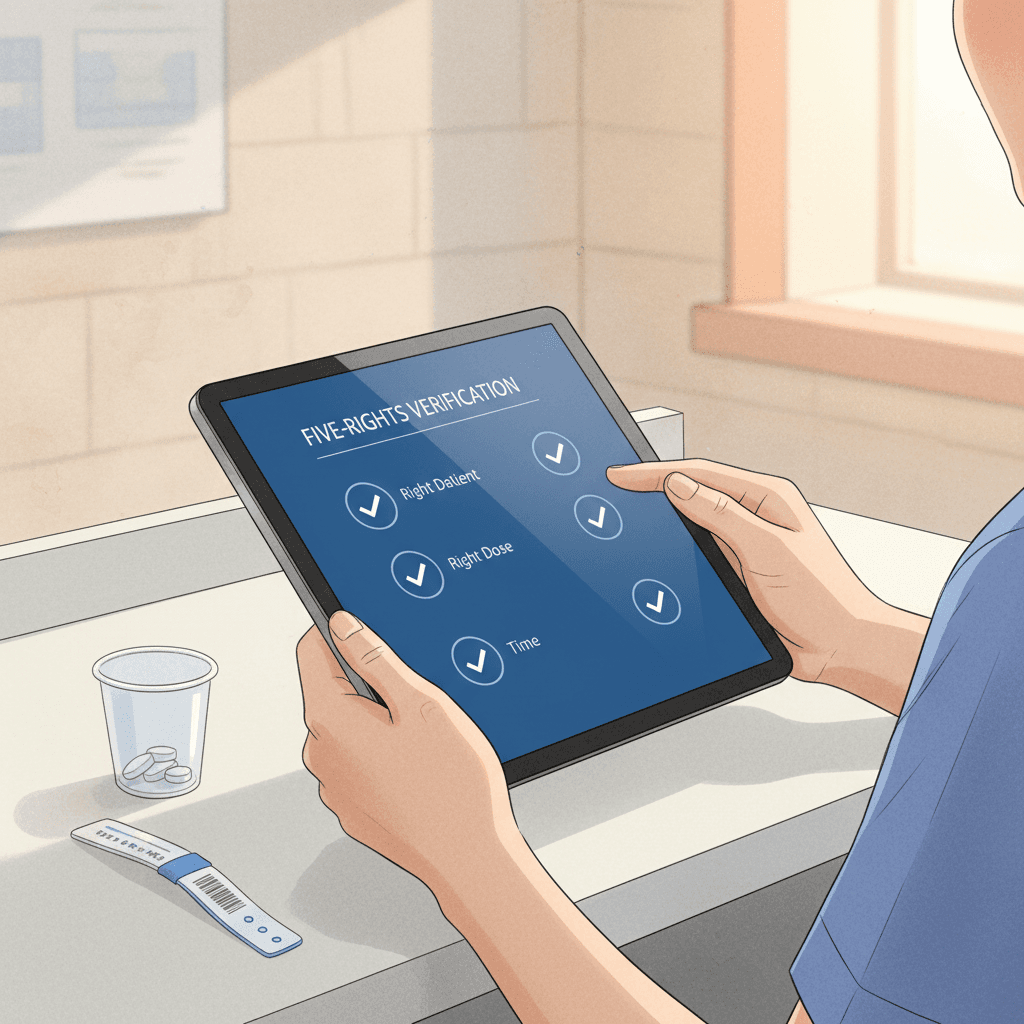
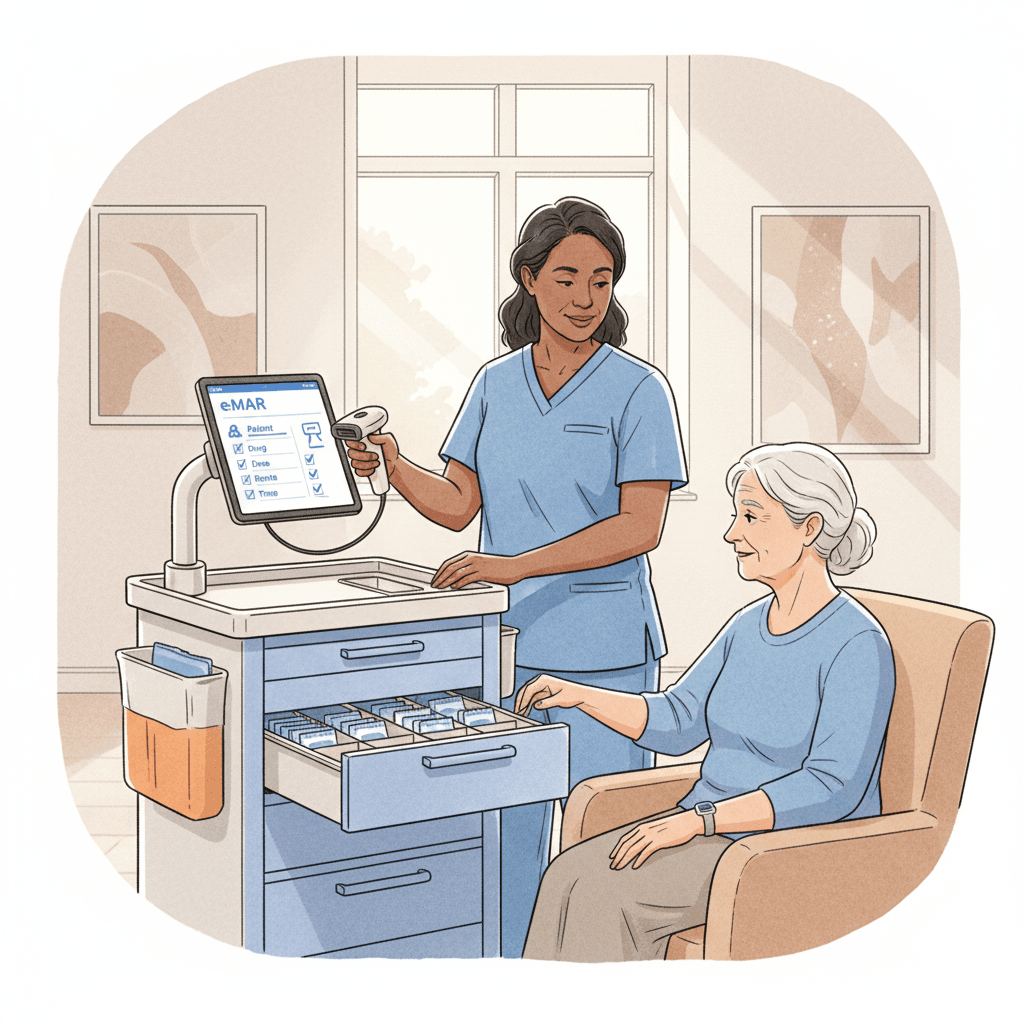
Barcode scanning at the point of administration provides a machine-verified identity check: the barcode on the medication packaging is scanned against the barcode on the resident's identification, confirming right patient and right drug simultaneously. This technology is well established in hospital settings and increasingly available for residential care, though adoption remains limited in smaller settings due to cost and infrastructure requirements.
Automated narcotic counts eliminate the manual counting process that is both time-consuming and error-prone. Controlled substance discrepancies — where the physical count does not match the documented count — consume significant staff time, generate regulatory concern, and are often caused by documentation errors rather than actual diversion. Automated counting systems reduce discrepancies by 90% or more and free clinical staff time for direct care activities.
7. Just Culture Reporting
A just culture reporting system is the foundation on which every other prevention strategy depends. Without accurate, comprehensive error reporting, the organization cannot identify which error types are most frequent, which system failures are contributing, or whether prevention strategies are working. And without a nonpunitive reporting environment, accurate and comprehensive reporting will not occur.
Just culture is not the same as a blame-free culture. A just culture distinguishes between human error (inadvertent, unintentional deviation — a slip or lapse that any competent person could make), at-risk behavior (a conscious choice to deviate from a protocol because the deviation has been normalized or the risk is not perceived — such as skipping identity verification because "I know all the residents"), and reckless behavior (a conscious disregard for a substantial and unjustifiable risk — such as administering a medication while impaired). Each category receives a different organizational response: human error receives system-focused corrective action, at-risk behavior receives coaching and incentive realignment, and reckless behavior receives disciplinary action. The critical distinction is that the response is determined by the behavior, not by the outcome. A staff member who skips identity verification and happens to give the right medication to the right resident has engaged in the same at-risk behavior as a staff member who skips verification and gives a medication to the wrong resident. The behavior is identical; only the outcome differs. A just culture addresses the behavior consistently regardless of outcome.
Near-miss reporting is the most valuable component of a just culture system. A near-miss — an error that was caught before reaching the resident, or a condition that could have produced an error but did not — provides the same diagnostic information as an actual error without the patient harm. A facility that receives 50 near-miss reports per month has vastly more safety intelligence than a facility that receives 5. High near-miss reporting volume is a sign of a healthy safety culture, not a sign of a dangerous facility. Low near-miss reporting volume, in contrast, is a red flag: it suggests that staff are either not recognizing near-misses or not reporting them, both of which indicate that the reporting system is not functioning.
Technology's Role in Error Prevention
Technology has transformed medication safety in hospital settings over the past two decades. Computerized physician order entry, automated dispensing cabinets, barcode medication administration, smart infusion pumps, and clinical decision support systems have collectively reduced hospital medication errors by an estimated 50 to 80% depending on the error category. Residential care has been slower to adopt these technologies, but the trajectory is clear: facilities that implement purpose-built medication management technology experience measurable error reductions that manual systems cannot achieve.
The key technologies relevant to residential care medication error prevention are electronic medication administration records, drug interaction alerts, barcode scanning, and automated narcotic management. Each addresses a specific category of error, and the value of each depends on how well it is integrated into the facility's workflow rather than bolted onto it.
Electronic medication administration records are the foundational technology. An eMAR that is integrated with the prescribing and pharmacy systems creates a single, current, accurate medication reference that eliminates transcription errors, enforces administration windows, calculates PRN intervals and daily maximums, displays resident photographs for identity verification, and generates real-time dashboards showing medication pass progress, overdue medications, and upcoming time-critical administrations. The difference between an integrated eMAR and a standalone eMAR is the difference between a system that prevents errors and a system that merely digitizes the paper MAR's existing vulnerabilities.
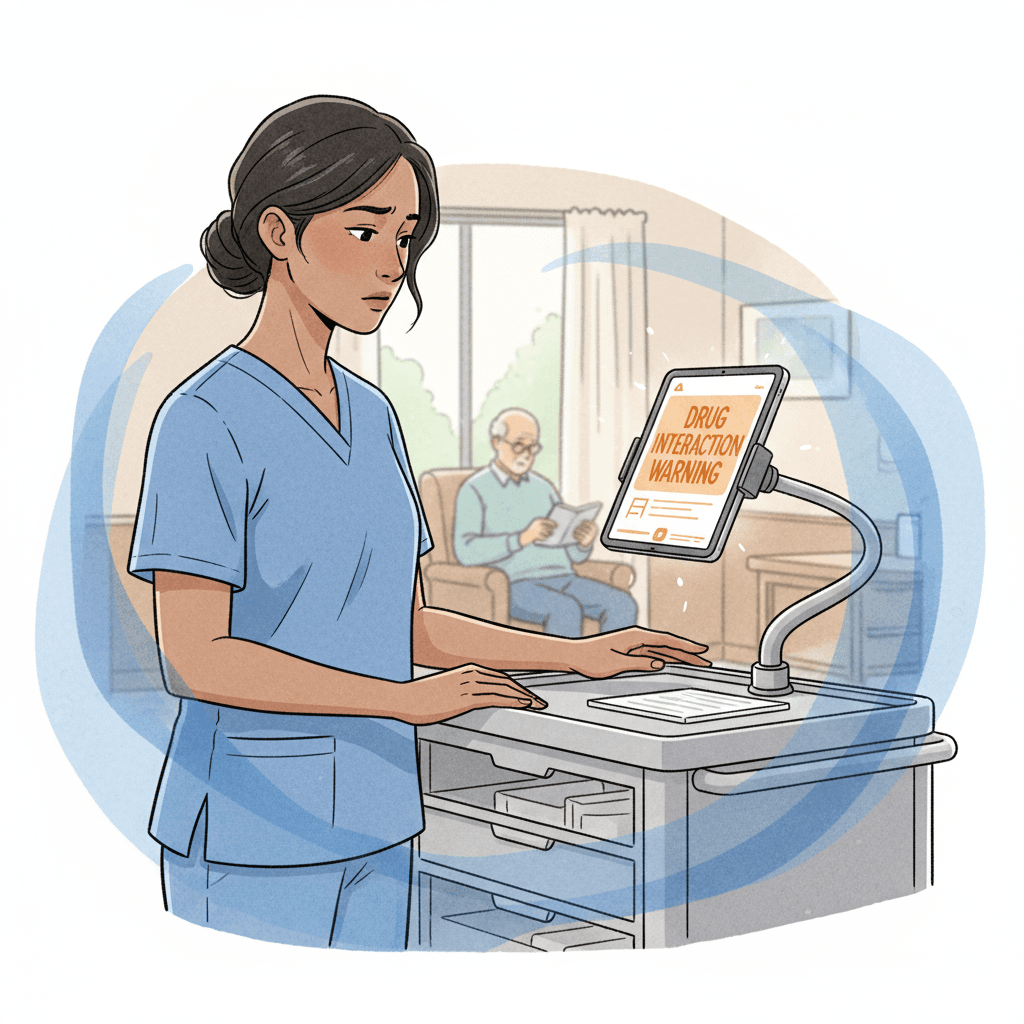
Drug interaction alerts provide automated clinical decision support at the point of prescribing and the point of administration. The value of these alerts depends on their specificity and clinical relevance. Alert fatigue — the phenomenon where clinicians begin ignoring alerts because too many are clinically insignificant — is a well-documented problem. An effective drug interaction alert system is tiered: high-severity interactions (those that can cause serious harm or death) generate hard stops that require override justification, moderate interactions generate warnings with recommended actions, and low-severity interactions are logged for pharmacist review without interrupting the workflow.
Harmony's medication management platform integrates eMAR functionality, drug interaction alerts, narcotic tracking, and real-time medication pass monitoring into a single system designed specifically for residential care workflows. The platform's offline capability ensures that medication passes are not interrupted by connectivity issues — a critical requirement in group home settings where internet reliability cannot be guaranteed. Medications administered during an offline period are recorded locally and synchronized automatically when connectivity is restored, maintaining an unbroken documentation trail regardless of network status.
Barcode scanning, while less widely adopted in residential care than in hospitals, provides the highest-fidelity identity verification available. A barcode scan confirms that the physical medication in the staff member's hand matches the medication record for the resident standing in front of them. This is a machine verification that does not depend on the staff member's reading ability, familiarity with medication names, or cognitive state. For facilities implementing barcode scanning, the critical success factor is scanner usability — a scanner that is difficult to use, slow to read, or unreliable will be bypassed, converting a safety tool into a source of workarounds.
Automated narcotic counting eliminates one of the most time-consuming and error-prone processes in residential care medication management. Manual narcotic counts — performed at every shift change and at every controlled substance administration — consume an average of 15 to 20 minutes per shift per facility. Discrepancies trigger investigation processes that consume additional hours. Automated counting systems that track each unit from receipt through administration to destruction reduce discrepancies to near zero and return hundreds of hours annually to direct care.
Case Scenario: Maplewood Residential Care
Maplewood Residential Care operates four group homes and one 60-bed long-term care facility in a mid-sized metropolitan area. In January 2025, after a state survey cited three medication errors involving wrong-dose administration and one near-miss involving a LASA confusion between metformin and metoprolol, the organization's clinical leadership committed to a systematic medication safety improvement initiative.
Maplewood's baseline medication error rate, calculated from incident reports and MAR reviews, was 4.2 errors per 1,000 medication administrations. Near-miss reporting averaged 3 reports per month across all five sites — a volume that the clinical director recognized as artificially low given the organization's total monthly administration volume of approximately 45,000 doses.
The improvement initiative was implemented in three phases over 12 months. Phase one (months 1 through 3) focused on standardizing the medication pass protocol across all five sites, implementing tall-man lettering on all MAR entries and storage labels, and launching a just culture reporting program with anonymous near-miss reporting capability. Phase two (months 4 through 7) focused on implementing an eMAR system with pharmacy integration, drug interaction alerts, and real-time pass monitoring. Phase three (months 8 through 12) focused on interruption reduction (medication safety vests, designated non-interruption protocols, and environmental modifications to medication preparation areas) and independent double-check procedures for high-alert medications.
Results at 12 months: the medication error rate decreased from 4.2 to 0.9 errors per 1,000 administrations — a 78% reduction. Near-miss reporting increased from 3 reports per month to 27 reports per month, reflecting improved detection and a reporting culture where staff felt safe identifying vulnerabilities. Wrong-dose errors decreased by 85%, driven primarily by eMAR integration eliminating transcription errors and automated alerts flagging dose discrepancies. Wrong-time errors decreased by 70%, driven by the eMAR's pass scheduling and overdue medication dashboards. LASA-related near-misses dropped from approximately one per month (estimated, since they were previously unreported) to two reports in the final quarter, all caught before reaching residents.
The most significant qualitative finding was cultural. Staff reported that the shift from punitive responses to system-focused analysis changed their relationship with error reporting. As one medication aide described it: "Before, if I made a mistake, I spent the rest of the shift worried about getting written up. Now, if I catch something that does not look right, I report it because I know it will be used to fix the system, not to punish me." This cultural shift — from concealment to transparency — was, in the clinical director's assessment, the single most important factor in the sustained error reduction.
Measuring and Reporting
Effective measurement is the mechanism by which medication safety improvement becomes self-sustaining. Without accurate, consistent metrics, an organization cannot determine whether its prevention strategies are working, which error categories remain most prevalent, or where to direct its next improvement effort. Measurement also provides the accountability framework that funders, regulators, families, and governing boards require — evidence that the organization is actively managing medication safety rather than simply reacting to incidents.
Error Rate Calculation
The standard medication error rate metric is errors per 1,000 medication administrations. This denominator — total administrations — normalizes the rate across facilities of different sizes and allows meaningful comparison over time and between sites. A facility that reports 5 errors in a month has a very different safety profile depending on whether it administers 5,000 or 50,000 medications in that month.
The numerator — total errors — must be defined consistently. The organization should establish a clear taxonomy of what constitutes a reportable medication error, including near-misses, and should communicate this taxonomy to all staff. Common definitional questions include: Is a medication administered 15 minutes late an error? (Most frameworks say no for non-time-critical medications.) Is a medication administered without the required pre-assessment (blood pressure check before an antihypertensive) an error even if the medication was otherwise correct? (Yes — this is a protocol deviation that constitutes an error.) Is a refusal that was not documented an error? (Yes — undocumented refusal is an omission from the documentation standpoint.)
Error rates should be calculated and reported monthly, trended quarterly, and benchmarked annually. A single month's data is too volatile to be meaningful — a single complex resident with multiple medication changes can distort a small facility's monthly rate. Quarterly trends reveal whether the rate is stable, improving, or deteriorating. Annual benchmarks provide the long-view perspective needed for strategic planning and regulatory reporting.
Near-Miss Reporting Volume
Near-miss reporting volume is a leading indicator of safety culture health. As a general benchmark, organizations with mature safety cultures report near-misses at a ratio of approximately 10:1 to actual errors — for every error that reaches a resident, 10 near-misses are caught and reported. A facility with a near-miss-to-error ratio below 3:1 should investigate whether near-misses are being underreported, underrecognized, or both.
Near-miss reports should be analyzed with the same rigor as actual errors. They provide the same system-level intelligence — the same root causes, the same contributing factors, the same defensive layer failures — without the resident harm. An organization that treats near-misses as "things that almost happened" and files them without analysis is discarding its most valuable source of safety intelligence.
Trend Analysis
Individual error reports provide incident-level data. Trend analysis reveals patterns that individual reports cannot. The questions that trend analysis answers include: Are certain error types increasing or decreasing over time? Are errors concentrated at particular times of day, particular days of the week, or particular shifts? Are specific medications or medication categories involved in a disproportionate share of errors? Are errors concentrated among specific staff members (which may indicate a training need) or distributed evenly (which indicates a system issue)? Are errors more frequent after pharmacy delivery cycles, after staffing changes, or after new resident admissions?
Trend analysis requires a minimum of six months of consistent data to produce reliable patterns. Organizations implementing new reporting systems should expect an initial surge in reported errors and near-misses as reporting behavior improves — this surge reflects improved detection, not worsened performance. After the reporting culture stabilizes (typically at three to four months), the trend data becomes reliable for analysis.
Reporting should be disseminated to all levels of the organization. Frontline staff should see their facility's error rates and near-miss volumes — not as a performance judgment but as shared safety intelligence. Supervisors should receive trend analysis for their sites. Clinical leadership should receive organization-wide trend data with comparisons across sites and against benchmarks. And the governing board should receive a quarterly medication safety dashboard that summarizes performance, highlights trends, and reports on the status of active improvement initiatives.
Conclusion
Medication errors in residential care are not inevitable. They are the predictable output of systems that were not designed with adequate safety infrastructure — systems that can be redesigned, strengthened, and maintained through the strategies described in this article. The path from a medication error rate of 4 per 1,000 administrations to less than 1 per 1,000 is not a path of perfection. It is a path of systematic defense: layering standardized protocols, high-alert procedures, LASA management, interruption reduction, double-check systems, technology safeguards, and just culture reporting into an integrated safety system where each layer compensates for the weaknesses of the others.
The organizations that achieve sustained medication error reduction share several characteristics. They treat medication safety as a system property rather than an individual responsibility. They invest in technology that eliminates error categories arising from human cognitive limitations. They build reporting cultures that generate honest, comprehensive data. They analyze errors and near-misses for system causes rather than individual blame. And they measure, trend, and act on their data with the same rigor they apply to financial management.
Every medication administration is a moment of risk and a moment of care. The resident who receives their morning medications correctly — right patient, right drug, right dose, right route, right time — is a resident whose care team has executed a complex, multi-step process flawlessly. The goal of medication error reduction is not to eliminate risk from this process. It is to build a system where risk is managed through multiple layers of defense, where errors are caught before they reach residents, where near-misses are reported and analyzed, and where the system improves continuously because the organization is honest about its vulnerabilities. That system is achievable. The evidence is clear, the strategies are proven, and the technology is available. What is required is the organizational commitment to build it.
Frequently Asked Questions
What is the most common type of medication error in residential care settings?
Wrong-dose errors are the most frequently reported error type, accounting for approximately 25 to 30% of all medication errors in residential care. These errors most commonly occur when a dose strength is changed by the prescriber but the old supply is not removed from the medication storage area, resulting in the previous dose being administered during the transition period. Liquid medication calculation errors and tablet-splitting inaccuracies are secondary contributors. Prevention requires a combination of pharmacy coordination (prompt removal of discontinued strengths), MAR accuracy (immediate update when dose changes are ordered), and staff training on calculation verification for liquid formulations.
How do you calculate a medication error rate, and what rate should we be targeting?
The standard metric is errors per 1,000 medication administrations. Calculate it by dividing the total number of medication errors in a period by the total number of medication administrations in the same period, then multiplying by 1,000. Published benchmarks for residential care range from 2.0 to 5.0 errors per 1,000 administrations as a typical starting point. Organizations with mature safety systems and integrated technology consistently achieve rates below 1.0 per 1,000. The target should be evidence-based improvement from your current baseline rather than an arbitrary number — a facility that reduces its rate from 4.5 to 2.0 has achieved a meaningful improvement even though its rate exceeds the benchmark achieved by organizations with greater resources.
How do we get staff to report medication errors when they are afraid of being punished?
Implementing a just culture framework is the essential first step. A just culture distinguishes between human error (unintentional — system-focused corrective action), at-risk behavior (normalized risk-taking — coaching and incentive realignment), and reckless behavior (conscious disregard of risk — disciplinary action). When staff understand that honest reporting of unintentional errors will result in system improvements rather than personal punishment, reporting rates increase dramatically. Practical steps include offering anonymous near-miss reporting channels, sharing de-identified error analysis results with all staff so they can see that reports lead to system changes rather than discipline, leadership publicly acknowledging and thanking reporters, and measuring reporting volume as a positive metric rather than counting errors as a negative one. Expect three to six months before reporting culture shifts measurably.
Can technology alone solve the medication error problem in residential care?
No. Technology eliminates specific categories of errors — transcription errors, calculation errors, memory-dependent checks, and information access delays — but it cannot perform the clinical assessments that medication safety requires. An eMAR cannot check a resident's blood pressure before administering an antihypertensive, assess swallowing ability before giving an oral medication, evaluate whether a resident's symptoms meet the criteria for a PRN dose, or recognize that a resident appears more sedated than usual and an opioid should be held. Technology is a verification layer that strengthens the safety system. It works best when implemented alongside standardized protocols, adequate staffing, interruption reduction, and a just culture reporting environment. Organizations that implement technology without addressing these foundational elements will experience some error reduction but will not achieve the 60 to 80% reductions that integrated approaches produce.
What is the difference between a medication error and a near-miss, and why does it matter?
A medication error is a deviation from the prescribed medication regimen that reaches the resident — the wrong dose was administered, the medication was omitted, the wrong drug was given. A near-miss is a deviation that was caught before reaching the resident — a nurse noticed the wrong strength in the blister pack before administering, a second staff member identified a LASA confusion during a double-check, or a pharmacy alert flagged a drug interaction before the medication was dispensed. The distinction matters because near-misses provide the same diagnostic information as actual errors — the same system weaknesses, the same contributing factors — without resident harm. Organizations with mature safety cultures report near-misses at a ratio of approximately 10:1 to actual errors. High near-miss reporting indicates that the defensive layers are working — errors are being generated by the system but caught before reaching residents. Low near-miss reporting indicates that the defensive layers have gaps, or that staff are not recognizing or reporting the catches they make.