Key Takeaways
- Clinical documentation serves four distinct purposes — communication, continuity, legal protection, and quality improvement — and every note should advance at least one of them.
- The FACT standard (Factual, Accurate, Complete, Timely) provides a practical framework for evaluating whether any clinical entry meets the minimum threshold for defensibility.
- Progress notes structured using the DAR format (Data, Action, Response) consistently outperform unstructured narrative notes in regulatory audits, legal proceedings, and clinical handoffs.
- Late entries, copy-paste notes, and vague language like "resident had a good day" are the three most common documentation deficiencies cited in survey findings across CMS, CQC, and provincial inspections.
- Documentation requirements vary meaningfully across jurisdictions — what satisfies CMS in the United States may fall short of CQC expectations in England or ACQS standards in Australia.
- Technology that enforces structured entry at the point of care reduces documentation errors by 30-45% compared to free-text retrospective charting, but only if templates are designed with frontline clinical input.
- A documentation culture built on peer review, routine audits, and visible recognition of quality charting produces more sustainable improvement than policy mandates alone.
Introduction
A state surveyor walks into a 36-bed residential care facility at 7:14 on a Tuesday morning. She does not start with the kitchen. She does not walk the halls first. She sits down at the nursing station, requests three resident charts, and begins reading. Within thirty seconds — sometimes less — she has formed an initial impression of how this facility documents. That impression will color every interaction she has for the rest of the survey.
What does she see in those first thirty seconds? She sees whether progress notes are dated and timed or left ambiguous. She sees whether the language is specific ("resident consumed 75% of breakfast, ambulated to dining room with rolling walker, no distress observed") or vague ("resident had a good day, no concerns"). She sees whether care plan interventions match the documentation trail or whether the plan says one thing and the notes say another — or say nothing at all. She sees whether incident follow-up is documented or whether the record goes silent after the initial report.
This is not a hypothetical. It is the lived reality of every residential care facility operating under regulatory oversight, which is to say, every residential care facility. The quality of clinical documentation shapes survey outcomes, litigation exposure, family confidence, accreditation standing, and — most importantly — the quality of care that residents actually receive. A missed medication that goes undocumented cannot trigger the follow-up assessment it requires. A behavioral change noted only in verbal shift report but never in the chart cannot inform the physician who reviews records remotely. A fall without documented circumstances, interventions, and outcomes cannot drive the care plan revision that might prevent the next fall.
Clinical documentation is the connective tissue of residential care. When it is strong, information flows reliably from one caregiver to the next, clinical decisions are grounded in data rather than memory, and the organization can defend its care in any forum — regulatory, legal, or ethical. When it is weak, gaps open between what happened and what the record shows, and those gaps become the terrain on which adverse outcomes, survey deficiencies, and malpractice claims are built.
This article provides a comprehensive, evidence-based guide to clinical documentation best practices in residential care settings. It covers the foundational purposes of documentation, the standards each record type must meet, the most common errors and how to correct them, jurisdictional differences that affect compliance, and the organizational culture required to sustain documentation quality over time. The guidance applies across long-term care, group homes, and assisted living communities and is designed for clinical directors, directors of nursing, compliance officers, and operations leaders who are responsible for documentation quality in their organizations.
The Purpose of Clinical Documentation
Clinical documentation in residential care serves four interconnected purposes. Understanding these purposes is not academic — it is the foundation for every documentation decision your organization makes, from what templates you design to how you train new staff to what you audit.
Communication
The primary purpose of a clinical record is to communicate the resident's current status, recent changes, and ongoing needs to every member of the care team. In residential care, where staffing rotates across shifts and where registered nurses, licensed practical nurses, certified nursing assistants, physicians, therapists, social workers, and family members all need access to resident information, the chart is the single source of truth. When a night shift aide documents that a resident was agitated between 2:00 and 3:30 AM, refused repositioning, and was observed rubbing their lower back, that entry communicates critical information to the day shift nurse who will assess the resident, the physician who may need to adjust the pain management plan, and the physical therapist who is scheduled for a session that afternoon.
Documentation that fails as communication — because it is vague, incomplete, buried in the wrong section of the chart, or written in shorthand that only the author understands — forces downstream caregivers to work from incomplete information. The consequences range from duplicated assessments (wasting time) to missed clinical changes (risking harm).
Continuity of Care
Residential care is not episodic. Residents live in your facility for months, years, sometimes decades. Over that time, their clinical status evolves, their care plans are revised, their medications change, their functional abilities shift, and their preferences develop. The clinical record is the institutional memory that maintains continuity across staff turnover, shift changes, and the passage of time.
A well-documented chart allows a new nurse who has never met a resident to understand within minutes what the resident's baseline looks like, what interventions are in place and why, what has been tried and failed, and what the current goals of care are. Without that continuity, each new caregiver starts from a partial picture, and care decisions are made without the context that only longitudinal documentation can provide.
Legal Protection
Clinical documentation is a legal document. In malpractice litigation, regulatory proceedings, family complaints, and ombudsman investigations, the chart is treated as the definitive record of what care was provided. The legal standard is unforgiving: if it was not documented, it was not done. This principle — sometimes called the "documentation presumption" — means that even excellent care, if undocumented, cannot be used as evidence of the organization's diligence.
Defensible documentation is not about writing more. It is about writing with specificity, timeliness, and objectivity so that a third party reading the record months or years later can reconstruct what happened, what was done about it, and what the outcome was. The best protection against legal liability is not a long note — it is a complete one that follows the clinical narrative from assessment through intervention through response through follow-up.
Quality Improvement
Clinical documentation is the raw material for quality improvement. Incident trending, fall analysis, medication error tracking, wound healing rates, behavioral pattern identification, and care plan effectiveness reviews all depend on data extracted from clinical records. If the documentation is inconsistent, incomplete, or unstructured, quality improvement efforts are built on unreliable data and the conclusions they produce cannot be trusted.
Organizations that treat documentation as a compliance obligation rather than a quality tool miss this connection. The same progress note that satisfies a regulatory requirement can, if properly structured, feed into a dashboard that shows the clinical director which residents are trending toward hospitalization, which units have rising fall rates, and which care plan interventions are producing results.
The Documentation Triangle
Every clinical entry should be evaluated against three criteria that form what documentation specialists call the documentation triangle: accurate, timely, and complete.
Accurate means the entry reflects what actually happened, uses objective and measurable language, avoids subjective interpretation unsupported by observation, and correctly identifies the resident, the date, the time, and the author.
Timely means the entry is made as close to the event as possible — ideally at the point of care, and never later than the end of the shift during which the event occurred. Late entries lose detail, introduce reconstruction error, and raise questions about reliability in legal and regulatory settings.
Complete means the entry includes all clinically relevant information. A vital sign without context ("BP 88/52") is less useful than a vital sign with context ("BP 88/52 at 0600, resident asymptomatic, lying in bed, no orthostatic symptoms, physician notified per standing orders, repeat BP ordered in 1 hour"). Completeness does not mean length — it means that the reader does not need to go looking for information that should have been in the note.
When documentation meets all three criteria, it serves all four purposes simultaneously: it communicates, it maintains continuity, it protects legally, and it supports quality improvement. When any one criterion is missing, the value of the entry degrades across every purpose.
Documentation Standards by Record Type
Not all clinical documentation serves the same function, and each record type has specific requirements for what must be included, how it should be structured, and where common deficiencies appear. The following standards apply across residential care settings and align with the expectations of major regulatory bodies including CMS (United States), CQC (England), provincial health authorities (Canada), and the Aged Care Quality and Safety Commission (Australia).
Progress Notes
Progress notes are the narrative backbone of the clinical record. They document changes in resident status, responses to interventions, clinical observations that fall outside routine parameters, and the clinical reasoning behind care decisions.
The DAR (Data-Action-Response) format provides a reliable structure for progress notes in residential care:
- Data: What was observed, reported, or measured. Use objective, specific language. Include vital signs, direct quotes from the resident, and measurable observations.
- Action: What was done in response. Include nursing interventions, physician notifications, medication changes, care plan updates, and referrals.
- Response: How the resident responded to the action. Document outcomes, ongoing symptoms, effectiveness of interventions, and plans for follow-up.
A progress note that covers all three elements creates a complete clinical narrative that a surveyor, attorney, or incoming nurse can follow without ambiguity.
Vital Signs Documentation
Vital signs must be documented with the date, time, measurement values, the method of measurement (if relevant), the position of the resident (for blood pressure), and any contextual factors that affect interpretation. Isolated numbers without context are clinically incomplete. When vital signs fall outside established parameters, the documentation must include the notification chain (who was informed), the response received (new orders, continued monitoring), and the follow-up plan.
Medication Administration Records
Medication administration records (MARs) must document the medication name, dose, route, time of administration, and the identity of the administering staff member for every dose. Omissions require documentation of the reason (resident refused, held per physician order, resident absent from facility, medication unavailable). PRN (as-needed) medications require documentation of the indication (why it was given), the time of administration, and a follow-up entry documenting the resident's response within the timeframe appropriate to the medication.
Incident Reports
Incident documentation must include the date, time, and location of the incident; the names of witnesses; a factual description of what occurred (not opinions about causation); the resident's condition immediately after the incident; all interventions provided; all notifications made (physician, family, supervisor, regulatory authority as required); and the follow-up plan. Post-incident documentation must continue until the clinical situation has stabilized and any new care plan interventions have been implemented and evaluated.
Care Plan Updates
Care plans are living documents, and every significant change in a resident's condition, preferences, or goals should trigger a care plan review and update. The documentation of care plan changes must include the reason for the change, the date of the change, the specific interventions added or modified, the responsible staff members, and the criteria for evaluating effectiveness. Care plan documentation that is static — unchanged for months despite evolving resident needs — is a frequent survey deficiency.
Behavioral Observations
Behavioral documentation requires particular precision because it often involves subjective experiences reported by the resident or interpreted by staff. Best practice is to separate observation from interpretation: document what was seen and heard before documenting what it might mean. Include the antecedent (what happened before the behavior), the behavior itself (described in specific, observable terms), and the consequence (what happened after, including staff interventions and the resident's response). This ABC (Antecedent-Behavior-Consequence) format is especially important for residents with dementia, mental health conditions, or behavioral support plans.
Common Deficiencies by Record Type
The following table summarizes the most frequently cited documentation deficiencies by record type, based on survey findings and audit data across multiple jurisdictions.
| Record Type | Common Deficiency | Why It Matters |
|---|---|---|
| Progress notes | Vague language ("doing well," "no change") | Provides no clinical information; fails communication and legal purposes |
| Progress notes | Missing follow-up entries after initial documentation | Creates gaps in the clinical narrative; raises questions about continuity |
| Vital signs | Numbers recorded without context or follow-up on abnormals | Cannot determine clinical significance or whether abnormals were addressed |
| Medication administration | PRN medications documented without indication or response | Cannot determine appropriateness of administration or effectiveness |
| Medication administration | Omissions without documented reason | Cannot distinguish intentional hold from missed dose (medication error) |
| Incident reports | Opinion or blame language ("resident was careless") | Not factual; compromises legal defensibility; may reflect bias |
| Incident reports | Missing post-incident follow-up documentation | Cannot demonstrate that the resident was monitored after the event |
| Care plans | Static plans unchanged despite documented changes in condition | Demonstrates disconnect between assessment and planning |
| Behavioral observations | Interpretive language without supporting observations | Cannot determine what actually occurred; limits usefulness for pattern analysis |
The FACT Documentation Standard
Among the various documentation frameworks used in residential care, the FACT standard provides one of the most practical and memorable guides for clinical staff. FACT stands for Factual, Accurate, Complete, and Timely. Each element addresses a specific dimension of documentation quality, and together they form a comprehensive checklist that staff can apply to every entry they make.
Factual
Factual documentation records what was observed, measured, or reported — not what was inferred, assumed, or judged. The distinction matters enormously in both clinical and legal contexts. A factual note describes behaviors, symptoms, and events in objective terms. A non-factual note interprets those observations through a lens that may not be shared by other readers.
Poor example: "Resident was confused and uncooperative this morning."
Better example: "Resident unable to state the current date or identify the facility by name at 0730. When approached for morning vital signs, resident stated 'Don't touch me' and pulled arm away. Repeated attempts at 0745 and 0800 were met with the same verbal refusal and withdrawal. Vital signs obtained at 0820 after resident agreed following reassurance. Physician notified of change in orientation per standing orders."
The poor example uses two subjective labels — "confused" and "uncooperative" — that different readers might interpret differently. The better example describes the exact behaviors that led to those impressions, allowing the next caregiver, the physician, and any future reviewer to reach their own clinical conclusions based on the evidence.
Factual documentation also means avoiding language that assigns blame, expresses frustration, or characterizes the resident's personality. Phrases like "resident is always difficult," "resident refuses to cooperate as usual," or "resident was being manipulative" have no place in clinical documentation. They reveal more about the author's emotional state than about the resident's clinical condition, and they can be devastating in litigation.
Accurate
Accurate documentation means every element of the entry is correct: the right resident, the right date, the right time, the right measurements, the right medication names and doses, the right names of staff members and physicians involved. Accuracy also means that the documentation reflects the scope of care that was actually provided — neither more nor less.
Poor example: "Blood sugar checked, within normal limits."
Better example: "Fasting blood glucose 142 mg/dL via fingerstick at 0630. Result above target range of 80-130 mg/dL per care plan. Sliding scale insulin administered per physician order: 2 units Humalog subcutaneous, left abdomen. Resident tolerated injection without complaint. Repeat blood glucose to be checked before lunch."
The poor example is not only vague ("within normal limits" provides no number and no reference range) — it may also be inaccurate. A blood glucose of 142 mg/dL might be within the laboratory reference range for a random glucose but is above the fasting target for a diabetic resident. Accurate documentation includes the number, the context, and the clinical significance relative to that resident's care plan.
Accuracy errors in documentation are often unintentional: a transposed digit in a blood pressure reading, a morning entry stamped with the previous day's date because the staff member forgot to update, a medication dose recorded in milligrams when it was actually measured in micrograms. These errors are preventable with structured templates that include validation rules, but they are common in free-text environments where the documentation system provides no guardrails.
Complete
Complete documentation contains all the information that a competent clinician would need to understand the clinical situation and continue care without consulting additional sources. Completeness does not mean length — a focused, well-structured note of four sentences can be more complete than a rambling paragraph that buries the relevant information in filler.
The test for completeness is simple: after reading the entry, does the reader need to ask any follow-up questions to understand what happened and what needs to happen next? If the answer is yes, the entry is incomplete.
Poor example: "Resident fell. Doctor notified."
Better example: "Resident found on floor of room 12B at 1415 by CNA Rodriguez. Resident was lying on right side, oriented to person and place, denied hitting head, complained of right hip pain rated 6/10. No visible deformity, bruising, or skin breakdown observed on initial assessment. Vital signs: BP 132/78, HR 84, RR 18, O2 sat 97% on room air. Resident assisted to seated position and then to wheelchair. Dr. Patel notified at 1425, ordered X-ray of right hip, ice to area, Tylenol 650mg PO for pain, neuro checks every 2 hours for 24 hours. Family member (daughter, Maria Gonzalez) notified at 1430. Incident report completed. Care plan updated to include increased fall risk interventions."
The poor example documents the event and one action. It does not describe the circumstances, the resident's condition, the assessment findings, the specific physician contacted, the orders received, the family notification, or the care plan response. In a legal proceeding, this two-sentence entry would be nearly impossible to defend.
Timely
Timely documentation means the entry is made as close to the event as possible. The gold standard is point-of-care documentation: charting during or immediately after the clinical interaction. When point-of-care entry is not possible, documentation should be completed before the end of the shift during which the event occurred.
Late entries — documentation completed hours or days after the event — are significantly less reliable than contemporaneous entries. Memory degrades rapidly: research on clinical recall shows that healthcare workers lose meaningful detail within two to four hours of an event and that entries made more than 12 hours after the fact contain substantially more errors and omissions than real-time entries.
Late entries also raise credibility concerns. In litigation, opposing counsel will ask why the entry was late, whether the clinician's recollection was influenced by subsequent events, and whether the late entry was written to fill a gap that someone identified after the fact. None of these questions are easy to answer when the timestamp shows a 14-hour delay.
When a late entry is genuinely necessary — and it sometimes is, because residential care is unpredictable — it must be clearly labeled as such. Best practice is to document "Late entry for [date and time of event]" at the beginning of the note, explain briefly why the entry was delayed, and record the actual time of documentation alongside the time of the event. Never backdate an entry to make it appear contemporaneous. Backdating is falsification, and it converts a documentation deficiency into a documentation fraud.
Common Documentation Errors and How to Fix Them
Even in well-run residential care facilities, documentation errors recur with predictable regularity. Understanding the most common errors and implementing specific countermeasures is more effective than general exhortations to "document better."
Late Entries
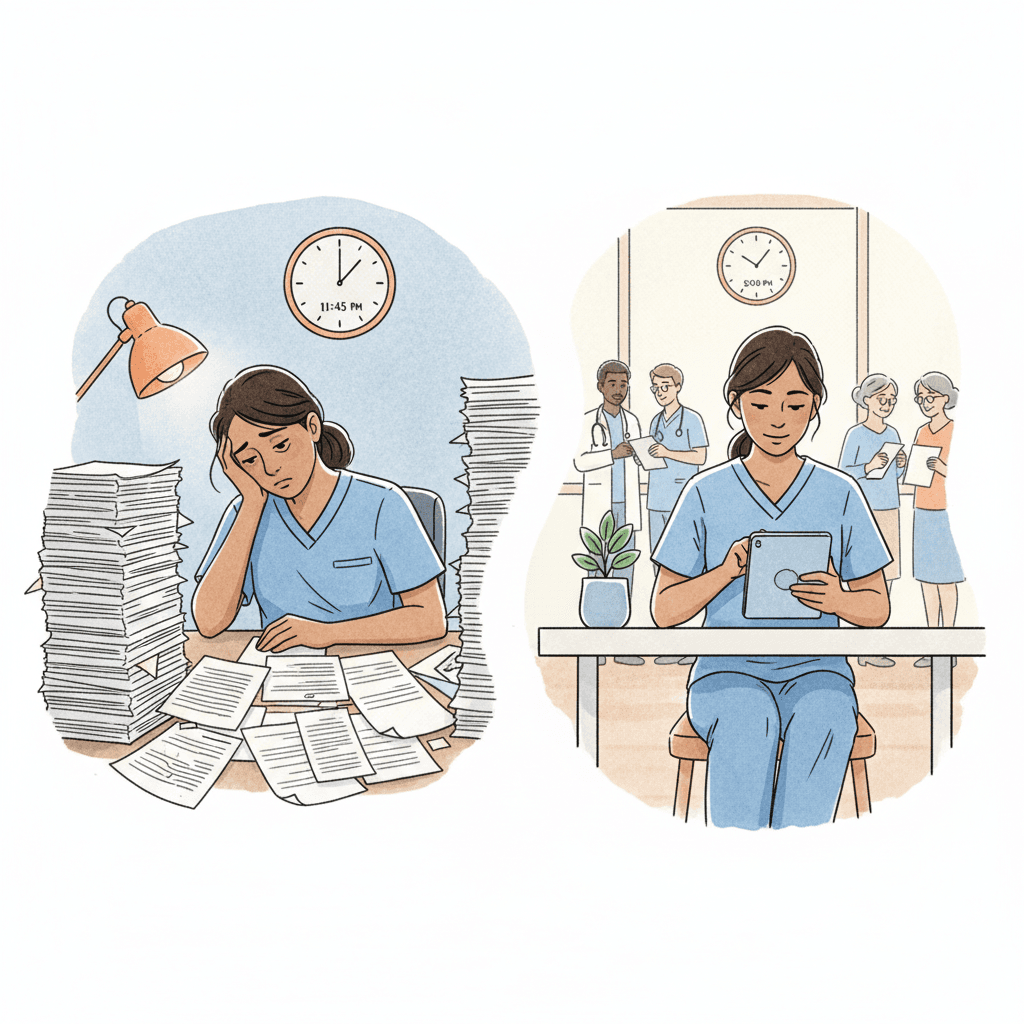
Late entries are the single most common documentation deficiency in residential care. They occur when staff defer documentation to the end of the shift, when unexpected events consume the time allocated for charting, or when the documentation system is inaccessible at the point of care.
The fix: Establish a documentation timeliness standard — for example, all routine entries completed within one hour of the event, all incident-related entries completed within 30 minutes. Make point-of-care documentation physically possible by providing mobile devices or workstations in resident areas. Track timeliness metrics and include them in documentation quality dashboards.
Copy-Paste Notes
Copy-paste documentation — also called "cloned notes" — occurs when a staff member copies a previous entry and pastes it as a new one, sometimes without modification. This practice produces records that appear complete but contain stale or inaccurate information. It is especially dangerous because the resulting notes may describe a clinical status that no longer exists, and a reader may rely on them without realizing they are recycled.
Before: "Resident resting comfortably in bed. Vital signs stable. No complaints. Care plan followed." (Identical entry appearing on 14 consecutive days.)
After: "Resident in bed at 0800, awake and watching television. Stated she slept 'pretty well but my knee was bothering me around 4 AM.' Right knee mildly swollen compared to left, warm to touch, ROM limited to approximately 90 degrees flexion with grimace. Pain rated 4/10. Applied ice pack per care plan, repositioned with pillow under right knee. Will reassess pain and swelling before noon medication pass."
The fix: Configure the documentation system to flag notes with greater than 80% textual similarity to prior entries. Require narrative specificity in at least one clinical observation per shift. Train staff that copy-paste documentation is a falsification risk, not a time-saver.
Vague Language
Vague language undermines every purpose of documentation. Phrases like "resident had a good day," "appetite fair," "slept well," and "no significant changes" communicate nothing specific to the next caregiver, provide no defensible record, and offer no useful data for quality improvement.
Before: "Resident had a good day. Ate well. Ambulated in hallway. No concerns."
After: "Resident pleasant and talkative at breakfast, consumed approximately 80% of meal (scrambled eggs, toast, juice — declined fruit cup). Ambulated length of Unit B hallway (approximately 40 meters) with rolling walker at 1030, steady gait, no shortness of breath. Participated in afternoon music program for 45 minutes. Stated 'I feel good today, that new pill is helping my back.' Pain rated 2/10, down from 5/10 three days ago."
The fix: Eliminate vague qualifiers from documentation templates. Replace "appetite: good/fair/poor" with percentage of meal consumed and specific items accepted or refused. Replace "slept well" with hours of sleep observed and any disruptions noted. Build specificity into the structure so that generic entries are literally not possible within the template.
Missing Times
Documentation without specific times loses much of its clinical value. "Blood pressure low, physician notified" raises immediate questions: when was it taken? When was the physician notified? What was the interval between the abnormal finding and the notification? In litigation, timing gaps suggest delays in response.
The fix: Require timestamps on all clinical entries, including the time of the event (not just the time of documentation). Configure documentation templates to auto-populate the current time when an entry is initiated and to require manual entry of the event time when they differ.
Undocumented Refusals
When a resident refuses care — medications, treatments, assessments, meals, repositioning — that refusal must be documented along with the specific care refused, the reason given (if any), the education provided to the resident about the consequences of refusal, and the notification of the supervisor and/or physician. Undocumented refusals create a gap in the record that may be interpreted as a missed service.
Before: (No entry — medication omitted from MAR without explanation.)
After: "Resident refused Metoprolol 25mg PO at 0800. Stated 'That pill makes me dizzy, I don't want it.' Educated resident that Metoprolol is prescribed for blood pressure control and that stopping it may cause blood pressure to rise. Resident verbalized understanding but maintained refusal. Charge nurse (J. Williams, RN) notified at 0810. Dr. Patel notified at 0815, ordered BP monitoring every 4 hours for 24 hours and follow-up appointment to discuss medication concerns. Resident agreed to blood pressure monitoring."
The fix: Build refusal documentation into medication administration and treatment workflows so that an omission cannot be recorded without a corresponding refusal note. Make it easier to document a refusal than to skip the entry entirely.
Failure to Document Follow-Up
An initial entry without follow-up documentation creates an incomplete clinical narrative. If a resident falls at 2:00 PM and the next relevant entry appears 12 hours later at the start of the next shift, there is no record of what happened in between — no neuro checks, no pain reassessment, no physician order follow-through. The absence of documentation does not prove the absence of care, but it shifts the burden of proof in a way that is difficult to overcome.
The fix: When an initial entry documents an event that requires follow-up (an incident, an abnormal vital sign, a new symptom, a medication change), the documentation system should generate reminders for follow-up entries at defined intervals. Supervisors should include follow-up documentation in their shift review checklist.
Documentation Across Jurisdictions
Residential care documentation requirements vary meaningfully across jurisdictions. Organizations operating in a single country must understand their national and regional requirements. Organizations operating across borders — increasingly common in aged care chains — must account for differences that can affect template design, audit criteria, and staff training.
United States: CMS Requirements
In the United States, documentation requirements for long-term care facilities participating in Medicare and Medicaid are governed by the Centers for Medicare and Medicaid Services (CMS) through the Requirements of Participation (42 CFR Part 483). Key documentation requirements include comprehensive assessments using the Minimum Data Set (MDS) at specified intervals, individualized care plans updated with each significant change in condition, and documentation of services provided consistent with the care plan. The State Operations Manual provides guidance to surveyors on how to evaluate documentation during annual surveys and complaint investigations.
CMS places particular emphasis on person-centered care planning, documentation of resident choices and preferences, and evidence that care plans are informed by the resident's goals. The Mega Rule (2016) expanded documentation expectations around the use of psychotropic medications, requiring documented evidence of gradual dose reduction attempts and clinical justification for continued use.
Canada: Provincial Standards
Canada does not have a single national standard for residential care documentation. Each province and territory establishes its own requirements through legislation and regulation. However, common themes include documentation of individualized care plans reviewed at minimum quarterly, medication administration records maintained in real time, incident reporting within defined timeframes (typically 24 hours for serious incidents), and documentation of informed consent for treatments and medications.
Provincial inspection processes vary in rigor and frequency, but all provinces require that documentation demonstrate the care described in the care plan was actually delivered. British Columbia's Residential Care Regulation, Ontario's Long-Term Care Homes Act, and Alberta's Continuing Care Health Service Standards each prescribe specific documentation elements, and organizations operating across provincial lines must map their templates to the most stringent applicable requirements.
United Kingdom: CQC Expectations
The Care Quality Commission (CQC) in England assesses residential care services against five key questions: safe, effective, caring, responsive, and well-led. Documentation requirements are woven through all five domains. CQC inspectors look for evidence that care plans reflect assessed needs and are regularly reviewed, that risk assessments are documented and updated, that incidents are recorded and investigated with demonstrable learning, and that mental capacity assessments and best interest decisions are properly documented in accordance with the Mental Capacity Act 2005.
CQC does not prescribe a specific documentation format, but its inspection framework places heavy emphasis on person-centered records that reflect the individual's voice, preferences, and life history. Documentation that reads as purely clinical — without evidence of the resident's perspective — may be flagged as not meeting the "caring" or "responsive" standards, even if it is clinically complete.
Australia: Aged Care Quality Standards
The Aged Care Quality and Safety Commission enforces the Aged Care Quality Standards, which include explicit requirements for clinical documentation under Standard 3 (Personal Care and Clinical Care). Since the Royal Commission into Aged Care Quality and Safety, documentation expectations have intensified, with greater scrutiny of clinical governance, medication management records, restrictive practice documentation, and evidence of clinical leadership.
Australian standards require that documentation demonstrate clinical oversight by registered nurses, that restrictive practices (including chemical restraint via psychotropic medications) are individually authorized and regularly reviewed, and that clinical deterioration is identified and responded to in a timely manner. The Serious Incident Response Scheme (SIRS) imposes additional reporting and documentation requirements for specified incident types.
Practical Implications
For organizations operating across jurisdictions, the safest approach is to design documentation standards that meet the most demanding requirements of any jurisdiction in which you operate. In practice, this typically means combining CMS-level specificity in assessment and care planning documentation with CQC-level emphasis on person-centered language and capacity-related documentation, supplemented by the incident reporting rigor required by Australia's SIRS framework. A single documentation standard built to the highest common denominator is easier to maintain and train than jurisdiction-specific variants, and it positions the organization well for expansion into new markets.
Technology for Better Documentation
Technology is not a substitute for clinical judgment or documentation discipline, but the right tools can make good documentation easier and poor documentation harder. The most effective documentation technology removes friction from the charting process, enforces structure where structure matters, and provides feedback that helps clinicians improve their documentation quality over time.
Structured Templates
Structured templates with pre-defined fields, standardized terminology, and appropriate default values reduce the cognitive load of documentation and increase consistency across staff and shifts. The most effective templates are designed collaboratively with frontline clinical staff — not by IT departments working from regulatory checklists — and they balance thoroughness with efficiency.
A well-designed progress note template, for example, might provide structured fields for vital signs, pain assessment, and medication administration while leaving a focused narrative section for the clinician's observations. The structured fields ensure that required elements are never omitted; the narrative section preserves the clinical voice that gives records their meaning.
Point-of-Care Entry
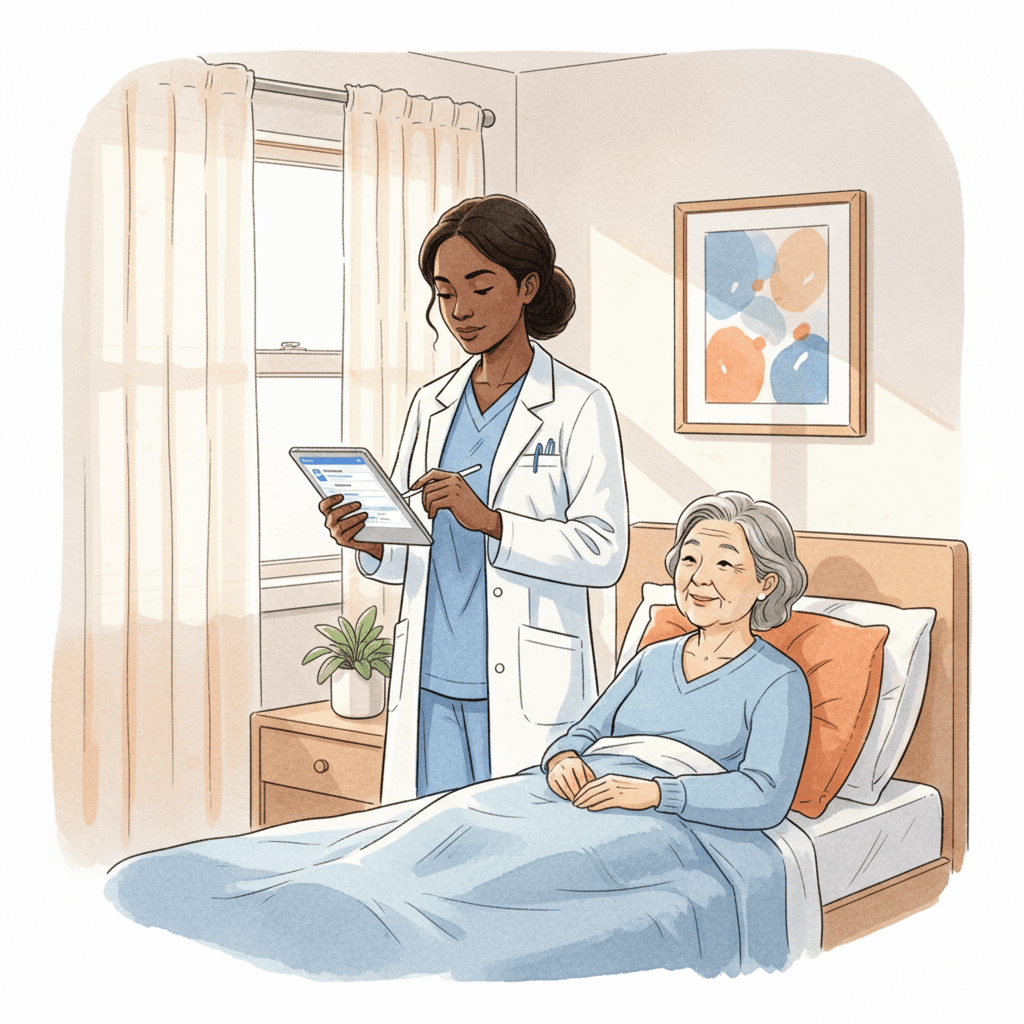
Point-of-care documentation — charting during or immediately after the clinical interaction — produces entries that are more timely, more accurate, and more detailed than retrospective documentation. Enabling point-of-care entry requires devices that are accessible in resident areas (tablets, mobile phones, or workstations on wheels), software that is fast enough that charting does not compete with care time, and workflows designed so that documentation is integrated into the care process rather than appended after it.
AI-Assisted Quality Review
Automated documentation review tools can scan entries for common deficiencies — vague language, missing times, incomplete follow-up, copy-paste patterns — and provide real-time feedback to the charting clinician. This shifts documentation quality from a retrospective audit finding to a real-time coaching opportunity. A staff member who is prompted "This note does not include the resident's response to the intervention — would you like to add it?" at the time of entry is far more likely to complete the note than one who receives the same feedback in a monthly audit report.
Offline Capability
Residential care facilities do not always have reliable internet connectivity in every resident area. Documentation technology must function offline, allowing staff to chart without interruption and syncing entries to the central system when connectivity is restored. Systems that freeze, lag, or lose data when connectivity drops force staff back to paper workarounds, which then must be transcribed — introducing delay and transcription errors.
How Harmony Approaches Documentation
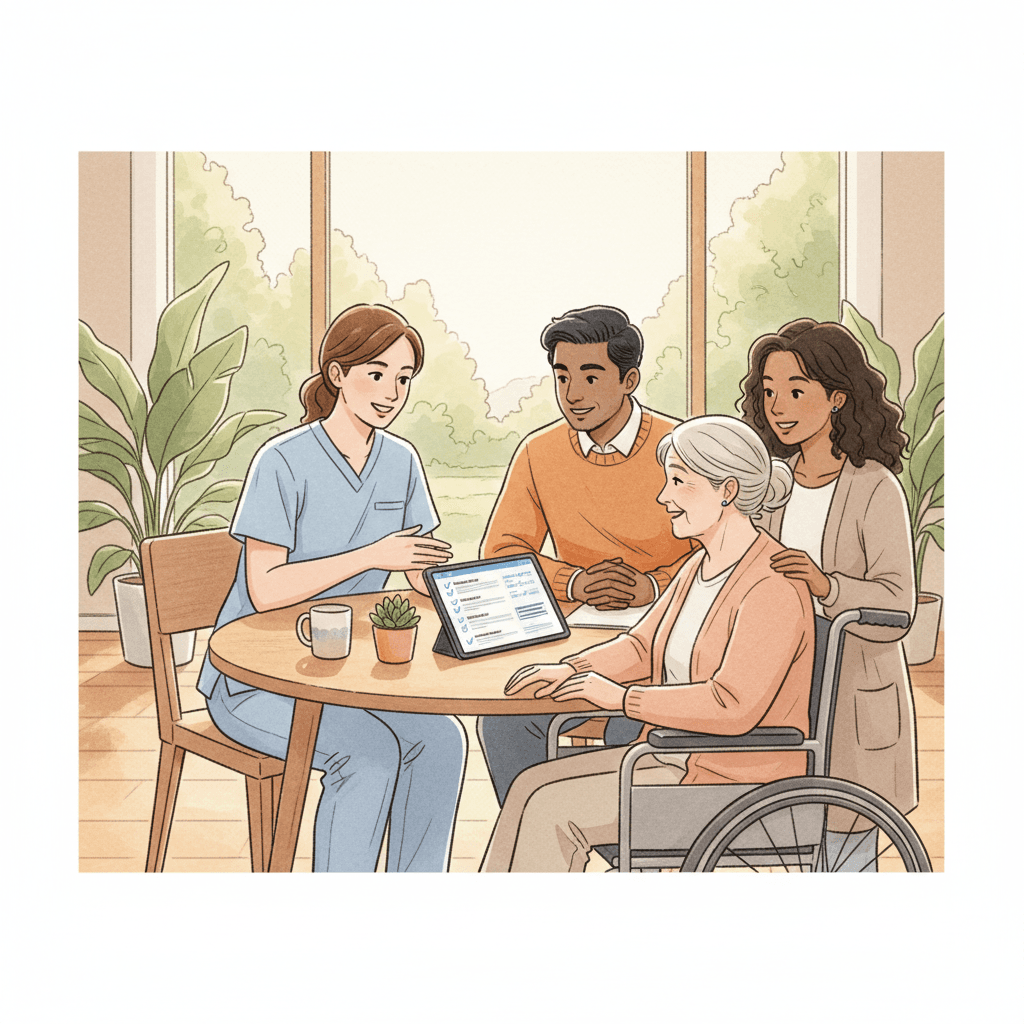
Harmony's clinical documentation module is built around these principles. Structured templates designed with input from registered nurses and certified nursing assistants ensure that required elements are present in every entry. Point-of-care entry is supported across mobile and tablet devices with offline capability, so documentation happens where care happens. Automated quality checks flag incomplete entries, vague language, and overdue follow-ups before the note is finalized. And because documentation data flows directly into Harmony's analytics and reporting tools, the same entries that satisfy regulatory requirements also power the quality improvement dashboards that clinical directors use to track outcomes and identify trends.
The goal is not to generate more documentation. It is to make the documentation that clinical staff already create more useful, more complete, and more defensible — without adding time to an already demanding workflow.
Case Scenario: Cedar Ridge Residential Care
Cedar Ridge is a 48-bed residential care facility in a mid-sized metropolitan area, operating across two units — one general residential care unit and one memory care unit. In early 2025, Cedar Ridge underwent its annual state survey and received deficiency citations in three documentation-related areas: progress notes lacking specificity, inconsistent medication administration documentation for PRN medications, and care plans that had not been updated to reflect documented changes in resident condition.
The facility's documentation compliance score — calculated by their corporate quality team based on a random sample of 50 chart entries per quarter — stood at 62%. The director of nursing, a 15-year veteran of residential care, recognized that the survey findings reflected a systemic problem rather than individual performance failures. The documentation deficiencies were distributed across all shifts and all staff categories, which pointed to a process and culture issue rather than a training gap.
The Intervention
Cedar Ridge implemented a structured six-month documentation improvement initiative with five components.
First, the facility adopted the DAR (Data-Action-Response) format for all progress notes, replacing an unstructured narrative approach that had been in use since the facility opened. All clinical staff attended a two-hour training session with before-and-after examples specific to their resident population.
Second, the facility redesigned its PRN medication documentation workflow to require three fields before a PRN entry could be completed: indication (why the medication was given), time of administration, and a follow-up entry within two hours documenting the resident's response. The documentation system was configured to generate reminders for overdue follow-up entries.
Third, the director of nursing implemented weekly documentation audits using a 10-item checklist aligned with the FACT standard. Five charts were reviewed per week, rotating across all units and shifts. Results were shared in a brief weekly huddle — not as individual performance reports, but as aggregate trends with teaching examples drawn from actual (anonymized) entries.
Fourth, the facility launched a peer review program in which experienced staff members reviewed one chart entry from a colleague each week and provided written feedback. This was positioned as a professional development activity, not a disciplinary mechanism, and participation was recognized in annual performance reviews.
Fifth, Cedar Ridge transitioned from retrospective end-of-shift documentation to point-of-care entry, equipping each unit with three tablet devices and training staff on the mobile documentation workflow.
The Results
At the six-month mark, Cedar Ridge's documentation compliance score had risen from 62% to 94%. Progress note specificity — measured by the presence of measurable observations, documented interventions, and resident response — improved from 48% to 91%. PRN medication documentation completeness (indication plus follow-up) improved from 35% to 88%. Care plan currency — the percentage of care plans updated within seven days of a documented change in condition — improved from 52% to 86%.
Staff feedback was cautiously positive. The most common concern — that structured templates and point-of-care entry would add time — was addressed by time studies showing that average documentation time per shift decreased by 18 minutes after the transition, primarily because structured templates eliminated the time spent composing narrative notes from scratch and point-of-care entry reduced end-of-shift catch-up.
Cedar Ridge's experience is not exceptional. It is representative of what happens when documentation improvement is treated as a system-level intervention rather than an individual training problem. The combination of clear standards (DAR format, FACT criteria), workflow redesign (point-of-care entry, PRN documentation requirements), ongoing feedback (weekly audits, peer review), and visible leadership commitment produces results that single-intervention approaches — such as a one-time training session — consistently fail to achieve.
Building a Documentation Culture
Documentation quality is ultimately a cultural outcome. Policies, templates, and technology create the conditions for good documentation, but the sustaining force is an organizational culture in which clinical staff understand why documentation matters, receive regular feedback on their documentation quality, and see documentation skill recognized and valued alongside clinical skill.
Training That Sticks
Initial documentation training during orientation sets expectations, but it fades quickly without reinforcement. Effective ongoing training is brief, frequent, and grounded in real examples. A 15-minute segment in a monthly staff meeting that reviews one well-documented entry and one poorly documented entry — drawn from actual (anonymized) charts — teaches more than an annual two-hour refresher. The key is making documentation quality visible and specific: not "you need to document better," but "here is what a complete fall documentation looks like, and here is what was missing from this one."
Training should also address the "why" behind documentation requirements. Staff who understand that their documentation protects them personally in litigation, enables the next caregiver to provide safe care, and directly affects the facility's regulatory standing are more motivated than staff who are told simply to "fill out the form." When a nurse understands that the three-sentence note she wrote about a fall could be read aloud in a courtroom two years from now, she writes a different note.
Peer Review
Peer review programs, in which clinical staff review one another's documentation and provide constructive feedback, build documentation skill more effectively than top-down audits. Peer review works because it is reciprocal (the reviewer learns as much as the person reviewed), it normalizes feedback (documentation quality becomes something colleagues discuss openly, not something supervisors critique behind closed doors), and it distributes the workload of quality monitoring across the team.
The critical design element is positioning peer review as professional development, not surveillance. Staff who perceive peer review as punitive will game the system or resist participation. Staff who perceive it as a learning opportunity — especially when peer reviewers are recognized and thanked — engage voluntarily.
Documentation Audits
Routine documentation audits provide the data that drives improvement. Effective audit programs sample charts randomly across all units, shifts, and staff members; use a standardized checklist aligned with the organization's documentation standards; and report results transparently.
Audit results should be trended over time so that improvements are visible and sustained. A facility that tracks its documentation compliance score quarterly and displays it in a staff area communicates that documentation quality is a priority — not just when the survey is approaching, but continuously.
Celebrating Good Documentation
Most organizations are quick to identify documentation failures and slow to recognize documentation excellence. This imbalance sends a clear cultural message: documentation is something you get in trouble for, not something you are valued for. Reversing that message — by recognizing staff who produce consistently excellent documentation in team meetings, performance reviews, or even informal acknowledgments — builds intrinsic motivation.
Some organizations designate a "Documentation Champion" on each unit: a clinician who has demonstrated strong documentation skills and who serves as a resource for colleagues. The champion role provides professional recognition, distributes expertise, and creates a peer-accessible standard of quality that is more influential than policy manuals.
Leadership Visibility
The most powerful driver of documentation culture is leadership behavior. When the director of nursing reads charts routinely and provides specific, constructive feedback — not just during audit season — staff understand that documentation quality is a genuine organizational priority. When clinical directors reference documentation data in quality meetings, staff see that their entries actually inform decisions. When administrators ask about documentation metrics alongside census and satisfaction scores, the entire organization receives the message that documentation is a core competency, not an administrative burden.
Conclusion
Clinical documentation in residential care is not a clerical task. It is a clinical skill that directly affects resident safety, care continuity, legal protection, and organizational performance. The standards outlined in this article — the FACT framework, the DAR progress note format, the documentation requirements for each record type, and the error-correction strategies — are not aspirational. They are the minimum threshold for defensible documentation in a regulatory environment that holds organizations accountable for what the record shows.
The good news is that documentation quality is eminently improvable. The Cedar Ridge scenario illustrates what is achievable in six months with structured standards, workflow redesign, point-of-care technology, ongoing audits, peer review, and leadership commitment. The 62% to 94% trajectory is not unusual. It is the predictable outcome of treating documentation as a system-level discipline rather than an individual compliance obligation.
For clinical directors and directors of nursing reading this article, the starting point is an honest assessment of where your organization stands today. Pull 20 charts at random. Apply the FACT criteria. Score the progress notes against the DAR format. Check whether incident documentation includes follow-up and whether care plans reflect documented changes in condition. The results will tell you exactly where to focus your improvement efforts.
Documentation is not the enemy of direct care. It is the infrastructure that makes direct care safer, more consistent, and more accountable. When clinical staff can document efficiently — with structured templates, at the point of care, with real-time quality feedback — documentation stops competing with care time and starts amplifying it. That is the goal, and it is within reach for every residential care organization willing to invest in the standards, tools, and culture that make it possible.
Frequently Asked Questions
How long should a progress note be?
There is no ideal word count for a progress note. The correct length is whatever it takes to document the data observed, the actions taken, and the resident's response — no more and no less. A routine shift assessment for a clinically stable resident might be four or five sentences. Documentation of a fall with injury, physician notification, diagnostic workup, and care plan revision might require two or three paragraphs. The test is completeness, not length: after reading the note, does the next caregiver have the information needed to continue care without further questions? If yes, the note is long enough. If no, it is incomplete regardless of how many words it contains.
What should we do when staff consistently write vague notes despite training?
Persistent vague documentation after training indicates a system problem, not a knowledge problem. Staff may lack the time for detailed entries, the documentation system may not prompt for specificity, or the organizational culture may not reinforce quality. Address this with structured templates that make vague entries difficult (replace "appetite: good" with required percentage-of-meal fields), real-time quality checks that flag incomplete entries before they are finalized, and a peer review program that provides ongoing feedback. If a small number of individual staff members continue to produce vague documentation despite system-level supports, targeted coaching with specific before-and-after examples is more effective than repeated general training.
Are electronic records legally equivalent to paper records?
In all major residential care jurisdictions — the United States, Canada, the United Kingdom, and Australia — electronic health records are legally equivalent to paper records, provided the system maintains an audit trail showing who created each entry, when it was created, and what (if any) modifications were made. Electronic records with robust audit trails are, in practice, more defensible than paper records because they provide tamper-evident metadata that paper records cannot. The critical requirement is that the electronic system prevents unauthorized alteration of completed entries and maintains a complete history of any amendments, including the original text, the amended text, the identity of the person making the amendment, and the date and time of the amendment.
How often should we audit documentation quality?
For organizations launching a documentation improvement initiative, weekly audits of a small sample (five to ten charts) provide the rapid feedback cycle needed to drive change. As documentation quality stabilizes above 85% compliance, the frequency can be reduced to biweekly or monthly without losing momentum. The key is consistency: an audit program that runs every week for three months and then stops sends the message that documentation quality is a temporary project, not an ongoing standard. Sustained improvement requires sustained monitoring, even if the sample size and frequency decrease over time.
Can AI write clinical documentation for us?
AI tools can assist with documentation — for example, by suggesting structured entries based on voice input, flagging incomplete notes, or pre-populating fields from prior assessments. However, the clinical responsibility for documentation accuracy rests with the licensed clinician who signs the entry. AI-generated text must be reviewed and verified by the documenting clinician before it becomes part of the medical record. No current AI system can replace the clinical judgment required to determine what is clinically significant, what context is relevant, and how the resident's current status relates to their longitudinal care trajectory. Think of AI as a documentation assistant that reduces keystrokes and enforces structure — not as a replacement for the clinician's professional judgment and accountability.