Key Takeaways
- Not all eMAR systems are built for residential care — many are downsized hospital products that assume a nurse-to-patient ratio, stationary workstations, and reliable internet connectivity that do not exist in group homes or assisted living communities.
- The seven core capabilities that any eMAR must deliver without workarounds are medication scheduling, administration recording, drug interaction checking, narcotic counting, PRN tracking with effectiveness documentation, refusal capture, and delegation management.
- Offline capability is not a convenience feature — it is a safety requirement, because a medication pass that cannot proceed due to a connectivity drop is a medication pass where errors happen on paper and never make it back into the system.
- Pharmacy integration is the single highest-value integration point for an eMAR, and the difference between automated bidirectional integration and manual order entry determines whether the system reduces transcription errors or simply digitizes them.
- Compliance requirements for medication documentation vary significantly across jurisdictions — a system that satisfies DEA requirements for controlled substance documentation in the United States may not meet the equivalent standards under Canadian provincial pharmacy acts, UK NICE guidelines, or Australian PBS requirements.
- The best way to evaluate an eMAR is not to watch a demo — it is to run a simulated medication pass using your own formulary data, your own resident profiles, and your own staffing model, and observe where the system creates friction versus where it removes it.
Introduction
There is a moment during every medication pass that reveals whether an eMAR system was built for the setting where it is being used. It happens at 6:00 AM in a six-bed group home, when a single medication technician is responsible for administering 14 scheduled medications to six residents before breakfast, three of whom have medications that must be given 30 minutes before food, one of whom is still asleep and will need a second attempt, and one of whom takes a controlled substance that requires a count verification before the blister pack is opened. In that moment, the system is either an ally — guiding the tech through the right medications for the right resident at the right time, flagging the narcotic count, queuing the follow-up for the sleeping resident — or it is an obstacle, requiring clicks through screens designed for a hospital nurse managing two patients from a stationary computer mounted on a medication cart with continuous Wi-Fi.
Not all electronic medication administration record systems are equal. The term "eMAR" covers a wide range of products, from purpose-built residential care platforms to hospital medication management modules that have been repackaged for the long-term care market with minimal adaptation. The differences between these products are not cosmetic. They show up in the workflow — how many taps it takes to document an administration, whether the system works when the internet drops, whether a PRN medication can be documented with its indication and effectiveness follow-up in a single flow, whether the delegation model reflects the reality that in many residential settings, unlicensed staff administer medications under the authority of a licensed nurse who may not be physically present.
These differences compound. A system that adds 15 seconds of unnecessary friction per administration adds more than 20 minutes per shift in a home where 80 medications are administered daily. Over a year, across 10 homes, that is more than 1,200 hours of staff time consumed by a poorly designed interface — time that could have been spent with residents. More critically, friction creates workarounds. When a system is difficult to use in the moment, staff default to documenting after the pass from memory, or they write on paper and enter later, or they skip optional fields like PRN effectiveness tracking. Each of those workarounds introduces a gap between what happened and what the record shows. And in medication management, gaps between reality and the record are where errors live.
This article is a comprehensive evaluation guide for residential care providers — clinical directors, operations leaders, IT directors, and pharmacy consultants — who are selecting or replacing an eMAR system. It covers what an eMAR must do at minimum, the features that separate adequate systems from excellent ones, the integration requirements that determine whether the eMAR reduces work or merely relocates it, the compliance considerations that vary across jurisdictions, and a practical approach to evaluating vendors that goes beyond watching a polished demo. The goal is to help you ask the right questions, test the right scenarios, and make a decision that improves medication safety rather than one that simply moves your paper MAR onto a screen.
What an eMAR Must Do
Before evaluating advanced features, establish a clear understanding of the baseline capabilities that any eMAR must deliver reliably, without workarounds, and without requiring staff to compensate for system limitations. These are not differentiators — they are prerequisites. An eMAR that fails to deliver any one of these core capabilities will create more problems than it solves, regardless of what else it offers.
Medication Scheduling
The system must maintain a complete, current medication schedule for every resident, reflecting all active orders including scheduled medications, PRN medications, time-critical medications, and short-course treatments. The schedule must display clearly which medications are due, which are overdue, which have been administered, and which require follow-up. It must handle complex scheduling patterns — medications given every other day, medications given on specific days of the week, medications with titration schedules, medications that must be separated from other medications by a specified interval, and medications that must be administered relative to meals rather than at fixed clock times.
Why this matters: A medication schedule that cannot represent the actual complexity of a residential care formulary forces staff to maintain mental or paper-based supplements to the electronic record. The moment staff are consulting a paper note taped to the medication cart to remember that Mrs. Patterson's levothyroxine needs to be given 60 minutes before her other morning medications, the eMAR has failed its most basic function.
Administration Recording
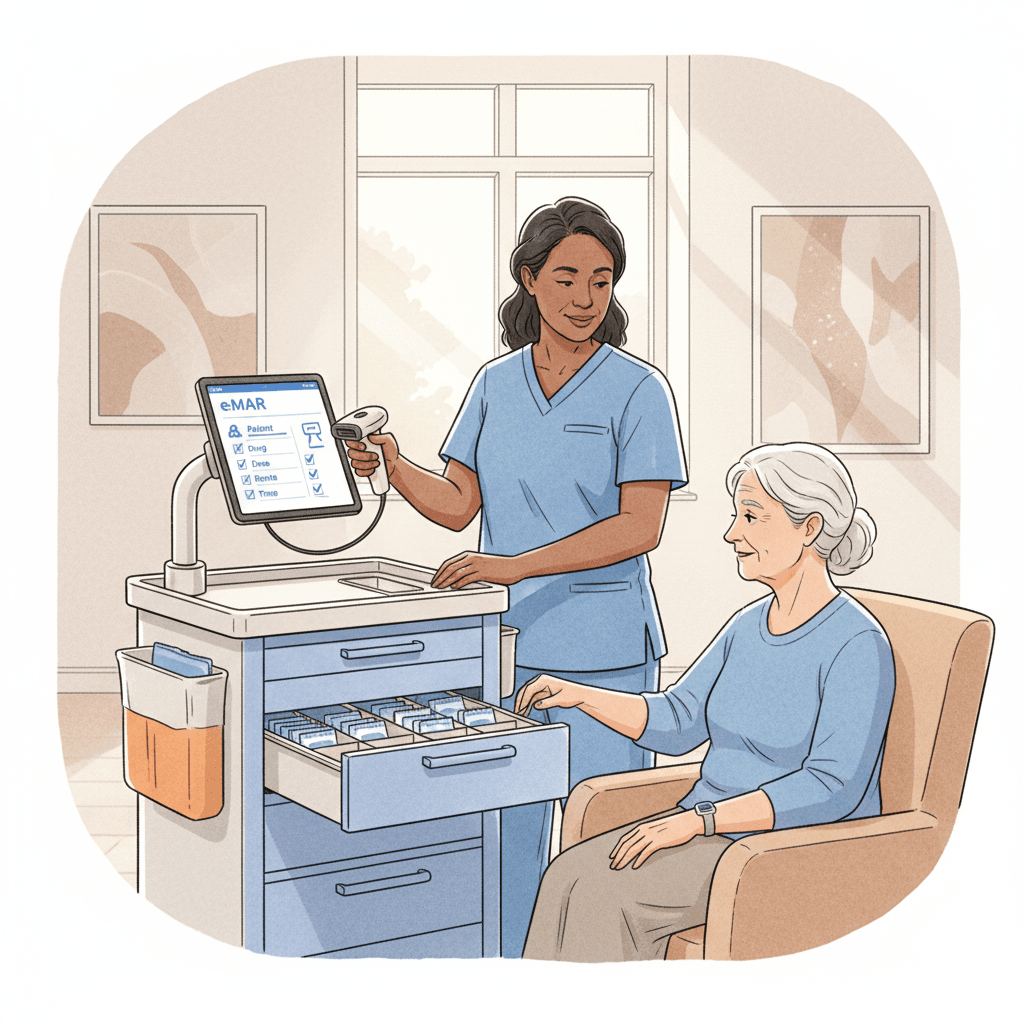
Every medication administration must be recorded with the medication name, dose, route, time of administration, and the identity of the person who administered it. The recording process must be fast enough to be completed at the point of administration — not retrospectively. The system must support barcode scanning of medications and resident identification where barcoded systems are in use, but must not require barcode scanning as the only method of verification, because many residential settings use blister-packed medications that may not carry individual barcodes.
Why this matters: If the administration recording workflow is too slow or too cumbersome to complete during the medication pass, staff will batch-enter administrations after the pass is complete. Retrospective batch entry eliminates the most important safety function of the eMAR — real-time verification that the right medication is being given to the right resident at the right time. An eMAR that staff do not use in real time is not an eMAR. It is a digital transcription tool.
Drug Interaction Checking
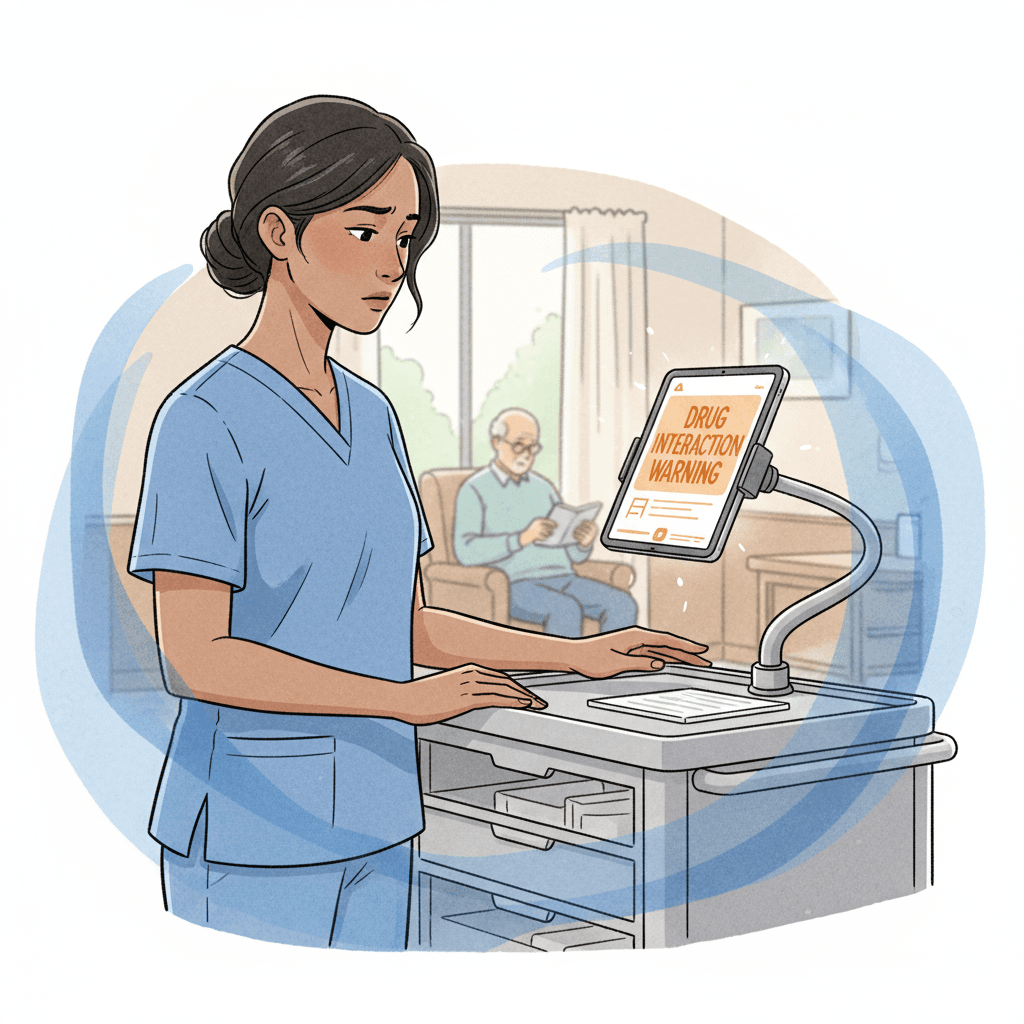
The system must check for clinically significant drug-drug interactions, drug-allergy contraindications, and therapeutic duplications at the point of order entry and at the point of administration. Interaction alerts must be clinically calibrated — a system that alerts on every theoretical interaction, including interactions of no clinical significance, will produce alert fatigue that causes staff to dismiss all alerts, including the ones that matter. The system should allow a pharmacist or clinical authority to configure alert severity thresholds appropriate to the residential care setting.
Why this matters: Drug interaction checking is one of the primary safety advantages an eMAR has over a paper MAR. A paper record cannot alert a medication technician that the newly ordered clarithromycin interacts with the resident's existing simvastatin. An eMAR can — but only if the interaction database is current, the alerts are calibrated to avoid noise, and the system is designed to present alerts at the right moment in the workflow rather than burying them in a log that no one reads.
Narcotic and Controlled Substance Counts
The system must support perpetual inventory counts for all controlled substances, with count verification at shift change and before each administration. It must record the count, the administering staff member, and the witnessing staff member (where dual-signature is required by regulation or policy). Discrepancies must trigger immediate alerts to the supervising nurse and generate an audit trail that can be produced for regulatory review. The system must support the documentation of wasting — partial doses administered with the remainder destroyed — including the identity of the witness to the waste.
Why this matters: Controlled substance management is one of the highest-risk areas in residential medication administration, both from a patient safety perspective and from a regulatory enforcement perspective. A DEA audit, a state pharmacy board investigation, or a provincial inspection that finds gaps in controlled substance documentation can result in sanctions, fines, and loss of dispensing authority. Paper-based narcotic count sheets are the most common source of discrepancies because they rely on manual arithmetic, are susceptible to transcription errors, and provide no real-time visibility into count status.
PRN Tracking
PRN (as-needed) medications require a documentation workflow that captures the indication — why the medication was given — the time of administration, and a follow-up effectiveness assessment within a clinically appropriate timeframe. The system must prompt for the effectiveness follow-up and make it visible to the administering staff member and the supervising nurse. It should support trending of PRN usage over time — how often a specific PRN medication is being administered, for what indications, and with what reported effectiveness — to support care plan review and prescriber communication.
Why this matters: PRN documentation is the most commonly deficient area in medication administration records across all residential care settings. Surveyors and auditors consistently flag two patterns: PRN medications documented without an indication (making it impossible to determine whether the administration was clinically appropriate) and PRN medications without effectiveness follow-up (making it impossible to determine whether the medication achieved its purpose). Both patterns raise questions about the quality of clinical decision-making.
Refusal Documentation
When a resident refuses a medication, the system must capture the refusal, the reason given (if any), the interventions attempted (re-approach, education, alternative form offered), the notification chain (supervising nurse, prescriber as required by policy), and any follow-up actions. Refusal documentation must be clearly distinguished from omission — a refusal is a clinical event that triggers specific follow-up obligations, while an omission due to medication unavailability or staff error is a different event with different implications.
Why this matters: In residential care, particularly in settings serving residents with cognitive impairment or behavioral health conditions, medication refusals are common. A resident with dementia who refuses morning medications three days in a row is communicating something that requires clinical assessment — it may be dysphagia, it may be a side effect, it may be a change in cognitive status that affects the ability to understand the purpose of the medication. An eMAR that treats a refusal as a checkbox rather than a clinical event misses the signal that should trigger a care plan review.
Delegation Management
In many residential care settings, medications are administered by unlicensed staff — medication technicians, medication aides, or direct support professionals — operating under the delegation authority of a licensed nurse. The eMAR must reflect this delegation model. It must track which staff members hold current delegation authority, which medications they are authorized to administer (some jurisdictions restrict delegation for certain medication types, routes, or controlled substance schedules), and which nurse has delegated that authority. The system must prevent administration by staff whose delegation has expired or who are not authorized for the specific medication or route.
Why this matters: Delegation compliance is a high-stakes regulatory requirement. A medication administered by a staff member without valid delegation authority is, in regulatory terms, a medication administered by an unauthorized person — regardless of whether the medication was the right drug, the right dose, and the right resident. An eMAR that does not enforce delegation rules at the point of administration leaves the organization exposed to a compliance violation that is entirely preventable through system design.
12 Features That Separate Good eMARs from Great Ones
The core capabilities described above are table stakes. Every eMAR on the market will claim to offer them. The features described in this section are where meaningful differentiation occurs — where the design decisions made by the vendor reveal whether they understand residential care or whether they are applying a generic medication management framework to a setting they have not deeply studied.
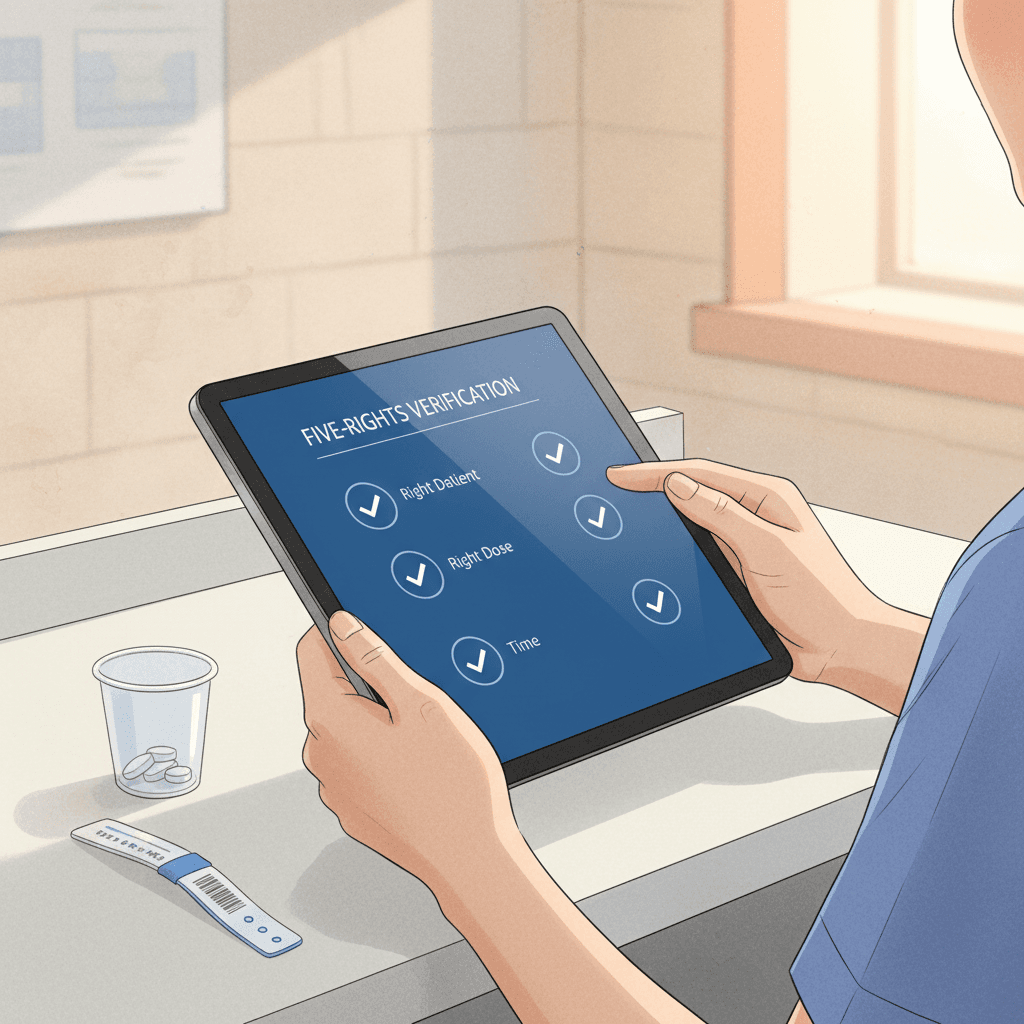
1. Five-Rights Verification
A great eMAR enforces the five rights of medication administration — right patient, right medication, right dose, right route, right time — through the workflow itself, not through a checklist that staff must mentally apply. This means the system verifies resident identity (through barcode, photo match, or explicit confirmation), confirms the medication against the active order, validates the dose, confirms the route, and checks administration time against the scheduling window. Verification should be woven into the natural flow of administration, not presented as an additional step that interrupts the pass. The distinction matters: systems that treat five-rights verification as a pop-up confirmation dialog train staff to click through it without reading. Systems that embed verification into each step of the workflow make verification the default behavior rather than an interruption to dismiss.
2. Offline Capability
Residential care settings are not hospitals. Group homes are residential properties, often in neighborhoods where internet service is provided by consumer-grade ISPs with no uptime guarantees. Assisted living communities may have Wi-Fi dead zones in medication rooms, storage areas, or resident rooms. Rural facilities may operate with satellite internet that drops during storms. A great eMAR must function fully offline — allowing staff to view schedules, document administrations, record narcotic counts, capture refusals, and document PRN indications without an active internet connection. When connectivity is restored, the system must synchronize seamlessly, resolving any conflicts (such as a medication order change received during the offline period) and alerting staff to changes that occurred while they were disconnected.
Offline capability is not a convenience feature. It is a safety requirement. When a medication pass cannot proceed because the eMAR displays an error screen or a loading spinner, staff face a choice: delay the medication pass (risking late or missed doses) or revert to paper documentation (introducing transcription errors, bypassing safety checks, and creating records that may never be entered into the system). Neither option is acceptable. An eMAR that requires continuous internet connectivity to function is an eMAR designed for an environment that does not exist in most residential care settings.
3. Photo Verification for Look-Alike Drugs
Medication errors involving look-alike, sound-alike (LASA) drugs are a persistent safety concern in residential care, where medications are often dispensed in blister packs or multi-dose packaging that can make visual differentiation difficult. A great eMAR includes a photo reference for each medication — showing the actual appearance of the pill, capsule, or liquid — that staff can consult during administration to verify that the medication in hand matches the medication on screen. This feature is especially valuable when pharmacies change generic manufacturers (which can change the color, shape, and markings of a medication without changing its name or dose), when new staff are unfamiliar with the formulary, and when residents take multiple medications with similar appearances.
4. PRN Effectiveness Tracking
Beyond the basic PRN documentation requirements described earlier, a great eMAR supports structured effectiveness tracking that produces clinically useful data. This means allowing staff to rate effectiveness on a standardized scale (rather than free text), tracking effectiveness over time to identify patterns (is this PRN analgesic consistently rated as ineffective?), and surfacing effectiveness data during care plan reviews and prescriber communications. A system that collects PRN effectiveness data but buries it in individual administration records without aggregation provides minimal clinical value. A system that trends the data and presents it to nurses and prescribers during review cycles transforms PRN documentation from a compliance exercise into a clinical decision-support tool.
5. Controlled Substance Dual-Signature Workflow
For controlled substances requiring witness verification, a great eMAR provides a streamlined dual-signature workflow that captures both the administering staff member and the witness in a single transaction. This workflow must support the count verification (count before administration, count after administration, calculated expected count), the witness confirmation (the witness attests to observing the administration or waste), and the documentation of any discrepancy. The workflow should be designed so that it can be completed at the medication storage location during the administration, not as a retrospective entry that requires the witness to log in later and confirm an event they may no longer clearly remember.
6. Automated Pharmacy Integration
Pharmacy integration is the single highest-value integration point for an eMAR, and the quality of this integration is the single most impactful variable in determining whether the eMAR reduces medication errors or merely changes their format from handwriting to typing. A great eMAR receives new orders, order changes, and discontinuations directly from the pharmacy system in real time, updates the medication schedule automatically, and presents changes to the supervising nurse for review and acknowledgment before they take effect. This eliminates the transcription step — the manual entry of a new order from a faxed or called-in prescription — which is one of the most error-prone points in the residential medication management process. When a prescriber changes Mrs. Chen's metoprolol from 25 mg twice daily to 50 mg twice daily, that change should appear in the eMAR within minutes of the pharmacy processing it, flagged for nurse review, and reflected in the next scheduled administration — without anyone retyping the order.
The inverse is equally important: the eMAR should transmit administration data, refusal data, and PRN usage data back to the pharmacy, enabling the dispensing pharmacist to identify patterns (a resident consistently refusing a medication, a PRN medication used daily that might warrant scheduled dosing) that inform pharmacy clinical review.
7. Delegation Workflow (Loi 90 Compliant)
In jurisdictions with formal delegation frameworks — including Canadian provinces governed by legislation such as Quebec's Loi 90, which establishes the scope of practice for various healthcare professionals and the conditions under which clinical activities may be delegated — the eMAR must support a delegation workflow that reflects the legal requirements. This includes formal delegation authorization from the delegating nurse, defined scope of delegation (which medications, which routes, which conditions), expiration dates on delegation authority, competency verification documentation linked to the delegation record, and automatic enforcement that prevents an unauthorized staff member from recording an administration. A great eMAR does not simply track whether a staff member "has" delegation — it tracks the full chain: who delegated, when, for what scope, under what conditions, with what competency evidence, and when the delegation expires or must be renewed.
8. Medication Change Audit Trail
Every change to a medication order — new orders, dose changes, frequency changes, discontinuations, holds, and reinstatements — must be captured in an immutable audit trail that records what changed, when it changed, who authorized the change, who entered the change in the system, and the previous value. A great eMAR presents this audit trail in a format that a surveyor can review efficiently: a chronological medication history for each resident showing the complete lifecycle of every medication from initial order through every modification to discontinuation. This audit trail must be tamper-evident — no user, including administrators, should be able to delete or modify historical records. Late entries and corrections must be clearly marked as such, with the original entry preserved.
9. Time-Critical Medication Alerts
Not all medications have equal scheduling flexibility. Some medications — such as insulin, certain antibiotics, and anticonvulsants — are time-critical, meaning that early or late administration can have significant clinical consequences. A great eMAR distinguishes between medications with standard scheduling windows (administration within 1 to 2 hours of scheduled time is acceptable) and time-critical medications (administration must occur within a narrow window, typically 30 minutes). Time-critical medications should generate escalating alerts as the administration window approaches and closes: a reminder when the window opens, a warning when half the window has elapsed, and an escalation to the supervising nurse when the window closes without documented administration.
10. Mobile-First Design for Medication Carts and Med Passes
The medication pass in residential care is a mobile activity. Staff move from room to room, from medication storage to resident bedside, carrying medications and a device. A great eMAR is designed for this workflow: large touch targets that can be operated with one hand, a display optimized for the screen size of a standard tablet or large smartphone, minimal scrolling, logical screen-to-screen flow that mirrors the physical sequence of the medication pass (select resident, view medications due, verify, administer, document, move to next resident), and quick switching between residents without losing context. Systems designed for desktop use and adapted for mobile — identifiable by small text, hover-dependent interactions, deep menu hierarchies, and workflows that require pinch-zooming — are not mobile-first. They are desktop systems rendered on a smaller screen, and the difference shows up in every medication pass.
11. Family Notification for Medication Changes
In residential care, families are active participants in care decisions, and medication changes are among the events that families most want to know about. A great eMAR includes an automated notification capability that alerts designated family members when a medication is added, changed, or discontinued — with appropriate privacy controls and configurable notification preferences. This feature reduces incoming calls from family members asking "what medications is my mother taking now?", reduces the burden on nursing staff who would otherwise need to make those calls manually, and creates a documented record that the family was informed of the change.
12. Regulatory Report Generation
Every jurisdiction requires some form of medication-related reporting — controlled substance logs for DEA inspections, medication error reports for state pharmacy boards, medication administration summaries for survey preparation, and pharmacy consultation documentation for regulatory compliance. A great eMAR generates these reports from the data already captured during normal operations, without requiring staff to compile information manually. The reports should be pre-formatted to match the expectations of the specific regulatory body, not generic exports that require manual formatting. A system that captures all the required data but cannot produce it in the format a surveyor expects has solved only half the problem.
Integration Requirements
An eMAR does not operate in isolation. It is one component in a technology ecosystem that includes pharmacy systems, electronic health records, clinical documentation platforms, incident reporting systems, and laboratory information systems. The value of the eMAR is significantly determined by how well it connects to these adjacent systems, because every manual data transfer between systems is an opportunity for error, delay, and lost information.
Pharmacy System Integration
This is the most critical integration. The eMAR must exchange data with the dispensing pharmacy in both directions. Inbound data includes new medication orders, order modifications, discontinuations, and formulary updates. Outbound data includes administration records, refusal documentation, PRN usage patterns, and controlled substance count data. The integration should use a standard protocol — HL7v2, HL7 FHIR, or NCPDP SCRIPT — and should operate in real time or near-real time. Batch file transfers processed once or twice daily create windows during which the eMAR and the pharmacy system are out of synchronization, and during those windows, staff may be working from an outdated medication schedule.
Evaluate whether the eMAR vendor has a production integration with your specific pharmacy provider. "We support pharmacy integration" is not the same as "we have a live, bidirectional integration with PharMerica that is currently operating at 200 customer sites." Ask for reference customers who use the same pharmacy and can speak to the reliability and completeness of the integration.
EHR Connectivity
If your organization uses an electronic health record for clinical documentation, the eMAR should share data with that system. At minimum, medication administration data from the eMAR should be visible in the resident's EHR record without requiring manual duplication. Ideally, the integration is bidirectional: the EHR sends allergy and diagnosis information to the eMAR (to support interaction checking and clinical decision support), and the eMAR sends administration data to the EHR (to support a complete clinical record). In organizations where the eMAR is a module within the EHR rather than a standalone system, this integration is inherent — but evaluate whether the medication module within the EHR meets the residential care-specific requirements described in this article, because many EHR medication modules are designed for acute care and lack the features residential care demands.
Clinical Documentation Integration
Medication administration does not happen in a clinical vacuum. A resident's medication record should be connected to their clinical documentation — progress notes, nursing assessments, care plans, and physician orders. When a nurse documents a change in a resident's pain level in a progress note, that documentation should inform the PRN medication analysis. When a PRN pain medication is administered, the effectiveness follow-up should be visible alongside the clinical documentation for that resident's pain management care plan. Systems that silo medication data from clinical documentation force clinicians to context-switch between applications to assemble a complete clinical picture, which is both inefficient and error-prone.
Incident Reporting Integration
Medication errors are incidents. When a medication error occurs — wrong drug, wrong dose, wrong time, wrong resident, or omission — the documentation of that error should flow from the eMAR into the incident reporting system without requiring the staff member to re-enter the same information in a different application. The incident report should automatically populate with the relevant medication data: what was ordered, what was administered, the time discrepancy, and the resident's information. This integration reduces reporting burden (which improves reporting rates — staff are more likely to report errors when reporting is easy) and ensures accuracy (the incident report reflects the actual eMAR data rather than a staff member's recollection of it).
Laboratory Results
For medications that require laboratory monitoring — warfarin with INR levels, lithium with serum lithium levels, metformin with renal function tests — the eMAR should be able to receive and display relevant lab results. When a resident's INR is above the therapeutic range, that information should be visible during the warfarin administration workflow, alerting the administering staff member and the supervising nurse that the prescriber may need to adjust the dose. This integration is technically more complex than pharmacy integration and is less commonly available in residential care eMAR systems, but it represents a significant safety advantage for organizations whose residents take high-risk medications requiring laboratory monitoring.
Compliance Across Jurisdictions
Medication administration documentation is regulated at the federal, state or provincial, and sometimes local level, and the specific requirements vary significantly across jurisdictions. An eMAR system that satisfies the regulatory requirements in one jurisdiction may not satisfy them in another, and organizations that operate across multiple jurisdictions — or that are evaluating eMAR systems developed in a different country — must verify that the system supports their specific compliance obligations.
United States
In the United States, medication administration in residential care is regulated through a combination of federal requirements (CMS Conditions of Participation, DEA controlled substance regulations) and state-specific requirements (state pharmacy practice acts, state nursing delegation rules, state-specific documentation standards). The DEA requires that all controlled substance administrations be documented with the administering individual, the date, the time, the dose administered, and the balance remaining. Many states require additional documentation elements — California, for example, requires that the licensed nurse who delegated medication administration authority to unlicensed staff review and co-sign the eMAR at specified intervals. State pharmacy boards set requirements for how medication orders are received, verified, and documented, and some states require that eMAR systems meet specific technical standards for data integrity, audit trails, and electronic signature validity.
When evaluating an eMAR for use in the United States, verify that the system meets the controlled substance documentation requirements of the DEA, the specific documentation requirements of each state in which you operate, and the electronic signature requirements applicable in your jurisdiction (many states have adopted ESIGN Act standards, but some have additional requirements for healthcare documentation).
Canada
Canadian provinces regulate medication administration through provincial pharmacy acts, nursing regulatory bodies, and health authority standards. Requirements vary meaningfully between provinces. In Quebec, Loi 90 establishes a detailed framework for the delegation of clinical activities, including medication administration, that directly affects what the eMAR must capture about delegation authority. In Ontario, the Personal Health Information Protection Act (PHIPA) imposes data handling requirements that affect how eMAR data is stored, accessed, and transmitted. In British Columbia, the Pharmacy Operations and Drug Scheduling Act sets specific requirements for controlled substance documentation that differ from those in Alberta under the Pharmacy and Drug Act.
For Canadian organizations, verify that the eMAR supports the delegation documentation requirements of your provincial nursing regulatory body, the controlled substance documentation requirements of your provincial pharmacy act, and the privacy and data handling requirements of your provincial health information legislation.
United Kingdom
In England, medication administration in care homes is guided by NICE guidelines (specifically NG67, Managing medicines in care homes) and regulated by the Care Quality Commission (CQC). NICE guidelines specify that care homes should maintain a record of all medications administered, refused, or omitted, including the reason for any refusal or omission, and that controlled drug registers must be maintained in accordance with the Misuse of Drugs Regulations 2001. The CQC evaluates medication management as part of its inspection framework, with specific attention to whether the home has a system for recording medication administration that is accurate, up to date, and auditable. In Scotland, Wales, and Northern Ireland, the regulatory bodies and guidelines differ, and organizations operating across UK nations must verify compliance with each.
Australia
Australian residential aged care providers must comply with the Aged Care Quality Standards (Standard 3 covers personal care and clinical care, including medication management) and the requirements of the Pharmaceutical Benefits Scheme (PBS) for subsidized medications. The Aged Care Quality and Safety Commission evaluates whether medication management systems support accurate prescribing, dispensing, and administration. The National Residential Medication Chart (NRMC) provides a standard format for medication orders that eMAR systems in Australia should align with. Additionally, the Australian Digital Health Agency's standards for electronic medication management set technical requirements for interoperability, data integrity, and clinical decision support that eMAR systems should meet.
Evaluating eMAR Vendors
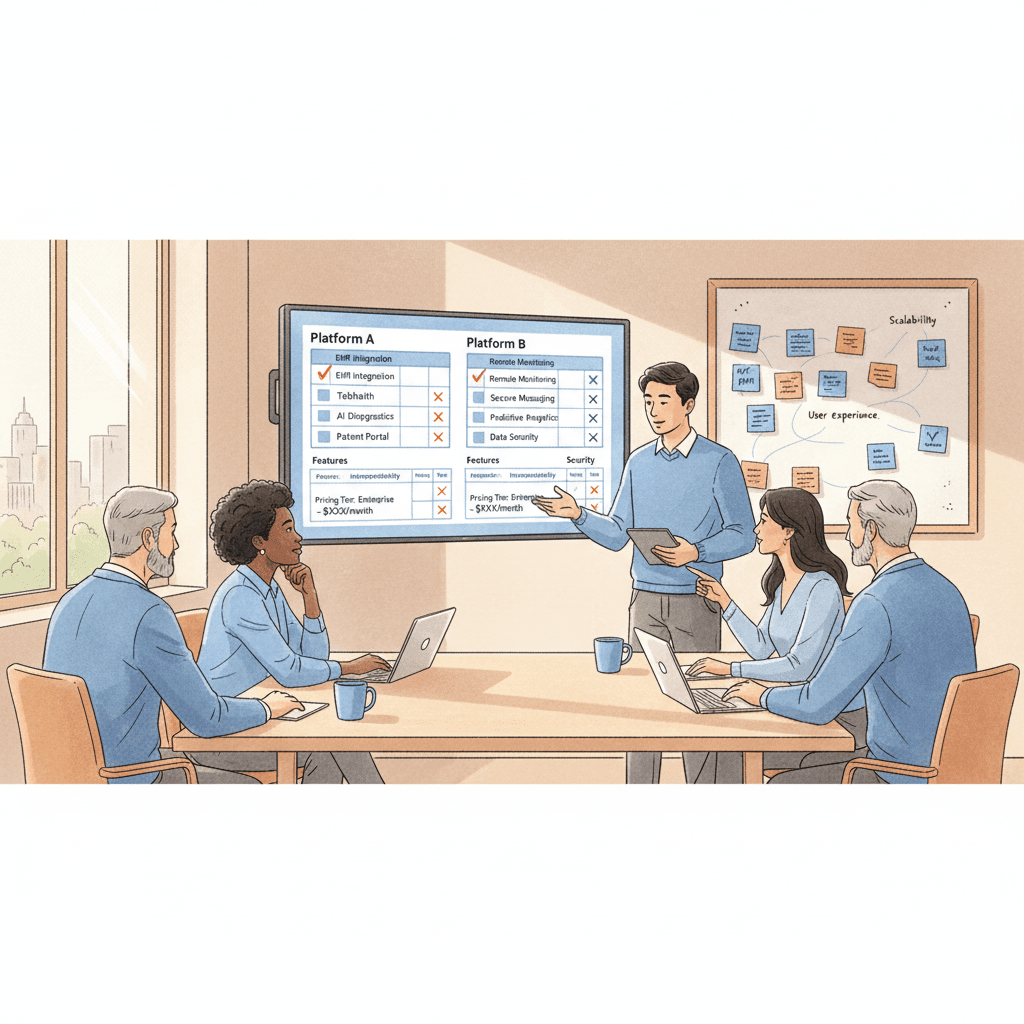
The most revealing evaluation of an eMAR system is not a vendor-led demo. It is a structured scenario-based assessment in which you present the vendor with realistic clinical situations drawn from your own operations and observe how the system handles them. The vendor's polished demo environment — with perfectly formatted data, ideal network conditions, and a presenter who knows exactly where every button is — tells you what the system can look like. A scenario-based evaluation tells you what the system will feel like at 6:00 AM in a six-bed group home with one medication technician, inconsistent Wi-Fi, and a resident who is refusing their morning medications.
Run a Simulated Medication Pass
Ask the vendor to configure the demo environment with a set of resident profiles that reflect your actual population — residents with 8 to 15 medications each, including scheduled medications at multiple times of day, PRN medications, time-critical medications, and at least one controlled substance. Then ask a member of your staff — not the vendor's sales engineer — to walk through a complete medication pass for three residents. Observe the workflow. Count the taps. Note where the staff member hesitates, where the system provides guidance, and where the system creates confusion. Time the pass. Then compare that time to how long the same pass takes on your current system (paper or electronic). If the eMAR is slower than your current workflow for routine administrations, adoption will be a struggle regardless of the system's other capabilities.
Test the Narcotic Count
During the simulated medication pass, include a controlled substance administration that requires a count verification and witness signature. Observe whether the count workflow is integrated into the administration flow or requires switching to a separate module. Observe whether the witness can confirm in real time (biometric, PIN, or separate login) or must go back to a separate workstation. Then introduce a discrepancy — the count does not match the expected balance. Observe what the system does. Does it alert immediately? Does it require documentation of the discrepancy before allowing the user to proceed? Does it notify the supervising nurse? Does it generate an audit trail entry? A system's handling of controlled substance discrepancies reveals more about its design philosophy than any feature checklist.
Process a Medication Change
During the demo, simulate a mid-shift medication change: a prescriber increases the dose of a resident's scheduled medication. Observe the full workflow from order receipt to schedule update to the next administration of the changed medication. If pharmacy integration is in place, the order should arrive in the eMAR automatically. If not, observe the manual order entry process — how long it takes, how many fields are required, and whether the system validates the new order against the existing medication profile for interactions and duplications. Then observe how the change appears to the medication technician at the next scheduled administration. Is the dose change visible? Is it highlighted? Does the system require acknowledgment before allowing administration of the changed dose? A system that quietly changes a dose without alerting the administering staff member is a system that prioritizes data accuracy over clinical safety.
Document a Refusal
Ask the demo to walk through a medication refusal scenario. The resident refuses their morning medications. Observe what the system captures: the fact of refusal, the reason (if given), the interventions attempted, the notification to the supervising nurse, and the plan for re-approach. Then observe what happens downstream. Is the refusal visible in the shift summary? Does it appear in the report to the prescriber? Can a nurse reviewing the MAR at the end of the shift quickly identify which residents refused medications and whether follow-up occurred? A refusal that disappears into a single field in the administration record, invisible unless someone clicks into the individual dose entry, is a refusal that will not receive the clinical attention it requires.
Additional Demo Checklist Items
Beyond the four core scenarios, evaluate the following during the demo:
- Offline mode: Ask the vendor to disconnect from the internet and demonstrate a complete medication pass. Observe what functionality is available offline and how synchronization works when connectivity is restored.
- Report generation: Ask the vendor to generate a controlled substance log for a 30-day period, a medication error summary, and a MAR summary for a single resident. Observe how long the reports take to generate and whether their format matches what your surveyors expect to see.
- User management: Ask the vendor to demonstrate adding a new medication technician to the system, assigning delegation authority, and removing access for a terminated employee. Observe the number of steps required and whether the delegation workflow matches your jurisdiction's requirements.
- Alert configuration: Ask the vendor to show how alert thresholds are configured — who can adjust them, what options are available, and whether alert settings can differ by facility (to accommodate different formularies and clinical practices across sites).
Case Scenario: Willow Creek Assisted Living
Willow Creek Assisted Living is a 48-bed assisted living community in the suburbs of Portland, Oregon. The facility serves a mixed population: approximately 60% of residents have a primary diagnosis of dementia, 25% are admitted for physical rehabilitation or chronic disease management, and 15% have both cognitive and significant medical needs. The average resident takes 11 medications, and the community administers approximately 520 scheduled medication doses per day across three medication passes (morning, midday, and evening), plus an average of 30 PRN administrations.
For eight years, Willow Creek documented medication administration on paper MARs. The system was familiar, and the staff had developed workarounds for its limitations — colored sticky notes on the MAR binder to flag narcotic count discrepancies, a handwritten log on the medication room whiteboard for pending pharmacy orders, and a verbal report system at shift change to communicate medication refusals that the incoming shift needed to follow up on. The system worked, in the sense that it had not produced a catastrophic error. But it was held together by institutional knowledge that lived in the heads of experienced staff members, not in the record itself.
The tipping point came during a state survey. The surveyor asked to see all PRN pain medication administrations for three residents over a 90-day period, with documentation of indications and effectiveness assessments. Assembling that data from paper MARs took the director of nursing four hours. The data, when assembled, revealed that effectiveness assessments had been documented for only 38% of PRN pain medication administrations — not because staff were not assessing effectiveness, but because the paper MAR provided no prompt, no structured field, and no follow-up reminder. The survey resulted in a deficiency that required a corrective action plan.
Willow Creek began evaluating eMAR systems the following month. They evaluated four products over a 10-week period using the scenario-based approach described in this article. Two of the four products were immediately eliminated: one could not function offline (Willow Creek's medication room has intermittent Wi-Fi), and the other required a desktop workstation for controlled substance counts (Willow Creek uses a medication cart that moves between resident rooms). The remaining two products were both capable, but differed in pharmacy integration: one had a live, bidirectional integration with Willow Creek's pharmacy provider, while the other required manual order entry with a planned integration "on the roadmap." Willow Creek selected the system with the existing pharmacy integration.
Six months after implementation, Willow Creek's PRN effectiveness assessment documentation rate had increased from 38% to 94% — not because staff became more diligent, but because the system prompted for effectiveness assessment at the clinically appropriate interval after each PRN administration and did not allow the documentation to be marked complete until the assessment was entered. Controlled substance discrepancies dropped from an average of 2.3 per month to 0.4 per month, because the perpetual inventory system caught count errors immediately rather than at the next shift-change count. And the director of nursing reported that preparing medication documentation for the next survey took 20 minutes instead of four hours.
Implementation Tips
Selecting the right eMAR is the first decision. Implementing it successfully is the second, and the second is where many organizations stumble. The following implementation practices are drawn from the experience of residential care organizations that have completed eMAR transitions, and they address the most common points of failure.
Run Parallel Documentation During Transition
Do not cut over from paper to electronic on a single date with no fallback. Run parallel documentation — maintaining both the paper MAR and the eMAR for the same medication administrations — for a minimum of two weeks per site. Parallel documentation is tedious and staff will resist it, but it serves two critical purposes: it exposes gaps in the eMAR configuration (medications missing from the electronic schedule, incorrect administration times, missing delegation records) before the paper record is gone, and it gives staff a safety net that reduces the anxiety of learning a new system while still being responsible for safe medication administration.
Train in the Medication Room, Not the Conference Room
Classroom training on an eMAR is necessary but not sufficient. The training that determines adoption success happens in the medication room, during an actual medication pass, with real residents and real medications. Schedule supervised medication passes — where a trainer or super-user accompanies the medication technician through the full pass, answering questions and demonstrating workflows in context — for every staff member before they are expected to use the system independently. Budget for at least three supervised passes per staff member. The first will be slow and uncertain. The second will be faster with fewer questions. The third should approximate normal workflow speed, and staff who cannot reach that threshold need additional support before working independently.
Assign a Clinical Super-User at Each Site
Identify one clinical staff member at each site — typically a charge nurse or experienced medication technician — to serve as the on-site eMAR expert. This person receives advanced training, has access to the vendor's support resources, and serves as the first point of contact when other staff encounter problems. The super-user is not a replacement for vendor support, but vendor support channels (phone queues, email tickets) operate on timelines that do not match the urgency of a 6:00 AM medication pass where a staff member cannot find a resident's medication list. The super-user provides immediate, context-aware assistance that keeps the medication pass moving.
Clean Your Medication Data Before Migration
The quality of your eMAR data on day one is determined by the quality of the data you migrate into it. Before going live, conduct a comprehensive medication reconciliation for every resident: verify that the medication list in the eMAR matches the current physician orders, the pharmacy dispensing records, and the resident's actual medication supply. Discrepancies discovered after go-live — a medication on the electronic schedule that was discontinued three weeks ago, a dose that does not match the current order, an allergy that was not transferred — create chaos during medication passes and erode staff confidence in the system. Medication reconciliation before go-live is not optional. It is the most important implementation task.
Plan for the First Bad Day
On some day during the first month of your eMAR implementation, something will go wrong. The internet will drop during the morning medication pass. A software update will change the location of a button that staff have learned. The pharmacy integration will fail to transmit an order. Plan for these moments in advance by establishing a clear downtime procedure (what staff do when the eMAR is unavailable), a communication protocol (who to contact and how to escalate), and a documented fallback workflow (how to document on paper and reconcile with the eMAR when it is restored). Organizations that plan for the first bad day navigate it. Organizations that assume continuous uptime are blindsided by it.
Conclusion
Selecting an eMAR system is a medication safety decision. It is not primarily a technology decision, and it is not primarily a documentation decision. It is a decision about whether medication errors will be caught before they reach the resident, whether clinical signals in medication data will be visible to the clinicians who need to act on them, and whether the medication administration record will be a reliable source of truth that serves communication, continuity, legal protection, and quality improvement.
The evaluation framework in this article is designed to help residential care providers look past the feature checklists and polished demos that characterize the vendor selection process and focus instead on the operational reality of medication administration in their specific settings. The right eMAR for your organization is the one that works at 6:00 AM during a rushed medication pass in a home with inconsistent Wi-Fi, administered by a medication technician who has been on the job for three weeks, for a resident who takes 14 medications including two controlled substances and one PRN that was administered at 4:00 AM and needs an effectiveness assessment before the morning pass begins.
That is the scenario that matters. That is the scenario you should test in every vendor evaluation. And the system that handles that scenario with clarity, speed, and safety — guiding the technician through the right medications, flagging the narcotic count, prompting the PRN follow-up, working despite the Wi-Fi, and documenting everything in a record that a surveyor can read six months later — is the system that deserves your organization's investment.
Do not settle for a system that merely digitizes your paper MAR. Insist on a system that makes medication administration safer, faster, and more transparent than it was on paper. The residents in your care, the staff who serve them, and the regulators who oversee you all deserve nothing less.
Frequently Asked Questions
How long does an eMAR implementation typically take from contract signing to full go-live?
For a single-site residential care facility with 30 to 60 beds, expect 8 to 12 weeks from contract signing to go-live, assuming that the vendor provides a standard implementation package and that your organization allocates the required internal resources. This timeline includes four to six weeks of system configuration (building your medication formulary, setting up resident profiles, configuring delegation rules, and establishing pharmacy integration), two to three weeks of staff training, and two weeks of parallel documentation before the paper MAR is retired. For multi-site organizations, add a phased rollout period — most organizations implement at two to three sites initially, refine the process based on lessons learned, and then roll out to remaining sites in groups of three to five over a period of months. Organizations that attempt to go live at all sites simultaneously take on significant operational risk, because the support demands of a new eMAR implementation are intense in the first two weeks and your implementation team cannot be in 15 places at once.
Can an eMAR system work in a group home with only three or four residents?
Yes, and group homes are one of the settings where a well-designed eMAR adds the most value relative to the effort of implementation. In a group home, medication administration is typically performed by a single staff member — often a direct support professional or medication technician rather than a nurse — working without on-site clinical supervision. The eMAR provides the safety checks (five-rights verification, interaction alerts, delegation enforcement) that the clinical supervisor would provide if they were physically present. The key consideration for group homes is mobile device suitability and offline capability: the eMAR must work on a standard tablet or smartphone (group homes do not have space for desktop workstations or medication carts with mounted computers) and must function without reliable internet connectivity (many group homes are residential properties with consumer-grade internet service).
What happens to medication administration documentation if the eMAR system goes down?
Every eMAR implementation must include a documented downtime procedure that staff are trained on before go-live. The standard approach is to maintain a set of printed backup MARs — a current medication schedule for each resident, printed from the eMAR weekly or whenever a medication change occurs — that staff can use for manual documentation during system outages. When the system is restored, staff enter the manually documented administrations into the eMAR, clearly marked as retrospective entries. The eMAR's audit trail should distinguish retrospective entries from real-time entries so that surveyors and auditors can identify which documentation was created during the outage. Organizations should test their downtime procedure at least quarterly — conducting a simulated outage during a low-volume medication pass and observing whether staff can execute the backup workflow without confusion or error.
How do we handle the transition period when some staff are trained on the eMAR and others are not?
Stagger training so that every shift has at least one trained staff member during the transition period. Do not allow untrained staff to use the eMAR unsupervised — an untrained user who makes errors in the system creates data integrity problems that are difficult to correct after the fact and that can undermine the confidence of other staff who are still learning the system. During parallel documentation (when both paper and electronic records are maintained simultaneously), assign trained staff to the eMAR and allow untrained staff to continue using paper. As each staff member completes training and supervised medication passes, transition them to the eMAR. The goal is to have all medication-administering staff trained and using the eMAR within four weeks of go-live. Staff who have not completed training within that window need additional support — not additional time on paper, which creates an indefinite dual-system burden that degrades both records.
Should the eMAR be a standalone system or a module within our broader care platform?
Both approaches can work, and the right choice depends on your organization's technology landscape and integration capabilities. A standalone eMAR offers the advantage of specialization — it is designed exclusively for medication management and may offer deeper functionality in areas like pharmacy integration, controlled substance management, and medication-specific clinical decision support. An eMAR module within a broader care platform offers the advantage of native integration — medication data is automatically connected to clinical documentation, care plans, incident reports, and resident records without requiring a separate integration. The risk of a standalone system is integration complexity: you must build and maintain connections between the eMAR and your other systems, and those connections can break when either system is updated. The risk of a platform-embedded module is functional compromise: the medication module may not offer the same depth of functionality as a specialized eMAR, particularly in areas like pharmacy integration, delegation management, and controlled substance workflows. Evaluate both options against the specific requirements outlined in this article, and weight your decision based on whether your highest-priority requirements fall in the area of medication-specific depth (favoring a standalone system) or cross-domain integration (favoring a platform module).