Key Takeaways
- Operational maturity in residential care is measurable, not subjective. A structured maturity model across six dimensions — documentation, compliance, staffing, technology, quality, and leadership — provides an objective benchmark for where an organization stands and what it takes to advance.
- Most multi-site residential care operators plateau at Level 2 (Managed), where basic digital tools are in place but processes remain inconsistent, compliance is reactive, and data is fragmented across systems that do not communicate with each other.
- The gap between Level 2 and Level 3 (Standardized) is the most consequential transition in the model. It is the point at which organizations shift from site-dependent performance to system-dependent performance — and it is where the majority of operational risk reduction occurs.
- Technology accelerates maturity but does not create it. Organizations that deploy sophisticated platforms on top of unstandardized processes end up automating inconsistency rather than eliminating it.
- Benchmarking against peers requires careful attention to setting, geography, population acuity, and regulatory environment. Comparing a six-bed IDD group home network to a 120-bed skilled nursing facility produces misleading conclusions regardless of the metrics used.
- A realistic maturity progression from Level 2 to Level 4 takes 12 to 24 months, requires sustained executive commitment, and follows a predictable pattern: standardize first, instrument second, optimize third.
Introduction
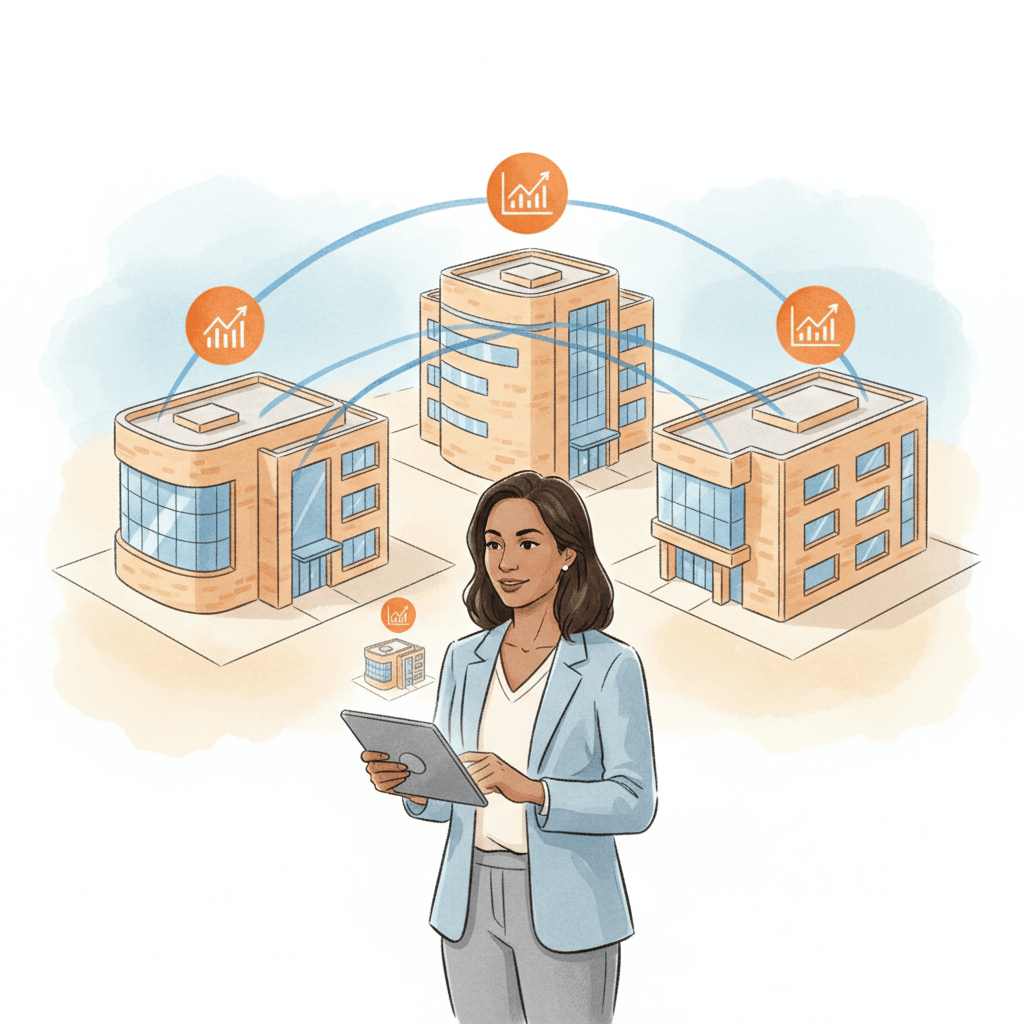
Two residential care organizations operate in the same state. Both serve adults with intellectual and developmental disabilities across a portfolio of group homes. Both have between ten and fifteen sites. Both operate under the same licensing framework, the same Medicaid waiver requirements, and the same survey process. Their reimbursement rates are comparable. Their geographies overlap. Their average home size is within one bed of each other.
One organization received three survey deficiencies in the last two years. The other received eleven — including two that triggered a plan of correction requiring state oversight. One has staff turnover at 38 percent. The other is at 74 percent. One fills open shifts within four hours on average. The other takes two days and relies on agency staff for 22 percent of its coverage. One can produce a compliance-ready incident summary for any home within minutes. The other needs a week to compile the same information and is never entirely confident in its accuracy.
These are not organizations at different resource levels. Their budgets per resident are within 5 percent of each other. The difference is not about how much they spend. It is about how they operate — and specifically, about where they sit on the continuum of operational maturity.
Operational maturity is a concept borrowed from fields like manufacturing, IT service management, and healthcare administration, where it has been formalized into frameworks like CMMI, ITIL, and Baldrige. The core idea is simple: organizations evolve through predictable stages of operational capability, from ad hoc and reactive to standardized, measured, optimized, and eventually transformative. Each stage has identifiable characteristics, predictable failure modes, and specific investments required to advance to the next level.
In residential care, this framework has been conspicuously absent. The industry has regulatory compliance frameworks, quality measures, and accreditation standards — but these are binary assessments. You are compliant or you are not. You passed the survey or you received deficiencies. They do not tell an operator where they stand on the operational capability spectrum, what the next meaningful improvement looks like, or how to prioritize investments across the many competing demands on limited resources.
This article introduces a five-level operational maturity model designed specifically for residential care operators. It maps the progression from reactive, crisis-driven operations to proactive, data-driven excellence across six organizational dimensions. It provides a self-assessment tool, benchmarking guidance, and a practical roadmap for advancing from one level to the next. The model is not theoretical — it reflects patterns observed across hundreds of residential care organizations at varying stages of operational development.
The goal is to give you a vocabulary for talking about operational capability that goes beyond "we passed our last survey" or "we need to do better." Maturity is measurable, progression is plannable, and the return on each incremental advance is quantifiable. The question is not whether your organization should pursue higher maturity — it is where you stand now, and what the most efficient path forward looks like.
The HarmonyCare Operational Maturity Model
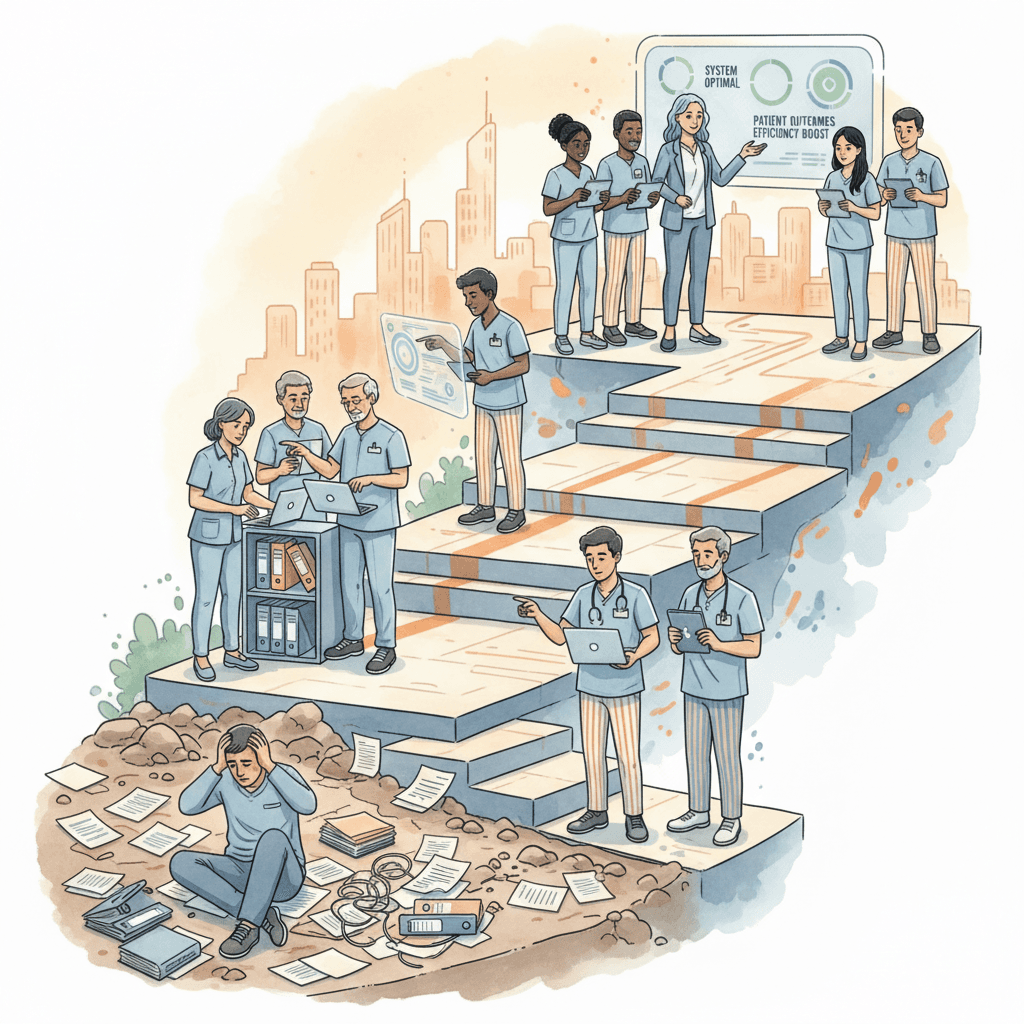
The HarmonyCare Operational Maturity Model defines five levels of operational capability for residential care organizations. Each level represents a distinct operating paradigm — not simply a set of tools or practices, but a fundamentally different way of managing care delivery, compliance, staffing, and quality across a portfolio of facilities.
The model evaluates maturity across six dimensions: documentation practices, compliance management, staffing operations, technology utilization, quality systems, and leadership engagement. An organization's overall maturity level is determined by the lowest-scoring dimension, because operational capability is constrained by the weakest link in the system. An organization with Level 4 technology but Level 1 documentation practices is not a Level 4 organization — it is an organization with expensive tools applied to broken processes.
Level 1: Reactive
At Level 1, operations are crisis-driven. The organization functions, but it functions through the heroic effort of individual staff members rather than through systems. Information lives in people's heads, on paper forms, and in email threads. When a key employee leaves, institutional knowledge leaves with them.
Documentation at Level 1 is paper-based or exists in disconnected digital systems that function as electronic paper — fillable PDFs stored in shared folders, Word documents emailed between staff, spreadsheets maintained by individual house managers with no standardized format. There is no single source of truth for any operational metric. If leadership wants to know how many incidents occurred across the portfolio last month, someone has to call each home, collect forms, and manually tally the numbers. The answer takes days and is never quite accurate.
Compliance management at this level is reactive by definition. The organization prepares for surveys when surveys are announced. Between surveys, compliance practices drift. Staff training records are tracked on paper or in personal spreadsheets maintained by individual managers. When a surveyor asks for documentation, the scramble to locate it reveals gaps that leadership did not know existed.
Staffing is managed through phone calls, text messages, and personal relationships. There is no centralized schedule. The house manager knows who is available because they have memorized the staff roster. When that manager is unavailable, shift coverage becomes a crisis. Overtime is high, burnout is common, and turnover is a perpetual emergency rather than a managed metric.
Technology at Level 1 is minimal or misapplied. The organization may have purchased an electronic health record or a scheduling tool, but adoption is low, data entry is inconsistent, and the systems are islands — none of them talk to each other or to leadership in a meaningful way.
Quality improvement does not exist as a formal discipline. Quality is the byproduct of individual competence — homes run by strong managers perform well, and homes run by struggling managers struggle. There is no mechanism to detect variation, identify root causes, or systematically improve performance.
Leadership at Level 1 is reactive by necessity. Executives spend their time managing crises rather than preventing them. Their information about the organization comes from escalations, complaints, and surveys — all of which represent failures that have already occurred. Strategic planning is aspirational rather than data-informed, because the data to inform it does not exist in a usable form.
Level 2: Managed
Level 2 represents the first meaningful step beyond reactive operations. At this level, the organization has adopted digital tools, established some standardized processes, and begun to capture data systematically. However, consistency is spotty, integration is limited, and the distance between data collection and data-informed decision-making remains significant.
Documentation at Level 2 is digital, at least in part. The organization uses an electronic system for at least some documentation categories — incident reports, shift notes, medication administration records. But the systems may not be the same across all sites. Data entry quality varies by home, by shift, and by individual staff member. Leadership has more data than at Level 1, but trusting that data requires caveats and footnotes.
Compliance at Level 2 is managed but not proactive. The organization has a compliance calendar, tracks training expirations, and conducts periodic internal audits. But the audits are manual, findings are not systematically tracked to resolution, and the interval between audits is long enough that drift accumulates undetected. Compliance is something the organization does periodically rather than something the organization is continuously.
Staffing has moved from entirely ad hoc to partially systematized. A scheduling tool may be in place, but it is not used consistently across all sites. Vacancy fill times have improved but remain unpredictable. The organization tracks turnover but has not connected turnover data to operational conditions — they know the number but not the cause.
Technology at Level 2 is present but fragmented. The organization operates multiple systems — an EHR, a scheduling tool, a training platform, a communication app — but they do not integrate. Data lives in silos. Producing a cross-functional report (for example, correlating staffing levels with incident rates) requires manual data extraction and spreadsheet manipulation.
Quality improvement at Level 2 exists as an organizational function — there may be a quality committee, periodic reviews, and improvement initiatives. But these efforts are episodic rather than continuous, driven by specific problems or regulatory requirements rather than by systematic performance measurement. The organization fixes problems when they surface but does not yet have the instrumentation to prevent them from surfacing.
Leadership at Level 2 has more information than at Level 1 but still spends significant time managing operational details. Reports are available but delayed. Decisions are informed by data but often by data that is weeks old. The executive team has begun to think about operational metrics but has not yet established the habits and rhythms of data-driven management.
Level 3: Standardized
Level 3 is the inflection point. It is where the organization shifts from site-dependent performance — where each home operates as a semi-autonomous unit whose quality depends on its individual manager — to system-dependent performance, where outcomes are driven by organizational processes that produce consistent results regardless of who is managing a particular home on a particular shift.
Documentation at Level 3 is standardized across all sites. Every home uses the same system, the same templates, the same definitions. An incident at Site 1 is categorized, documented, and escalated using the same protocol as an incident at Site 15. This standardization makes data comparable across the portfolio for the first time — leadership can look at incident trends across homes and trust that the comparison is valid.
Compliance at Level 3 is proactive. Automated alerts flag approaching deadlines — training expirations, certification renewals, policy review dates — before they lapse. Internal audits are scheduled, standardized, and tracked to resolution. The organization does not prepare for surveys because it is always survey-ready. Compliance is a continuous state, not a periodic event.
Staffing at Level 3 is managed through a centralized system that provides portfolio-wide visibility. Open shifts are visible to all qualified staff across the organization, not just within a single home. Fill times are measured, overtime is tracked against policy limits, and staffing data is correlated with other operational metrics. When incidents spike at a particular home, leadership can quickly assess whether staffing patterns are a contributing factor.
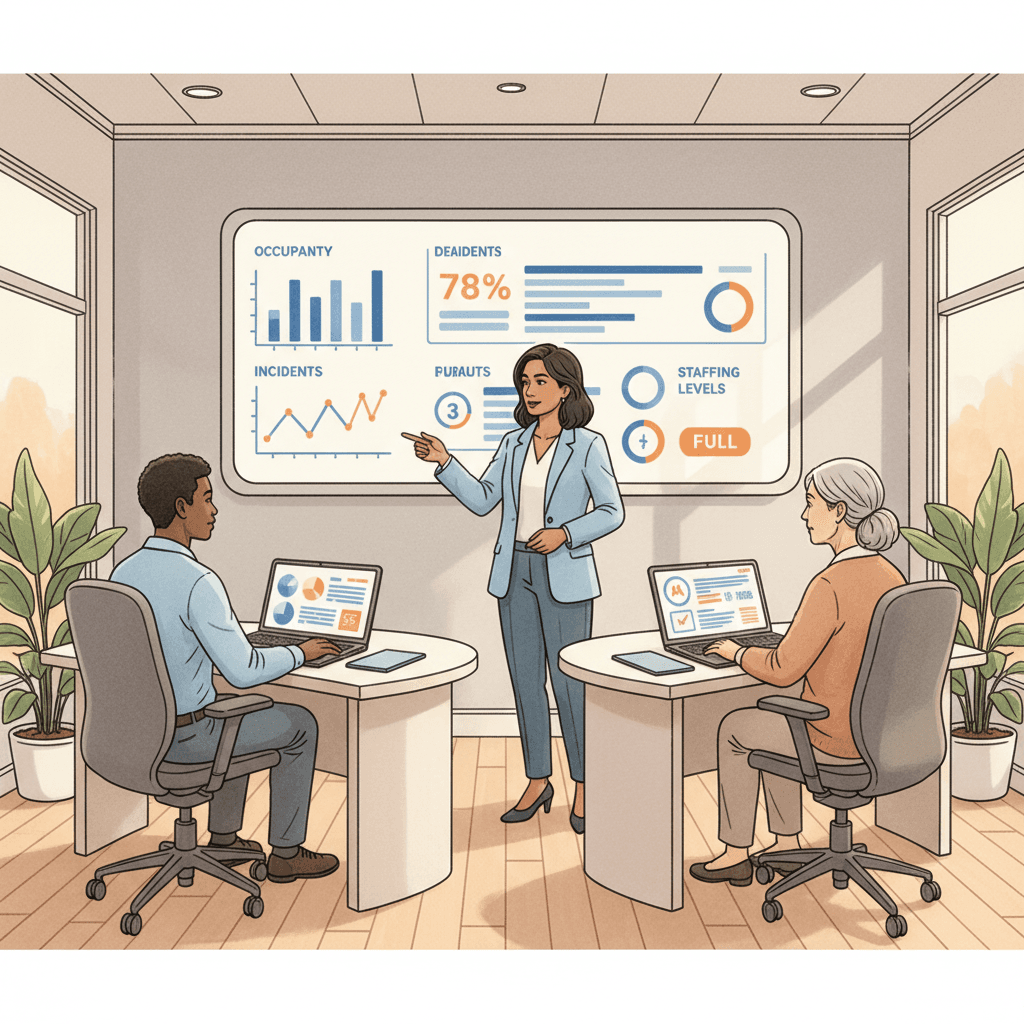
Technology at Level 3 is integrated. Core systems share data, either through native integration or through a centralized platform that connects them. Leadership has access to real-time or near-real-time dashboards that aggregate data across all sites. The technology stack is not just a collection of tools — it is an operational infrastructure that supports decision-making at every level of the organization.
Quality improvement at Level 3 is systematic. The organization measures performance against defined standards, tracks trends over time, and conducts root-cause analyses when metrics deviate from expectations. Quality is not just a committee — it is a set of processes embedded in daily operations, from shift-level documentation reviews to portfolio-level trend analysis.
Leadership at Level 3 is proactive. Executives receive real-time alerts for critical events and weekly dashboards for trend data. They spend their time on pattern recognition and strategic response rather than on firefighting and data gathering. Board reports are generated from live data, not from manually compiled retrospective summaries.
Level 4: Optimized
Level 4 moves from standardized operations to continuously improving operations. At this level, the organization does not just measure performance — it uses measurement to drive systematic improvement. Data is not just visible — it is analyzed, modeled, and used to predict and prevent problems before they occur.
Documentation at Level 4 is not just standardized — it is optimized. The organization has analyzed documentation workflows to eliminate redundancy, reduce burden on frontline staff, and improve data quality. Natural language processing or other tools may assist with documentation review, flagging incomplete or inconsistent entries for follow-up. Documentation completion rates are consistently above 95 percent across all sites.
Compliance at Level 4 is predictive. The organization uses historical data to identify compliance risk patterns — which types of homes, which staffing configurations, which time periods are most likely to produce compliance gaps. Resources are allocated proactively to high-risk areas. The organization does not just maintain compliance — it predicts and prevents compliance failures.
Staffing at Level 4 is data-optimized. Predictive models anticipate staffing needs based on census patterns, acuity levels, historical call-off rates, and seasonal trends. The organization has reduced its reliance on overtime and agency staff to minimal levels. Retention strategies are targeted based on data about which roles, shifts, and locations experience the highest turnover and why.
Technology at Level 4 is an analytical platform, not just an operational one. Business intelligence tools, automated reporting, and predictive analytics are integrated into the decision-making process. The organization generates insights from its data, not just reports. Technology is regularly evaluated against operational goals and upgraded or replaced based on measurable impact.
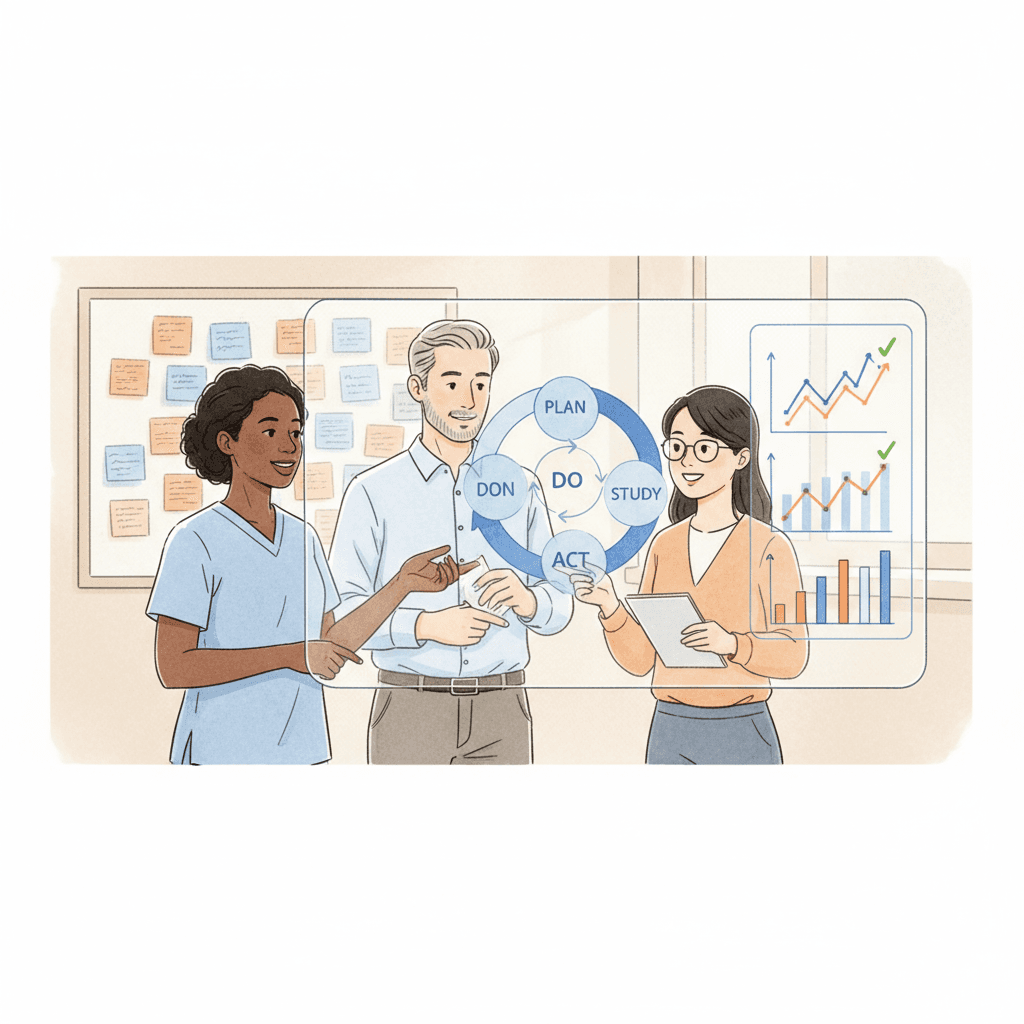
Quality improvement at Level 4 is continuous and data-driven. The organization runs formal improvement cycles — Plan-Do-Study-Act or similar — on a regular cadence. Improvement initiatives are prioritized based on quantitative impact analysis. The organization benchmarks against external standards and peer organizations, not just against its own historical performance.
Leadership at Level 4 is strategic. Executives focus on organizational development, market positioning, and long-term capability building. Operational management is handled by systems and middle management, with executive involvement triggered by exception rather than routine. The board receives predictive dashboards that show not just where the organization has been, but where it is heading.
Level 5: Transformative
Level 5 represents operational excellence that extends beyond the organization itself. At this level, the organization is not just performing well — it is advancing the standard of care for the industry. This is rare, and it is aspirational for most organizations, but it defines the frontier of what is possible.
Documentation at Level 5 incorporates AI-assisted capture, ambient documentation tools, and continuous quality analysis. Frontline staff spend less time on administrative documentation and more time on direct care, because the system captures and structures information in real time. Documentation is a byproduct of care delivery, not a separate task.
Compliance at Level 5 is built into the operating system of the organization. Regulatory changes are identified, analyzed, and incorporated into workflows automatically. The organization participates in shaping regulatory frameworks, contributing data and insights to policy discussions at the state and national level.
Staffing at Level 5 reflects workforce innovation. The organization has developed proprietary approaches to recruitment, retention, and development that produce consistently lower turnover than industry averages. It may operate its own training programs, career pathways, or workforce development partnerships.
Technology at Level 5 is a source of competitive advantage and industry contribution. The organization may develop or co-develop tools that advance the state of the art in care delivery. Its data assets are extensive enough to support research partnerships, outcome studies, and evidence-based practice development.
Quality at Level 5 is defined by outcomes rather than processes. The organization measures and publishes resident outcomes — quality of life indicators, health outcomes, community integration metrics — and uses these to drive continuous refinement of care models.
Leadership at Level 5 is visionary. The executive team is recognized as an industry thought leader. The organization influences policy, contributes to professional standards, and serves as a model for peer organizations.
Maturity Model Summary Table
The following table maps each maturity level across the six core dimensions, providing a quick-reference guide for assessment.
| Dimension | Level 1: Reactive | Level 2: Managed | Level 3: Standardized | Level 4: Optimized | Level 5: Transformative |
|---|---|---|---|---|---|
| Documentation | Paper-based, inconsistent, tribal knowledge | Digital but fragmented, variable data quality | Standardized across all sites, comparable data | Optimized workflows, AI-assisted review, >95% completion | Ambient capture, documentation as byproduct of care |
| Compliance | Reactive, survey-driven, scramble to locate records | Compliance calendar, periodic manual audits | Proactive alerts, continuous readiness, automated tracking | Predictive risk modeling, resource allocation to high-risk areas | Built-in regulatory intelligence, policy participation |
| Staffing | Phone calls and personal networks, no centralized data | Scheduling tool in partial use, turnover tracked but not analyzed | Centralized scheduling, portfolio-wide visibility, data correlation | Predictive models, optimized fill rates, targeted retention | Workforce innovation, proprietary development programs |
| Technology | Minimal or unused, disconnected systems | Multiple tools, no integration, data silos | Integrated platform, real-time dashboards, connected data | Analytics platform, business intelligence, predictive capability | Competitive advantage, co-development, research-grade data |
| Quality | No formal program, dependent on individual managers | Quality committee exists, episodic improvement efforts | Systematic measurement, root-cause analysis, defined standards | Continuous PDSA cycles, quantitative prioritization, external benchmarking | Outcome-based measurement, published results, evidence-based practice |
| Leadership | Crisis management, reactive, information from escalations | More data but delayed, operational detail consumes executive time | Proactive, real-time alerts, strategic focus emerging | Strategic, exception-based management, predictive dashboards | Visionary, industry influence, policy shaping |
Self-Assessment: Where Do You Stand?
The maturity model is useful as a conceptual framework, but it becomes actionable only when you apply it honestly to your own organization. The following self-assessment is designed to help leadership teams evaluate their current operational maturity across the six dimensions. It is not a precise diagnostic instrument — it is a structured conversation starter that surfaces the gaps most organizations prefer not to discuss.
Instructions
For each of the following twenty questions, assign a score from 1 to 5 based on how accurately the statement describes your organization's current state. Be ruthless in your honesty — the value of this exercise is directly proportional to the candor of the responses. A score of 1 means "this does not describe us at all." A score of 5 means "this describes us consistently and reliably across all sites."
Gather your leadership team — CEO, COO, regional directors, quality director, and compliance lead — and complete the assessment independently before comparing results. The gaps between individual scores often reveal more than the scores themselves. When your COO rates documentation standardization a 4 and your regional director rates it a 2, the disagreement itself is diagnostic.
Documentation (Questions 1-4)
1. Standardized documentation systems. All of our sites use the same documentation system, with the same templates, categories, and definitions. A shift note at one home looks structurally identical to a shift note at any other home in our portfolio.
2. Documentation timeliness. Shift notes, incident reports, and medication administration records are completed within the same shift in which the events occurred, at least 90 percent of the time, across all sites.
3. Documentation accessibility. Any authorized member of our leadership team can access complete, current documentation for any resident at any site within five minutes, without calling the home or asking someone to look something up.
4. Documentation quality review. We have a systematic process for reviewing documentation quality — not just completeness, but accuracy, detail, and clinical relevance — and we act on the findings of those reviews.
Compliance (Questions 5-8)
5. Continuous compliance readiness. If a surveyor arrived at any of our sites tomorrow without notice, we could produce all required documentation within one business day without pulling staff from their regular duties to compile it.
6. Automated compliance tracking. Staff training, certifications, policy acknowledgments, and other compliance requirements are tracked in a system that automatically alerts us to upcoming expirations at least 30 days in advance.
7. Internal audit program. We conduct standardized internal audits across all sites on a regular schedule (at least quarterly), and findings are tracked to resolution in a system visible to leadership.
8. Regulatory change management. When regulations change, we have a defined process for analyzing the impact, updating policies and procedures, retraining staff, and verifying implementation — and we can demonstrate the timeline of that process for any regulatory change in the past two years.
Staffing (Questions 9-12)
9. Centralized scheduling. All of our sites use a centralized scheduling system that provides portfolio-wide visibility into coverage, vacancies, and overtime.
10. Fill time metrics. We measure the time it takes to fill an open shift, and our average fill time is under eight hours for non-emergency vacancies.
11. Turnover analysis. We track turnover by site, role, shift, and tenure — and we have used that data in the last six months to make a specific operational change aimed at reducing turnover.
12. Staffing-outcome correlation. We can demonstrate a quantitative relationship between staffing metrics (fill rate, overtime, agency utilization) and quality or safety metrics (incident rate, documentation completeness, compliance findings) at the site level.
Technology (Questions 13-16)
13. System integration. Our core operational systems — documentation, scheduling, compliance tracking, and reporting — share data without manual extraction. A change in one system is reflected in connected systems without someone re-entering the information.
14. Real-time dashboards. Our leadership team has access to dashboards that display current operational data — incidents, staffing, documentation status, compliance — updated at least daily, without manual report generation.
15. Mobile accessibility. Frontline staff can complete their core documentation tasks — shift notes, incident reports, medication records — on a mobile device at the point of care, without returning to a desktop computer.
16. Data-driven decisions. In the last quarter, our leadership team made at least three specific operational decisions that were informed by data from our technology systems, and we can document those decisions and their outcomes.
Quality (Questions 17-18)
17. Formal quality program. We operate a quality improvement program with defined metrics, regular review cycles, root-cause analysis for adverse events, and improvement initiatives that are tracked to measurable outcomes.
18. External benchmarking. We regularly compare our performance on key metrics — incident rates, staffing ratios, turnover, compliance findings — against external benchmarks or peer organizations, and we use those comparisons to set improvement targets.
Leadership (Questions 19-20)
19. Strategic time allocation. Our executive team spends the majority of its time on strategic priorities — growth, quality improvement, workforce development, organizational design — rather than on managing daily operational crises or compiling information.
20. Proactive intervention. In the last 90 days, our leadership team identified and intervened on an emerging operational issue — before it became a crisis, a complaint, or a regulatory finding — based on data from our operational systems.
Scoring Guide
Total your score across all 20 questions. Maximum possible: 100.
-
20-35 points: Level 1 (Reactive). Your organization operates primarily in crisis mode. Operations depend on individual effort rather than organizational systems. The path forward begins with basic standardization and digital adoption.
-
36-50 points: Level 2 (Managed). You have tools and some processes in place, but consistency is uneven and data remains fragmented. This is the most common score range for multi-site residential care operators. Focus on standardization and integration.
-
51-65 points: Level 3 (Standardized). Your operations are consistent and measurable. You have the foundation for data-driven management. The next step is optimizing based on the data you now collect reliably.
-
66-80 points: Level 4 (Optimized). You operate a data-driven organization with continuous improvement embedded in your culture. Focus on predictive capability, innovation, and industry leadership.
-
81-100 points: Level 5 (Transformative). You are among the most operationally advanced residential care organizations in the country. Focus on sustaining excellence, contributing to industry standards, and innovating care models.
Interpreting Your Results
The total score provides a general orientation, but the dimension-level scores are where the real insight lives. Plot your scores across the six dimensions. Most organizations discover that they are not at a single maturity level — they are at different levels across different dimensions. You might find that your technology adoption is at Level 3 while your quality program is at Level 1, or that your compliance tracking is advanced but your staffing operations lag behind.
This is normal, and it is strategically important. Operational maturity is constrained by the weakest dimension, because the dimensions are interdependent. Sophisticated analytics (Level 4 technology) produce misleading results when applied to inconsistent data (Level 1 documentation). Predictive staffing models (Level 4 staffing) cannot function without integrated systems (Level 3 technology). A quality improvement program (Level 3 quality) has nothing to work with if the underlying metrics are unreliable (Level 1 or 2 documentation and compliance).
The dimension with the lowest score is almost always the highest-priority investment. It is the bottleneck that constrains progress across every other dimension.
Pay particular attention to the gap between how leadership scored the assessment and how regional or site-level managers scored it. A consistent pattern in residential care is that executive leadership overestimates maturity by one to two levels compared to operational staff. This is not because executives are dishonest — it is because the visibility gap (which itself is a maturity indicator) means that executives see the policies and systems they have purchased, while operational staff experience the reality of how those policies and systems function in daily practice.
The Journey from Level to Level
Understanding where you stand is necessary but not sufficient. The more urgent question for most operators is: what does it take to advance? How long does it realistically take? Where do organizations commonly stall? And why is the progression harder than it appears on paper?
Level 1 to Level 2: From Chaos to Basic Systems
The transition from Level 1 to Level 2 is primarily about technology adoption and basic process definition. It requires selecting and deploying digital tools for documentation, scheduling, and compliance tracking, and establishing baseline expectations for how those tools are used.
This transition is usually the fastest — three to six months for the core technology deployment, with another three to six months for adoption to stabilize. The primary challenge is not technical; it is cultural. Frontline staff who have operated with paper and informal systems for years will resist digital workflows, particularly if the new tools increase their documentation burden rather than reducing it. House managers who have built their operational identity around personal knowledge of their staff and residents may feel threatened by systems that make their information visible to others.
The key to successful transition is choosing tools that reduce burden, not just digitize it. If your new system requires a DSP to enter the same information that used to go on a paper form, but now on a tablet with a slower interface, you have not improved operations — you have added friction. The tool must make the work easier, or at minimum not harder, for the people closest to care delivery.
Expected timeline: 6-12 months. Investment: Moderate (technology licensing, training, implementation support). Common stall point: Tool purchased but not adopted. The system is technically available, but staff continue using paper and workarounds because training was insufficient, the interface is cumbersome, or leadership did not enforce the transition.
Level 2 to Level 3: From Fragmentation to Standardization
This is the most difficult and most consequential transition in the model. It is where most organizations plateau, and it is where the greatest operational risk reduction occurs. Moving from Level 2 to Level 3 requires not just better tools, but organizational discipline — the willingness to impose consistent standards across sites and to hold every site to the same expectations.
The difficulty is partly structural and partly political. Residential care organizations — particularly those serving individuals with IDD — often grow through acquisition. Each acquired home comes with its own culture, its own documentation habits, its own definitions of what constitutes an incident, its own staffing norms. The house managers at these homes have operated independently for years, sometimes decades. Standardization feels like a loss of autonomy, and it requires house managers to change habits that have worked (by their assessment) for their individual home.
The organizational work required at this transition includes defining standardized documentation templates, incident categories, escalation protocols, staffing policies, and compliance procedures. It requires deploying a single integrated technology platform across all sites — which often means replacing multiple tools that different sites have adopted independently. It requires extensive training, not just on the new tools, but on the new standards. And it requires a period of active enforcement, where leadership monitors adoption and addresses deviation.
Expected timeline: 9-18 months. Investment: Significant (platform consolidation, training, dedicated project management, change management). Common stall point: Standardization starts but does not complete. Central office imposes new policies, but enforcement is inconsistent. Some sites adopt fully; others comply superficially while maintaining shadow processes. The result is a false sense of standardization — policies exist on paper, but data quality and process consistency remain variable.
Level 3 to Level 4: From Standardized to Optimized
The transition from Level 3 to Level 4 is less about organizational change management and more about analytical capability. Once operations are standardized and data is reliable, the question shifts from "can we measure this?" to "what does the measurement tell us, and how do we act on it?"
This transition requires different skills than the previous ones. Level 3 was built by operations leaders and implementation teams. Level 4 requires analytical thinking — the ability to identify patterns in data, design improvement experiments, measure their impact, and scale what works. Many residential care organizations do not have this capability in-house, and developing or hiring it is part of the investment.
The organizational work at this transition includes establishing formal quality improvement cycles (PDSA or equivalent), building predictive models for staffing and compliance risk, implementing continuous benchmarking against external standards, and developing the leadership habit of making decisions based on data analysis rather than intuition or anecdote.
Expected timeline: 12-18 months after Level 3 is stable. Investment: Significant (analytics talent, business intelligence tools, ongoing training). Common stall point: The organization collects and reports data but does not act on it. Dashboards exist, reports circulate, but operational decisions continue to be made the same way they were made before the data was available. Data becomes wallpaper rather than a decision-making tool.
Level 4 to Level 5: From Optimized to Transformative
The transition to Level 5 is not a project — it is an ongoing organizational commitment to innovation and industry leadership. Very few residential care organizations reach this level, and those that do have typically been investing in operational maturity for five or more years.
This level requires not just internal excellence but external engagement — participation in research, contribution to policy development, sharing of best practices, and development of novel approaches to persistent industry challenges. It is not a destination to plan for in a twelve-month roadmap; it is the long-term aspiration that gives direction to the work at Levels 3 and 4.
Why Most Organizations Plateau at Level 2
The data across the industry is clear: the majority of multi-site residential care operators function at Level 2. They have digital tools, they generate data, and their leadership teams are well-intentioned about using that data to improve. But the gap between having tools and having standardized, integrated, consistently applied operational systems is larger than most executives appreciate before they attempt to cross it.
The reasons for the plateau are consistent:
Decentralized culture. Residential care has a deep tradition of home-level autonomy. House managers and site directors are accustomed to running their homes their way. Standardization feels like bureaucracy imposed by people who do not understand the realities of individual homes and residents.
Competing priorities. The organizations that need operational maturity most urgently — those dealing with high turnover, frequent deficiencies, and constant crises — are also the ones with the least bandwidth to invest in the standardization work that would relieve those pressures. The daily operational load crowds out the strategic work.
Technology fragmentation. Many organizations have adopted tools incrementally over years, resulting in a patchwork of systems that each solve one problem but collectively create data silos and workflow complexity. Consolidating onto a single platform requires a level of change management that feels disproportionate to the perceived benefit.
Insufficient change management. The technical aspects of moving from Level 2 to Level 3 — selecting a platform, configuring workflows, migrating data — are straightforward relative to the human aspects. Organizations that approach this transition as a technology project rather than an organizational change initiative consistently underinvest in training, communication, and adoption support.
Breaking through the plateau requires executive sponsorship that goes beyond approval — it requires active, visible, sustained commitment to the transition. The CEO or COO must own the initiative, not delegate it. The organization must accept a period of disruption and temporary productivity loss as new systems and standards take hold. And leadership must be willing to hold every site to the same standard, even when the strongest house managers resist.
Benchmarking Against Peers
Once you have assessed your own maturity, the natural next question is: how do we compare? Benchmarking provides external context for your assessment — it tells you whether your performance is typical for organizations at your level, whether your improvement targets are realistic, and where you might learn from peers who have solved problems you are still working on.
Industry Benchmarks for Key Metrics
While comprehensive residential care benchmarking data is less robust than in acute care settings, several metrics have enough published data to serve as reference points.
Staff turnover. The national average for direct support professionals in IDD services ranges from 40 to 55 percent annually, depending on the source and year. Assisted living averages are similar. Skilled nursing turnover for CNAs is typically 50 to 70 percent. Organizations at Level 3 or above typically achieve turnover rates 15 to 25 percentage points below the national average for their setting.
Incident rates. Meaningful comparison of incident rates requires normalization — incidents per resident per month, categorized by type and severity. Industry data suggests that Level 1 organizations underreport incidents (because documentation systems do not capture them reliably), Level 2 organizations often see incident rates increase as documentation improves (the events were always happening; they are now being recorded), and Level 3 and above organizations see incident rates stabilize and then decline as prevention strategies take effect.
Documentation completion. Level 2 organizations typically achieve 70 to 85 percent on-time documentation completion. Level 3 organizations achieve 85 to 95 percent. Level 4 organizations exceed 95 percent consistently. These figures refer to documentation completed within the same shift in which the events occurred.
Survey deficiencies. Organizations at Level 3 or above receive, on average, 40 to 60 percent fewer survey deficiencies than the industry median for their state and setting. This is the single most visible external indicator of operational maturity.
Shift fill time. Level 1 organizations often take 24 to 48 hours to fill an unexpected open shift. Level 2 organizations fill within 8 to 16 hours. Level 3 and above fill within 4 to 8 hours, with internal staff rather than agency coverage.
How to Find Comparison Data
Industry associations — including those specific to IDD services, assisted living, and long-term care — publish annual surveys with workforce and operational data. State licensing agencies publish survey results and deficiency data, often searchable by provider. CMS publishes quality data for skilled nursing facilities through its Care Compare system. Trade publications and consultancy firms periodically release benchmarking reports.
For more specific comparison, regional peer groups — organizations of similar size, setting, and population served within the same state or regulatory environment — provide the most meaningful benchmarks. Many state provider associations facilitate benchmarking groups where member organizations share operational data confidentially.
The Danger of Comparing Unlike Settings
Benchmarking is only useful when the comparison is valid, and residential care is diverse enough that invalid comparisons are easy to make and dangerously misleading.
A six-bed group home serving adults with IDD who have high behavioral support needs is a fundamentally different operational environment than a 60-bed assisted living community serving elderly adults with mild cognitive impairment. Staffing ratios, documentation requirements, incident profiles, regulatory frameworks, and operational complexity are different in kind, not just in degree. Comparing their incident rates, turnover numbers, or documentation completion rates without acknowledging these differences produces conclusions that look data-driven but are actually meaningless.
When benchmarking, control for the following variables:
- Care setting. Compare group homes to group homes, assisted living to assisted living, skilled nursing to skilled nursing.
- Population acuity. Within any setting, the population's support needs dramatically affect operational metrics. A home serving individuals with minimal behavioral support needs will have a fundamentally different incident profile than a home serving individuals with significant behavioral challenges.
- Geography and regulatory environment. State regulations, Medicaid reimbursement rates, and labor markets vary enough to make cross-state comparisons unreliable for most operational metrics.
- Organization size. A three-site operator and a fifty-site operator face qualitatively different operational challenges. The three-site operator may achieve high consistency through personal oversight; the fifty-site operator must achieve it through systems.
The most productive benchmarking happens within narrowly defined peer groups: organizations of similar size, serving similar populations, in similar regulatory environments. Within those groups, the variation in operational maturity — and the correlation between maturity level and performance outcomes — is striking and instructive.
Technology as a Maturity Accelerator
Technology plays a specific and important role in operational maturity progression, but its role is frequently misunderstood. Technology is an accelerator, not a driver. It amplifies whatever operational state it is applied to — which means it accelerates maturity for organizations that have the process foundations in place, and it cements dysfunction for organizations that do not.
How the Wrong Technology Cements Bad Practices
The most common technology mistake in residential care is deploying sophisticated tools on top of unstandardized processes. An organization at Level 1 that purchases an advanced analytics platform will not leap to Level 4. It will have expensive analytics on unreliable data, producing dashboards that leadership cannot trust, which leadership then ignores, which justifies the staff perception that the technology was a waste of money.
Similarly, deploying multiple disconnected tools — a scheduling app here, an EHR there, a compliance tracker somewhere else — does not advance maturity. It creates a digital version of the same fragmentation that characterized the paper-based environment. Data enters multiple systems, none of which communicate, and the work of integration falls on staff who now have more systems to manage rather than fewer.
The worst outcome is when technology creates a false sense of maturity. Leadership sees digital dashboards and assumes they are data-driven. But the dashboards display data that was entered inconsistently, in systems that do not share information, by staff who have not been trained on standardized definitions. The organization looks modern but operates at Level 1 with a Level 3 user interface.
How the Right Technology Accelerates Maturity
When technology is deployed in alignment with the organization's maturity progression — standardization before analytics, integration before optimization — it dramatically compresses the timeline for each transition.
An integrated platform that enforces standardized documentation templates eliminates the most common reason organizations stall at Level 2: inconsistent data entry across sites. When the system requires specific fields, specific categories, and specific workflows, standardization is built into the tool rather than dependent on human discipline alone.
Real-time data aggregation eliminates the information pipeline problem that plagues Level 1 and Level 2 organizations. When an incident is documented at the point of care, leadership can see it immediately — not after it has traveled through four levels of handoff over three days. This single capability transforms leadership from reactive to proactive.
Automated compliance tracking converts compliance from a periodic activity to a continuous state. The system knows when training expires, when policies are due for review, when certifications need renewal — and it alerts the right people at the right time. The compliance calendar that Level 2 organizations maintain manually becomes a living system that Level 3 organizations rely on automatically.
Analytics and reporting tools, when applied to standardized, integrated data, enable the transition from Level 3 to Level 4. Pattern recognition that would take a human analyst weeks to identify — correlations between staffing patterns and incident rates, seasonal trends in documentation quality, predictive indicators of compliance risk — becomes available in real time.
Harmony's Role in Maturity Progression
HarmonyCare is designed as a maturity progression platform — not as a tool for one level, but as an infrastructure that supports organizations at Level 2 through Level 4 and provides the foundation for Level 5 aspiration. Its standardized documentation framework, integrated compliance tracking, centralized staffing visibility, and real-time reporting capabilities address each of the dimensions in the maturity model.
For organizations at Level 2 looking to reach Level 3, Harmony provides the standardization infrastructure: consistent templates, integrated workflows, and portfolio-wide data visibility that eliminates the fragmentation problem. For organizations at Level 3 looking to reach Level 4, Harmony provides the analytical tools: trend analysis, benchmarking dashboards, and configurable alerts that enable data-driven decision-making and continuous improvement.
The platform is designed to grow with the organization's maturity, so that the technology investment made at Level 2 continues to deliver value at Level 4 — rather than requiring a platform replacement at each transition.
Case Scenario: Cornerstone Care Network
Cornerstone Care Network is a composite scenario based on patterns observed across multiple residential care organizations. It illustrates a realistic maturity progression from Level 2 to Level 4 over an eighteen-month period.
Starting Position
Cornerstone operates fourteen group homes serving adults with intellectual and developmental disabilities across two regions. When the new COO conducted an operational assessment using a framework similar to the one in this article, the results were sobering. The organization scored a 39 out of 100 — firmly in Level 2 territory.
Documentation was digital at most sites, but three homes still used paper forms for shift notes. The eight homes that used digital documentation used two different systems, neither of which was accessible to central office without requesting exports. Compliance tracking was maintained in a shared spreadsheet by the quality director, who spent roughly fifteen hours per week updating it. Staffing was managed by individual house managers with no portfolio-wide visibility. The last state survey had produced seven deficiencies, three of which were repeat findings from the previous cycle.
Staff turnover was 62 percent. Average shift fill time for unexpected vacancies was 22 hours. Documentation completion within the same shift stood at 71 percent.
Phase 1: Standardization (Months 1-8)
Cornerstone deployed an integrated care operations platform across all fourteen homes. The first four months focused on migration, configuration, and training. The COO made two critical decisions that shaped the success of the initiative.
First, she mandated a single platform across all sites with no exceptions. The two existing digital systems were retired, and the three paper-based homes were migrated simultaneously. This was politically difficult — several house managers had strong attachments to their existing tools — but it eliminated the data fragmentation that made portfolio-wide analysis impossible.
Second, she invested in a dedicated implementation coordinator — a full-time role for six months — whose sole responsibility was training, adoption support, and workflow standardization. This person spent time at every home, worked alongside DSPs during actual shifts, and iteratively refined documentation templates based on frontline feedback.
By month eight, all fourteen homes were operating on the same platform with the same documentation standards. Documentation completion rates had improved from 71 percent to 88 percent. The quality director reclaimed ten of the fifteen weekly hours previously spent maintaining the compliance spreadsheet.
Phase 2: Integration and Visibility (Months 6-12)
Overlapping with the later stages of Phase 1, Cornerstone activated centralized scheduling, real-time incident dashboards, and automated compliance alerts. The COO established a weekly portfolio review meeting where the leadership team reviewed dashboard data for all fourteen homes — a practice that was impossible before because the data to support it did not exist in a usable form.
Within this phase, the first proactive interventions began to occur. The dashboard revealed that one home was experiencing a spike in behavioral incidents that correlated with a staffing change three weeks earlier. The regional director investigated, discovered that a new staff member had not completed the required behavioral support training, and resolved the issue before the pattern resulted in a regulatory finding.
By month twelve, the organization's self-assessment score had moved from 39 to 58 — solidly into Level 3. Average shift fill time had decreased from 22 hours to 7 hours. Documentation completion stood at 93 percent. Staff turnover had decreased to 48 percent. The annual survey produced two deficiencies, neither of which was a repeat.
Phase 3: Optimization (Months 12-18)
With standardized data flowing reliably, Cornerstone began using analytics to drive improvement. The quality team launched formal PDSA cycles targeting the three metrics with the greatest gap to benchmark: turnover at two specific homes, medication documentation timeliness, and incident follow-up completion.
The organization established quarterly benchmarking reviews against a peer group of similarly sized IDD providers in the region, which revealed that their incident rate per resident was above the peer median — not because incidents were more frequent, but because their improved documentation was capturing events that peers were likely underreporting.
By month eighteen, the self-assessment score had reached 69 — crossing into Level 4 territory. Turnover stood at 41 percent. Documentation completion exceeded 96 percent. The organization had not received a regulatory deficiency in over a year. The COO estimated that the total investment in the maturity progression — platform licensing, the implementation coordinator, training time, and ongoing analytics support — represented roughly 3 percent of the organization's annual operating budget. The return, measured in reduced agency staffing costs, reduced regulatory risk, and improved occupancy stability, exceeded the investment within the first twelve months.
Building Your Maturity Roadmap
An assessment without a plan is a diagnostic without a treatment. The value of knowing your maturity level is entirely dependent on what you do with the information. Here is a practical framework for building a maturity roadmap that produces measurable results within twelve months.
Step 1: Establish Your Baseline
Complete the self-assessment with your leadership team. Do it independently, then compare results. The conversation about disagreements is as valuable as the scores themselves. Identify your weakest dimension — this is your primary constraint and your highest-priority investment.
Document the baseline formally. Write down your scores, the date, and the specific evidence that supports each score. In twelve months, when you re-assess, you need an honest comparison point, not a memory that has been unconsciously revised upward.
Step 2: Set a Twelve-Month Target
Do not try to jump two levels. If you are at Level 2, your twelve-month target is solid Level 3. If you are at Level 1, your target is stable Level 2. Attempting to skip levels leads to superficial adoption — the appearance of maturity without the operational substance.
Define your target in specific, measurable terms for each dimension. "Improve documentation" is not a target. "Achieve 90 percent same-shift documentation completion across all sites, as measured by the platform's automated tracking" is a target. "Improve compliance" is aspirational. "Zero compliance items overdue by more than 14 days, with automated tracking and escalation" is actionable.
Step 3: Identify Three Priority Investments
You cannot advance every dimension simultaneously, and attempting to do so spreads resources too thin for meaningful progress anywhere. Choose the three investments that will produce the greatest maturity gain given your current constraints.
For most organizations moving from Level 2 to Level 3, the priority investments are:
- Platform consolidation. Replace fragmented tools with a single integrated platform. This is the foundational investment that enables progress in every other dimension.
- Standardization of documentation and compliance workflows. Define, train, and enforce consistent processes across all sites. This is the organizational discipline that makes the platform investment productive.
- Leadership operating rhythm. Establish regular, data-driven portfolio review meetings where leadership uses operational data to identify and address emerging issues. This is the behavioral change that converts data into decisions.
Step 4: Measure Quarterly
Re-run a targeted version of the self-assessment every quarter. You do not need to repeat all twenty questions each time — focus on the dimensions where you have invested. Track progress quantitatively and adjust your approach based on what the data shows.
Quarterly measurement serves two purposes. First, it maintains organizational focus. Maturity progression is a multi-month effort, and without regular checkpoints, it is easy for daily operational demands to crowd out the strategic work. Second, it provides early warning when a transition is stalling. If documentation completion rates have not improved after two quarters of investment, the root cause is not time — it is something in the approach that needs to change.
A Note on Patience and Realism
Operational maturity progression is not a sprint. The organizations described in this article — the ones that consistently outperform their peers on every metric that matters — did not achieve their current state in a single budget cycle. They invested over years, maintained focus through leadership transitions and market disruptions, and accepted that some quarters would show slower progress than expected.
The realistic expectation is meaningful, visible improvement within twelve months, with full Level transition in eighteen to twenty-four months. The unrealistic expectation is transformation in six months. Set ambitious but achievable targets, invest in the right areas, measure honestly, and sustain the effort. The compounding returns of operational maturity — in reduced risk, improved quality, lower costs, and stronger competitive position — are substantial, but they accrue over time.
Conclusion
Operational maturity in residential care is not an abstract concept or a management consulting exercise. It is a measurable characteristic of how an organization operates — how it captures information, manages compliance, fills shifts, uses technology, improves quality, and directs leadership attention. It explains, more than almost any other factor, why two organizations of the same size, in the same market, serving the same population, under the same regulations, produce dramatically different outcomes.
The five-level model presented in this article provides a common language for describing where an organization stands and what it takes to advance. Level 1 is reactive and crisis-driven. Level 2 is managed but fragmented. Level 3 is standardized and consistent. Level 4 is optimized and data-driven. Level 5 is transformative and industry-leading. Each level has identifiable characteristics across six dimensions — documentation, compliance, staffing, technology, quality, and leadership — and each transition requires specific investments, specific organizational changes, and specific timelines.
The most important insight from the model is not where you stand today — it is that the path forward is knowable and plannable. You do not need to guess what to invest in next. The maturity model tells you. You do not need to wonder whether your improvement efforts are working. The assessment tells you. You do not need to wait for a survey or a crisis to learn about your operational capability. You can measure it yourself, honestly and systematically, and build a roadmap that closes the gap between where you are and where the residents you serve need you to be.
The organizations that outperform their peers did not arrive at operational excellence by accident. They arrived there by assessing honestly, investing strategically, measuring continuously, and sustaining the effort through the inevitable periods when progress is slow and competing demands are loud. The model is a map. The assessment is a compass. The roadmap is yours to build. What matters now is the decision to start.
Frequently Asked Questions
What is an operational maturity model for residential care?
An operational maturity model is a framework that describes the stages of organizational capability in managing residential care operations. It defines five levels — from reactive and crisis-driven to transformative and industry-leading — across dimensions such as documentation, compliance, staffing, technology, quality improvement, and leadership engagement. Unlike regulatory compliance assessments, which produce binary outcomes (compliant or not), a maturity model measures the depth and sophistication of an organization's operational systems. It helps leadership teams identify where they stand relative to peers, understand what specific investments and changes are needed to advance, and set realistic timelines and targets for improvement. The model is not a pass-fail test — it is a diagnostic tool that informs strategic planning.
How long does it take to move from one maturity level to the next?
The timeline varies by transition and by the organization's starting conditions, but general benchmarks are consistent. Moving from Level 1 to Level 2 typically takes six to twelve months and centers on technology adoption and basic process definition. The transition from Level 2 to Level 3 — the most challenging — takes nine to eighteen months and requires standardization, platform consolidation, and significant change management. Moving from Level 3 to Level 4 takes twelve to eighteen months and depends on developing analytical capability and embedding continuous improvement practices. These timelines assume sustained executive commitment and adequate investment. Organizations that treat maturity progression as a side project alongside normal operations will take longer. Organizations that stall at a particular level typically do so because of insufficient change management, not insufficient technology.
Can we measure operational maturity without an integrated technology platform?
Yes, but with important limitations. The self-assessment in this article can be completed by any organization regardless of its technology stack. You can manually track many of the metrics that indicate maturity — documentation completion rates, shift fill times, compliance currency, incident trends. However, manual measurement is labor-intensive, introduces data quality concerns, and becomes impractical as the organization grows. The honest answer is that reliable, continuous measurement of operational maturity at Level 3 and above functionally requires an integrated technology platform. You can assess your current state manually, and you can begin the journey manually, but the transition from Level 2 to Level 3 is where technology infrastructure becomes a necessity rather than a convenience.
How do we prevent the assessment from becoming a political exercise?
The most common failure mode for self-assessment is inflation — every leader scores their area generously, the aggregate suggests the organization is more mature than it actually is, and the resulting roadmap addresses problems the organization does not have while ignoring problems it does. Three practices help prevent this. First, require evidence for every score above 3. Not an anecdote — a specific, verifiable metric or demonstration. "We score a 4 on documentation timeliness" should be accompanied by a report showing the actual completion rate across all sites. Second, have assessments completed independently before group discussion. When leaders fill out the assessment in a conference room together, social pressure inflates scores. Third, include perspectives from multiple levels of the organization. Regional directors and house managers often see operational realities that executive leadership cannot — and the gap between their scores and the executive team's scores is itself one of the most revealing data points in the entire assessment.
What is the relationship between operational maturity and regulatory compliance?
Operational maturity and regulatory compliance are related but distinct. Compliance is a minimum standard — it defines what you must do to maintain your license and meet legal requirements. Maturity describes how well you do it, how consistently, and whether you have the systems to sustain it. An organization at Level 1 can pass a survey — many do — through intense preparation in the weeks before the survey and a degree of luck about what the surveyor examines. But that organization is at continuous risk between surveys, because it lacks the systems to maintain compliance without the motivating pressure of an upcoming inspection. An organization at Level 3 or above is continuously survey-ready, not because compliance is its goal, but because the operational systems that produce maturity inherently generate compliance as a byproduct. Compliance is the floor. Operational maturity is the building. You cannot have the building without the floor, but the floor alone is not a building.