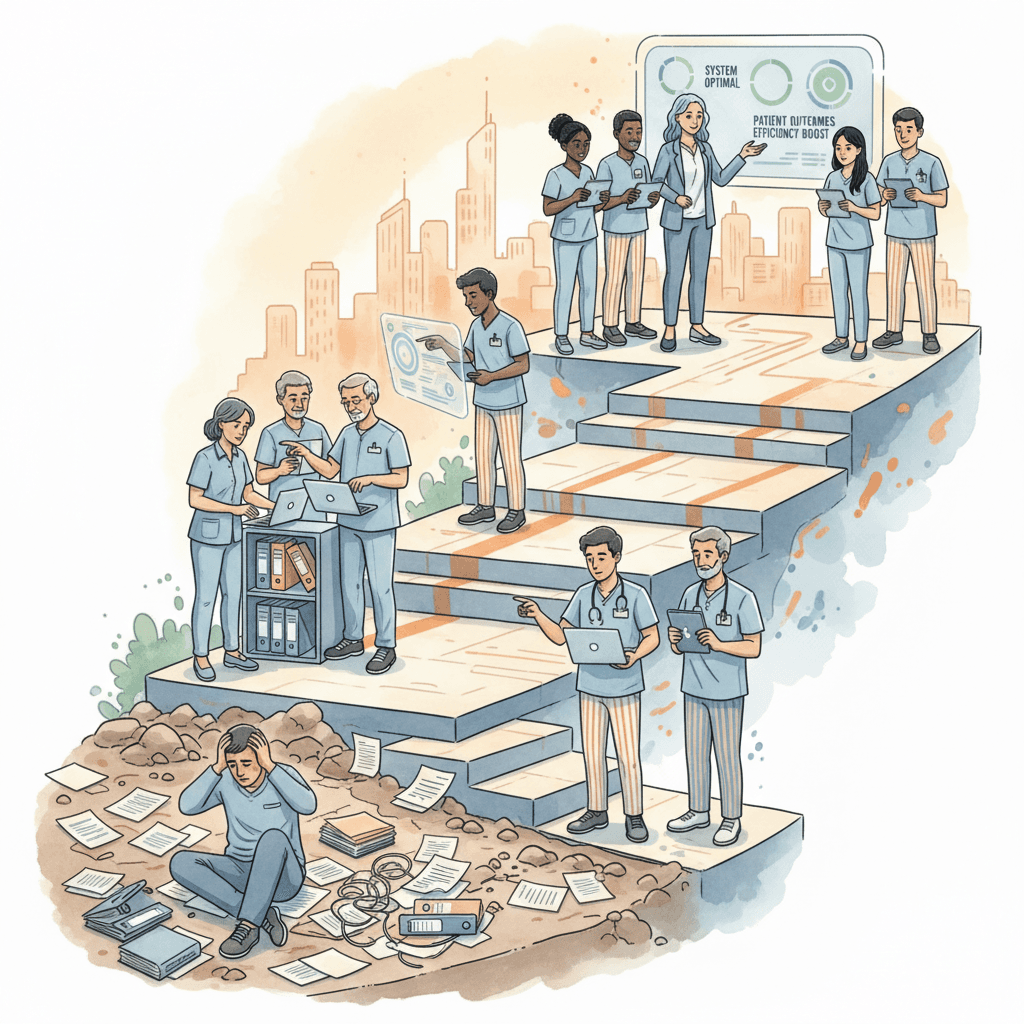
Key Takeaways
- Quality improvement is not a department, a committee, or a quarterly meeting — it is an operating discipline that integrates data collection, analysis, intervention, and verification into the daily rhythm of care delivery, and organizations that treat it as a discrete function rather than a pervasive practice will see sporadic gains that do not sustain.
- The PDSA (Plan-Do-Study-Act) cycle is the most practical and widely validated QI methodology for residential care because it emphasizes small, testable changes rather than large-scale transformations — allowing care teams to test interventions on a single unit or shift before scaling across the organization.
- Selecting 8 to 12 quality indicators across four domains — clinical quality, operational performance, resident experience, and safety — provides enough breadth to detect systemic patterns without overwhelming the organization with measurement burden, and the specific indicators chosen must reflect what actually matters to your residents, your regulators, and your operational reality.
- QI committee structure must balance clinical expertise, operational authority, and frontline representation — and for multi-site operators, the governance model must clarify the relationship between site-level QI teams and the organizational QI committee, including decision authority, data aggregation, and resource allocation.
- Data without analysis is noise, and analysis without action is academic — the organizations that achieve measurable QI outcomes are the ones that have disciplined processes for converting operational data into prioritized improvement projects, tracking those projects through structured PDSA cycles, and verifying results before claiming success.
- Sustaining a QI culture requires visible leadership commitment, frontline staff involvement in identifying and testing improvements, celebration of measurable gains, transparency about what is not working, and an organizational willingness to abandon interventions that data shows are ineffective — even when those interventions were championed by senior leaders.
Introduction
Quality improvement is not a department or a committee. It is an operating discipline.
This distinction matters because most residential care organizations have some form of quality improvement activity — a committee that meets monthly, a set of metrics that gets reported quarterly, an improvement initiative that gets launched after a survey deficiency. What most organizations do not have is a quality improvement program — a systematic, data-driven, continuously operating discipline that identifies variation, tests interventions, measures outcomes, and embeds successful changes into standard practice. The difference between QI activity and a QI program is the difference between an exercise routine and physical fitness. One is something you do occasionally. The other is a condition your organization maintains continuously.
The regulatory relevance is direct and significant. CMS quality assurance and performance improvement (QAPI) requirements for long-term care facilities mandate not just that facilities conduct quality improvement activities, but that they maintain an ongoing, comprehensive, data-driven quality assessment and performance improvement program. The emphasis on "program" — not "project" or "committee" — is deliberate. Canadian provincial licensing standards contain equivalent requirements. CQC's Well-Led framework in England evaluates whether the organization has effective governance processes, including continuous learning and quality improvement. Australia's Aged Care Quality Standards include Standard 8, which explicitly requires that the organization's governing body promotes and enables continuous improvement.
These are not requirements that can be satisfied by pointing to a binder of meeting minutes. They require evidence that the organization systematically identifies areas for improvement, tests and implements changes, and monitors whether those changes produce measurable results. Surveyors evaluate this by asking to see your QI program documentation, your indicator data over time, your completed PDSA cycles, and your evidence of sustained improvement. An organization that can produce these artifacts — and that can articulate how its QI program connects to its operational performance and resident outcomes — presents a fundamentally different compliance profile than one that points to a quarterly committee meeting and a list of improvement goals.
The purpose of this article is to provide a practical framework for building and sustaining a quality improvement program in residential care. It covers the PDSA methodology adapted for care settings, indicator selection, committee structure, data-driven QI practices, technology enablement, and the organizational culture required to sustain QI as an operating discipline rather than a periodic exercise. It is written for compliance officers, clinical directors, operations leaders, and quality managers in long-term care, group homes, and multi-site care organizations who need their QI program to produce measurable outcomes — not just meeting minutes.
The PDSA Cycle for Residential Care
The Plan-Do-Study-Act cycle — developed by W. Edwards Deming and adapted across healthcare — is the most practical quality improvement methodology for residential care settings. Its power lies in its simplicity and its emphasis on small, rapid cycles of change rather than large-scale transformations that take months to plan and years to implement. A well-executed PDSA cycle can be designed in a single meeting, tested in a single week, studied in a single review, and either adopted, adapted, or abandoned based on evidence rather than opinion.
Plan
The planning phase defines three things: what change are we testing, what outcome do we expect, and how will we measure it?
A common failure in the planning phase is ambiguity — the improvement team agrees that "we need to reduce falls" but does not specify what intervention will be tested, on which population, for how long, or against what baseline. A well-designed Plan phase produces a testable hypothesis: "If we implement a toileting schedule aligned with diuretic administration timing for residents on furosemide in Building A, we expect to reduce fall events during peak urgency periods (13:00-16:00) by at least 25 percent over a four-week test period, measured against the same population's fall rate during the preceding eight weeks."
The specificity of that hypothesis does three things. First, it makes the test manageable — one building, one intervention, one population, four weeks. The team is not trying to redesign fall prevention across the entire organization. They are testing a single, specific change in a contained environment. Second, it makes the outcome measurable — the team will know in four weeks whether the intervention worked, because they defined what "worked" means before they started. Third, it makes the result actionable — if the intervention reduces falls by the expected amount, it can be scaled to other buildings. If it does not, the team has learned something specific about why and can design a modified intervention for the next cycle.
Key planning elements for residential care:
- Problem statement: What specific quality issue has been identified, and how was it identified? (Incident trend data, survey deficiency, resident satisfaction feedback, clinical outcome metric)
- Root cause analysis: What contributing factors has the team identified? (Use fishbone diagrams, "5 Whys," or process mapping)
- Intervention: What specific change will be tested? (Be precise — "improve communication" is not a testable intervention; "implement structured SBAR handoff at every shift change in Home 3" is)
- Population and scope: Where and with whom will the test be conducted? (Start small — one unit, one home, one shift)
- Timeline: How long will the test run? (Two to six weeks is typical for most residential care PDSA cycles)
- Measures: What data will be collected to determine whether the intervention worked? (Specify the measure, the data source, the collection method, and the baseline)
- Prediction: What outcome does the team expect? (A specific, quantitative prediction that can be compared against actual results)
Do
The Do phase implements the intervention on the defined scope and collects data. This is not a full-scale rollout — it is a controlled test. The team implements the change as planned, documents what actually happens (including any deviations from the plan), and collects the defined measurement data.
Two common failures in the Do phase undermine the entire cycle. The first is scope creep: the team planned to test a toileting schedule change in Building A but expands the test to Buildings A, B, and C because "it just makes sense to do it everywhere." This destroys the controlled test — if something goes wrong or results are ambiguous, the team cannot isolate the cause. The second failure is data collection neglect: the team implements the intervention but does not collect the measurement data with the rigor required to produce a valid comparison against baseline. If baseline data showed 8 falls during peak hours over 8 weeks, and the test period data is incomplete because two shifts did not record fall times accurately, the Study phase has nothing reliable to analyze.
During the Do phase, the team should also document observations, unexpected outcomes, and implementation challenges. Did staff resist the change? Was the intervention harder to execute than anticipated? Did it have unintended consequences — positive or negative? These qualitative observations are as valuable as the quantitative data, because they inform whether the intervention is sustainable at scale even if the numbers are favorable.
Practical example — reducing falls:
The care team at a 40-bed long-term care facility identified through incident trend analysis that fall events for residents taking morning diuretics were concentrated between 13:00 and 16:00. Root cause analysis revealed that scheduled toileting assistance at 14:00 lagged behind the onset of medication-induced urgency by approximately 60 to 90 minutes, and residents were attempting to ambulate independently during this gap.
The Plan specified: implement a toileting schedule adjusted to 12:30 and 14:30 (replacing 14:00 and 16:00) for eight residents on morning diuretics in the east wing, for a four-week test period. The team predicted a 25 percent reduction in fall events during 13:00-16:00 compared to the prior eight-week baseline of 12 falls in the target population during target hours.
During the Do phase, the adjusted schedule was implemented with training for two shifts of CNAs. Data was collected daily: toileting assistance delivery times, fall events with times, and CNA observations about resident urgency patterns. One implementation challenge was noted: the 12:30 toileting round conflicted with lunch service, creating a brief workflow tension that required a minor staffing adjustment.
Study
The Study phase analyzes the data collected during the Do phase and compares actual results against the prediction made during the Plan phase. This is where most organizations stumble, because Study requires honesty. The question is not "Did we do something?" — it is "Did what we did produce the outcome we predicted?"
In the fall reduction example, the Study phase would analyze the four-week test data against the eight-week baseline. If the team predicted a 25 percent reduction and the data shows a 33 percent reduction (from 12 falls to 4 falls in the target population during target hours over a comparable timeframe), the intervention exceeded expectations. If the data shows a 10 percent reduction, the intervention had a partial effect and may need modification. If the data shows no change or an increase, the intervention did not work as hypothesized and the team needs to understand why.
The Study phase should also analyze the qualitative data: staff feedback, implementation challenges, unintended effects. An intervention that produces strong quantitative results but is unsustainable from a workflow perspective — because it requires heroic effort from staff, conflicts with other operational priorities, or depends on conditions that cannot be replicated — is not a viable improvement. The Study phase must evaluate both effectiveness and feasibility.
Key study questions:
- Did the actual results match the prediction? By how much?
- Was the data collection reliable? Are there gaps or quality concerns?
- What implementation challenges were encountered?
- Were there unintended consequences — positive or negative?
- Is the intervention sustainable as currently designed?
- What modifications would improve effectiveness or feasibility?
Act
The Act phase makes a decision based on the Study findings: adopt, adapt, or abandon.
Adopt: The intervention produced the expected results and is operationally sustainable. Scale it to additional units, homes, or populations. Incorporate it into standard operating procedures, training materials, and care plans. Define ongoing monitoring to ensure the improvement sustains.
Adapt: The intervention showed partial effectiveness or encountered implementation challenges that need to be addressed. Modify the intervention based on what was learned and run another PDSA cycle with the modified approach. This is not failure — it is learning. Most successful QI initiatives require two to four PDSA cycles before arriving at an intervention that is both effective and sustainable.
Abandon: The intervention did not produce meaningful improvement, or the Study phase revealed that the root cause analysis was incorrect and the intervention was addressing the wrong contributing factor. Document what was learned and start a new PDSA cycle targeting a different intervention or a different root cause. Abandoning an ineffective intervention based on data is a sign of a mature QI program. Persisting with an ineffective intervention because the team invested time in it is a sign of an immature one.
PDSA Template
The following template provides a structured format for documenting each PDSA cycle:
Cycle: [Number — e.g., Cycle 1 of 3] Date initiated: [Start date] Improvement team: [Names and roles of team members] Problem statement: [Specific quality issue identified, with supporting data] Root cause analysis: [Contributing factors identified, with methodology used] Intervention: [Specific change being tested] Scope: [Population, unit, location, and duration of test] Prediction: [Expected outcome with specific, measurable target] Baseline data: [Relevant metrics for the pre-intervention period] Test period data: [Metrics collected during the intervention period] Study findings: [Comparison of actual results vs. prediction, qualitative observations] Decision: [Adopt / Adapt / Abandon — with rationale] Next steps: [If adopt: scale plan. If adapt: modifications for next cycle. If abandon: alternative approach.]
Practical example — improving documentation timeliness:
A group home network identified through internal audits that shift documentation was completed on time (within 30 minutes of shift end) only 62 percent of the time across 8 homes. The PDSA cycle tested a change: providing a dedicated 15-minute documentation window at the end of each shift, with handoff responsibilities temporarily covered by the oncoming shift. The test ran in 2 homes for 3 weeks. Result: on-time documentation improved from 64 percent to 91 percent in the test homes. The intervention was adopted and scaled to all 8 homes, with the documentation window built into the standard shift schedule. Three months later, portfolio-wide on-time documentation was at 87 percent, up from 62 percent.
Practical example — medication error reduction:
A 60-bed assisted living community experienced a medication error rate of 2.3 per 1,000 administered doses, above the industry benchmark of 1.5 per 1,000. Root cause analysis revealed that 68 percent of errors occurred during evening medication passes when a single nurse administered medications to 30 residents within a 90-minute window. The PDSA cycle tested staggering the evening medication pass into two rounds (17:00 and 19:00) with half the resident population in each round. Over a 6-week test, the medication error rate dropped to 1.1 per 1,000 doses. The intervention was adopted and integrated into permanent scheduling. A second PDSA cycle then tested adding a barcode scanning verification step to the evening pass, further reducing errors to 0.7 per 1,000 doses.
Choosing Quality Indicators
A quality improvement program without defined indicators is a program without direction. Quality indicators provide the measurement foundation that allows the organization to identify where improvement is needed, to set targets for improvement initiatives, to track progress during PDSA cycles, and to verify that gains are sustained over time. Selecting the right indicators — and avoiding the trap of measuring too many things superficially rather than the right things deeply — is one of the most consequential decisions in QI program design.
The Four Domains
Quality indicators for residential care should span four domains, each capturing a distinct dimension of organizational performance:
Clinical quality indicators measure the outcomes and processes of direct care delivery. These include fall rates (per 1,000 resident days), pressure injury incidence and prevalence, unplanned weight loss, medication error rates (per 1,000 administered doses), infection rates, emergency department transfer rates, unplanned hospitalizations, antipsychotic medication use without a qualifying diagnosis, catheter utilization rates, and restraint use. Clinical indicators are the most directly connected to resident welfare and are the most closely scrutinized by regulators.
Operational performance indicators measure the efficiency and reliability of the systems that support care delivery. These include documentation timeliness (percentage of records completed within the defined window), staffing fill rates (percentage of scheduled shifts filled), overtime hours as a percentage of total hours, agency staff utilization, staff turnover rates, training compliance rates (percentage of staff current on all required training), and incident report completion timeliness. Operational indicators reveal whether the infrastructure of care delivery is functioning reliably.
Resident experience indicators measure how residents and their families perceive the quality of care and life within the facility. These include satisfaction survey scores, complaint rates and resolution times, grievance trends, community integration participation rates, choice and autonomy measures, and family satisfaction scores. Resident experience indicators are increasingly weighted in regulatory frameworks — CMS Five-Star ratings include quality measures, and Australia's Aged Care Quality Standards explicitly evaluate consumer experience.
Safety indicators measure the organization's ability to identify, respond to, and prevent adverse events. These include incident reporting rates (higher is generally better, indicating a healthy reporting culture), investigation completion rates, corrective action implementation rates, repeat incident rates (the percentage of incidents that are recurrences of previously identified issues), near-miss reporting rates, and regulatory citation frequency. Safety indicators provide the clearest view of whether the organization is learning from its events.
How to Select 8 to 12 Indicators
The temptation is to measure everything. The discipline is to measure what matters. An organization tracking 30 indicators is almost certainly not analyzing any of them with the depth required to drive improvement. An organization tracking 8 to 12 well-chosen indicators can maintain the analytical discipline needed to convert measurement into action.
The selection process should follow these principles:
Relevance to your population. If your organization serves adults with intellectual and developmental disabilities, antipsychotic medication use may be less relevant than behavioral incident rates or community integration metrics. If you operate skilled nursing facilities, pressure injury prevalence and catheter utilization may be critical. Choose indicators that reflect the actual care you provide to the actual people you serve.
Alignment with regulatory priorities. Every jurisdiction has indicators that regulators scrutinize with particular attention. CMS quality measures, provincial quality indicators in Canada, CQC Key Lines of Enquiry in England, and the National Aged Care Mandatory Quality Indicator Program in Australia each define specific measures that are expected or required. Your indicator set should include the measures that your regulators will ask about.
Actionability. An indicator is useful only if a change in its value triggers a response. If fall rates increase and no one investigates why or tests an intervention, the indicator is decoration. Select indicators that your organization has the capacity and commitment to act upon.
Balance across domains. Avoid concentrating all indicators in a single domain. An organization that tracks eight clinical measures but no operational or experience measures has a clinical quality program, not a quality improvement program. Aim for three to four clinical indicators, two to three operational indicators, two to three safety indicators, and one to two resident experience indicators.
Benchmarking availability. Where possible, select indicators for which external benchmarks exist — industry averages, peer comparisons, or regulatory thresholds. Internal trend analysis (comparing your performance over time) is valuable, but external benchmarking (comparing your performance against peers) provides context that internal data alone cannot. Sources of benchmarks include CMS Nursing Home Compare data, Canadian Institute for Health Information (CIHI) Your Health System reports, CQC provider data in England, and the Australian Institute of Health and Welfare.
Sample Indicator Set
The following is a sample set of 10 indicators for a multi-site residential care operator:
| Domain | Indicator | Measure | Frequency | Benchmark Source |
|---|---|---|---|---|
| Clinical | Fall rate | Falls per 1,000 resident days | Monthly | CMS/CIHI |
| Clinical | Pressure injury prevalence | Percentage of residents with Stage 2+ pressure injuries | Quarterly | CMS Quality Measures |
| Clinical | Unplanned hospitalizations | ED transfers per 100 residents per month | Monthly | Internal trend + peer comparison |
| Operational | Documentation timeliness | Percentage of shift notes completed within 30 min of shift end | Monthly | Internal target: 90% |
| Operational | Staffing fill rate | Percentage of scheduled shifts filled without overtime or agency | Monthly | Internal target: 95% |
| Operational | Staff turnover | Annualized voluntary turnover rate | Quarterly | Industry average (~55% for DSPs) |
| Safety | Incident investigation completion | Percentage of incidents with completed investigation within timeline | Monthly | Internal target: 95% |
| Safety | Repeat incident rate | Percentage of incidents that are recurrences of prior events | Quarterly | Internal trend (target: declining) |
| Experience | Resident satisfaction | Validated survey composite score | Annually | National benchmarks |
| Experience | Family complaint resolution time | Average days from complaint to documented resolution | Quarterly | Internal target: fewer than 7 days |
QI Committee Structure
A quality improvement program needs a governance structure that brings together clinical expertise, operational authority, data capability, and frontline perspective. Without clinical expertise, QI projects target the wrong problems. Without operational authority, QI decisions do not translate into practice changes. Without data capability, QI conversations are opinion-based rather than evidence-based. Without frontline perspective, QI interventions are designed by people who do not do the work and are resisted by people who do.
Committee Composition
The QI committee should include the following roles:
Chair: The administrator, executive director, or a senior leader with organizational authority to allocate resources and enforce decisions. The chair's presence signals that QI is an organizational priority, not a clinical subspecialty. If the chair delegates this role to a quality coordinator without authority, the committee's recommendations become suggestions rather than directives.
Clinical representative: The director of nursing, medical director, or a senior clinician who can evaluate proposed interventions from a clinical perspective, assess whether clinical indicators reflect genuine quality concerns, and connect QI initiatives to evidence-based practice standards.
Compliance officer: The person responsible for regulatory compliance, who connects QI initiatives to regulatory requirements, identifies compliance-driven improvement priorities, and ensures that QI documentation meets survey expectations.
Operations representative: A house manager or regional operations director who understands the practical realities of implementing changes at the site level — staffing constraints, workflow dependencies, technology limitations, and the difference between what works in a meeting room and what works at 3 AM.
Frontline staff representative: A CNA, DSP, or direct care worker who provides the perspective of the people who will actually execute the changes the committee designs. This role is the most frequently missing from QI committees, and its absence is the most common reason that well-designed interventions fail at the implementation level. Frontline representatives should rotate to ensure broad participation and to prevent the perception that QI is something "other people" do.
Data analyst or quality coordinator: The person responsible for compiling, analyzing, and presenting indicator data. In smaller organizations, this role may be combined with the compliance officer or administrator. The critical requirement is that someone owns the data and presents it in a format that enables decision-making rather than reporting for its own sake.
Meeting Cadence
The QI committee should meet monthly. Less frequently than monthly, and QI loses operational momentum — data becomes stale, PDSA cycles stall between meetings, and the committee becomes a retrospective reporting forum rather than an active improvement engine. More frequently than monthly, and the committee generates meeting fatigue without proportionally more improvement activity.
Each monthly meeting should follow a structured agenda:
-
Indicator review (20 minutes): Review the current month's indicator dashboard. Identify any indicators that have moved outside acceptable range or are trending in a concerning direction. This is not a comprehensive review of every indicator — it is exception-based review focused on indicators that require attention.
-
Active PDSA cycle updates (20 minutes): Each active improvement project reports on its current PDSA phase — what was done, what was found, and what is next. Projects in the Study phase present data and recommendations for adopt, adapt, or abandon. Projects in the Do phase report on implementation progress and any challenges.
-
New project identification (10 minutes): Based on indicator trends, incident patterns, survey findings, or frontline observations, identify candidates for new PDSA cycles. Prioritize based on impact, feasibility, and alignment with organizational goals.
-
Closed project review (10 minutes): For projects that have been adopted and scaled, review sustained results. Has the improvement held? Are there signs of regression? Is additional intervention needed?
Reporting Structure
The QI committee's findings and recommendations must flow to organizational leadership and governance:
- Monthly: QI committee minutes distributed to the administrator and leadership team. Minutes should include indicator dashboard, active project status, and any decisions made.
- Quarterly: QI program summary presented to the governing body or board. The summary should include indicator trends over the quarter, completed PDSA cycles with results, active improvement projects, and any systemic concerns identified.
- Annually: Comprehensive QI program evaluation, assessing overall program effectiveness, indicator trend analysis over 12 months, aggregate impact of completed improvement projects, and priorities for the coming year.
Multi-Site QI Governance
For organizations operating multiple sites, QI governance requires an additional layer of structure. The core question is: where does decision-making authority reside — at the site level, the organizational level, or both?
The most effective model uses a hub-and-spoke structure:
Site-level QI teams (spokes): Each site maintains a small QI team — typically the house manager, a clinician, and a frontline staff representative — that monitors site-specific indicators, identifies site-specific improvement opportunities, and executes PDSA cycles that address local issues. Site teams meet biweekly or monthly and report to the organizational QI committee.
Organizational QI committee (hub): The organizational committee aggregates data across all sites, identifies portfolio-wide trends, prioritizes improvement initiatives that affect multiple sites, and allocates resources (training, technology, staffing adjustments) to support improvement. The organizational committee also standardizes PDSA methodology, templates, and reporting across all sites to ensure consistency and comparability.
Decision authority: Site-level teams have authority to initiate and complete PDSA cycles that affect only their site and require no additional resources. Improvement initiatives that affect multiple sites, require capital investment, or involve policy changes require organizational QI committee approval. This distribution of authority ensures that sites can act quickly on local issues while the organization maintains oversight and coordination of cross-site improvements.
Data-Driven QI
A quality improvement program is only as strong as its relationship with data. Organizations that collect data but do not analyze it are performing quality measurement, not quality improvement. Organizations that analyze data but do not act on it are performing quality research, not quality improvement. Quality improvement requires the complete loop: collect, analyze, intervene, measure, verify.
Turning Operational Data Into Improvement Projects
The most common question QI committees face is not "how do we improve?" but "what should we improve next?" In an organization with dozens of operational metrics, multiple incident categories, regular survey findings, and ongoing staff and family feedback, the number of potential improvement targets can be overwhelming. Data-driven prioritization provides a systematic answer.
The prioritization process starts with indicator review. Each month, the QI committee reviews the indicator dashboard and identifies indicators that are trending negatively, that have crossed a defined threshold, or that represent persistent gaps compared to benchmarks. Not every negative trend requires a PDSA cycle — some fluctuation is normal. The committee should focus on sustained trends (three or more months of worsening performance), significant deviations (indicators that have moved more than one standard deviation from baseline or benchmark), and high-impact indicators (measures directly related to resident safety, regulatory compliance, or organizational sustainability).
Once a potential improvement target is identified, the committee should conduct a rapid root cause assessment before initiating a PDSA cycle. This assessment answers three questions: Why is this indicator deteriorating? Is the cause systemic (process, policy, or resource issue) or situational (one-time event, individual performance issue)? What intervention has the highest probability of impact with the lowest implementation cost?
Trend Analysis
Trend analysis is the discipline of reading data over time rather than as isolated snapshots. A fall rate of 6.2 per 1,000 resident days is meaningless as a standalone number. A fall rate that has increased from 4.8 to 5.3 to 5.9 to 6.2 over four consecutive months is a trend that demands investigation. A fall rate that has been stable between 5.8 and 6.4 for twelve months is a baseline that may be acceptable or may indicate an opportunity for improvement, depending on the benchmark.
Effective trend analysis in residential care requires:
Consistent measurement: The same indicator must be measured the same way every period. If the definition of "fall" changes, or if the data collection method changes, or if the denominator calculation changes, the trend is no longer valid. Measurement consistency is the responsibility of the data analyst or quality coordinator, and it should be documented in the indicator definition (including numerator, denominator, data source, and collection method).
Sufficient time horizon: Trends require time to emerge. Comparing two data points is not trend analysis — it is noise detection. Most residential care QI indicators require at least 6 months of data to establish a meaningful baseline and at least 12 months to identify seasonal patterns. The QI committee should resist the temptation to react to month-over-month fluctuations that fall within normal variation.
Segmentation: Portfolio-wide averages can mask significant site-level variation. An overall fall rate of 5.5 per 1,000 resident days may conceal the fact that three homes are at 3.0 and two homes are at 9.5. Segmenting indicator data by site, by unit, by shift, by day of week, or by resident acuity level reveals patterns that aggregate data obscures. The most actionable QI insights often come from segmentation, because they identify where performance is already good (and can be learned from) and where performance is poor (and needs intervention).
Root Cause Identification
When trend analysis identifies a quality concern, the QI committee must understand why before designing an intervention. Root cause identification for QI purposes follows the same methodologies used in incident investigation — "5 Whys," fishbone diagrams, process mapping — but applied at a systemic level rather than an individual-event level.
For example, if fall rates have increased over three months, the root cause analysis should examine contributing factors across multiple dimensions: Has resident acuity changed (new admissions with higher fall risk)? Have staffing patterns changed (increased vacancy rates, more agency staff, schedule changes)? Has the environment changed (maintenance issues, lighting, flooring)? Have clinical practices changed (new medications, changes in assessment protocols)? Have incident detection practices changed (more falls occurring, or the same number of falls being reported more consistently)? The answer determines the intervention. An increase in falls driven by higher-acuity admissions requires a different response than an increase driven by staffing gaps during evening shifts.
Statistical Process Control Basics for Care Leaders
Statistical process control (SPC) provides a more rigorous framework for distinguishing normal variation from meaningful change. While the full SPC methodology is typically applied in manufacturing and hospital settings with high-volume data, the core concepts are accessible and valuable for residential care QI programs.
The central concept is the control chart: a run chart with a center line (the mean) and upper and lower control limits (typically set at three standard deviations from the mean). Data points that fall within the control limits represent common cause variation — normal fluctuation inherent in any process. Data points that fall outside the control limits, or that form specific patterns (such as eight consecutive points above or below the mean), represent special cause variation — something has changed in the process that requires investigation.
For residential care leaders, the practical value of this concept is the ability to distinguish signal from noise. When your fall rate increases from 5.2 to 5.8 in a single month, an SPC framework helps you determine whether this is a normal fluctuation (common cause) that does not require investigation, or a meaningful shift (special cause) that does. Without this framework, QI committees tend to react to every data movement — launching investigations and PDSA cycles in response to random variation, which wastes resources and generates improvement fatigue without producing meaningful change.
The practical application does not require statistical software. A simple run chart — data plotted over time with a horizontal line at the median — can be maintained in a spreadsheet. If you observe eight consecutive data points on one side of the median (above or below), you have statistical evidence of a shift. This rule of thumb is rigorous enough for most residential care QI purposes and accessible to leaders without statistical training.
Technology for QI Programs
Technology serves four functions in a quality improvement program: it collects data consistently, it analyzes data automatically, it tracks improvement projects systematically, and it makes performance visible in real time. Each function builds on the one before it, and the absence of any one weakens the others.
Dashboards
The QI committee dashboard is the program's central nervous system. It should present the organization's selected quality indicators in a format that enables rapid exception identification — which indicators are within acceptable range, which are trending negatively, and which have crossed threshold values. The dashboard should update at least monthly (weekly for high-frequency indicators like staffing fill rates and documentation timeliness) and should be accessible to all QI committee members and site leaders.
Effective dashboards distinguish between indicators that are on track (green), indicators that require attention (yellow — trending toward threshold), and indicators that require immediate investigation (red — outside acceptable range). This traffic-light model is simple, visual, and effective for audiences with varying levels of data literacy. The dashboard should also show trend lines for each indicator — not just the current value but the trajectory over 6 to 12 months — because trend direction often matters more than current position.
Trend Analysis Tools
Beyond the static dashboard, the QI program benefits from analytical tools that can segment data, correlate indicators, and identify patterns that visual inspection of a dashboard cannot detect. For example, a correlation analysis might reveal that fall rates and staffing fill rates move in opposite directions — when fill rates drop below 90 percent, fall rates increase within two weeks. This correlation, once identified, becomes a leading indicator: the QI team can monitor staffing fill rates as a predictor of fall risk and intervene proactively.
Project Tracking
Each active PDSA cycle should be tracked in a system that captures the project's current phase, responsible team members, timeline, key milestones, and status. This tracking serves two purposes: it prevents projects from stalling (because overdue milestones are visible and escalatable), and it provides the documented evidence of QI program activity that surveyors request during regulatory reviews. A spreadsheet can serve this function for an organization with one or two active projects. An organization with multiple concurrent PDSA cycles across multiple sites needs a purpose-built project tracking tool.
Harmony's reporting and analytics module provides QI programs with real-time indicator dashboards, automated trend analysis, segmentation by site and population, and PDSA project tracking integrated into the same platform that captures the operational data the QI program measures. Because the data that feeds the quality indicators — incident reports, documentation completion records, staffing schedules, clinical assessments — is captured in the same system that presents the QI dashboard, there is no manual data extraction, no spreadsheet compilation, and no delay between data collection and data availability. The QI committee reviews current data, not last month's data. And when a PDSA cycle tests an intervention, the data to evaluate its effectiveness is available in the same system without additional data gathering effort.
Case Scenario: Cedar Valley Reducing Falls by 40 Percent Through PDSA
Cedar Valley is a 48-bed long-term care facility serving seniors with mixed acuity levels, including a 16-bed memory care unit. Over a 12-month period, the facility recorded 142 falls — a rate of 8.1 per 1,000 resident days, significantly above the peer benchmark of 5.5 per 1,000 resident days. Falls had been discussed at quality committee meetings for over a year, but no structured improvement project had been initiated. The QI committee had repeatedly noted that "falls are a concern" and had encouraged staff to "be more vigilant" — but no specific intervention had been designed, tested, or measured.
The new quality coordinator introduced PDSA methodology and proposed that the committee select falls as its first formal improvement project. Rather than attempting to address all falls across the entire facility simultaneously, the team segmented the data to identify the highest-impact target.
Cycle 1: Timing analysis. The team analyzed 6 months of fall data by time of day and found that 47 percent of falls occurred between 17:00 and 23:00 — the evening and early night shifts. Further analysis revealed that 62 percent of evening falls involved residents who had not been toileted within 90 minutes of the fall event. The team hypothesized that evening toileting schedules were not aligned with residents' actual urgency patterns and that evening shift staffing was insufficient to maintain consistent toileting rounds.
The Plan specified a targeted intervention: implement a structured toileting round at 17:30, 19:30, and 21:30 during the evening shift for the 20 residents identified as high fall risk, using a two-person team dedicated to the toileting round and relieved of other duties during that 30-minute window. The test ran in the main building (32 beds) for four weeks.
Result: evening falls in the test population decreased from an average of 4.2 per week to 2.1 per week — a 50 percent reduction. However, the dedicated staffing model was not sustainable long-term because it required pulling two staff from other duties during peak evening activity.
Cycle 2: Staffing modification. The team adapted the intervention based on Cycle 1 findings. Instead of a dedicated two-person toileting team, the revised approach staggered resident dinner times into two seatings (17:00 and 17:45), which freed dining room staff to assist with the first evening toileting round. This eliminated the need for dedicated staffing while maintaining the structured toileting schedule.
Result: evening falls remained at the reduced level (2.3 per week average) over a four-week test, and staff reported that the staggered dinner schedule actually reduced dining room congestion and improved the mealtime experience.
Cycle 3: Memory care unit. The team extended the structured toileting approach to the memory care unit with modifications — visual cues, verbal prompting protocols, and toileting schedules aligned with each resident's documented pattern rather than a fixed schedule. This cycle required close collaboration with the CNAs who knew each resident's habits and the nursing staff who managed continence care plans.
Result: falls in the memory care unit decreased from 3.8 per week to 2.4 per week — a 37 percent reduction. The team also observed a decrease in agitation-related incidents during evening hours, hypothesized to be related to reduced urgency-driven distress.
Aggregate result: Over three PDSA cycles spanning five months, Cedar Valley's overall fall rate decreased from 8.1 to 4.9 per 1,000 resident days — a 40 percent reduction. The improvement was sustained over the subsequent six months with only minor regression (fall rate stabilized at 5.1 per 1,000 resident days). The QI committee documented the complete PDSA cycle series, and the documentation served as evidence of a functioning QI program during the facility's annual survey.
The facility administrator noted three lessons from the project. First, segmenting the data before designing an intervention was essential — the team had spent a year trying to "reduce falls" generically, and progress only occurred when they targeted the specific time window, population, and contributing factor where improvement was most achievable. Second, the willingness to adapt rather than abandon after Cycle 1 was critical — the initial intervention worked clinically but was not sustainable operationally, and the PDSA framework gave the team a structured way to preserve the clinical benefit while solving the operational constraint. Third, the documented PDSA cycles transformed the facility's relationship with its surveyor, who commented that the facility "demonstrated a quality improvement process that produced measurable results" — a direct regulatory credit that the facility had never received before.
Sustaining QI Culture
Building a quality improvement program is a project. Sustaining one is a discipline. The difference between organizations that achieve improvement and organizations that sustain improvement lies in their ability to maintain the QI discipline through leadership transitions, staffing changes, competing priorities, and the inevitable periods when the novelty of quality improvement wears off and the daily grind of operational management reasserts its dominance.
Leadership Visibility
Quality improvement sustains when organizational leaders treat it as a core operational function — not an add-on, not a regulatory requirement, and not a project that can be deprioritized when other pressures increase. The single most important sustainability factor is whether the administrator or executive director attends and actively participates in QI committee meetings. When the senior leader is present, the committee's recommendations are decisions. When the senior leader delegates attendance to a quality coordinator without authority, the committee's recommendations are suggestions that compete with every other priority for attention and resources.
Leaders sustain QI culture not only through committee participation but through daily operational behavior. Asking "what does the data show?" before making operational decisions. Referencing QI indicator trends in staff meetings. Recognizing teams that complete PDSA cycles — regardless of whether the intervention was adopted, adapted, or abandoned, because the learning has value in all three outcomes. Making QI results visible: posting the indicator dashboard in staff areas, sharing improvement stories in newsletters, and including QI outcomes in board reports.
Frontline Involvement
QI programs that are designed, executed, and evaluated exclusively by management and clinical leadership will not sustain. They will achieve initial improvements through top-down directives, and those improvements will erode when management attention shifts to the next priority. Sustained QI requires that frontline staff — the people who deliver care, who observe daily operational realities, and who implement every intervention the QI committee designs — are involved in identifying improvement opportunities, designing interventions, and evaluating results.
Frontline involvement does not mean asking CNAs to attend a monthly committee meeting. It means creating mechanisms for frontline staff to surface concerns and ideas — structured suggestion processes, unit huddles, direct communication channels to the QI committee — and then visibly acting on those inputs. When a frontline staff member suggests that a workflow change would reduce documentation burden, and the QI committee tests that suggestion through a PDSA cycle and adopts it based on evidence, the staff member learns that QI is not something done to them. It is something done with them. That distinction is the foundation of a sustainable QI culture.
Transparency About Failure
QI programs that celebrate successes but conceal failures are not learning organizations. They are marketing organizations. The PDSA methodology explicitly includes the possibility — the likelihood, in fact — that interventions will not work as expected. Cycles that result in "adapt" or "abandon" decisions are not failures. They are the mechanism by which the organization learns what works and what does not.
Sustaining QI culture requires that the organization is transparent about interventions that did not produce the expected results. Sharing these outcomes openly — in QI committee meetings, in staff communications, and in board reports — normalizes the learning process and prevents the QI program from becoming a showcase for cherry-picked successes. It also prevents the organization from persisting with interventions that data shows are ineffective — a common pattern when the intervention was championed by a senior leader whose ego is invested in its success.
Avoiding QI Fatigue
Organizations that launch too many PDSA cycles simultaneously, that change focus every month, or that never complete a cycle before starting the next one will generate QI fatigue — a state where staff and leaders perceive quality improvement as an endless series of initiatives that demand time and attention without producing visible results. QI fatigue is a cultural toxin that can kill a QI program more effectively than any external threat.
The antidote is discipline: limit the number of active PDSA cycles to what the organization can realistically execute with rigor (two to three concurrent projects for a single-site organization, four to six for a multi-site operator), complete each cycle through all four phases before starting the next one, and ensure that every completed cycle produces a visible outcome — an adopted change, a documented learning, or an abandoned approach with a clear explanation of why.
Conclusion
A quality improvement program is not a set of meetings, a collection of metrics, or a binder of completed PDSA templates. It is an organizational capability — the ability to identify variation in performance, understand its causes, test interventions, measure their effects, and embed successful changes into daily operations. Organizations that develop this capability systematically outperform those that do not, across every metric that matters: regulatory survey outcomes, clinical quality measures, staff retention, resident satisfaction, and operational efficiency.
The PDSA methodology provides the structure. Quality indicators provide the measurement. Committee governance provides the accountability. Technology provides the visibility. But none of these components produce improvement on their own. They produce improvement when they are operated as an integrated system by an organization that treats quality improvement not as something it does but as something it is.
The residential care organizations that achieve sustained quality improvement share three characteristics. They use data to identify problems rather than waiting for regulators to find them. They test small changes rapidly rather than planning large changes indefinitely. And they are honest about results — celebrating improvements, learning from failures, and abandoning approaches that do not work regardless of who proposed them. These characteristics are not personality traits. They are organizational disciplines that can be designed, built, measured, and sustained. The question is not whether your organization can build a quality improvement program. It is whether your organization is willing to operate one.
FAQ
How many PDSA cycles should we run at the same time?
The number of concurrent PDSA cycles should be calibrated to your organization's capacity to execute each cycle with rigor — including data collection, analysis, and genuine study of results — rather than to an abstract target. For a single-site facility, two to three concurrent cycles is a practical maximum. Each cycle requires dedicated attention from the improvement team, and spreading attention across too many projects results in cycles that stall in the Do phase because no one is collecting data, or that skip the Study phase because the committee moves on to the next initiative before analyzing results. For a multi-site operator, site-level teams can each manage one to two cycles while the organizational QI committee oversees an additional two to three portfolio-wide initiatives. The discipline is to complete each cycle through all four phases before initiating new ones. An organization running six PDSA cycles simultaneously but completing none of them is not doing quality improvement — it is doing quality activity.
What is the difference between quality improvement and quality assurance?
Quality assurance (QA) is the discipline of maintaining existing standards — ensuring that defined processes are followed, that performance meets established thresholds, and that compliance requirements are satisfied. Quality improvement (QI) is the discipline of raising standards — identifying opportunities to achieve better outcomes than current processes produce, testing interventions, and embedding successful changes. QA asks "Are we meeting the standard?" QI asks "Can we set a higher standard and achieve it?" Both are necessary, and they are complementary rather than competing. An organization that does QA without QI will maintain its current performance level but will not advance. An organization that does QI without QA may achieve sporadic improvements that are not sustained because the foundational standards are not being maintained. The most effective quality programs integrate both: QA functions (audits, compliance monitoring, standard enforcement) operate continuously to maintain the floor, while QI functions (PDSA cycles, indicator analysis, improvement projects) operate systematically to raise the ceiling.
Our organization is small — do we really need a formal QI committee?
Yes, though the structure can be scaled to your organization's size. A single group home with 8 residents and 15 staff members does not need a 7-person QI committee meeting monthly with a formal charter. It does need a defined process for reviewing quality data regularly, identifying areas for improvement, testing changes, and measuring results. This could be as simple as the house manager and a senior direct care worker reviewing three to four key indicators monthly, selecting one area for a PDSA cycle each quarter, and documenting the cycle and its results. The scale is smaller, but the discipline is the same: data-driven identification, structured testing, honest evaluation, and documented outcomes. What small organizations cannot afford is informality — relying on the house manager's intuition about what is working and what is not, without measurement or documentation. That approach does not satisfy regulatory QI requirements, and more importantly, it does not produce the systematic improvement that a structured approach achieves.
How do we get buy-in from frontline staff who see QI as "more work"?
Frontline staff resist QI when it is experienced as additional work with no visible benefit to their daily practice. The most effective approach is to select the first QI project based on a problem that frontline staff themselves have identified and that directly affects their work experience. If CNAs have been complaining that evening documentation takes too long because the system is slow, a PDSA cycle that tests and implements a faster documentation workflow produces a tangible benefit that staff can feel. If direct support professionals have been frustrated by frequent behavioral incidents during meal transitions, a PDSA cycle that tests a modified transition protocol and reduces those incidents improves their daily work experience. When frontline staff experience QI as a process that solves their problems — not a process that creates additional paperwork for someone else's compliance requirements — buy-in follows naturally. The worst approach is to launch a QI program with a project selected by management that addresses a management concern (like documentation compliance rates) without any connection to what frontline staff experience as their most pressing daily challenge.
How do we know if our QI program is actually working?
A functioning QI program produces three types of evidence. First, indicator trends: at least some of your quality indicators should show measurable improvement over 12 months. Not all indicators will improve simultaneously, but an organization that runs four to six PDSA cycles per year and sees no improvement in any indicator has a program design or execution problem. Second, completed PDSA cycles: the organization should have documented cycles that include all four phases and that demonstrate honest Study findings — including cycles where the intervention was adapted or abandoned based on data. An organization that reports only successful adoptions is likely not being honest about its results. Third, sustained improvements: gains achieved through PDSA cycles should hold over time. An organization that achieves a 30 percent fall rate reduction during a PDSA test period but sees the rate return to baseline within three months has an adoption problem — the intervention was not adequately embedded into standard practice. Track the sustainability of each adopted intervention at 90 days, 6 months, and 12 months post-adoption. Sustained improvement is the ultimate evidence that the QI program is working.