Key Takeaways
- The 15 minutes between shifts is where continuity of care lives or dies — structured handoff documentation reduces handoff-related adverse events by 30 to 50% compared to informal verbal-only handoffs, and the templates in this guide provide a ready-to-implement framework for every residential care setting.
- The SBAR-RC handoff template adapts the proven SBAR (Situation, Background, Assessment, Recommendation) framework for residential care by adding five categories that hospital-oriented handoffs miss: behavioral status, family communication, pending appointments, ADL changes, and environmental or safety concerns.
- Handoff documentation must be adapted to care setting — a two-staff group home shift change, a 40-bed long-term care unit report, and an assisted living wellness check each require different templates with different information density, but all share the same underlying structure and prioritization system.
- The red-amber-green prioritization system ensures that outgoing staff communicate the most safety-critical information first — red items (immediate clinical or safety risks) are communicated verbally and documented, amber items (changes requiring monitoring) are documented with verbal highlights, and green items (routine updates) are documented for reference without requiring verbal discussion.
- Digital handoff tools eliminate the information loss inherent in verbal-only and paper-based handoffs by auto-populating clinical data from the electronic record, generating pending task queues, and creating searchable handoff archives — but they must be built on top of a well-designed handoff protocol, not offered as a substitute for one.
- Measuring handoff quality requires auditing both the completeness of handoff documentation and the accuracy of information transfer — a handoff that documents everything but communicates incorrectly is as dangerous as a handoff that communicates nothing at all.
Introduction
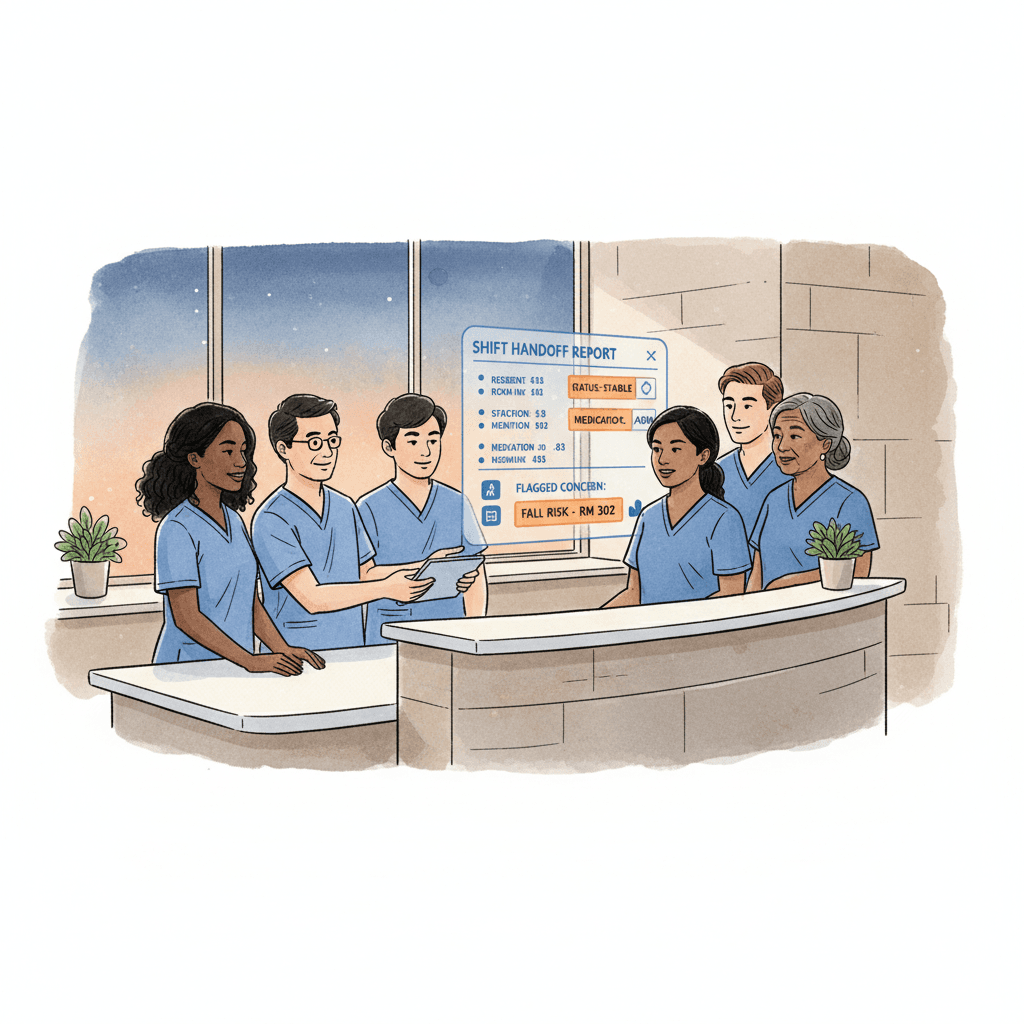
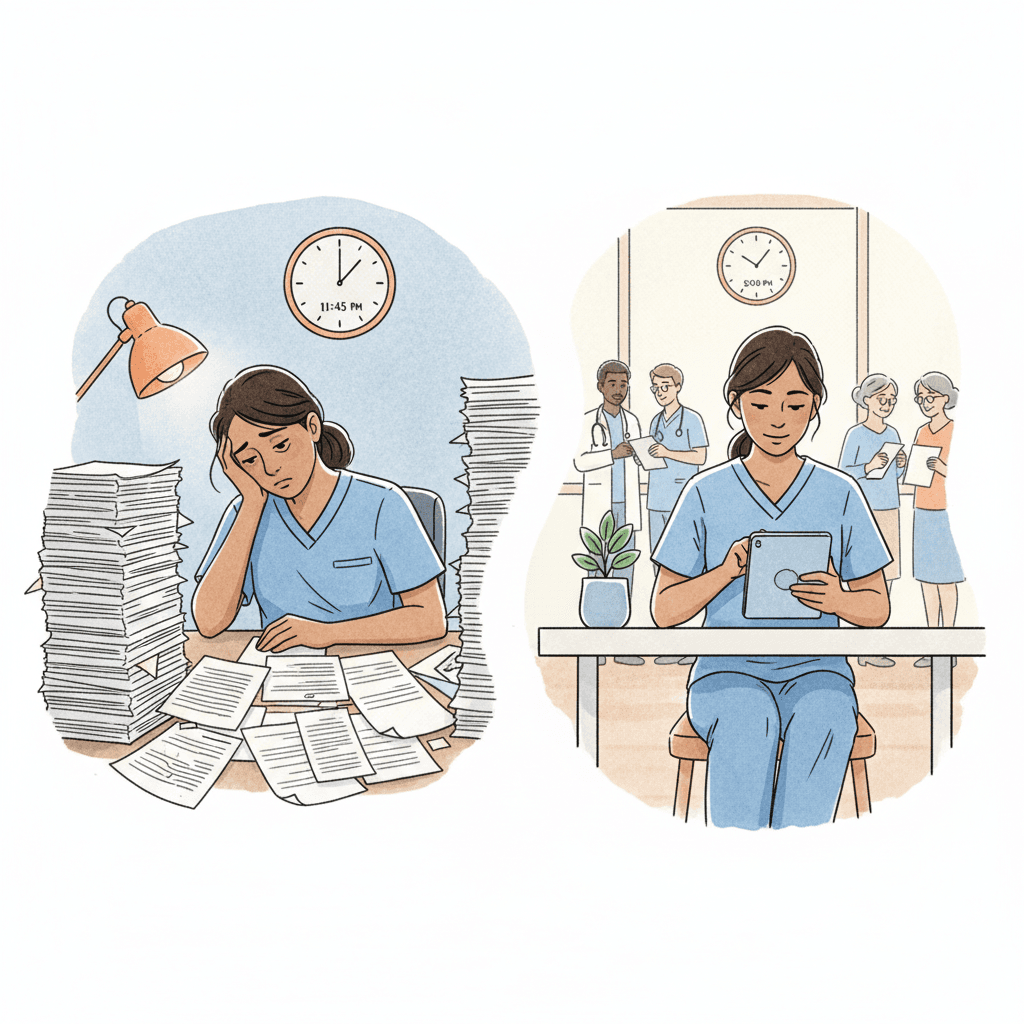
The 15 minutes between shifts is the most dangerous period in residential care. Not because anything dramatic happens during those 15 minutes — but because of what does not happen. Information that existed in one person's mind walks out the door. Information that should transfer to the next person's mind does not arrive. And the gap between what was known and what is known becomes the space where errors, omissions, and preventable harm find room to grow.
Consider the arithmetic of a single shift change at a 30-bed long-term care facility. The outgoing nurse has accumulated eight hours of observations, decisions, and interactions across 30 residents. Some of those observations are routine — Mrs. Chen ate 80% of her breakfast, Mr. Abadi completed his physical therapy exercises without complaint. Others are clinically significant — Mrs. Patterson's blood pressure has been trending upward over the last three readings, the pharmacy sent a new antibiotic for Mr. Okoro that requires a loading dose protocol, and the daughter of a resident in Room 14 called with concerns about a skin change she noticed during yesterday's visit. The outgoing nurse holds all of this information simultaneously, weighted by clinical importance and operational urgency. The incoming nurse holds none of it.
The handoff is the mechanism by which that informational asymmetry is resolved. And in residential care, it is resolved poorly more often than it is resolved well. The Joint Commission — the primary accrediting body for healthcare organizations in the United States — identified communication failures during care transitions as the root cause of approximately 80% of serious preventable adverse events. The World Health Organization designated communication during patient care handoffs as one of its top global patient safety priorities. A systematic review published in the BMJ found that standardized handoff protocols reduced preventable adverse events by up to 30%.
These statistics describe what happens when handoffs fail. This article provides what is needed to ensure they succeed: ready-to-use handoff documentation templates designed for residential care, a prioritization system that ensures the most critical information is always communicated first, guidance on adapting templates to different care settings, a practical implementation plan for rolling out structured handoffs, and metrics for measuring handoff quality over time.
The templates in this guide are not theoretical. They are derived from handoff frameworks validated in peer-reviewed research — SBAR, I-PASS, and the WHO Handoff Toolkit — adapted for the specific information requirements of long-term care, group homes, and assisted living settings. They are designed to be printed, laminated, and placed at every handoff station today, or integrated into a digital handoff platform that automates the data population and creates a searchable handoff archive.
Handoff documentation is not paperwork. It is the clinical bridge between two teams caring for the same people. When the bridge is solid, continuity is maintained. When it is not, residents fall through the gaps.
The SBAR-RC Handoff Template
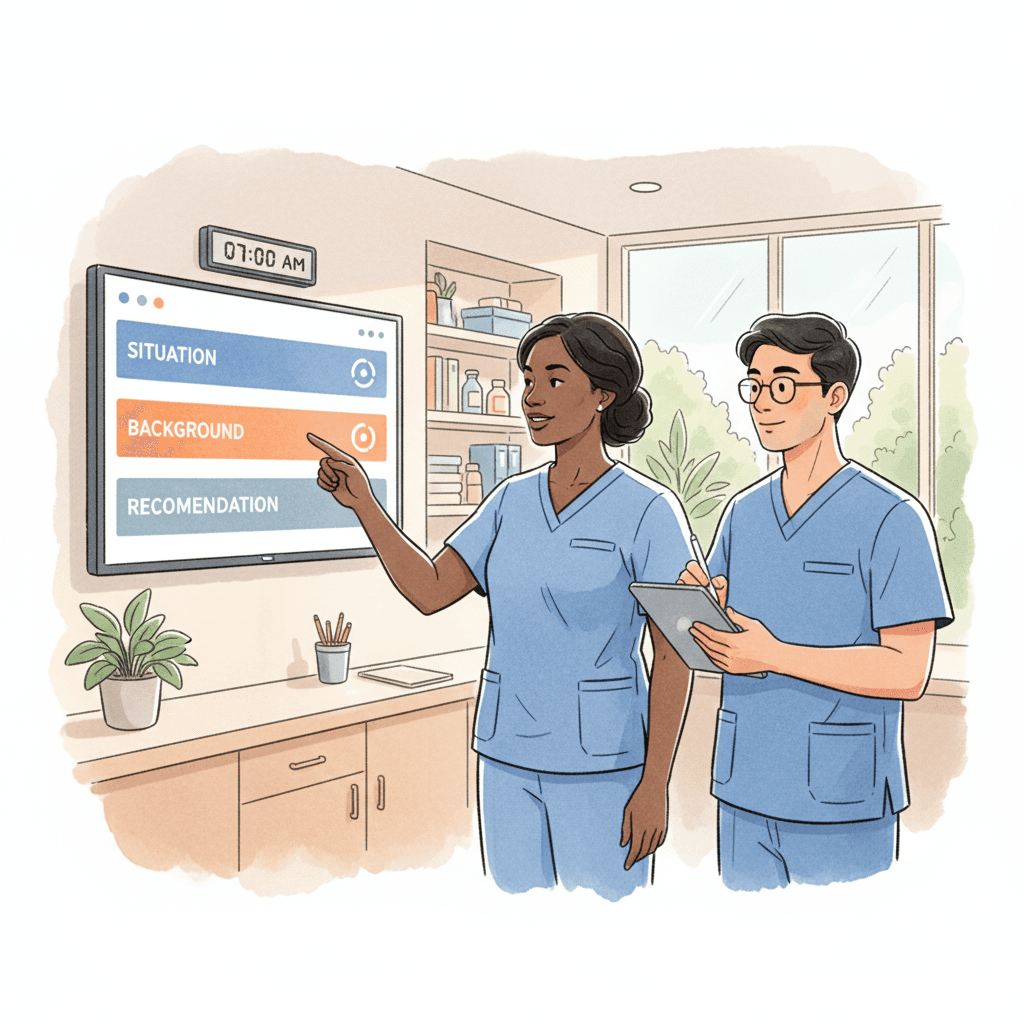
SBAR — Situation, Background, Assessment, Recommendation — is the most widely validated structured communication framework in healthcare. Developed by the United States Navy for high-stakes communication in nuclear submarine operations and adapted for healthcare by Kaiser Permanente in the early 2000s, SBAR provides a predictable sequence that ensures critical information is conveyed in a consistent order regardless of who is delivering it or who is receiving it.
Standard SBAR, however, was designed for acute clinical communication — a nurse calling a physician about a deteriorating patient, a surgeon briefing the post-anesthesia care unit after a procedure. When applied directly to residential care shift handoffs, standard SBAR misses entire categories of information that are essential for continuity in settings where residents live for months or years and where care encompasses behavioral health, family dynamics, daily living activities, and environmental safety alongside clinical status.
SBAR-RC — SBAR for Residential Care — extends the standard framework with five additional categories. The result is a nine-section handoff template that captures the full scope of information that residential care continuity requires.
S — Situation: What Is Happening Right Now
The Situation section opens the handoff. It answers one question: What does the incoming shift need to know immediately?
This section is not a summary of the entire shift. It is a focused statement of current status and immediate concerns, restricted to information that is time-sensitive or safety-relevant. For each resident who requires individual handoff attention, the Situation statement includes the resident's name and location, their current clinical status if it deviates from baseline, any immediate needs or tasks that require attention within the next two hours, and any active safety concerns.
Template fields:
- Resident name and location: Full name and current physical location (room number, common area, off-site if applicable).
- Current status: One-line clinical status — stable, changed, acute, or new concern. Use "stable — no update needed" for residents with nothing to hand off.
- Immediate needs: Tasks due within the next two hours — medication due at a specific time, scheduled appointment departure, family member arriving, PRN medication follow-up due.
- Active safety concerns: Fall risk status if changed, elopement risk, behavioral escalation indicators, skin integrity changes, infection control precautions in effect.
Example entry: "Mrs. Patterson, Room 2 — changed status. Abdominal pain rated 5/10 at 0300, refused PRN acetaminophen at 2300 and 0300. Resting at time of handoff but reported pain still present at 0500. Needs nursing assessment by 0900. No active safety concerns beyond current pain."
Guidance for completing this field: Lead with the most urgent resident. If no residents require urgent handoff, say so explicitly — "No urgent situations to hand off" — rather than skipping the section. Absence of urgency is information the incoming shift needs to hear.
B — Background: What Context Makes This Meaningful
The Background section provides the clinical and personal history that makes the Situation meaningful. Without Background, the incoming staff member knows that Mrs. Patterson has abdominal pain but does not know whether this is a new symptom or a recurring pattern, whether it might indicate a serious condition, or what clinical history is relevant to the assessment.
Template fields:
- Relevant medical history: Diagnoses, conditions, or previous episodes related to the current situation.
- Recent changes: Medication changes within the past 72 hours, care plan updates, dietary changes, new orders.
- Recent provider contact: Physician, NP, or specialist visits in the past 7 days and their outcomes. Telehealth consultations and their recommendations.
- Pending diagnostics: Lab work ordered and not yet resulted, imaging scheduled, specialist referrals pending.
- Baseline for comparison: What is normal for this resident so the incoming shift can identify deviation.
Example entry: "Mrs. Patterson has a history of diverticulitis — hospitalized for a flare-up 6 months ago. PCP increased her fiber supplement last week. No fever — temp 98.4 at 0400. Last bowel movement 3 days ago per tracking sheet, which is unusual for her. Baseline BMs are daily. No recent medication changes other than the fiber supplement."
Guidance for completing this field: Include only the history that is relevant to the current situation. This is not a comprehensive medical history — it is the context that helps the incoming shift interpret and respond to the Situation. If the resident's current handoff item is a behavioral concern, the Background should include behavioral history, not cardiac history.
A — Assessment: What Do You Think Is Happening
The Assessment section is where the outgoing staff member provides their clinical judgment. This is not a diagnosis. It is an informed interpretation from someone who has been observing the resident for the past 8 to 12 hours — an interpretation that the incoming staff member cannot form because they were not present.
Template fields:
- Clinical interpretation: What the outgoing staff member believes is happening based on their observations.
- Trajectory: Is the condition stable, improving, or deteriorating compared to the start of the shift?
- Level of concern: Low (routine monitoring sufficient), moderate (needs assessment within a defined timeframe), or high (needs immediate attention).
- Patterns observed: Any trends, recurring events, or changes from the resident's normal pattern.
Example entry: "I am moderately concerned. Pain pattern and location are consistent with how her last diverticulitis episode presented — lower left quadrant, onset over 24 to 48 hours, associated constipation. Three days without a BM is unusual for her. I think she needs a nursing assessment this morning and potentially PCP contact if pain persists or worsens."
Guidance for completing this field: Do not hedge by saying "I am not sure." If you are uncertain, state what you observed and what two or three possibilities you considered. The incoming staff member benefits from knowing your thought process even if you have not reached a conclusion. Your uncertainty is valuable clinical information.
R — Recommendation: What Should the Incoming Shift Do
The Recommendation section converts the Assessment into specific, actionable steps. It tells the incoming staff member exactly what to do, when to do it, and what conditions should trigger escalation.
Template fields:
- Specific actions: What tasks should be performed and by when. Name the task, the deadline, and the person responsible if applicable.
- Monitoring parameters: What to watch for, how frequently, and what to document.
- Escalation triggers: What specific changes should prompt the incoming shift to contact a provider, supervisor, or emergency services. Use measurable criteria, not vague language.
- Provider contact information: Name and contact method for the relevant prescriber, on-call service, or specialist.
Example entry: "Nursing assessment by 0900 — assess abdomen, check vitals, document pain level. Monitor pain every 2 hours and document. Escalation triggers: pain above 6/10, fever above 100.4, nausea or vomiting, abdominal rigidity. If any trigger is met, contact Dr. Mendes at the clinic — number is on the provider contact sheet. Encourage fluids and light breakfast if she is willing."
Guidance for completing this field: Recommendations must be specific enough that a staff member who has never met this resident could follow them. "Keep an eye on her" is not a recommendation. "Assess pain level at 0900, 1100, and 1300 using the numeric rating scale and document in the progress notes" is a recommendation.
RC-1 — Behavioral Status
The first residential care extension captures information about behavioral health, emotional wellbeing, and behavioral support plan implementation. In many residential care settings — particularly IDD group homes and memory care units — behavioral status is the most critical handoff category.
Template fields:
- Current behavioral presentation: Calm, agitated, anxious, withdrawn, escalating — describe the resident's current state.
- Incidents during shift: Any behavioral events, their antecedents, the interventions used, and the outcomes.
- BSP changes: Any changes to the behavioral support plan, new strategies implemented, or strategies that were ineffective.
- Psychotropic medication notes: PRN behavioral medications given or refused, effectiveness observed, and timing of last dose.
Example entry: "Mr. Okafor, Room 3 — one escalation at 2000, verbal aggression toward another resident during dinner. Antecedent: seating conflict at the dining table. Used verbal de-escalation and offered quiet room per updated BSP. He calmed within 15 minutes. No physical intervention needed. No PRN medication given. BSP was updated yesterday — new plan adds a 10-minute quiet-room option before physical redirection. Updated plan is in his binder and in the system."
RC-2 — Family Communication
The second residential care extension captures all family contact during the shift. In residential care, family communication is not a peripheral concern — it is a core continuity requirement that, when dropped from the handoff chain, produces trust breakdowns, complaints, and regulatory findings.
Template fields:
- Contact during shift: Who called or visited, the time, and the duration.
- Content of communication: What was discussed, what concerns were raised, what information was shared.
- Commitments made: Any promises or follow-up commitments made to the family member. Specify who committed to what and by when.
- Emotional tone: Was the family member calm, concerned, upset, angry? This context helps the incoming shift calibrate their approach if follow-up is needed.
- Follow-up required: What actions need to be taken and by whom.
Example entry: "Mrs. Patterson's daughter Sarah called at 2100. She noticed a bruise on her mother's left forearm during yesterday's visit and was upset. I explained it is documented — she bumped the doorframe on Monday, witnessed by two staff. Sarah wants the site manager to call her back today. Her tone was concerned but not hostile. I logged the call and referenced the incident documentation. Follow-up: site manager to call Sarah by 1400."
RC-3 — Pending Appointments and External Coordination
The third residential care extension covers appointments, deliveries, and external contacts expected during the incoming shift.
Template fields:
- Appointments: Resident name, appointment type, provider, time, transportation arrangements, documents or materials that must accompany the resident, preparation required (fasting, medication timing).
- Deliveries expected: Pharmacy deliveries, medical supply deliveries, equipment deliveries — with expected time and any action required upon receipt.
- External contacts expected: Home health visits, therapy visits, regulatory visits, family visits with specific scheduled times.
Example entry: "Mr. Abadi — podiatry appointment at 1030 at the clinic on Oak Street. Transport arranged via facility van, departure at 0945. He needs his medication list and insurance card — both are in his file in the office. He can eat breakfast as normal. Mrs. Chen — pharmacy delivery expected between 1000 and 1200, includes a new prescription for omeprazole. Verify the delivery against the MAR and stock in her medication bin."
RC-4 — ADL and Wellness Changes
The fourth residential care extension captures changes in activities of daily living, nutritional intake, sleep patterns, and general wellness — the gradual shifts that formal clinical documentation often misses but that frontline staff observe.
Template fields:
- Eating/drinking changes: Appetite, intake quantity, any swallowing concerns observed, food preferences or refusals.
- Sleep pattern changes: Sleep quality, night waking frequency, daytime drowsiness.
- Mobility changes: Any observed change in gait, balance, strength, or willingness to ambulate.
- Continence changes: Any change in continence status, frequency, or pattern.
- Social and engagement changes: Withdrawal from activities, increased or decreased interaction with peers, mood changes.
Example entry: "Mrs. Chen — decreased appetite over the last two days. Ate approximately 50% of meals yesterday and today, compared to her usual 80 to 90%. No swallowing difficulty observed. She said she 'just is not hungry.' No nausea or abdominal complaints. Worth monitoring — if intake continues below 50% for another day, consider nursing assessment and possible PCP notification."
RC-5 — Environmental and Safety Concerns
The fifth residential care extension captures environmental conditions, equipment issues, and safety concerns that affect resident wellbeing.
Template fields:
- Environmental issues: Temperature, noise, cleanliness concerns, equipment malfunctions (call bells, bed alarms, lifts).
- Safety incidents: Falls, near-falls, elopement attempts, fire alarm activations, utility issues.
- Maintenance requests: Submitted during the shift and their status.
- Supply concerns: Items running low or out of stock that the incoming shift will need.
Example entry: "Bed alarm in Room 8 is not sounding consistently — maintenance request submitted at 2200, ticket number 4471. Until it is repaired, increase visual checks on Mr. Holloway to every 30 minutes overnight. He is a high fall risk and the alarm is his primary alert system. I placed a temporary chair alarm as an interim measure."
Handoff Documentation by Care Setting
The SBAR-RC template provides a comprehensive framework, but the implementation must match the operational reality of each care setting. A 6-bed group home with two staff members per shift has different handoff dynamics than a 60-bed long-term care unit with a nursing team, and both differ from an assisted living community where residents are semi-independent. The underlying structure and information requirements remain consistent — what changes is the format, the depth, and the delivery method.
Group Home Handoff Template
Group homes (typically 4 to 16 beds) operate with small teams — often two direct support professionals per shift, with nursing oversight that may be remote or periodic. The handoff is face-to-face between two people, and the entire handoff covers every resident in the home.
Template format: A single-page document organized by resident, with a row for each resident and columns for each SBAR-RC section. Residents with nothing to hand off receive a single-word status ("stable") in the Situation column and blank remaining columns. Residents with active handoff items receive completed entries across all relevant sections.
Minimum duration: 15 minutes. Group home handoffs are frequently compressed to 5 minutes or less because the outgoing staff member wants to leave and the incoming staff member feels they already know the residents. Fifteen minutes is the minimum required to review every resident systematically, even when most are stable.
Template-specific fields for group homes:
- House-level items: Issues that affect the entire home rather than individual residents — maintenance concerns, supply levels, upcoming inspections, visitors expected, vehicle status.
- Delegation status: Which tasks have been delegated by the supervising nurse and are active for this shift — medication administration, blood glucose monitoring, wound care observations.
- On-call information: Who is on call (supervising nurse, administrator, behavioral consultant), their contact numbers, and the appropriate escalation pathway for different scenario types.
Paper implementation: Print the template on legal-size paper (landscape orientation), laminate a blank copy at the handoff station, and use dry-erase markers for shift-to-shift updates. Keep completed paper copies in a handoff binder for 30 days as a reference trail.
Long-Term Care Unit Handoff Template
Long-term care units (typically 20 to 60 beds per unit) conduct handoffs as team-based shift reports. The outgoing nurse reports to the incoming nurse, often with CNA participation. The volume of residents requires a different approach than the group home's resident-by-resident review.
Template format: A two-tier structure. Tier 1 is a unit-level summary — census count, admissions and discharges during the shift, deaths, transfers, residents currently off-unit, and unit-wide issues (staffing, equipment, environmental). Tier 2 is a resident-specific report using the SBAR-RC framework, but only for residents who require individual handoff attention. Residents who are at baseline with no changes receive a batch statement: "Residents in Rooms 15 through 22 are at baseline — no individual handoff items."
Minimum duration: 20 minutes for a 30-bed unit, 30 minutes for a 60-bed unit. This includes time for questions and two-way verification.
Template-specific fields for LTC units:
- Census and acuity: Current census, available beds, residents on observation or increased monitoring, residents on hospice or comfort care.
- Medication pass status: Where the outgoing shift left off — which residents have completed their medication pass, which have not, and why (absent, sleeping, refused — with planned re-approach times).
- CNA assignment sheet: Which CNA is assigned to which residents for the incoming shift, and any assignment-specific notes (resident preferences, assist levels, two-person transfer requirements).
- Pending physician orders: Orders received during the shift that have not yet been executed, with expected execution times.
- Infection control status: Residents on isolation precautions, type of precaution, PPE requirements, and any new cultures sent.
Digital implementation: LTC units benefit most from digital handoff tools that auto-populate clinical data from the electronic health record. A digital handoff platform can pull the current medication list, recent vital signs, pending orders, and active alerts into the handoff template automatically, allowing the outgoing nurse to focus their verbal communication on assessment, interpretation, and recommendations rather than reciting data that the incoming nurse could read from the chart.
Assisted Living Wellness Check Template
Assisted living communities occupy a distinct position in the care continuum. Residents are semi-independent, many manage their own medications, and the staff's primary role shifts from direct care to wellness monitoring, activity facilitation, and emergency response. The handoff in assisted living is less about clinical status and more about wellness observations, scheduled services, and resident-reported concerns.
Template format: A checklist-based format organized into three sections: wellness observations (residents who required attention or reported concerns during the shift), scheduled services (meals, activities, transportation, housekeeping, medication reminders), and operational items (staffing, maintenance, visitors, deliveries).
Template-specific fields for assisted living:
- Wellness rounds summary: Which residents were checked, any concerns observed or reported, any residents who did not respond to the wellness check (with follow-up actions taken).
- Medication reminder status: Which residents received scheduled medication reminders, any residents who did not respond or declined, and any medication-related concerns observed (resident appeared confused about their medications, expressed new complaints about side effects).
- Meal participation: Residents who did not attend a meal and whether they were checked on, residents who reported dietary concerns or requested meal modifications.
- Social and activity engagement: Residents who declined activities they normally attend, residents who appeared isolated or withdrawn, residents who expressed dissatisfaction or requested services.
- Emergency response events: Any falls, medical emergencies, behavioral concerns, or calls to emergency services during the shift.
Critical Information Prioritization
Not all handoff information is equally important. A handoff that spends five minutes discussing a resident's meal preferences and thirty seconds on an acute pain episode has failed at prioritization. The red-amber-green (RAG) system provides a structured approach to ensuring that the most critical information is communicated first, with the greatest emphasis, and with explicit verification that the incoming staff member received and understood it.
Red: Communicate Immediately, Verify Understanding
Red items are situations that present an immediate or near-immediate risk to resident safety, health, or wellbeing. They require verbal communication with explicit verification — the incoming staff member must repeat back the key details to confirm they understood.
Red items include: acute clinical changes (new pain, vital sign abnormalities, falls within the past shift, new confusion or altered mental status), medication issues (new medications with specific administration requirements, medication errors discovered, controlled substance discrepancies), safety risks (active elopement risk, active behavioral escalation, equipment failures affecting resident safety such as a non-functional bed alarm for a fall-risk resident), and urgent follow-up tasks (physician callback required within a defined timeframe, family member expecting a call, time-critical medication due within the first two hours of the incoming shift).
Communication protocol for red items: The outgoing staff member states the item clearly and asks the incoming staff member to confirm understanding. "Mrs. Patterson has abdominal pain — she has a history of diverticulitis and this looks similar to her last episode. She needs a nursing assessment by 0900. Can you repeat back what the assessment should include and what would trigger a call to her PCP?" This is not a bureaucratic exercise. It is a verification step that catches misunderstanding before it produces a care gap.
Amber: Communicate Verbally With Documentation Reference
Amber items are situations that require monitoring or follow-up but do not present an immediate risk. They are communicated verbally during the handoff — not merely documented — because documented items that are not highlighted verbally may not be read until a later review, if they are read at all.
Amber items include: changes in ADLs or wellness patterns (decreased appetite, sleep disturbance, reduced mobility), family communication requiring follow-up within 24 to 48 hours, pending appointments or deliveries during the incoming shift, medication changes that do not require immediate action but should be noted (dose adjustment effective in two days, new PRN medication added to the MAR), and behavioral observations that do not constitute a current escalation but represent a shift from baseline.
Communication protocol for amber items: The outgoing staff member mentions each amber item verbally and references where the documentation can be found. "Mrs. Chen's appetite has been down for two days — I documented the details in the ADL section of the handoff. If it continues through today, flag it for the nurse." No read-back is required, but the incoming staff member should acknowledge hearing the item.
Green: Document for Reference, No Verbal Discussion Required
Green items are routine updates that do not require verbal communication during the handoff. They are documented in the handoff record for the incoming shift to reference as needed during their shift.
Green items include: residents who are at baseline with no changes, completed routine tasks (ADL assistance provided as usual, meals served and consumed at typical levels), routine maintenance or supply information, and general facility updates that are not time-sensitive.
Communication protocol for green items: These items are included in the written handoff document but are not discussed during the verbal handoff unless the incoming staff member has a specific question. The purpose of the green designation is to protect handoff time for red and amber items by explicitly identifying which information does not require verbal discussion.
Prioritization in Practice
The RAG system works when it is used consistently and when staff trust the categorization. If a staff member categorizes a genuine red item as amber to save time, the system fails. If a staff member treats every item as red and gives a 45-minute handoff, the system fails through information overload. Training should include examples that illustrate the boundary between categories and calibrate staff judgment through scenario-based exercises.
A useful calibration question: "If this information is not communicated verbally and the incoming staff member does not read the documentation for four hours, what is the worst plausible outcome?" If the answer involves potential harm to a resident, the item is red. If the answer involves a delayed response that could be corrected without harm, the item is amber. If the answer involves a minor inconvenience or no consequence, the item is green.
Digital vs. Paper Handoffs
The choice between digital and paper handoff systems is not binary. Each has strengths, limitations, and failure modes. The best approach for many residential care organizations is a hybrid that uses digital tools for data population and archival while retaining a verbal component for the clinical assessment and interpretation that technology cannot automate.
Paper Handoff Advantages
Paper handoffs are immediate, require no technology infrastructure, work during internet outages and power failures, and impose no learning curve for staff who are not comfortable with digital systems. A printed template at the handoff station is always available. It cannot crash, freeze, or require a password reset at 6:55 AM when the incoming shift is arriving.
Paper handoffs also enforce a cognitive engagement that digital systems can undermine. When a staff member writes information by hand, they process it differently than when they click a checkbox or read an auto-populated field. The act of writing requires recall and synthesis — the staff member must think about what happened, select the relevant details, and organize them into the template structure.
Paper Handoff Limitations
Paper handoffs suffer from three structural weaknesses. First, they depend entirely on the outgoing staff member's memory and judgment for content — whatever is not remembered is not documented, and whatever is not considered important is not included. There is no system prompt to remind the outgoing staff member that a medication change occurred four hours ago and should be communicated.
Second, paper handoffs are not searchable or archivable in a meaningful way. A binder of paper handoff sheets from the past month can answer the question "what was handed off on March 3rd" only by physically locating and reading the March 3rd sheet. It cannot answer the question "how many times in the past month has Mrs. Patterson's pain been handed off" without reading every sheet.
Third, paper handoffs require manual transcription of information that already exists in the electronic record. The outgoing staff member must look up the current medication list, check the latest vital signs, review the pending orders, and manually write this information on the handoff sheet. This duplication consumes time and introduces transcription errors — the same failure mode that paper MARs introduce in medication administration.
Digital Handoff Advantages
Digital handoff tools address each of paper's structural weaknesses. Auto-population pulls current clinical data from the electronic record into the handoff template without manual transcription — the medication list, latest vital signs, active allergies, recent lab results, and pending orders appear automatically. The outgoing staff member's role shifts from transcription to interpretation: they do not need to copy the medication list, but they do need to note that the new antibiotic added yesterday requires a loading dose protocol.
Pending task queues ensure that nothing falls through the cracks during shift changes. Tasks that were generated during the outgoing shift but not completed — a pharmacy callback, a family follow-up, a wound assessment due at a specific time — are automatically queued for the incoming shift with deadlines and priority flags.
Searchable archives enable trend analysis and accountability. When a family member asks how their loved one has been sleeping over the past two weeks, the clinical team can search the handoff archive for sleep-related entries rather than reviewing 42 paper handoff sheets. When a regulatory surveyor asks about communication of a specific medication change, the archive provides a timestamped, attributed record.
Alert forwarding ensures that active clinical alerts are not silently dropped at shift change. A high fall risk alert, an infection control precaution flag, or a medication hold that was active during the outgoing shift is automatically forwarded to the incoming shift's dashboard with a visual indicator.
Digital Handoff Limitations
Digital handoff tools fail when they are treated as a substitute for verbal communication rather than a supplement to it. A digital system that generates a comprehensive handoff report does not guarantee that the incoming staff member reads it, understands it, or acts on it. The verbal handoff — the face-to-face conversation where the outgoing staff member highlights red items, provides clinical interpretation, and answers questions — cannot be replaced by a screen.
Digital systems also fail when they auto-populate data without clinical context. A list of medications is data. The note that "the new omeprazole was added because Mrs. Chen has been complaining of reflux since starting the NSAID last week, and the PCP wants a two-week trial before considering a scope" is clinical context. Auto-population provides the data; the human provides the context.
Harmony's Handoff Features
Harmony's clinical documentation platform includes a structured handoff module that implements the SBAR-RC framework digitally. The platform auto-populates clinical data from the resident's electronic record — current medications, latest vitals, active alerts, and pending tasks — into the SBAR-RC template, freeing the outgoing staff member to focus on the Assessment and Recommendation sections that require clinical judgment. The pending task queue automatically surfaces incomplete tasks from the outgoing shift, medication pass items that were not administered, and upcoming appointments. The handoff archive is searchable by resident, by date range, and by keyword, enabling trend analysis and regulatory compliance documentation. And the RAG priority system is built into the interface, with red items requiring acknowledgment before the incoming staff member can proceed.
Implementing Structured Handoffs
Implementing structured handoffs is a change management challenge as much as a clinical one. Staff who have been conducting informal handoffs for years — a quick verbal summary, a few notes on a scrap of paper, a five-minute conversation while pulling on a jacket — will not adopt a 15-minute structured template willingly unless the implementation addresses their concerns, demonstrates the value, and provides the training and support needed to build new habits.
Phase 1: Assessment and Design (Weeks 1 to 2)
Before introducing a new handoff template, assess the current state. Observe three to five handoffs at each facility without intervening. Time each handoff. Note what information is communicated and what is missed. Identify the current format (verbal only, verbal plus notes, verbal plus paper template, verbal plus digital). After the observations, interview frontline staff: What do they think works about the current handoff? What information do they wish they received but do not? What barriers prevent them from giving a complete handoff?
Use the assessment findings to customize the SBAR-RC template for your organization. Not every field will be relevant at every facility. A group home that does not serve residents with behavioral support plans does not need the RC-1 behavioral status section. An assisted living community where residents manage their own medications needs a different medication section than a long-term care unit. Customize the template to match the information needs identified in the assessment — and only those needs.
Phase 2: Training (Weeks 3 to 4)
Training for structured handoffs should be skills-based, not knowledge-based. Staff do not need a lecture on why handoffs are important — they know handoffs are important. They need practice performing handoffs using the new template in a safe environment where they can make mistakes, receive feedback, and build fluency.
Training methods that produce measurable results: simulation exercises using realistic resident scenarios (provide the outgoing staff member with a shift report card containing 10 pieces of information and measure how many transfer accurately to the incoming staff member using the template versus without it), buddy shifts where a trainer observes and coaches during actual handoffs for three to five shifts, and competency assessments using a structured rubric that evaluates both the completeness and the accuracy of the handoff.
Training duration: four hours of classroom and simulation training, followed by five buddy shifts with coaching. Total investment per staff member: approximately 12 hours including the buddy shifts. This is a significant investment. It is justified by the evidence: training alone, without the structured template, produces no measurable improvement. The template alone, without training, produces partial improvement. Training plus template produces the 30 to 50% reduction in handoff-related adverse events documented in the research.
Phase 3: Go-Live and Support (Weeks 5 to 8)
Launch the structured handoff template at all sites simultaneously. A phased rollout — one facility at a time — introduces inconsistency and allows delay. All sites use the same template, starting on the same date.
During the first four weeks, provide daily support. A clinical leader or designated handoff champion should be available during at least one shift change per day at each facility to answer questions, observe adherence, and provide real-time coaching. Common early challenges include: handoffs taking longer than expected (this normalizes after two to three weeks as staff become fluent with the template), staff reverting to informal handoffs when the champion is not present (address through peer accountability and audit), and disagreement about what constitutes a red versus amber item (calibrate through weekly team discussions with specific examples).
Phase 4: Audit and Sustain (Ongoing)
After the initial implementation period, transition to a monthly audit cycle. Audit criteria should include: Was the handoff template used? Were all sections completed? Was the verbal handoff conducted face-to-face? Did the handoff last at least 15 minutes? Were red items verified through read-back? Was the handoff documentation legible and specific (not generic phrases like "stable" without supporting detail)?
Audit results should be shared with staff — not as a punitive report card but as a quality improvement metric. "Last month, 85% of handoffs used the template and 78% included read-back for red items. Our target is 95% for both. Here is what we are doing to close the gap." This transparency builds accountability without blame.
Case Scenario: Riverside Group Homes
Riverside Group Homes operates eight community-based residential facilities, each serving 6 to 12 adults with intellectual and developmental disabilities. In early 2025, a quality assurance review revealed that 34% of incident reports filed across the organization involved information that should have been communicated during a shift handoff but was not. The most common failures were: missed follow-up on behavioral incidents (a staff member used a de-escalation strategy on the evening shift but the technique and its outcome were not communicated to the overnight shift), delayed response to family concerns (a family member called with a question on Monday and did not receive a callback until Thursday because the message was lost across three shift changes), and medication-related gaps (a PRN medication was given on the evening shift but the overnight shift did not know to assess the resident for effectiveness or adverse effects).
Riverside implemented structured handoffs using the SBAR-RC group home template over a six-week period. Phase 1 included handoff observations at all eight homes, identifying that the average handoff duration was 4 minutes and 20 seconds, and that verbal handoffs covered an average of 3.2 information items out of a possible 9 categories. Phase 2 provided 4 hours of simulation-based training to all 64 direct support professionals, using scenario cards based on actual incidents from the quality assurance review. Phase 3 launched the template across all eight homes simultaneously, with house managers serving as handoff champions during the first four weeks.
Results at six months: handoff duration increased to an average of 14 minutes. Information transfer completeness — measured by auditing the number of SBAR-RC categories addressed per handoff — increased from 3.2 to 7.8 out of 9 categories. Handoff-related incident reports decreased by 60%, from 34% of all incidents to 14%. Family follow-up timeliness improved: the average time from family contact to resolution decreased from 3.4 days to 1.1 days. Staff satisfaction with handoff quality, measured by anonymous survey, increased from 42% ("satisfied" or "very satisfied") to 81%.
The most frequently cited benefit in staff feedback was confidence. As one DSP described it: "Before, I would come in and spend the first hour figuring out what happened on the last shift by reading notes and asking questions. Now, I walk in knowing exactly what happened, what needs to happen, and who I need to call. I feel like I can actually do my job from minute one instead of minute sixty."
Measuring Handoff Quality
Implementing structured handoffs without measuring their quality is like implementing a medication safety program without tracking error rates — you know you did something, but you do not know whether it is working. Handoff quality measurement requires two distinct metrics: completeness (was all relevant information included in the handoff?) and accuracy (was the information that was communicated correct?).
Completeness Metrics
Completeness is the easier dimension to measure. It answers the question: Did the handoff template sections get filled out?
Measurement method: Monthly audit of a random sample of handoff documents (paper or digital). For each handoff, score whether each SBAR-RC section was completed, partially completed, or blank. Calculate a completeness percentage per handoff, then aggregate across the facility and organization.
Target: 90% completeness within three months of implementation, 95% within six months. One hundred percent is not a realistic target because some sections will be genuinely not applicable for some handoffs — a resident at baseline with no changes may legitimately have a completed Situation field ("stable — no update needed") and blank Background, Assessment, and Recommendation fields.
Accuracy Metrics
Accuracy is the harder and more important dimension. It answers the question: Did the incoming staff member receive the correct information?
Measurement method: Periodic cross-check audits where the auditor compares the handoff documentation against the primary source record. For example: the handoff states that Mrs. Patterson's last PRN medication was given at 0300 — does the MAR confirm this? The handoff states that a pharmacy delivery is expected at 1000 — does the pharmacy schedule confirm this? The handoff states that a resident's blood pressure was 148/92 at the last check — does the vital signs record confirm this?
Accuracy audits are labor-intensive and should be conducted quarterly on a small sample (five to ten handoffs per facility per quarter). They serve a dual purpose: identifying accuracy problems that need training or system correction, and demonstrating to staff that handoff content is audited for correctness, which incentivizes accurate documentation.
Leading Indicators
Beyond completeness and accuracy, track two leading indicators that predict handoff quality before adverse events occur:
Handoff duration. If average handoff duration drops below 10 minutes for a group home or below 15 minutes for an LTC unit, investigate. Shortened handoffs may indicate time pressure, staffing constraints, or regression to informal communication patterns.
Read-back compliance for red items. If read-back verification for red items drops below 80%, the prioritization system is not being followed and high-risk information may be transferring without verification.
Conclusion
Clinical handoff documentation is not an administrative task that competes with direct care for staff time. It is direct care. The information that transfers — or fails to transfer — during a shift change determines the quality of care that residents receive for the next 8 to 12 hours. A structured handoff using the SBAR-RC framework, adapted for the specific care setting, prioritized using the red-amber-green system, and supported by appropriate technology, transforms the shift change from the most dangerous 15 minutes of the day into the 15 minutes that ensure continuity, safety, and confidence.
The templates provided in this guide are designed to be implemented immediately. Print the group home template, laminate it, and place it at the handoff station. Adapt the LTC unit template to your facility's census and reporting structure. Configure the assisted living template to match your wellness check workflow. Then train your staff — not by lecturing about handoff importance but by practicing with realistic scenarios, coaching during buddy shifts, and auditing for quality.
The evidence is unambiguous. Structured handoff protocols reduce handoff-related adverse events by 30 to 50%. They reduce the time incoming staff spend reconstructing information that the outgoing shift held in their memory. They reduce family complaints about unanswered questions and delayed follow-up. And they build a culture where every staff member knows that the information they document and communicate will be read, acted upon, and valued.
Every shift change is a test of the organization's commitment to continuity. The SBAR-RC framework ensures that every shift passes that test — not through heroic effort or individual memory but through a system designed to transfer the right information, to the right person, at the right time, every time.
Frequently Asked Questions
How long should a handoff take in a residential care setting?
The minimum recommended duration is 15 minutes for group homes with fewer than 16 residents and 20 to 30 minutes for long-term care units with 30 to 60 residents. These durations account for the time needed to review each SBAR-RC section, discuss red and amber items verbally, allow questions from the incoming staff member, and perform read-back verification for high-priority items. Organizations that attempt to compress handoffs below these minimums consistently report higher rates of information loss and handoff-related incidents. The 15-minute minimum is not arbitrary — it reflects the time required to transfer the volume of information that residential care continuity demands. Protecting this time as a nonnegotiable part of the shift schedule is a leadership decision that pays for itself in reduced incidents, fewer family complaints, and improved staff confidence.
What is the difference between SBAR and SBAR-RC, and why does residential care need a different framework?
Standard SBAR — Situation, Background, Assessment, Recommendation — was developed for acute clinical communication in hospital settings. It provides an excellent structure for conveying clinical information but was not designed for the breadth of information that residential care shift handoffs require. SBAR-RC extends the standard framework with five residential care categories: behavioral status, family communication, pending appointments and external coordination, ADL and wellness changes, and environmental and safety concerns. These additions capture the non-clinical dimensions of a resident's life that are essential for continuity in settings where residents live for months or years and where care encompasses behavioral health, family relationships, daily routines, and quality of life alongside clinical management.
Should we use paper or digital handoff templates?
The answer depends on your facility's technology infrastructure, staff comfort level, and existing electronic health record capabilities. Paper templates work immediately, require no technology infrastructure, and enforce cognitive engagement through the act of writing. Digital templates eliminate transcription, enable auto-population from the EHR, create searchable archives, and forward active alerts across shift changes. The most effective approach for many organizations is a hybrid: use a digital platform to auto-populate clinical data and generate pending task queues, then conduct a verbal handoff using the digital display as a reference, with the outgoing staff member adding clinical assessment and recommendations that technology cannot generate. The verbal component is non-negotiable regardless of format — a digital handoff report that is read silently without face-to-face discussion is not a handoff.
How do we handle handoffs when agency or temporary staff are covering a shift?
Agency and temporary staff require more comprehensive handoffs, not less. When an unfamiliar staff member is receiving a handoff, the outgoing staff cannot rely on shared knowledge of residents' baseline behaviors, preferences, or history. The SBAR-RC template addresses this by structuring the handoff around explicit information rather than assumed knowledge — the Background section provides context that familiar staff would already possess, the Assessment section shares clinical interpretation that an unfamiliar staff member could not independently form, and the Recommendation section provides specific actions rather than relying on the incoming staff member's judgment about a resident they have never met. Additionally, organizations should maintain a resident summary card — a one-page reference for each resident with key diagnoses, allergies, behavioral triggers, communication preferences, and emergency contacts — that supplements the shift handoff for agency staff.
How do we measure whether our handoff improvement initiative is actually reducing harm?
Measure at three levels. First, measure process metrics: handoff template completeness (target 95%), handoff duration (minimum 15 minutes), and read-back compliance for red items (target 90%). These are leading indicators that predict handoff quality. Second, measure outcome metrics: the percentage of incident reports that involve handoff-related information gaps, the average time from family contact to follow-up completion, and the number of medication-related events attributable to shift-change communication failures. Compare these against your pre-implementation baseline. Third, measure perception metrics: staff satisfaction with handoff quality (measured by anonymous survey) and staff confidence in the information they receive at shift change. A well-implemented structured handoff program should show improvement across all three levels within six months, with process metrics improving first (within weeks), perception metrics improving next (within two to three months), and outcome metrics improving last (within four to six months).