Key Takeaways
- Safeguarding documentation in UK residential care is governed by the Care Act 2014, which places a statutory duty on local authorities to make enquiries where abuse or neglect is known or suspected — and the quality of your documentation directly determines whether the local authority can conduct an effective Section 42 enquiry, whether your service can demonstrate it met its duty to protect, and whether CQC inspectors will assess your safeguarding systems as adequate.
- The six categories of abuse defined in the Care Act 2014 — physical, psychological, financial, sexual, neglect and acts of omission, and organisational abuse — were expanded by the Care and Support Statutory Guidance to include domestic abuse, modern slavery, discriminatory abuse, and self-neglect, and your documentation systems must be capable of recording concerns across every category, not just the ones your service encounters most frequently.
- A defensible safeguarding record documents the complete decision chain: what was observed, who was informed, what threshold assessment was applied, what decision was made (and by whom), what actions were taken, and what outcome resulted — the absence of any link in this chain transforms a reasonable professional judgment into an indefensible gap that regulators, coroners, and safeguarding adults boards will scrutinise.
- Professional curiosity — the practice of asking questions, following up on inconsistencies, and not accepting surface explanations — must be documented as a habit rather than an exception, because CQC inspectors and Safeguarding Adults Review panels routinely identify "failure to exercise professional curiosity" as a contributing factor in serious safeguarding failures, and the only evidence of curiosity is a written record of the questions asked and the answers received.
- Deprivation of Liberty Safeguards (DoLS) documentation is a safeguarding function, not an administrative task — every DoLS application, authorisation, review, and expiry must be tracked in a system that ensures no person is deprived of their liberty without current authorisation, because an expired or absent DoLS authorisation means the deprivation is unlawful, regardless of whether it serves the person's best interests.
Introduction
Safeguarding is not a policy manual. It is not a training module completed annually. It is not a section of the CQC inspection framework that can be addressed independently of everything else the service does. Safeguarding is the thread that runs through every aspect of residential care — every interaction between staff and the people they support, every handover between shifts, every incident that does or does not get reported, every concern that is or is not escalated. And the evidence of whether safeguarding is functioning within a service is, ultimately, the documentation.
The Care Act 2014 established safeguarding adults as a statutory responsibility for the first time in English law. Section 42 places a duty on local authorities to make enquiries, or cause others to make enquiries, where an adult with care and support needs is experiencing or at risk of abuse or neglect, and as a result of those needs is unable to protect themselves. This duty does not fall on the local authority alone. Care providers are expected to identify safeguarding concerns, report them to the local authority, cooperate with enquiries, and take protective action while enquiries are ongoing. Every one of these expectations generates documentation obligations that are substantially more demanding than standard incident reporting.
The consequences of inadequate safeguarding documentation extend far beyond regulatory findings. When a serious safeguarding incident occurs — a death, a serious injury, a pattern of abuse that went undetected — the resulting Safeguarding Adults Review examines the documentary record of every agency involved. The question is not whether staff cared about the person's safety. The question is what was documented, what decisions were recorded, what escalations occurred, and whether the documentary record demonstrates that the service met its duty to protect. Services with comprehensive safeguarding documentation can demonstrate that they identified concerns, responded appropriately, and cooperated with multi-agency processes. Services with inadequate documentation cannot demonstrate any of this, regardless of what actually happened.
This article provides practical guidance on safeguarding documentation requirements for UK residential care providers. It covers the types of abuse and neglect that must be documented, the safeguarding referral process, Section 42 enquiry documentation, decision-making records, chronology records, body map documentation, professional curiosity, Deprivation of Liberty Safeguards, and the role of technology in supporting defensible safeguarding records.
Types of Abuse and Documentation Requirements
The Care Act 2014 and the accompanying Care and Support Statutory Guidance identify multiple categories of abuse and neglect. Each category presents distinct documentation challenges, and your safeguarding recording systems must accommodate all of them — not just the categories your service encounters most frequently.
Physical Abuse
Physical abuse includes hitting, slapping, pushing, restraint misuse, and any use of physical force that results in pain, injury, or impairment. Documentation of physical abuse concerns must include the specific observable indicators (bruising patterns, grip marks, injuries inconsistent with explained causes), the circumstances of discovery, any explanation offered by the person or by staff, and body map documentation showing the exact location, size, colour, and shape of any injuries.
The critical documentation challenge with physical abuse is distinguishing between injuries that are consistent with the person's care needs and mobility level and injuries that require further investigation. A person with a documented history of falls may sustain bruising that is clinically expected. The same bruising on a person with no fall history, or bruising in locations inconsistent with a fall mechanism, warrants a different level of concern. The documentation must show that this assessment was made and by whom.
Psychological Abuse
Psychological abuse includes threats, intimidation, coercion, verbal aggression, isolation, and withdrawal of communication. Documenting psychological abuse is inherently more difficult than documenting physical abuse because the indicators are behavioural rather than physical: changes in mood, withdrawal from activities, fearfulness around specific staff, reluctance to speak freely, and changes in eating or sleeping patterns.
Documentation of psychological abuse concerns should record the specific behaviours observed (not interpretations — "Maria flinched when John entered the room" rather than "Maria seems afraid of John"), the pattern of observations over time, any disclosures made by the person, and the actions taken to investigate and protect.
Financial Abuse
Financial abuse includes theft, fraud, misuse of a person's funds or property, and coercion in relation to financial matters. In residential care, financial abuse concerns often relate to the management of residents' personal finances — missing cash, unexplained transactions on managed accounts, pressure to change wills or financial arrangements, and misappropriation of benefits or allowances.
Documentation must include the specific financial concern (amounts, dates, transactions), who has access to the person's finances and under what authority, the outcome of any financial reconciliation, and the actions taken to protect the person's financial interests. Where a Power of Attorney or Court of Protection Deputyship is in place, documentation should record the scope of the authority and whether the actions in question fall within it.
Neglect and Acts of Omission
Neglect includes failure to provide adequate food, drink, shelter, medical care, personal care, or protection from harm. In residential care, neglect findings often relate to missed medication doses, delayed responses to health concerns, inadequate nutrition or hydration, poor personal hygiene, and failure to act on identified risks.
Organisational abuse is a distinct category
Organisational abuse occurs when the routines, systems, and regimes of a service place the needs of the organisation above the needs of the people who use it. Examples include rigid meal times that do not accommodate individual preferences, blanket restrictions applied to all residents rather than individually assessed, and staffing patterns that prioritise administrative convenience over residents' care needs. Organisational abuse is not the result of individual staff failings — it is a systemic condition, and CQC treats it as such. Documentation must capture not just individual incidents but patterns of practice that suggest the service's culture or systems are causing harm.
Self-Neglect
Self-neglect was added to the statutory guidance as a category that local authorities should consider under safeguarding duties. In residential care, self-neglect concerns arise when a person refuses care, declines medication, restricts their own food intake, or engages in behaviours that pose a risk to their health or safety. Documentation of self-neglect must record the person's expressed wishes, any Mental Capacity Act assessment conducted, the risks identified, the interventions offered and the person's response, and the multi-disciplinary discussion about how to balance the person's autonomy with the duty to protect.
Self-neglect documentation is particularly complex because it sits at the intersection of safeguarding and the person's right to make unwise decisions. The Mental Capacity Act 2005 is clear: a person who has capacity to make a decision has the right to make that decision, even if others consider it unwise. When a person with capacity refuses care, the service cannot override that decision — but it must document the capacity assessment, the information provided to support the person's decision-making, the risks explained, and the person's informed choice. This documentation protects both the person (by ensuring they received adequate information) and the service (by demonstrating that the refusal was a genuine, informed choice rather than a failure of care provision).
The Safeguarding Referral Process
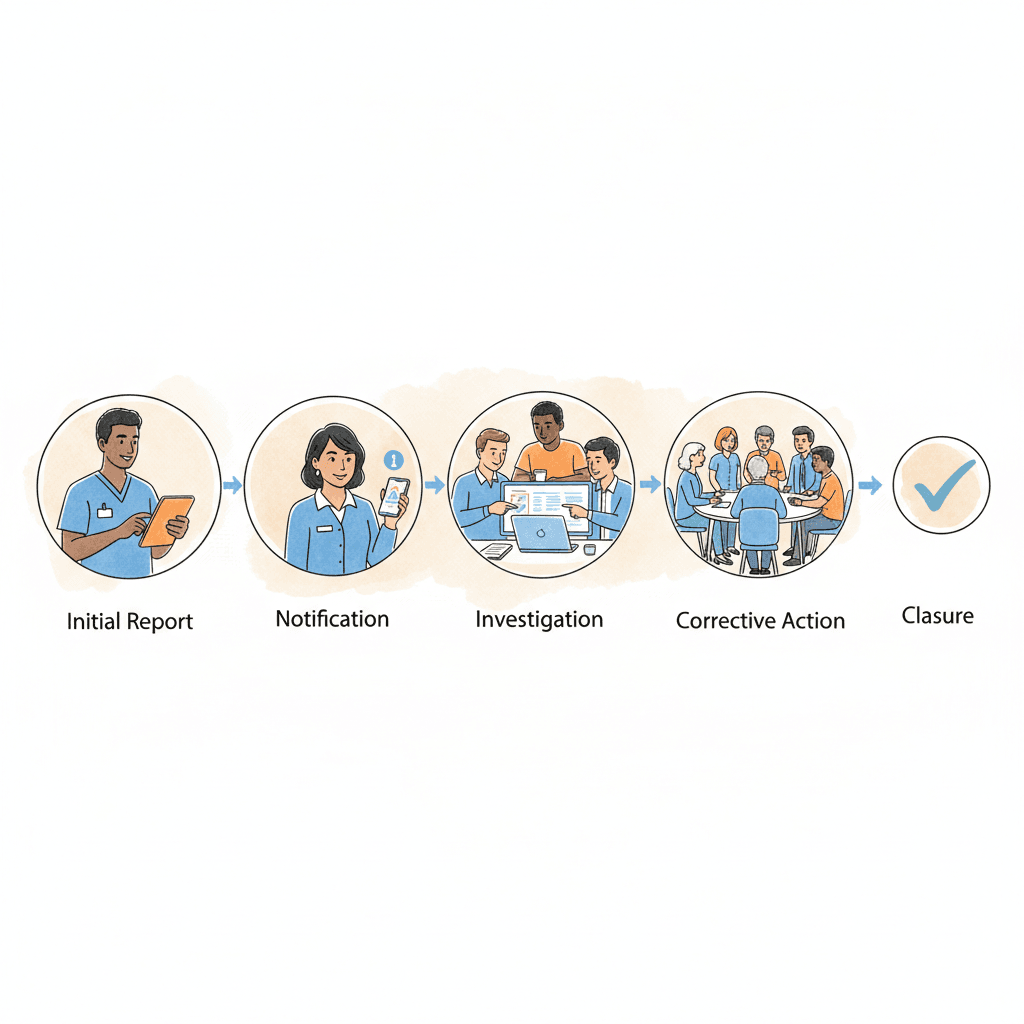
When a member of staff identifies a safeguarding concern, the service's response generates a documentation trail that must be contemporaneous, specific, and complete. The referral process involves internal decision-making, external reporting, and ongoing cooperation with the local authority.
Internal Identification and Escalation
The first documentation requirement is a contemporaneous record of what was observed or disclosed, written by the person who identified the concern. This record must be factual and specific: what was seen, heard, or disclosed, the date and time, the location, the people present, and any immediate actions taken to ensure the person's safety. This record should be made as soon as practicable after the event — the contemporaneity of the record is a critical factor in its evidential value.
The staff member must escalate the concern to the designated safeguarding lead (typically the registered manager or their deputy). The escalation must be documented: who was informed, when they were informed, and through what channel. If the safeguarding lead is not available, the documentation must record what alternative escalation was used.
Threshold Decision
The safeguarding lead must assess the concern against the Section 42 threshold: does the person have care and support needs, is there reasonable cause to suspect abuse or neglect, and is the person unable to protect themselves because of those needs? This threshold assessment must be documented regardless of the outcome. If the decision is to make a safeguarding referral, the documentation must record the basis for that decision. If the decision is not to refer, the documentation must record the reasoning — what was considered, why the threshold was not met, and what alternative actions (if any) are being taken.
Document decisions not to refer
The decision not to make a safeguarding referral is as important to document as the decision to refer. When a Safeguarding Adults Review examines a service's response to a pattern of concerns, one of the most common findings is that individual concerns were assessed and not referred, but the cumulative pattern — which would have crossed the threshold — was never identified because no one documented the lower-level decisions in a way that made the pattern visible. Every threshold assessment, including decisions not to refer, should be recorded in a safeguarding concerns log that allows pattern analysis over time.
Making the Referral
When the threshold is met, the service must make a safeguarding referral to the local authority. Documentation of the referral must include: the date and time the referral was made, the local authority contact who received it (name, role, reference number), the information provided in the referral, any immediate actions requested by the local authority, and the agreed next steps.
Most local authorities have standardised referral forms, and a copy of the completed form should be retained in the service's records. Where a referral is made by telephone in urgent circumstances, the verbal referral must be documented immediately and followed up in writing within 24 hours.
The quality of the referral itself matters. A referral that provides vague, incomplete, or disorganised information hampers the local authority's ability to assess the concern and determine the appropriate response. An effective referral includes: a clear description of the concern in specific, factual terms, relevant background information about the person (care needs, capacity, communication needs, relevant history), the immediate risk assessment and any protective actions already taken, the names and roles of staff involved, and any known information about the alleged perpetrator. Investing time in a thorough initial referral reduces the need for follow-up requests for information and enables a faster, more effective response.
Actions Pending Enquiry
While the local authority is conducting or arranging a Section 42 enquiry, the service has ongoing documentation obligations. The service must record all protective actions taken to safeguard the person while the enquiry is underway, any risk assessments conducted or revised, any restrictions on staff contact or duties pending investigation, communications with the person and their family about the safeguarding process, and the person's wishes and feelings regarding the enquiry.
Section 42 Enquiry Documentation
When the local authority determines that a Section 42 enquiry is warranted, the care provider may be asked to conduct the enquiry on the local authority's behalf (a "caused enquiry") or to cooperate with an enquiry conducted by the local authority directly. In either case, the documentation requirements are substantial.
Enquiry Records
The enquiry record must document: the terms of reference (what specific concerns are being investigated), the evidence gathered (witness statements, documentary records, physical evidence), the analysis of that evidence, the findings, and the actions taken or recommended. Each witness statement should be recorded in the person's own words, dated, signed, and witnessed. Documentary evidence (care plans, incident reports, medication records, staffing rotas) should be copied and preserved in its original form — not redacted or summarised.
When the service is asked to conduct a caused enquiry on the local authority's behalf, the quality of the enquiry record reflects directly on the service's safeguarding capability. The local authority will review the enquiry record to assess whether the investigation was thorough, objective, and competent. An enquiry that fails to interview all relevant witnesses, that does not examine relevant documentary evidence, or that reaches conclusions unsupported by the evidence will be returned for further work — and the local authority may reconsider whether the provider has the capability to conduct future caused enquiries. Providers should invest in training their designated safeguarding leads in investigation methodology, including evidence gathering, witness interviewing techniques, and analytical report writing.
Chronology Records
A safeguarding chronology is a timeline of all relevant events, observations, and actions relating to the concern. The chronology should include events from before the specific concern was raised, because safeguarding enquiries frequently reveal that earlier indicators were present but not connected. A defensible chronology includes: the date and time of each event, a factual description of what occurred, the source of the information, and any action taken in response.
The chronology is one of the most powerful safeguarding documents because it makes patterns visible that individual records do not. A series of individual incident reports, each documenting a minor event, may appear unremarkable in isolation. The same events arranged chronologically — with escalating frequency, consistent timing, or association with a specific staff member — may reveal a safeguarding concern that was not apparent from any single record.
Body Map Documentation
When physical injuries are identified, body map documentation provides a visual record that supplements the written description. A body map is a diagram of the human body on which the location, size, shape, and colour of injuries are marked. Body maps should be completed by the person who first identified the injury, at the time of identification, and should include the date and time of documentation, the name and role of the person completing the body map, a written description accompanying each marked injury, the person's own account of how the injury occurred (in their own words), and whether the injury is consistent with the reported cause.
Body maps are not a substitute for clinical assessment. Where injuries require medical attention, the service must arrange for assessment by an appropriate health professional and document the referral, the clinical findings, and any treatment provided.
For people living with dementia or other conditions that affect their ability to report injuries or explain their cause, body maps take on heightened importance as the primary physical evidence record. Services should consider implementing routine body mapping as part of personal care for people at elevated safeguarding risk — not as a response to identified injuries but as a baseline record that enables changes to be identified and investigated. A baseline body map completed at admission and updated at regular intervals provides a comparison point that makes new injuries immediately identifiable and documents pre-existing conditions that might otherwise be mistaken for evidence of harm.
Professional Curiosity
Professional curiosity is the practice of exploring and understanding what is happening in a person's life rather than accepting information at face value. It is the opposite of making assumptions or taking the path of least resistance when something does not seem right. In the context of safeguarding documentation, professional curiosity is evidenced by the questions that were asked, not just the answers that were received.
Documenting Professional Curiosity
When a member of staff observes something that prompts a question — an unexplained injury, a change in behaviour, an inconsistency between what a person says and what the records show — the documentation should record: what prompted the concern, what questions were asked, who was asked, what answers were received, whether the answers adequately explained the concern, and what follow-up actions were taken.
Professional curiosity failures are a recurring theme in Safeguarding Adults Reviews. The reviews consistently find that staff noticed something unusual but did not ask questions, asked questions but accepted explanations without verification, or asked questions and documented the answers but did not connect the information with other known concerns. Building a culture of professional curiosity starts with documenting it — when staff see that recording their questions and observations is expected and valued, they are more likely to ask the questions in the first place.
Deprivation of Liberty Safeguards (DoLS) Documentation
The Deprivation of Liberty Safeguards provide a legal framework for authorising deprivations of liberty in care homes and hospitals for people who lack the mental capacity to consent to their care arrangements. DoLS documentation is a safeguarding function because an unauthorised deprivation of liberty is, by definition, a breach of the person's human rights under Article 5 of the European Convention on Human Rights.
Identifying Deprivation of Liberty
The first documentation requirement is identifying whether the care arrangements for any person in the service amount to a deprivation of liberty. The "acid test" established by the Supreme Court in P v Cheshire West (2014) has two elements: the person is under continuous supervision and control, and the person is not free to leave. If both elements are met and the person lacks the capacity to consent to the arrangements, the person is being deprived of their liberty and authorisation must be obtained.
Documentation of the assessment must include: the specific arrangements that constitute continuous supervision and control, the evidence that the person is not free to leave, the Mental Capacity Act assessment regarding the person's capacity to consent to the arrangements, and the date the DoLS application was submitted to the supervisory body (the local authority).
Managing DoLS Authorisations
Once a DoLS authorisation is granted, the service must maintain documentation of: the specific conditions attached to the authorisation, the duration of the authorisation (maximum 12 months), the review schedule, any changes in the person's circumstances that require a review or a new application, and the expiry date.
Expired DoLS authorisations are unlawful deprivations
When a DoLS authorisation expires without renewal, the deprivation of liberty becomes unlawful from the moment of expiry. This is true even if the renewal application has been submitted but not yet processed by the supervisory body. Services must track DoLS expiry dates proactively and submit renewal applications with sufficient lead time to account for local authority processing delays. A system that relies on manual diary entries or spreadsheets to track DoLS expiry dates is vulnerable to the administrative lapses that result in unlawful deprivations.
DoLS and the Liberty Protection Safeguards
The Liberty Protection Safeguards (LPS) were intended to replace DoLS under the Mental Capacity (Amendment) Act 2019. As of 2026, the implementation timeline for LPS remains uncertain, and DoLS continue to be the operative framework. Services should maintain their DoLS systems while monitoring Department of Health and Social Care communications for implementation updates. When LPS does take effect, the documentation requirements will change significantly — particularly regarding the role of the care home manager in arranging assessments and the introduction of a new authorisation process. Services that have robust DoLS documentation systems will be better positioned to transition to LPS requirements than those that rely on ad hoc processes.
Case Scenario: Building a Safeguarding Documentation Culture
Oakfields Residential Home, a 28-bed care home in the South East, underwent a Safeguarding Adults Review in 2025 following a series of unexplained injuries to a resident with advanced dementia over a four-month period. The review found that individual staff members had noticed bruising on three separate occasions, documented the bruising in daily notes, and accepted the explanation that the injuries were caused by the resident's known tendency to bump into furniture. No safeguarding threshold assessment was conducted for any of the three observations. No body maps were completed. No pattern analysis connected the three observations.
The Safeguarding Adults Review identified two systemic failures. First, staff lacked the framework to assess individual observations against the safeguarding threshold — they documented what they saw but had no structured process for determining whether what they saw constituted a safeguarding concern. Second, the service had no mechanism for identifying patterns across individual observations — each bruise was documented in a daily note that was read by the shift supervisor but not analysed in aggregate.
In response, Oakfields implemented a three-part safeguarding documentation reform. First, every observation of unexplained injury, change in behaviour, or potential indicator of abuse now triggers a structured safeguarding consideration form — a brief document that records the observation, the staff member's assessment of whether it meets the safeguarding threshold, and the reasoning behind that assessment. Second, all safeguarding considerations are logged in a central register that the designated safeguarding lead reviews weekly, looking specifically for patterns across individuals, staff, and time periods. Third, body map documentation is required for every unexplained injury, regardless of whether the injury appears consistent with a known cause.
Within six months, the system had identified and referred two safeguarding concerns that would previously have been missed — both involving financial abuse by a family member that was identified through a pattern of small discrepancies in a resident's personal allowance records. The safeguarding lead described the shift: "Before, we documented injuries. Now we document decisions. The documentation itself forces the staff member to think — is this a safeguarding concern? The answer might be no, but the fact that they asked the question and recorded the reasoning means we catch the ones where the answer should have been yes."
Safeguarding Governance and Oversight
Effective safeguarding documentation is not produced by individual staff members working in isolation. It is the output of a governance system that establishes expectations, provides support, monitors compliance, and learns from experience.
Safeguarding Lead Responsibilities
The designated safeguarding lead (typically the registered manager) has specific documentation responsibilities: maintaining the safeguarding concerns log, ensuring all threshold assessments are documented, tracking the progress and outcome of all safeguarding referrals, reporting safeguarding activity to the governance structure (board, trustees, regional management), submitting CQC notifications for safeguarding events, and conducting periodic audits of safeguarding documentation quality.
Safeguarding Audits
Monthly safeguarding audits should review: whether all incidents have been assessed against the safeguarding threshold, whether decisions (to refer or not to refer) are documented with reasoning, whether referrals were made within the required timeframe, whether the service cooperated with local authority enquiries and documented its contribution, whether protective actions were taken and documented while enquiries were underway, and whether outcomes and learning were recorded and shared.
Learning from Safeguarding Events
Every safeguarding event — whether or not it resulted in a referral — is a learning opportunity. Post-event documentation should record: what the event revealed about the service's safeguarding systems, what worked well and what could be improved, any changes to policies, procedures, or training that are needed, and how the learning will be shared with staff. This learning documentation is evidence under the Well-led domain of CQC inspections and demonstrates that the service treats safeguarding as a continuous improvement function rather than a reactive process.
Multi-Agency Working
Safeguarding is a multi-agency responsibility, and documentation of multi-agency working is essential. Records should capture: communications with the local authority safeguarding team, participation in safeguarding strategy meetings and case conferences, contributions to multi-agency risk assessments, and the actions agreed at multi-agency meetings and the service's progress against them.
Multi-agency safeguarding documentation presents a specific challenge: information shared by other agencies may be subject to confidentiality restrictions that limit how it can be recorded in the service's own systems. The service must balance the need for comprehensive records against information-sharing protocols established by the local Safeguarding Adults Board. When information received from another agency cannot be recorded in full, the documentation should note that information was received, the source, the date, and a summary of the relevance to the safeguarding concern — sufficient for the service's own governance purposes without breaching the information-sharing agreement.
Safeguarding Reporting to CQC
In addition to the local authority safeguarding referral, care providers must submit statutory notifications to CQC for specified safeguarding events. The CQC notification process is separate from the local authority process, uses different forms, and serves a different purpose — CQC uses notifications to monitor the service's safeguarding activity and to inform its inspection planning. Both the local authority referral and the CQC notification must be submitted for every event that meets both thresholds, and each submission must be documented in the service's records.
The registered manager should maintain a notifications tracker that records every CQC notification submitted, including the date, the event type, the reference number, and the confirmation of receipt. Monthly review of the notifications tracker as part of governance activities ensures that all required notifications have been submitted and identifies any gaps or patterns.
Staff Training for Safeguarding Documentation
Safeguarding awareness training is a universal requirement in adult social care, but generic safeguarding training rarely addresses the documentation skills that frontline staff need. A care assistant who can identify the signs of abuse but cannot document what they observed with the specificity that a safeguarding enquiry requires has only half the capability needed.
Recognition and Recording Skills
Staff training should include practical exercises in writing factual, specific, observable descriptions of concerns. The difference between "resident had a bruise on arm" and "resident had a dark purple bruise approximately 3cm in diameter on the inner aspect of the left forearm, not present during morning personal care at 08:15, first observed at 14:30 during afternoon activities" is the difference between a note that provides minimal investigative value and a record that establishes a timeline and preserves clinical detail.
Training should cover body map completion using standardised diagrams, with emphasis on precision of location, measurement of injury size, documentation of colour and shape, and the use of the person's own words to describe how the injury occurred. Staff should practise completing body maps in real-time scenarios, because the skill of translating a visual observation into a marked diagram requires practice that a classroom presentation alone does not provide.
Threshold Assessment Training
All staff who may identify safeguarding concerns — which in residential care means all staff — should receive training on the Section 42 threshold criteria. Training should include scenario-based exercises where staff are presented with situations of varying severity and asked to assess whether the threshold is met. The scenarios should include situations that clearly meet the threshold, situations that clearly do not, and ambiguous situations where reasonable professionals might disagree. The purpose is not to produce uniform answers but to develop the analytical habit of applying the threshold criteria to every concern, rather than relying on intuition or experience alone.
Escalation Confidence
One of the most significant barriers to effective safeguarding documentation is staff reluctance to escalate concerns — particularly concerns involving colleagues. Training must explicitly address this barrier, including the service's whistleblowing policy, the protections available to staff who raise concerns in good faith, and the consequences of failing to escalate a genuine safeguarding concern. Staff who are confident that escalation will be taken seriously and that they will be supported in raising concerns are more likely to document and report what they observe.
Technology for Safeguarding Documentation
The volume and complexity of safeguarding documentation — threshold assessments, referral records, enquiry documentation, chronologies, body maps, DoLS tracking, audit results, and learning records — exceeds what paper-based systems can reliably manage. The consequences of documentation gaps in safeguarding are more severe than in almost any other domain of care operations, because the gaps may not become apparent until a serious incident triggers scrutiny of the entire historical record.
Integrated Safeguarding Recording
A purpose-built platform integrates safeguarding recording with the service's broader incident management and care planning systems. When a staff member records an incident, the system prompts a safeguarding threshold assessment. When the threshold is met, the system generates the referral workflow, tracks the referral through to outcome, and links the safeguarding record to the person's care plan, risk assessment, and any related incidents. This integration eliminates the information silos that contribute to pattern blindness — the failure to connect individual concerns into a recognisable safeguarding pattern.
Harmony's clinical documentation platform provides this integration by embedding safeguarding threshold prompts within the incident recording workflow, generating automated chronologies from linked records across the care planning, incident, and safeguarding domains, maintaining a centralised safeguarding concerns register with weekly review alerts, and producing the audit reports that designated safeguarding leads need to monitor documentation quality and compliance across the service. The platform treats safeguarding documentation as a continuous governance function rather than a reactive response to individual events.
Automated DoLS Tracking
Technology that tracks DoLS applications, authorisations, conditions, review dates, and expiry dates with automated alerting eliminates the most common DoLS compliance failure: expired authorisations. The system generates escalating reminders as the expiry date approaches, flags any person whose DoLS authorisation has expired without renewal, and provides a dashboard showing the DoLS status of every person in the service.
The DoLS tracking dashboard should display three categories: authorised (current DoLS in place with conditions documented), pending (application submitted, awaiting local authority assessment), and expired or approaching expiry (requiring immediate attention). For services with more than a small number of residents, the volume of DoLS applications, renewals, and reviews can be substantial — a 40-bed care home may have 20 or more active DoLS authorisations, each with its own conditions, review dates, and expiry dates. Manual tracking at this scale is unreliable, and a single expired authorisation represents an unlawful deprivation of liberty that must be addressed immediately.
Digital Body Map Documentation
Digital body map tools allow staff to record injury locations, descriptions, and photographs on a standardised template that is date-stamped and linked to the person's record. Unlike paper body maps, digital records cannot be altered without an audit trail, can be compared over time to identify recurring injury patterns, and can be shared electronically with the local authority or other agencies involved in a safeguarding enquiry. The evidential value of digital body maps is significantly higher than paper equivalents, particularly when they include photographic evidence alongside the diagrammatic record.
Pattern Detection
Individual safeguarding concerns, recorded in isolation across different staff members, shifts, and time periods, may not reveal patterns that would be visible in aggregate. Technology that analyses safeguarding data across the service can identify: increasing frequency of concerns relating to a specific person, concentration of concerns during specific shifts or involving specific staff, types of abuse that are underreported relative to benchmarks, and themes in threshold decisions that suggest the threshold is being applied inconsistently.
Common Safeguarding Documentation Failures
Analysis of published Safeguarding Adults Review reports and CQC inspection findings reveals consistent documentation failures that recur across services. Understanding these patterns allows providers to target their training and governance activities at the areas of highest risk.
Failure to Document Low-Level Concerns
The most frequently identified documentation failure in Safeguarding Adults Reviews is the absence of records for low-level concerns that, in aggregate, constituted a safeguarding pattern. Individual staff members noticed things — a change in behaviour, a unexplained mark, a resident's reluctance to be alone with a specific person — but did not document their observations because each individual observation did not seem significant enough to warrant a formal record. The pattern became visible only retrospectively, after a serious incident forced a review of the entire history.
Prevention requires a low-threshold documentation culture where staff are trained to document observations that prompt any degree of concern, regardless of whether the observation meets the safeguarding referral threshold. These records should be reviewed regularly (at least weekly) by the designated safeguarding lead, who is responsible for identifying patterns that individual staff members would not see.
Undocumented Threshold Decisions
When a potential safeguarding concern is identified and the manager decides that it does not meet the Section 42 threshold, the decision-making process is frequently undocumented. The manager made a professional judgment, but the reasoning — what was considered, what threshold criteria were applied, and why the conclusion was reached — exists only in the manager's memory. When a subsequent event forces a review, the absence of documented reasoning for prior decisions creates a gap that reviewers interpret as a failure to assess rather than an assessment that concluded the threshold was not met.
Prevention requires a standardised threshold assessment form that is completed for every potential safeguarding concern, including those that do not result in a referral. The form should document the specific concern, the threshold criteria considered, the decision, and the reasoning.
Incomplete Chronologies
Safeguarding chronologies are frequently incomplete — missing events that occurred before the specific concern was raised, omitting actions taken between events, or lacking the source attribution that gives each entry evidential value. A chronology that begins on the day a safeguarding referral was made, without incorporating relevant historical events, provides an incomplete picture that may miss the contextual factors that contributed to the concern.
Prevention requires that chronologies are constructed retrospectively from all available records, including daily notes, incident reports, care plan reviews, GP visit records, and family communications. The chronology should be maintained as a living document that is updated as new information emerges during the enquiry process.
Failure to Record the Person's Voice
Safeguarding documentation frequently records what professionals observed and decided, but fails to record what the person at the centre of the concern said, wanted, or felt. The Care Act 2014 places the person at the centre of the safeguarding process — their wishes and feelings must inform every decision. Documentation that does not include the person's own words, their expressed preferences for how the concern should be handled, and their views on the outcome of the process fails to demonstrate compliance with this principle.
Prevention requires that every safeguarding record includes a section for the person's voice — their own words about what happened, what they want to happen, and how they feel about the process. Where the person lacks the capacity to express their views, the documentation should record who was consulted as their advocate or representative and what that person's views were.
Conclusion
Safeguarding documentation is not paperwork. It is the evidentiary foundation of the service's duty to protect the people in its care. Every threshold assessment, every referral decision, every chronology entry, every body map, and every learning record contributes to a documentary system that serves three functions: it protects the people who use the service by ensuring that concerns are identified, reported, and acted upon; it protects the service by demonstrating that its staff and systems met the standard of care expected by regulators, commissioners, and the courts; and it protects the broader safeguarding system by providing the information that local authorities, CQC, and Safeguarding Adults Boards need to identify systemic risks and drive improvement.
The standard for safeguarding documentation is not perfection. It is defensibility — can the service demonstrate, through its records, that it acted reasonably, promptly, and in accordance with its statutory duties? A service that documents its safeguarding decisions comprehensively, including decisions not to escalate, will be better positioned to withstand scrutiny than a service that acted appropriately but failed to record its reasoning.
Building this documentation standard requires clear systems that guide staff through the safeguarding recording process, training that develops both safeguarding awareness and documentation skills, governance structures that monitor safeguarding documentation quality and act on gaps, and technology that integrates safeguarding recording with the operational workflows staff use every day, ensuring that documentation is a byproduct of the safeguarding process rather than a separate administrative burden.
The regulatory environment for safeguarding in adult social care continues to evolve. The Liberty Protection Safeguards will eventually replace the Deprivation of Liberty Safeguards, bringing new documentation requirements and revised authorisation processes. CQC's inspection methodology continues to strengthen its focus on safeguarding outcomes — not just whether services have safeguarding systems, but whether those systems actually protect people from harm. Safeguarding Adults Boards are increasingly publishing thematic reviews that identify sector-wide documentation failures, creating new expectations that individual services must meet. Services that invest in building robust safeguarding documentation systems now will be positioned to adapt to these evolving requirements. Services that continue to treat safeguarding documentation as an afterthought will find the gap between their practices and regulatory expectations widening with each new reform.
Frequently Asked Questions
What is the timeframe for making a safeguarding referral to the local authority?
There is no single statutory timeframe specified in the Care Act 2014, but the expectation is that referrals are made without delay once a safeguarding concern is identified and the threshold assessment concludes that the Section 42 criteria are met. In practice, most local authority safeguarding protocols expect referrals to be made within 24 hours of the concern being identified, with immediate telephone referral required in cases where the person is at ongoing risk of harm. The service's own safeguarding policy should specify its internal timeframe, which should be at least as prompt as the local authority's expectation. Document the time the concern was identified, the time the threshold assessment was completed, and the time the referral was made — any delay between these points must have a documented explanation.
How long should safeguarding records be retained?
Care and Support Statutory Guidance does not specify a retention period for safeguarding records. However, the general principle is that safeguarding records should be retained for significantly longer than standard care records because safeguarding concerns may be re-examined years after the events occurred — particularly if a Safeguarding Adults Review is commissioned or if patterns of abuse are identified retrospectively. Most legal guidance recommends retaining safeguarding records for a minimum of seven years from the date the service's involvement ended, with longer retention where the records relate to ongoing concerns, criminal investigations, or inquests. Records relating to people who lacked capacity should be retained indefinitely or until legal proceedings are concluded.
What happens if a staff member raises a safeguarding concern that the manager decides does not meet the threshold?
The manager's decision not to refer must be documented with the specific reasoning — what threshold criteria were assessed, what evidence was considered, and why the conclusion was that the criteria were not met. The concern itself must still be recorded in the safeguarding concerns log, because individual concerns that fall below the threshold may form part of a pattern that crosses the threshold when viewed in aggregate. The staff member who raised the concern should be informed of the decision and the reasoning, and this communication should be documented. If the staff member disagrees with the decision, they have the right to make a referral to the local authority directly — and the service's safeguarding policy should make this right clear.
How should we document safeguarding concerns raised by family members or visitors?
Concerns raised by family members, visitors, or other external parties should be documented using the same process as concerns raised by staff. Record the specific concern in the words of the person who raised it, the date and time it was raised, and the identity of the person who received it. Conduct and document the same threshold assessment. If the concern is referred, document the referral and ongoing actions. If the concern does not meet the threshold, document the reasoning and any alternative actions taken. Communicate the outcome to the person who raised the concern, to the extent permitted by confidentiality obligations, and document this communication.
What is the relationship between safeguarding documentation and CQC notifications?
CQC requires providers to submit statutory notifications for specific events, including allegations of abuse. The safeguarding referral to the local authority and the CQC notification are separate obligations with separate timeframes and separate forms. Both must be completed. The CQC notification should reference the local authority safeguarding referral (including the reference number) so that the two records are linked. Failure to submit a CQC notification for a safeguarding event is itself a regulatory finding under Regulation 18, independent of the safeguarding concern itself.