Key Takeaways
- Every use of a restrictive practice is, by definition, a failure of less restrictive alternatives — and the documentation must prove that the provider understands this by recording what alternatives were attempted, why they were insufficient, and what evidence supports the conclusion that the restriction was the least intrusive intervention available.
- Restrictive practices exist on a continuum that most organizations underestimate, ranging from locked doors and physical holds to PRN psychotropic medication, removal of personal items, and environmental modifications that limit freedom of movement — and many practices that staff consider routine safety measures are classified as restrictions under current regulatory frameworks.
- Authorization requirements differ materially across jurisdictions: CMS requires restraint-free environments with narrow medical exceptions, Canadian provinces require individualized behavior support plans, the UK CQC evaluates against Regulation 13 safeguarding standards and the Deprivation of Liberty Safeguards framework, and the Australian NDIS Quality and Safeguards Commission mandates registered behavior support plans with time-limited authorizations and independent review.
- A defensible restrictive practice record documents not just that a restriction occurred but the complete decision chain — the behavior or risk that triggered the response, the less restrictive alternatives attempted, the clinical justification for escalation, the specific authorization in effect, the duration of the restriction, the person's response during and after, and the scheduled review date.
- Time-limited authorizations are not optional in any major jurisdiction — every restrictive practice must have an explicit expiration date, a review schedule, and documented evidence that the review actually occurred, that the practice was re-evaluated against current behavior data, and that the authorization was either renewed with justification, modified, or discontinued.
- Technology that enforces authorization workflows, tracks usage patterns over time, auto-schedules reviews before authorizations expire, and surfaces trend data for clinical teams reduces unauthorized restrictive practice use by 40-70% compared to paper-based systems, but only when the system is configured to treat documentation as a clinical governance function rather than a compliance checkbox.
Introduction
Every use of a restrictive practice represents a failure. Not a failure of the individual staff member who implemented it. Not necessarily a failure of the care team that authorized it. But a failure, at some level, of the less restrictive alternatives that should have prevented the situation from reaching the point where restriction was considered necessary.
This is not a philosophical position. It is the foundational regulatory premise in every major jurisdiction that governs residential care. The United States Centers for Medicare and Medicaid Services require a restraint-free environment as the standard of care, permitting restraints only under narrowly defined medical exceptions. The United Kingdom's Care Quality Commission evaluates restrictive practices under Regulation 13, which frames safeguarding not as the management of restriction but as the protection of liberty. The Australian NDIS Quality and Safeguards Commission requires that every restrictive practice be authorized through a registered behavior support plan that demonstrates the practice is necessary, proportionate, and the least restrictive option available. Canadian provinces mandate that restrictive interventions be individually justified, time-limited, and subject to ongoing review. In every case, the regulatory expectation is the same: restriction is a last resort, and the burden of proof falls on the provider to demonstrate that alternatives were exhausted before restriction was used.
And yet, restrictive practices remain pervasive in residential care. A 2024 review of NDIS data in Australia found that restrictive practices were authorized for approximately 24% of participants receiving supported independent living services. CMS survey data from the same period identified restraint-related deficiencies in 18% of long-term care facility surveys. A 2023 CQC thematic review of restraint use in adult social care found that 31% of inspected services had concerns related to the use, documentation, or oversight of restrictive practices. These numbers do not reflect malicious intent. They reflect the operational reality of providing care to individuals whose behavior poses genuine risks to themselves or others, in settings where staff are under-resourced, under-trained, and under-supervised.
The documentation challenge sits at the intersection of these pressures. Restrictive practices must be authorized before they are used, documented when they are used, reviewed after they are used, and reduced over time through systematic investment in positive behavior support. Each of these requirements generates documentation obligations that are substantially more demanding than standard clinical documentation. The authorization process requires clinical justification, less restrictive alternative analysis, consent or substitute decision-maker involvement, and regulatory notification. The usage documentation requires real-time capture of duration, staff response, resident response, and outcome. The review process requires trend analysis, behavior support plan evaluation, and formal re-authorization decisions. The reduction strategy requires evidence of proactive planning, environmental modification, skill building, and outcome tracking.
Organizations that treat restrictive practice documentation as an extension of their incident reporting system miss the fundamental difference. An incident report documents something that happened. Restrictive practice documentation must demonstrate a decision-making framework — the reasoning that led to the restriction, the evidence that less restrictive options were considered and rejected, the authority under which the restriction was implemented, and the plan for reducing or eliminating the restriction over time. The documentation must prove that the organization understands that every restriction is a failure of less restrictive alternatives, and that it is systematically working to make those alternatives succeed.
This article examines the full lifecycle of restrictive practice governance: what constitutes a restrictive practice across care settings, how jurisdictional requirements differ, how to build authorization and review workflows that satisfy regulators, what must be documented for each instance of restrictive practice use, how technology supports comprehensive oversight, and how organizations can systematically reduce their reliance on restrictive interventions. It is written for clinical directors, behavior analysts, compliance officers, operations leaders, and quality managers in group homes, developmental services, and long-term care facilities who need their restrictive practice governance to withstand the scrutiny of regulators, advocates, families, and their own professional standards.
Defining Restrictive Practices
A restrictive practice is any intervention that limits a person's rights, freedom of movement, or freedom to make decisions. This definition is broader than most care staff initially assume. When organizations think about restrictive practices, they typically think about physical restraint — staff holding a person to prevent them from harming themselves or others. Physical restraint is certainly a restrictive practice. But it is only one category on a continuum that extends far beyond hands-on interventions, and many of the practices that carry the most significant regulatory exposure are ones that staff consider routine parts of daily operations.
Physical Restraint
Physical restraint involves the use of physical force — including holds, takedowns, and prone or supine immobilization — to restrict a person's movement against their will. In residential care, physical restraint is the most scrutinized category of restrictive practice and is subject to the most stringent authorization requirements in every jurisdiction. The critical regulatory distinction is between planned physical restraint (authorized through a behavior support plan for identified high-risk situations) and unplanned or emergency physical restraint (used in response to an immediate danger that was not anticipated in the behavior support plan). Both require documentation. Planned restraint requires advance authorization. Unplanned restraint requires immediate post-incident documentation and review, and repeated unplanned restraint triggers a mandatory revision of the behavior support plan.
Physical restraint in residential care differs from physical restraint in acute care settings in one critical respect: duration. In an emergency department, a physical restraint may be authorized for up to four hours under a physician's order. In a residential group home, a physical restraint that lasts more than a few minutes triggers immediate regulatory concern. Regulatory bodies in residential settings expect physical restraint to be used for the minimum time necessary to resolve the immediate danger, and duration exceeding five to ten minutes (depending on jurisdiction) requires a specific clinical justification and, in most cases, an immediate notification to the authorizing clinician or regulatory body.
Mechanical Restraint
Mechanical restraint involves the use of a device to restrict a person's movement. In long-term care facilities, this includes lap belts on wheelchairs, bed rails when used to prevent the person from getting out of bed (as distinct from bed rails used as positioning aids at the person's request), and wander-prevention devices such as locked-unit wristbands. In developmental services and group homes, mechanical restraint is less common but may include specialized seating systems, helmets, or protective equipment used to prevent self-injurious behavior.
The distinction between a mechanical restraint and an assistive device is one of the most contested areas in restrictive practice governance. A bed rail is an assistive device when the resident requests it and can independently raise and lower it. The same bed rail becomes a mechanical restraint when it is raised to prevent a resident from leaving the bed, regardless of whether the staff member who raised it considers it a safety precaution. The regulatory test is not the staff member's intention but the effect on the person's freedom of movement: if the device prevents the person from doing something they would otherwise choose to do, it is a restraint.
Chemical Restraint
Chemical restraint is the use of medication to control a person's behavior or restrict their freedom of movement, where the medication is not being used to treat a diagnosed medical or psychiatric condition. The most common form of chemical restraint in residential care is the PRN (as needed) administration of psychotropic medication — antipsychotics, anxiolytics, or sedatives — to manage behavioral symptoms rather than to treat an underlying condition.
Chemical restraint is arguably the most underreported category of restrictive practice in residential care. A 2023 analysis of antipsychotic prescribing in Canadian long-term care homes found that approximately 21% of residents were prescribed antipsychotic medications without a documented diagnosis of psychosis, schizophrenia, or another condition for which antipsychotics are the indicated treatment. When these medications are prescribed "for agitation" or "for behavioral management" without a diagnosable condition, they constitute chemical restraint — and they require the same documentation, authorization, and review as any other restrictive practice.
The regulatory complexity of chemical restraint is compounded by the involvement of prescribing physicians. The authorization pathway for chemical restraint differs from physical restraint because it runs through the medical ordering process. However, the residential care provider retains the obligation to document the behavioral context in which the medication was administered, the alternatives that were attempted before medication was used, the person's response to the medication, and the scheduled review of whether the PRN order remains clinically appropriate.
Environmental Restraint
Environmental restraint restricts a person's freedom of movement through modifications to the physical environment. Locked doors are the most obvious form of environmental restraint — when a unit or facility entrance is locked to prevent residents from leaving, it constitutes an environmental restriction on every person in that environment, not just the individuals for whom the lock was implemented. Other forms of environmental restraint include restricted access to kitchens, bathrooms, or personal spaces; removal of personal items (sharp objects, cleaning supplies, certain foods); controlled access to common areas; and curfew policies that require residents to be in their rooms by a specific time.
Environmental restraint is particularly challenging to govern because it is often applied to an entire residential setting rather than to a specific individual. A locked front door restricts the liberty of every person in the home, including those who pose no risk of harm from leaving. The UK Deprivation of Liberty Safeguards (DoLS) framework directly addresses this challenge by requiring that environmental restrictions be individually assessed and authorized, even when they are applied uniformly across a setting. The question is not whether the lock exists but whether each individual person's liberty is being deprived — and if so, whether that deprivation is authorized, proportionate, and in the person's best interests.
Psychosocial Restraint
Psychosocial or psychological restraint uses verbal direction, intimidation, coercion, or threat to restrict a person's behavior or freedom of choice. This is the most difficult category of restrictive practice to identify, document, and govern because it does not involve a physical device, a medication, or a locked door. It involves how staff communicate with the people in their care.
Examples of psychosocial restraint include: telling a resident they cannot attend a community activity as a consequence for earlier behavior; refusing to provide a requested service until the resident complies with a staff direction; using a raised voice or physically imposing posture to gain compliance; threatening to call the police or to pursue a transfer to a more restrictive setting; and withholding information or choices to control the person's behavior. Many of these practices are so normalized in residential care that staff do not recognize them as restrictive. They are, nonetheless, restrictions on the person's autonomy, and they are increasingly scrutinized by regulatory bodies.
The Continuum of Restriction
Understanding restrictive practices as a continuum rather than a binary classification is essential for effective governance. At one end of the continuum are practices that virtually everyone recognizes as restrictive: prone restraint, locked seclusion, forced medication administration. At the other end are practices that feel like common sense: securing the cleaning supplies, requiring residents to be accompanied when using the stove, placing a baby monitor in a shared living room. The regulatory challenge is that every practice on this continuum potentially constitutes a restrictive practice, and the farther toward the "common sense" end a practice falls, the less likely it is to be documented, authorized, or reviewed.
The practical consequence of this continuum is that most organizations significantly undercount their use of restrictive practices. An organization that reports using physical restraint twice per quarter may also be locking its front door 24 hours a day, administering PRN antipsychotics weekly, restricting access to kitchens and bathrooms, removing personal items from bedrooms, and using verbal directives to control behavior throughout the day — and reporting none of these as restrictive practices because they are not perceived as such. Effective governance begins with an honest environmental scan of all practices that limit any person's freedom, autonomy, or decision-making ability, regardless of whether the organization has historically classified them as restrictive.
Regulatory Requirements by Jurisdiction
Restrictive practice regulation varies significantly across jurisdictions, reflecting different legal traditions, service delivery models, and philosophical approaches to the balance between safety and autonomy. Organizations must map their practices to the specific requirements of every jurisdiction in which they operate, because a practice that is permissible with documentation in one jurisdiction may be prohibited outright in another.
United States: CMS Restraint-Free Requirements
The Centers for Medicare and Medicaid Services have established a restraint-free standard for long-term care facilities under the Nursing Home Reform Act (OBRA 1987) and its implementing regulations (42 CFR 483.12). The standard is unambiguous: residents have the right to be free from any physical or chemical restraints imposed for purposes of discipline or convenience, and not required to treat the resident's medical symptoms. Restraints are permitted only when they are necessary to treat a medical symptom, authorized by a physician's order with a specific clinical justification, used for the minimum duration necessary, and subjected to ongoing monitoring and review.
CMS surveyors evaluate restraint practices under F-Tag F604 (Right to be free from physical or chemical restraints), F-Tag F605 (Right to be free from restraints used for discipline or convenience), and F-Tag F606 (Not use verbal, mental, sexual, or physical abuse, or involuntary seclusion). Deficiencies under these F-Tags are among the most serious findings in a CMS survey and can trigger immediate jeopardy determinations, civil monetary penalties, and denial of payment for new admissions.
For Home and Community-Based Services (HCBS) under the Settings Final Rule, restrictive practices require additional documentation demonstrating that the intervention is necessary to ensure the health and safety of the individual, that less restrictive alternatives were tried and did not work, that the restriction is documented in the person-centred service plan, and that the individual (or their representative) has provided informed consent. State Medicaid agencies enforce these requirements through provider audits and incident reviews, with heightened scrutiny applied to HCBS providers that report restrictive practice use above state-defined thresholds.
Canada: Provincial Restraint Policies
In Canada, restrictive practice regulation is a provincial responsibility, resulting in significant variation across the country. Ontario's Fixing Long-Term Care Act (2021) strengthened restraint requirements, mandating that physical restraints be used only as a last resort, authorized by the attending physician or a registered nurse in an emergency, documented in the plan of care with a clinical justification, reviewed within 24 hours of initiation and at regular intervals thereafter, and discontinued as soon as the clinical justification no longer applies. Ontario also requires that every resident have a restraint minimization plan that documents the alternatives considered and the strategies in place to reduce or eliminate restraint use over time.
British Columbia's Community Care and Assisted Living Act prohibits the use of restraints except where necessary to prevent serious harm, and requires that every use of restraint be immediately documented and reported to the licensing authority. Alberta's Continuing Care Health Service Standards require individualized behavior support plans for any person subject to restrictive practices, with documented evidence of less restrictive alternatives, clinical justification, time-limited authorization, and ongoing review. Quebec's framework for developmental services emphasizes positive behavior support as the primary approach, with restrictive practices permitted only within an approved intervention plan that has been reviewed by a human rights committee.
United Kingdom: CQC Regulation 13 and DoLS
In England, the Care Quality Commission evaluates restrictive practices under Regulation 13 of the Health and Social Care Act 2008 (Regulated Activities) Regulations 2014, which addresses safeguarding from abuse and improper treatment. Regulation 13(4)(b) specifically states that service users must not be subject to "control or restraint that is not necessary or proportionate to the risk of harm to the service user or other individuals." CQC inspectors assess whether services have clear policies on restrictive interventions, whether staff understand the principles of least restrictive practice, whether restrictions are individually assessed and authorized, and whether the service can demonstrate ongoing reduction efforts.
The Deprivation of Liberty Safeguards (DoLS) — and the forthcoming Liberty Protection Safeguards (LPS) that will eventually replace them — provide a legal framework for authorizing deprivations of liberty in care settings. Under DoLS, a care home that believes it is depriving a person of their liberty must apply to the local authority for a standard authorization. The assessment process evaluates whether the person lacks the mental capacity to consent to the arrangements, whether the deprivation is in the person's best interests, and whether it is a proportionate response to the likelihood and seriousness of harm. DoLS authorizations are time-limited (typically 12 months maximum) and must be reviewed if the person's circumstances change.
Australia: NDIS Restrictive Practices Framework
The Australian NDIS Quality and Safeguards Commission administers one of the most comprehensive restrictive practice regulatory frameworks in the world. Under the NDIS (Restrictive Practices and Behaviour Support) Rules 2018, all NDIS providers that use restrictive practices must report every use of a restrictive practice to the NDIS Commission, implement a behavior support plan developed by an NDIS behavior support practitioner, demonstrate that the restrictive practice is the least restrictive response possible, obtain state or territory authorization where required, and show evidence of active reduction and elimination strategies.
The NDIS framework explicitly identifies five categories of restrictive practice: seclusion, chemical restraint, mechanical restraint, physical restraint, and environmental restraint. Each category requires specific documentation, and repeated or prolonged use triggers a mandatory review of the behavior support plan. The behavior support plan must be developed by a registered NDIS behavior support practitioner, must include a functional behavior assessment, must document interim and comprehensive strategies for reducing restrictive practice use, and must be reviewed at least annually. State and territory governments retain separate authorization responsibilities, creating a dual-layer regulatory framework that providers must navigate.
The Australian Aged Care Act reforms, which took effect progressively from 2024, extended similar restrictive practice requirements to residential aged care, with particular emphasis on reducing the use of chemical restraint (psychotropic medication) in dementia care. The reforms require that every use of a restrictive practice in aged care be recorded in the consumer's care and services plan, authorized by an appropriate decision-maker, reviewed at regular intervals, and reported through the My Aged Care system.
Comparative Overview
| Requirement | US (CMS) | Canada (Provincial) | UK (CQC/DoLS) | Australia (NDIS) |
|---|---|---|---|---|
| Default standard | Restraint-free | Least restrictive | Least restrictive, proportionate | Least restrictive |
| Authorization | Physician order (medical necessity) | Physician/RN (varies by province) | DoLS application to local authority | Behavior support plan + state/territory authorization |
| Time limits | Ongoing physician review | 24-hour emergency review; periodic renewal | DoLS max 12 months | Time-limited per behavior support plan |
| Behavior support plan | Not universally required (varies by setting) | Required in developmental services | Expected under best practice | Mandatory — registered practitioner |
| Reporting to regulator | Survey-based review | Varies by province | CQC notification for deprivation of liberty | Mandatory reporting of every instance |
| Chemical restraint oversight | F-Tag review, pharmacy review | Provincial prescribing reviews | Medication reviews, safeguarding | Specific category with distinct requirements |
| Reduction requirement | Implicit in restraint-free standard | Explicit in most provinces | Explicit in Regulation 13 | Explicit — documented reduction strategies |
Authorization and Review Workflows
The authorization process for restrictive practices is not a single decision point. It is a multi-layered workflow that begins before a restriction is ever used and continues long after any individual instance of use. Organizations that treat authorization as a one-time event — a physician's order signed once, a behavior support plan approved once, a consent form signed once — will find their authorization frameworks failing under regulatory scrutiny. Authorization is an ongoing, dynamic process that must respond to changing behavior patterns, evolving clinical understanding, and the person's own expressed preferences.
Who Can Authorize
The question of who can authorize a restrictive practice varies by jurisdiction and by the type of restriction. In the United States, physical and chemical restraints in long-term care require a physician's order, but the order alone is not sufficient — the facility must also demonstrate that the clinical team assessed alternatives, that the resident (or representative) was informed, and that the restriction is consistent with the care plan. In the UK, a DoLS authorization requires assessment by a best interests assessor and a mental health assessor, with final authorization by a supervisory body (typically the local authority). In Australia, NDIS restrictive practice authorization requires a registered behavior support plan, state or territory consent (where applicable), and the participation of the person and their support network.
For planned restrictive practices — those that are anticipated based on the person's known behavior patterns and documented in their support plan — authorization must be obtained before the practice is used. The authorization must specify the circumstances under which the practice may be implemented, the maximum duration of each instance, the staff members authorized to implement the practice, the de-escalation and alternatives that must be attempted first, and the review date for the authorization.
For emergency or unplanned restrictive practices — those used in response to an immediate danger that was not anticipated in the support plan — post-incident authorization and review are required. The practice may be implemented without prior authorization when there is immediate risk of serious harm, but the organization must document the emergency justification within a defined timeframe (typically one to four hours), notify the authorizing clinician within 24 hours, conduct a formal review within 48 to 72 hours, and update the behavior support plan to address the newly identified risk.
Clinical Justification
Clinical justification for a restrictive practice must be specific to the individual and the situation. "Resident is a fall risk" is not a clinical justification for bed rails. "Resident has a documented history of bilateral lower extremity weakness following a stroke on 2/15/2026, has sustained two injurious falls while attempting to transfer from bed without assistance in the past 30 days, and has been assessed by physical therapy as requiring bilateral bed rails as a transfer assist — which the resident has requested and is able to independently lower when she wishes to exit the bed" is a clinical justification. The first statement identifies a risk category. The second identifies a specific clinical history, documented assessment findings, and the individual's own request.
For chemical restraint, clinical justification requires that the medication be linked to a diagnosed condition or a documented behavioral pattern, that non-pharmacological interventions have been attempted and documented, that the prescribing physician has assessed the individual (not simply renewed a standing order), and that the expected outcomes and monitoring parameters are specified. A PRN order for lorazepam "for agitation" without a documented behavioral assessment, without evidence of non-pharmacological intervention attempts, and without a defined monitoring protocol fails the clinical justification standard in every major jurisdiction.
Least Restrictive Alternative Documentation
The requirement to document less restrictive alternatives is perhaps the single most important element of restrictive practice authorization, because it operationalizes the principle that restriction is a last resort. The documentation must show what alternatives were considered, what alternatives were attempted, the outcomes of those attempts, and the evidence-based rationale for concluding that the less restrictive alternatives were insufficient.
This documentation cannot be retrospective or formulaic. An authorization that states "less restrictive alternatives were considered" without identifying those alternatives is non-compliant. An authorization that lists alternatives but provides no evidence that they were actually attempted is equally non-compliant. The documentation must demonstrate a genuine process of attempting alternatives over time, not a checklist completed at the moment of authorization.
Effective less restrictive alternative documentation reads like a clinical narrative: "Between January 15 and February 28, 2026, the following alternatives were implemented to address Maria's pattern of leaving the home during overnight hours: (1) Preferred activity scheduling in the evening to reduce restlessness — implemented 1/15, continued through 2/28, no measurable effect on nighttime wandering frequency. (2) Weighted blanket offered at bedtime — tried on 1/20, refused by Maria after two nights. (3) Environmental modifications including motion-sensor night lights in hallway and bathroom — installed 1/22, no effect on wandering frequency. (4) Sleep hygiene assessment by NP, completed 1/25, melatonin 3mg trialed 1/28-2/15, no significant effect on sleep onset or overnight waking pattern. (5) 1:1 staff presence during peak wandering hours (2:00-4:00 AM) — implemented 2/1-2/14, effective in redirecting Maria to her room on 10 of 14 nights, but not sustainable with current staffing levels. Based on these documented attempts, the team recommends a door alarm on the exterior door of the home, activated between 11:00 PM and 6:00 AM, as the least restrictive intervention currently available to address the identified safety risk."
Time-Limited Authorizations
Every restrictive practice authorization must have an explicit expiration date. Open-ended authorizations — "restraint may be used as needed" — are non-compliant in every jurisdiction. The authorization period varies by jurisdiction and by the type of restriction: emergency physical restraint authorizations typically expire within 24 hours; PRN chemical restraint orders require renewal on a defined schedule (often 30 to 90 days); environmental restrictions under DoLS authorizations may be authorized for up to 12 months; and behavior support plans under the NDIS must be reviewed at least annually, with restrictive practice components subject to more frequent review.
The practical challenge is not setting the expiration date but ensuring that the review actually occurs before the authorization expires. Organizations that rely on manual tracking — calendar reminders, spreadsheet logs, paper tickler files — consistently experience authorization lapses, where a restrictive practice continues to be used after its authorization has expired. This is a serious regulatory finding. It means the restriction is being applied without current authorization — and an unauthorized restriction is, by regulatory definition, a potential abuse or neglect event.
Review Schedules
Review of restrictive practice authorizations must be both scheduled and event-driven. Scheduled reviews occur at defined intervals (monthly, quarterly, or annually, depending on the jurisdiction and the type of restriction). Event-driven reviews are triggered by specific occurrences: a change in the person's behavior pattern, a new assessment finding, a critical incident related to the restriction, the person's own request for review, or a change in the person's support network or living situation.
Each review must document: the current behavior data, the frequency and duration of restrictive practice use since the last review, whether the restrictive practice is still necessary based on current evidence, whether less restrictive alternatives have become available or feasible, whether the behavior support plan should be modified, and the determination — continue, modify, or discontinue. A review that simply states "continue current plan" without evidence of analysis is a rubber-stamp review, and regulators treat it accordingly.
Documentation Requirements
When a restrictive practice is used, the resulting documentation must capture the complete event — the antecedent, the intervention, the outcome, and the review — in sufficient detail that any qualified reviewer can reconstruct the decision-making process and evaluate its appropriateness. The documentation requirements for a single instance of restrictive practice use are substantially more demanding than standard incident documentation, because the documentation must demonstrate not only what happened but why it was justified.
What Must Be Documented for Each Instance
Date, Time, and Duration. The exact start time and end time of the restrictive practice must be documented. For physical restraint, this means the time physical contact began and the time it was released — not the time the incident started or the time the documentation was written. Duration must be calculated and recorded. A restraint that lasted "a few minutes" is not documented with sufficient specificity. A restraint that lasted "from 14:22 to 14:29, duration seven minutes" is.
Antecedent and Triggering Behavior. The behavior or situation that triggered the use of the restrictive practice must be described in specific, observable terms. "Resident was aggressive" is insufficient. "Resident picked up a ceramic mug from the dining table and raised it above shoulder height while facing staff member J. Martinez, who was standing approximately three feet away" is specific and observable. The antecedent documentation should also include the environmental context: what was happening before the behavior escalated, who else was present, what time of day it occurred, and any known triggers that may have contributed.
Alternatives Attempted. Every alternative intervention attempted before the restrictive practice was used must be documented, including the timing of each attempt and its outcome. This is not a retrospective checklist — it is a real-time record of the de-escalation process. "Staff attempted verbal de-escalation" is insufficient. "At 14:18, J. Martinez offered Maria a choice of moving to a quieter space or continuing the activity with modified seating. Maria refused both options. At 14:19, J. Martinez used a calm, low-volume tone to acknowledge Maria's frustration and offered a preferred activity (listening to music in her room). Maria stood and moved toward the dining table. At 14:20, R. Chen approached from the side and offered to walk with Maria to the garden. Maria picked up the mug at 14:22."
Authorization Reference. The documentation must reference the specific authorization under which the restrictive practice was implemented. For planned restrictions, this means citing the behavior support plan section, the date of authorization, and the authorizing clinician. For emergency restrictions, this means documenting that no prior authorization existed, that the practice was used under emergency provisions, and that post-incident authorization and review will be initiated within the required timeframe.
Description of the Practice Used. The specific restrictive practice must be described with clinical precision: the type of hold, the number of staff involved and their positions, any equipment used, and the person's body position throughout the restriction. For chemical restraint, the medication, dose, route, and time of administration must be documented. For environmental restraint, the specific modification and the duration of application must be recorded.
Person's Response During the Restriction. The person's physical, emotional, and verbal response during the restriction must be documented at regular intervals. For physical restraint lasting more than a few minutes, this includes vital signs, respiratory status, skin color and condition under restraint points, verbal statements or vocalizations, and any signs of distress. For chemical restraint, this includes the person's response to medication including level of consciousness, behavioral response, and any adverse effects.
Outcome and Post-Event Status. The documentation must record how the restrictive practice ended (de-escalation, spontaneous resolution, clinical decision to discontinue), the person's condition immediately following the restriction, any injuries sustained by the person or staff during the restriction, and the person's emotional state and any comfort measures provided.
Post-Incident Debrief and Review. A post-incident debrief should be documented within 24 to 48 hours. The debrief includes the perspectives of all staff involved, the person's perspective (obtained when the person is ready and willing), an analysis of what could have been done differently, and any recommended changes to the behavior support plan or environmental modifications.
Template for Restrictive Practice Instance Documentation
An effective restrictive practice record follows this structure:
Section 1: Event Identification — Date, time (start and end), location, person involved, staff involved, type of restrictive practice used.
Section 2: Antecedent — Environmental context, triggering behavior (observable description), known triggers or patterns related to this behavior.
Section 3: De-escalation and Alternatives — Chronological list of alternatives attempted, each with timestamp and outcome.
Section 4: Authorization — Reference to behavior support plan or emergency provision, authorizing clinician (if applicable), expiration date of current authorization.
Section 5: Implementation — Detailed description of the restrictive practice as implemented, including technique, staff positions, duration, and any modifications during the restriction.
Section 6: Monitoring During Restriction — Person's response at regular intervals (every 5 minutes minimum for physical restraint), vital signs (where applicable), verbal statements, signs of distress.
Section 7: Resolution and Outcome — How the restriction ended, person's condition immediately post-restriction, injuries (person and staff), comfort measures provided.
Section 8: Notifications — All notifications made (clinical, administrative, family, regulatory), including time, method, and recipient.
Section 9: Debrief and Review — Post-incident review findings, staff perspectives, person's perspective, recommended changes, date of next formal review.
Section 10: Follow-Up Actions — Specific actions to be taken, responsible parties, deadlines, and connection to behavior support plan revision.
Technology for Oversight
The complexity of restrictive practice governance — with its multi-layered authorization requirements, time-sensitive documentation obligations, scheduled reviews, trend analysis expectations, and regulatory reporting mandates — exceeds the capacity of paper-based systems and disconnected spreadsheets. Organizations that attempt to manage restrictive practice oversight through manual processes consistently experience authorization lapses, delayed reviews, incomplete documentation, and an inability to identify usage trends that would inform reduction strategies.
Authorization Workflow Automation
A purpose-built platform enforces the authorization chain before a restrictive practice can be used under a planned authorization. The behavior support plan is entered into the system with its specific authorized practices, the circumstances under which each practice may be used, the maximum duration, and the expiration date. When a staff member initiates a restrictive practice record, the system validates that a current authorization exists for the reported practice, that the authorization has not expired, and that the reported circumstances match the authorized conditions. If any validation fails, the system flags the event as unauthorized and triggers an immediate escalation workflow to the clinical lead and compliance officer.
Usage Tracking and Trend Analysis
Individual restrictive practice events, when viewed in isolation, provide limited insight. When viewed in aggregate — across time, across individuals, across staff, across shifts, and across locations — patterns emerge that drive meaningful reduction. Technology enables this analysis at a scale and speed that manual review cannot match. A platform that tracks restrictive practice use can surface trends such as: increasing frequency of restraint for a specific individual (suggesting the behavior support plan is not effective), concentration of restraint events during specific shifts (suggesting environmental or staffing factors), higher restraint rates associated with specific staff members (suggesting training needs), and seasonal or temporal patterns that correlate with known behavioral triggers.
Harmony's approach to restrictive practice oversight integrates authorization management, real-time event documentation, automated review scheduling, and trend analytics into a unified governance framework. The platform enforces that every restrictive practice event is documented against a valid authorization, auto-schedules reviews before authorizations expire, generates trend reports for clinical team review, flags unauthorized or expired-authorization events for immediate escalation, and provides the audit trail that regulators require to verify compliance. The system treats restrictive practice governance as a continuous clinical process, not a retrospective paperwork exercise.
Auto-Scheduled Reviews
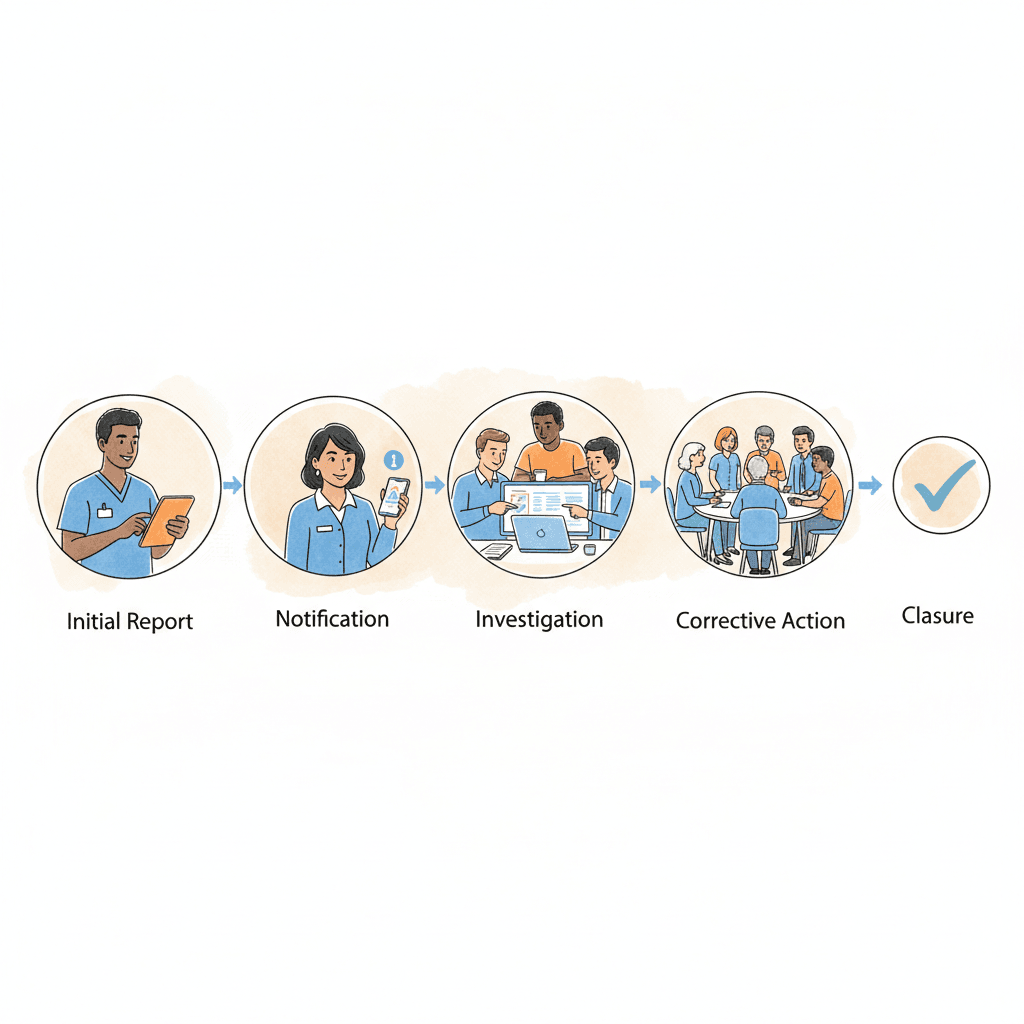
One of the most common restrictive practice compliance failures is a missed review. An authorization that expires without review means the restrictive practice is being used without current authorization — a finding that regulators treat as a serious compliance failure. Technology eliminates missed reviews by auto-scheduling the review before the authorization expires, sending escalating reminders to the responsible clinician, escalating to the clinical director if the review is not completed by the due date, and suspending the authorization (requiring manual override with documented justification) if the review is not completed within a defined grace period.
Regulatory Reporting Integration
In jurisdictions that require mandatory reporting of restrictive practice use (notably Australia under the NDIS framework), the platform can generate the required reports in the format specified by the regulatory body, reducing the administrative burden of compliance while ensuring that no reportable event is missed. In jurisdictions where reporting is survey-based rather than event-based (such as the United States under CMS), the platform maintains the audit trail that surveyors will review, organized and accessible rather than buried in paper files.
Case Scenario: Reducing Restrictive Practice Use Through Systematic Documentation and Review
Maple Ridge Developmental Services operates six group homes across two counties, supporting 48 adults with intellectual and developmental disabilities. In 2024, Maple Ridge's restrictive practice use was typical for their sector: each home averaged 8 to 12 physical restraint events per month, PRN psychotropic medication was administered 15 to 20 times per month across the organization, and three homes had locked front doors on a 24-hour basis. The organization's restrictive practice documentation consisted of brief incident reports filed after physical restraint events, with no standardized tracking of chemical or environmental restraint use, no centralized authorization management, and no systematic trend analysis.
In January 2025, following a licensing review that identified documentation deficiencies in restrictive practice authorization and review, Maple Ridge implemented a comprehensive restrictive practice governance program supported by a digital platform. The program included three components: systematic identification of all restrictive practices in use (including environmental and chemical restrictions that had not previously been tracked), standardized authorization workflows with time-limited authorizations and auto-scheduled reviews, and monthly trend analysis reviewed by the clinical leadership team.
The results over 12 months were significant. The identification phase revealed that the organization was using 47 distinct restrictive practices that had not been formally recognized as such — including locked kitchen cabinets, restricted access to personal items, mandatory accompaniment policies for community outings, and the 24-hour locked doors in three homes. Once identified, each practice was assessed for clinical justification, and 19 practices were discontinued immediately because the clinical team could not identify a current justification.
For the remaining practices, individualized behavior support plans were developed or revised with specific authorization criteria, less restrictive alternative documentation, and time-limited authorizations with 90-day review cycles. The trend analysis function identified that 60% of physical restraint events occurred during two daily transition periods — morning personal care and the return from day programs — and that three specific environmental modifications (adjusted transition schedules, visual cue systems, and a dedicated quiet room available during high-stimulation periods) reduced restraint events during those periods by 74%.
By December 2025, Maple Ridge's organizational restrictive practice metrics showed a 60% reduction in physical restraint events (from an average of 58 per month to 23 per month across all homes), a 45% reduction in PRN psychotropic administration, elimination of 24-hour locked doors in two of the three homes (replaced by individualized door alarm protocols for the specific residents with nighttime wandering risk), and zero authorization lapses — every restrictive practice in use had a current, time-limited authorization with a documented review schedule.
The most revealing metric was not the reduction numbers themselves but the change in the organization's relationship with restrictive practice documentation. Staff initially resisted the detailed documentation requirements, describing them as "paperwork for paperwork's sake." Within six months, frontline staff reported that the structured documentation process — particularly the requirement to document alternatives attempted before each restrictive event — changed their approach to behavioral situations. As one DSP described it: "When you know you have to write down what you tried first, you actually try things first."
Minimization Strategies
Reducing restrictive practice use is not a matter of willpower or policy declarations. It is a clinical and operational undertaking that requires investment in four interconnected domains: environmental design, staff capability, positive behavior support, and organizational culture.
Environmental Design
Many restrictive practices are compensating for environmental design failures. A locked front door compensates for an environment that does not provide meaningful reasons to stay. Restricted kitchen access compensates for a kitchen that is not set up for safe independent use. Bed alarms compensate for a sleeping environment that does not address the person's comfort, sleep patterns, or nighttime needs. Systematic environmental assessment — conducted with the input of the people who live in the environment — identifies the environmental factors that contribute to the behaviors that trigger restrictive practices, and environmental modifications frequently reduce or eliminate those behaviors without any restriction on the person's freedom.
Effective environmental modifications include: sensory assessment and modification of lighting, noise levels, temperature, and visual stimulation; creation of spaces that accommodate different sensory needs (quiet rooms, active spaces, outdoor access); removal of environmental triggers identified through behavioral data analysis; and design that supports independence (accessible kitchens, clear wayfinding, self-service options) rather than restricting it.
Staff Capability
Restrictive practices often reflect the gap between the behavioral challenge a staff member faces and the behavioral management skills they possess. When staff have limited de-escalation skills, they reach for restriction more quickly — not because they prefer restriction, but because they lack alternatives. Investment in staff capability includes: evidence-based de-escalation training with regular competency assessment, trauma-informed care training that helps staff understand behavior as communication rather than defiance, specific training on the individual needs and preferences of each person they support, and ongoing coaching and supervision that reinforces skill application in real-time situations.
Training alone is insufficient. Staff need ongoing mentoring, real-time support during behavioral situations, and a supervisory framework that recognizes and reinforces the use of less restrictive approaches. The organization's response to incidents where restriction is used shapes staff behavior far more powerfully than any training curriculum: if staff perceive that restriction is the expected response and that using alternatives takes longer and is not valued, training on alternatives will not change behavior.
Positive Behavior Support
Positive behavior support (PBS) is the evidence-based framework that underpins restrictive practice reduction in every major jurisdiction. PBS begins with functional behavior assessment — understanding the function of the behavior rather than simply its form — and builds individualized support strategies that address the underlying needs the behavior is communicating. When a person hits staff during personal care, PBS does not ask "how do we stop the hitting?" It asks "what is the person communicating through the hitting, and how can we address that communication need without the behavior and without restriction?"
Effective PBS implementation requires qualified behavior support practitioners who can conduct functional assessments and develop individualized strategies, frontline staff who are trained to implement the strategies consistently, data collection systems that track both the target behaviors and the effectiveness of the support strategies, and regular review cycles that adjust strategies based on outcome data.
Organizational Culture
The most powerful predictor of restrictive practice reduction is not the presence of policies, training programs, or technology systems. It is the organization's culture — the unwritten norms, expectations, and values that shape how staff respond to behavioral challenges. An organization that treats restrictive practice as a normal part of care delivery will continue to use restriction regardless of policy. An organization that treats every restrictive practice event as a learning opportunity — a signal that something in the support plan, the environment, or the staffing model needs to change — will systematically reduce its reliance on restriction.
Culture change requires visible leadership commitment (leaders who review restrictive practice data personally and prioritize reduction), transparency (sharing restrictive practice data with staff, families, and regulators), accountability (clear expectations for documentation and review compliance with consequences for non-compliance), and recognition (acknowledging and celebrating successful de-escalation and the use of less restrictive alternatives).
Conclusion
Restrictive practice governance is not a documentation exercise. It is a clinical governance function that sits at the intersection of individual rights, clinical safety, regulatory compliance, and organizational culture. The documentation requirements — authorization, usage recording, review, trend analysis, and reduction planning — exist because they operationalize the fundamental principle that every person in residential care has the right to the least restrictive support that meets their needs.
Organizations that approach restrictive practice documentation as paperwork will produce paperwork that satisfies no one — not the regulators who review it, not the clinicians who are supposed to learn from it, and not the people whose liberty it is supposed to protect. Organizations that approach it as a clinical governance function will build systems that do what the documentation is actually designed to do: ensure that every restriction is justified, authorized, time-limited, monitored, reviewed, and systematically reduced.
The path from one approach to the other is not mysterious. It requires honest identification of all practices that restrict freedom (including the ones the organization has not previously classified as restrictive), standardized authorization workflows that enforce clinical justification and time-limited approval, structured documentation that captures the complete decision chain for every instance of use, technology that automates review scheduling, tracks trends, and flags compliance gaps, investment in environmental design, staff capability, and positive behavior support that addresses the root causes of the behaviors that trigger restriction, and organizational culture that treats every restrictive practice event as a learning opportunity rather than a routine occurrence.
The measurement of success is not the absence of restrictive practice documentation. It is the presence of documentation that demonstrates a steadily declining trajectory of use, supported by evidence that less restrictive alternatives are being developed, implemented, and refined. That documentation tells regulators, families, and the individuals themselves that the organization understands what every use of a restrictive practice represents — and that it is working to ensure those alternatives succeed.
Frequently Asked Questions
What is the difference between a restrictive practice and a safeguarding measure?
The distinction is one of the most common sources of confusion in residential care. A safeguarding measure protects a person from harm without restricting their freedom, autonomy, or decision-making ability. Supervision in a communal area, environmental modifications that remove hazards, and individualized safety plans that provide additional support during high-risk activities are safeguarding measures. A restrictive practice limits a person's freedom, autonomy, or decision-making ability in order to manage a risk. Locked doors, physical restraint, removal of personal items, and PRN psychotropic medication administered for behavioral management are restrictive practices. The critical test is whether the measure limits the person's ability to do something they would otherwise choose to do. If it does, it is a restriction — regardless of the organization's safety rationale — and it triggers the full authorization, documentation, and review requirements.
Can a restrictive practice become "routine" and no longer require documentation?
No. A restrictive practice does not cease to be restrictive because it has been used for a long time, because the person appears to have adapted to it, or because staff consider it a normal part of the daily routine. A locked front door that has been locked for five years is just as much an environmental restriction on the day of the regulatory survey as it was on the day the lock was installed. The authorization must remain current, the documentation requirements apply to each period of use, and the review schedule must be maintained. In fact, regulatory bodies apply heightened scrutiny to restrictive practices that have become routine, because routinization often indicates that reduction efforts have stalled and that the organization has normalized the restriction rather than actively working to eliminate it.
How should organizations handle restrictive practices that are requested by the person themselves?
A person's request for a restrictive practice does not eliminate the organization's documentation and authorization obligations. A resident who requests bed rails, a locked bedroom door, or restricted access to certain foods is exercising a form of choice, and that choice should be respected and documented. However, the organization must still assess whether the practice is clinically appropriate, document the person's request and informed consent, ensure the authorization is reviewed periodically (because the person's preferences and needs may change), and distinguish between a genuine preference and acquiescence — a person who says "I don't mind" is not the same as a person who actively requests a restriction. The documentation should reflect the person's own words and the process through which their preferences were ascertained.
What training should frontline staff receive on restrictive practice documentation?
Frontline staff who may use or witness restrictive practices need training in four areas: (1) recognition — what constitutes a restrictive practice across all categories, including practices that are commonly normalized as routine; (2) de-escalation and alternatives — evidence-based techniques for preventing escalation and managing behavioral situations without restriction; (3) documentation — how to complete a restrictive practice record with the required specificity, including antecedent documentation, alternative documentation, and person response monitoring; and (4) rights awareness — understanding that every person has the right to the least restrictive support, and that documentation is part of protecting that right, not just a compliance obligation. Training should include scenario-based practice with feedback, and competency should be assessed annually.
How do organizations track restrictive practice trends when they operate across multiple sites?
Multi-site organizations need centralized data aggregation that allows analysis across homes, teams, individuals, and time periods. The minimum trend analysis should include: frequency and duration of each type of restrictive practice by site and by individual, comparison of usage rates across sites (controlling for population acuity), analysis of timing patterns (shift, day of week, time of day), correlation of restrictive practice events with staffing levels and staff experience, and tracking of authorization status (current, expired, under review) across all sites. This analysis is impractical with paper-based systems and disconnected spreadsheets. A centralized platform that captures event data in real time and generates automated trend reports enables the clinical leadership team to identify patterns, deploy resources, and track the effectiveness of reduction strategies across the entire organization.