Key Takeaways
- The NDIS Quality and Safeguards Commission requires registered providers to report every use of a restrictive practice — not just significant incidents or emergency uses but every single instance of seclusion, chemical restraint, mechanical restraint, physical restraint, and environmental restraint — and failure to report is itself a compliance breach that triggers increased regulatory scrutiny.
- A behaviour support plan is not a document that authorises restrictive practices — it is a clinical strategy for reducing and eliminating them, and the Commission evaluates behaviour support plans on the strength of their proactive and preventive strategies, not on the comprehensiveness of their restrictive practice protocols.
- The distinction between interim and comprehensive behaviour support plans is not administrative but clinical: an interim plan provides time-limited authorisation for restrictive practices while a comprehensive functional behaviour assessment is completed, but the Commission expects the transition from interim to comprehensive to occur within six months, and extended reliance on interim plans is treated as evidence that the provider is not investing in the assessment and planning required to reduce restriction.
- State and territory governments retain independent authorisation responsibilities for restrictive practices, creating a dual-layer regulatory framework where providers must satisfy both the NDIS Commission's reporting and documentation requirements and the specific authorisation procedures of each jurisdiction in which they operate — and the requirements do not always align, requiring providers to meet the higher standard in every case.
- Reportable incidents under the NDIS framework extend well beyond restrictive practices to include the death of a participant, serious injury, abuse or neglect, sexual misconduct, and unauthorised use of restrictive practices — and the five-day reporting window for most incidents, with 24-hour reporting for deaths and immediate notification for imminent risk situations, demands documentation systems that can produce complete, accurate incident records under significant time pressure.
Introduction
The National Disability Insurance Scheme Quality and Safeguards Commission administers one of the most prescriptive restrictive practice regulatory frameworks in the world. Where other jurisdictions regulate restrictive practices primarily through survey-based review or complaint-driven investigation, the NDIS Commission requires affirmative reporting of every instance of restrictive practice use, mandatory behaviour support plans for every participant subject to restriction, independent practitioner involvement in plan development, and documented evidence of systematic reduction efforts. The framework is comprehensive by design — it exists because the disability sector's historical relationship with restriction has been characterised by overuse, underreporting, and insufficient oversight.
For registered NDIS providers operating group homes and supported independent living services, this regulatory framework creates documentation obligations that are qualitatively different from standard clinical record-keeping. Every use of a restrictive practice generates a reporting obligation to the Commission. Every participant who is subject to restrictive practices must have a behaviour support plan developed by an NDIS behaviour support practitioner. Every plan must include a functional behaviour assessment, interim strategies, comprehensive strategies, and a documented pathway toward reducing and eliminating restriction. Every authorisation must be time-limited. Every expired authorisation represents an unlawful restriction that must be reported as a compliance breach.
The volume and complexity of these requirements mean that providers cannot manage restrictive practice compliance through paper-based systems, disconnected spreadsheets, or ad hoc documentation practices. The providers that consistently maintain compliance are those that have embedded restrictive practice governance into their operational systems — treating documentation not as a post-event administrative task but as an integral part of the clinical decision-making process that begins before a restriction is used and continues long after it ends.
This article provides registered NDIS providers with comprehensive guidance on the Commission's reporting requirements, the definition and documentation of each category of restrictive practice, behaviour support plan requirements, the reportable incident framework, state and territory authorisation variations, and the role of technology in supporting compliant restrictive practice governance.
Definition and Categories of Restrictive Practices
The NDIS (Restrictive Practices and Behaviour Support) Rules 2018 define five categories of restrictive practice. Each category has specific documentation requirements, and providers must ensure their recording systems can capture the information required for each type.
Seclusion
Seclusion is the sole confinement of a person with disability in a room or physical space at any hour of the day or night where voluntary exit is prevented, or the person with disability cannot exit of their own free will. Seclusion is the most heavily regulated category of restrictive practice under the NDIS framework, and many state and territory authorisation schemes either prohibit seclusion outright or permit it only under the most restrictive conditions.
Documentation requirements for seclusion include: the specific behaviour or risk that necessitated seclusion, the alternatives attempted before seclusion was used (with timestamps and outcomes), the start time and end time of seclusion (to the minute), continuous monitoring records during seclusion (observation at intervals not exceeding 15 minutes, including the person's physical condition, emotional state, and verbal communications), the conditions of the seclusion environment (temperature, lighting, ventilation, access to toilet facilities), the identity of all staff involved, how and why seclusion was terminated, and the person's condition immediately following release from seclusion.
Chemical Restraint
Chemical restraint is the use of medication or chemical substance for the primary purpose of influencing a person's behaviour, where the medication is not prescribed for the treatment of, or to enable treatment of, a diagnosed mental disorder, a physical illness, or a physical condition. The critical word is "primary" — a medication prescribed for a diagnosed condition that also has behavioural effects is not chemical restraint. A medication prescribed primarily to manage behaviour without a diagnosed condition is chemical restraint.
Documentation requirements for chemical restraint include: the specific medication, dose, route, and time of administration, the behaviour that prompted administration, the alternatives attempted before medication was used, the prescriber's clinical justification (which must reference the behaviour support plan), the person's response to the medication (onset of effect, behavioural change, level of consciousness, adverse effects), and the scheduled review date for the PRN order.
PRN psychotropic medication is chemical restraint unless clinically indicated
The most common form of undocumented chemical restraint in disability group homes is PRN psychotropic medication administered for behavioural management. If a participant has a PRN order for a benzodiazepine or antipsychotic "for agitation" without a documented diagnosed condition for which that medication is the indicated treatment, every administration constitutes chemical restraint and must be reported to the Commission. Providers should review all current PRN psychotropic orders to determine whether they meet the clinical indication threshold, and reclassify those that do not as chemical restraint requiring behaviour support plan documentation and Commission reporting.
Mechanical Restraint
Mechanical restraint is the use of a device to prevent, restrict, or subdue a person's movement for the primary purpose of influencing their behaviour, but does not include the use of devices for therapeutic or non-behavioural purposes. The same device may be therapeutic in one context and a mechanical restraint in another — a postural support used as prescribed by an occupational therapist for musculoskeletal management is therapeutic; the same device applied to prevent a person from leaving a chair is a mechanical restraint.
Documentation requirements for mechanical restraint include: the specific device used, the purpose for which it was applied (which must be documented in the behaviour support plan), the duration of application, the person's physical condition during application (skin integrity, circulation, respiratory status), the person's verbal and behavioural response, and monitoring records at defined intervals.
Physical Restraint
Physical restraint is the use or action of physical force to prevent, restrict, or subdue movement of a person's body or part of their body for the primary purpose of influencing their behaviour. Physical restraint in the NDIS context encompasses any hands-on intervention — holds, blocks, guided movement against the person's will, and prone or supine immobilisation.
Documentation requirements for physical restraint are the most detailed of any category and include: the specific technique used (the type of hold, the number of staff involved, their positions relative to the person, and the person's body position throughout), the behaviour that triggered the restraint, the alternatives attempted with timestamps, the start and end time (to the minute), monitoring observations during the restraint (at minimum every five minutes), the person's physical and emotional condition throughout and immediately after, any injuries to the person or staff, and the post-incident debrief record.
Environmental Restraint
Environmental restraint is the restriction of a person's free access to all parts of their environment, including items and activities. This is the broadest category of restrictive practice and the one most commonly underreported, because many environmental restrictions are normalised as safety measures or house rules. Locked doors, restricted access to kitchens or bathrooms, removal of personal items, curfews, and controlled access to outdoor spaces all constitute environmental restraint when they restrict a specific person's freedom for behavioural management purposes.
Documentation requirements for environmental restraint include: the specific restriction in place, the individuals affected (environmental restraint must be individually assessed even when applied to an entire residential setting), the clinical justification documented in each affected person's behaviour support plan, the hours during which the restriction applies, and the review schedule for the restriction.
Behaviour Support Plan Requirements
The behaviour support plan (BSP) is the central document in the NDIS restrictive practice governance framework. It is not merely an authorisation mechanism for restrictive practices — it is a clinical strategy for understanding the function of behaviour and systematically replacing restrictive interventions with positive, evidence-based supports. The Commission evaluates BSPs on the quality and ambition of their proactive strategies, not solely on the adequacy of their restrictive practice protocols.
Who Can Develop a BSP
A behaviour support plan that contains restrictive practices must be developed by an NDIS behaviour support practitioner who is registered with the Commission as either a proficient or core practitioner (for plans containing restrictive practices, core-level registration is required). The practitioner must hold relevant qualifications (typically a postgraduate qualification in applied behaviour analysis, psychology, or a related discipline) and must demonstrate competence in functional behaviour assessment, positive behaviour support, and restrictive practice governance.
Providers cannot develop their own BSPs for participants subject to restrictive practices. The requirement for independent practitioner involvement is a safeguard against the conflict of interest that arises when the organisation that uses restrictive practices is also the organisation that authorises them. The practitioner develops the plan in collaboration with the participant, their support network, and the provider, but the clinical content of the plan — including the functional assessment, the proactive strategies, and the conditions under which restrictive practices may be used — is the practitioner's professional responsibility.
Interim vs. Comprehensive BSPs
The Commission recognises two types of BSPs: interim plans and comprehensive plans. An interim BSP may be developed when there is an immediate need to document and authorise restrictive practices that are already in use, but a comprehensive functional behaviour assessment has not yet been completed. The interim plan must document the restrictive practices currently in use, the initial assessment of their necessity, and a timeline for completing the comprehensive assessment and transitioning to a comprehensive plan.
The Commission expects the transition from interim to comprehensive BSP to occur within six months. Interim plans that are repeatedly extended without progress toward a comprehensive assessment are treated as evidence that the provider and practitioner are not meeting their obligations. The Commission monitors the ratio of interim to comprehensive plans across providers and practitioners as a quality indicator.
Comprehensive BSP Content Requirements
A comprehensive BSP must include:
Functional behaviour assessment. A systematic analysis of the behaviour of concern that identifies the antecedents (events, conditions, and interactions that precede the behaviour), the behaviour itself (described in specific, observable, measurable terms), and the consequences (events that follow the behaviour and may reinforce it). The functional assessment must identify the function of the behaviour — what the person achieves or avoids through the behaviour — and this function informs the proactive strategies.
Person-centred profile. A description of the person's strengths, preferences, communication style, cultural background, goals, and support needs. This section ensures that the BSP is not solely a behaviour management document but a holistic support plan that addresses the person's quality of life.
Proactive and preventive strategies. The strategies that will be implemented to prevent the behaviour of concern from occurring. These may include environmental modifications, skill-building programmes, communication supports, schedule adjustments, relationship strategies, and health and wellbeing interventions. The proactive strategies must address the identified function of the behaviour — if the behaviour serves a communicative function, the proactive strategies must include teaching alternative communication methods.
Reactive strategies. The responses that staff should implement when the behaviour of concern occurs despite proactive strategies. Reactive strategies should be arranged in a hierarchy from least to most restrictive, with clear criteria for escalation. Restrictive practices should appear only at the end of this hierarchy, after all less restrictive options have been documented.
Restrictive practice protocols. For each restrictive practice authorised by the plan, the specific conditions under which the practice may be used, the maximum duration, the monitoring requirements during use, the criteria for discontinuation, and the review schedule.
Reduction and elimination strategies. A documented plan for reducing the frequency and intensity of restrictive practice use over time, with measurable targets and timeframes. This section must demonstrate that the practitioner and provider are actively working toward elimination, not merely maintaining the status quo.
Data collection and review schedule. The data that will be collected to monitor both the behaviour of concern and the effectiveness of the support strategies, the frequency and method of data collection, and the schedule for reviewing and revising the plan.
Reportable Incidents
The NDIS (Incident Management and Reportable Incidents) Rules 2018 require registered NDIS providers to report specified incidents to the Commission. Reportable incidents extend well beyond restrictive practices and include categories that have distinct documentation requirements and reporting timeframes.
Categories of Reportable Incidents
Death of a person with disability. Any death of a participant that occurs in connection with the delivery of NDIS supports and services must be reported within 24 hours. The report must include the circumstances of the death, the care and supports being provided at the time, any events in the preceding 72 hours that may be relevant, and the actions taken by the provider following the death.
Serious injury of a person with disability. A serious injury is one that requires medical or dental treatment by a health practitioner, including fractures, burns, deep lacerations, or head injuries. The initial report must be submitted within five business days, with a follow-up report due within a further 60 business days that includes the investigation findings and corrective actions.
Abuse or neglect of a person with disability. Any reasonable suspicion or allegation of abuse or neglect of a participant must be reported within five business days. The report must include the nature of the allegation, the identity of the alleged perpetrator (if known), the actions taken to protect the participant, and the status of any investigation.
Sexual misconduct. Any sexual misconduct committed against or in the presence of a person with disability must be reported within five business days. This category includes sexual offences, sexual exploitation, and grooming behaviours.
Unauthorised use of a restrictive practice. The use of a restrictive practice that is not authorised by a current behaviour support plan, or the use of a restrictive practice in a manner that does not comply with the conditions specified in the BSP, must be reported within five business days. This is one of the most frequently reported incident categories, because it captures not only deliberate misuse of restriction but also administrative failures — expired authorisations, staff using techniques not specified in the plan, and emergency uses that were not anticipated in the BSP.
Monthly Restrictive Practice Reporting
In addition to incident-based reporting, registered providers must submit monthly reports to the Commission documenting every use of every category of restrictive practice for every participant. The monthly report includes the number of instances of each type of restrictive practice, the participants affected, the duration of each instance, whether the use was consistent with the participant's current BSP, and any authorisation lapses or compliance concerns identified.
Monthly reporting drives Commission risk assessments
The Commission analyses monthly restrictive practice data to identify providers with increasing usage trends, providers whose usage significantly exceeds sector benchmarks, providers with high rates of unauthorised use, and participants whose restrictive practice exposure is not decreasing over time despite having a BSP in place. These data patterns trigger targeted assessment contacts and, in some cases, compliance investigations. Accurate, complete monthly reporting is not just a compliance obligation — it is the data the Commission uses to decide how much regulatory attention your organisation receives.
Documentation Requirements for Reportable Incidents
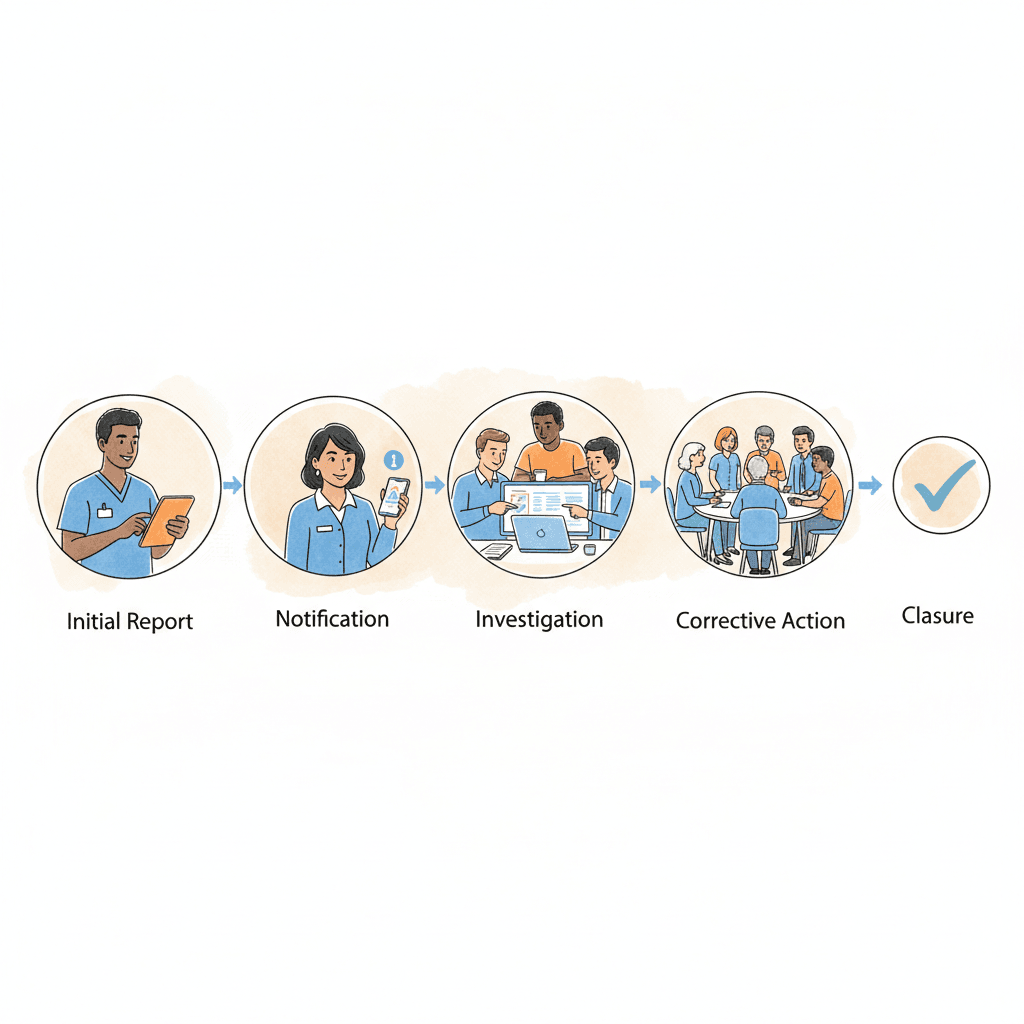
Every reportable incident requires an initial notification and a final report. The initial notification must include the category of incident, the date, time, and location, the people involved, a factual description of what occurred, the immediate actions taken to ensure the participant's safety, and any notifications to other authorities (police, coroner, state regulatory bodies).
The final report, due within 60 business days of the initial notification, must include: the full investigation findings, the root cause analysis, the corrective actions taken or planned, evidence that the participant's support plan has been reviewed and updated if necessary, and evidence that the provider's systems have been reviewed to prevent recurrence.
State and Territory Authorisation Variations
The NDIS Commission administers the national reporting framework, but state and territory governments retain independent responsibilities for authorising restrictive practices. This dual-layer framework means that compliance requires satisfying both the national reporting requirements and the specific authorisation procedures of each jurisdiction in which the provider operates.
New South Wales
In NSW, the NDIS Commission directly administers restrictive practice authorisations. Providers must lodge authorisation requests with the Commission, supported by a comprehensive or interim BSP and evidence that state-based consent requirements have been met. The Commission may approve, conditionally approve, or refuse the authorisation.
Victoria
Victoria's Department of Families, Fairness and Housing retains a role in authorising restrictive practices through the Senior Practitioner framework. The Victorian Senior Practitioner reviews behaviour support plans, monitors restrictive practice use, and provides independent oversight. Providers in Victoria must comply with both the NDIS Commission's reporting requirements and the Senior Practitioner's oversight requirements, which include specific requirements for compulsory treatment and chemical restraint documentation.
Queensland
Queensland's authorisation framework is administered through the Office of the Public Guardian and the Queensland Civil and Administrative Tribunal (QCAT). For participants under guardianship, restrictive practice authorisation may require QCAT approval. Providers must navigate the intersection of NDIS Commission reporting, guardian consent requirements, and QCAT authorisation processes.
South Australia
South Australia's framework operates through the Office of the Public Advocate, which provides consent and oversight functions for restrictive practices applied to participants who are subject to guardianship orders. Providers must ensure that the appropriate consent pathway is followed based on each participant's decision-making arrangements.
Other Jurisdictions
Western Australia, Tasmania, the Northern Territory, and the Australian Capital Territory each have distinct authorisation frameworks that providers must navigate alongside the national NDIS Commission requirements. The key principle across all jurisdictions is that the provider must meet whichever standard is more stringent — if the state framework requires a step that the national framework does not, or vice versa, the provider must satisfy both.
| Jurisdiction | Authorising Body | Key Requirement |
|---|---|---|
| NSW | NDIS Commission | Direct authorisation through Commission |
| Victoria | Senior Practitioner (DFFH) | Independent practitioner review and oversight |
| Queensland | Public Guardian / QCAT | Tribunal approval for guardianship participants |
| South Australia | Public Advocate | Consent function for guardianship participants |
| Western Australia | NDIS Commission (transitional) | Evolving framework, monitor for updates |
| Tasmania | NDIS Commission | Direct authorisation through Commission |
| ACT | NDIS Commission | Direct authorisation through Commission |
| Northern Territory | NDIS Commission | Direct authorisation through Commission |
Case Scenario: Reducing Restrictive Practices Through Systematic Documentation
Horizon Support Services operates eight group homes across metropolitan Sydney, supporting 32 NDIS participants with intellectual disability and complex behaviour support needs. In early 2025, the organisation's monthly reporting data showed an average of 94 restrictive practice events per month across all homes, with physical restraint accounting for 40%, environmental restraint for 35%, and chemical restraint for 25%. Six of the 32 participants accounted for 70% of all restrictive practice events. Four participants were on interim BSPs that had been in place for more than six months without transition to comprehensive plans.
Following a Commission assessment contact that identified the extended interim plans as a compliance concern, Horizon engaged two additional core-level behaviour support practitioners and invested in a digital platform to replace its paper-based documentation system. The reform programme focused on three priorities: transitioning all interim plans to comprehensive BSPs, improving the quality of event-level documentation to support functional analysis, and using trend data to drive targeted environmental and staffing modifications.
The transition to comprehensive BSPs was completed within four months. The functional behaviour assessments revealed that for three of the six high-frequency participants, the behaviour of concern served a clear escape function — the participants were using behaviour to exit situations that were aversive due to noise, crowding, or staff interaction style. Environmental modifications for these three participants (adjusted common area layouts, noise reduction measures, and revised staff rotation to ensure compatibility) reduced their combined restrictive practice events by 62% within three months.
For a fourth participant, the functional assessment identified that morning personal care was the primary trigger for physical restraint, and that the trigger was specifically related to water temperature sensitivity that had not been previously identified. A simple modification — allowing the participant to test and adjust water temperature independently before personal care began — eliminated the morning restraint events entirely.
By December 2025, Horizon's monthly restrictive practice events had declined from 94 to 31 — a 67% reduction. The reduction was not uniform: environmental restraint decreased by 80% (primarily through the elimination of blanket environmental restrictions that were replaced by individualised protocols), physical restraint decreased by 60%, and chemical restraint decreased by 45% (the slower reduction reflecting the longer timeline required for medication reviews and prescriber engagement). The Commission's quarterly analysis of Horizon's data noted the declining trend and did not schedule a follow-up assessment contact.
The behaviour support practitioners attributed the reduction not to any single intervention but to the documentation system itself. When staff were required to document alternatives attempted before every restrictive practice event, the alternatives were actually attempted. When trend data was reviewed monthly by the clinical leadership team, patterns became visible that guided targeted interventions. When authorisation expiry dates were tracked automatically, reviews happened on schedule rather than being triggered by lapses.
NDIS Practice Standards Compliance Documentation
The NDIS Practice Standards are the quality framework against which registered providers are audited. Providers that use or are likely to use restrictive practices must meet the supplementary module on implementing behaviour support plans, which contains specific verification criteria.
Core Module Requirements
The core NDIS Practice Standards include requirements for governance and operational management, incident management and reportable incidents, complaints management, worker screening, and human resource management. Each of these intersects with restrictive practice governance:
Governance must demonstrate that the provider has systems to ensure restrictive practices are used only as authorised, that usage data is reviewed by leadership, and that reduction is a strategic priority. Incident management must demonstrate that all uses of restrictive practices are documented and that unauthorised use is reported as a reportable incident. Worker screening must demonstrate that all staff involved in implementing restrictive practices have appropriate clearances and qualifications.
Supplementary Module: Behaviour Support
The supplementary module requires providers to demonstrate that: behaviour support plans are implemented as written, staff are trained in the specific strategies of each participant's BSP, restrictive practices are used only in accordance with the current BSP, all uses are documented and reported, authorisations are current and have not expired, data is collected to monitor both behaviour and restrictive practice use, and there is evidence that restrictive practice use is decreasing over time.
Specialist Behaviour Support Practitioner Requirements
The NDIS Commission maintains a register of behaviour support practitioners and assigns practitioners to one of two suitability levels: proficient and core. The suitability level determines what type of BSPs the practitioner can develop.
Proficient practitioners can develop behaviour support plans that do not contain restrictive practices. They can also develop interim BSPs that contain restrictive practices, provided they are working under the supervision of a core practitioner.
Core practitioners can develop comprehensive behaviour support plans that contain restrictive practices. Core-level suitability requires demonstrated competence in functional behaviour assessment, development of comprehensive positive behaviour support strategies, and restrictive practice governance.
The Commission monitors practitioner performance through the Behaviour Support Quality Evaluation framework, which assesses the quality of BSPs submitted to the Commission. Providers should verify that their contracted practitioners maintain appropriate suitability levels and are not subject to any compliance concerns with the Commission.
Staff Capability and Documentation Quality
The quality of restrictive practice documentation depends directly on the capability of the staff who produce it. Frontline support workers are responsible for the real-time documentation that forms the evidentiary foundation of the entire compliance framework — the event records, the alternative documentation, the monitoring observations, and the post-incident reports. If frontline documentation is vague, incomplete, or formulaic, the entire governance system built on that documentation is compromised.
Training Requirements
All staff who may implement or witness restrictive practices must receive training that covers four domains: recognition of all five categories of restrictive practice (including normalised practices that staff may not identify as restrictive), the specific strategies and protocols documented in each participant's BSP (generic restrictive practice training is not sufficient — staff must be trained on each individual's plan), documentation skills including how to write specific, observable, timed descriptions of behaviours, alternatives, and outcomes, and de-escalation techniques that provide genuine alternatives to restriction.
Training must be documented with evidence of content covered and competency assessed. Annual refresher training is the minimum expectation, with additional training required when BSPs are revised, when new participants are admitted, or when documentation audits identify quality concerns.
Documentation Quality Standards
The Commission's evaluation of restrictive practice documentation is not limited to completeness — whether all required fields are populated. It extends to quality — whether the content of those fields provides meaningful clinical and governance information. A physical restraint record that documents "alternatives attempted: verbal redirection" provides less information than one that documents "at 14:22, staff member A offered Maria a choice of moving to a quieter area or listening to music. Maria declined both options and continued to approach the exit door. At 14:24, staff member B positioned himself between Maria and the exit and used a calm voice to ask Maria what she needed. Maria pushed past staff member B and reached for the door handle."
Providers should establish documentation quality standards that define the expected level of specificity for each type of record and audit documentation quality monthly. When quality falls below the expected standard, targeted coaching is more effective than additional classroom training.
Technology for NDIS Restrictive Practice Compliance
The reporting obligations under the NDIS framework — real-time event documentation, monthly aggregate reporting, incident notification within defined timeframes, authorisation tracking, and BSP review scheduling — create a documentation workload that manual systems cannot reliably sustain. The consequences of documentation failures are not abstract: unreported incidents are compliance breaches, expired authorisations are unlawful restrictions, and incomplete monthly reports trigger Commission scrutiny.
Integrated Documentation and Reporting
A purpose-built platform integrates restrictive practice event documentation with the Commission's reporting requirements. When a staff member documents a restrictive practice event, the system validates that a current BSP authorises the practice, captures the required data fields (type, duration, alternatives attempted, person's response), flags any authorisation concerns for immediate escalation, and queues the event for inclusion in the monthly report. When an event constitutes a reportable incident (unauthorised use, or use involving injury), the system triggers the incident notification workflow with the appropriate timeframe.
Authorisation Management
The platform tracks every participant's BSP status, including whether the plan is interim or comprehensive, the authorisation expiry date, the state or territory authorisation status, and the scheduled review date. Automated alerts notify clinical leads when authorisations are approaching expiry, when interim plans are approaching the six-month transition deadline, and when state authorisation renewals are due. This automated tracking eliminates the most common compliance failure in restrictive practice governance: the administrative lapse that results in an unauthorised restriction.
Trend Analysis for Reduction
The Commission evaluates whether restrictive practice use is decreasing over time. Demonstrating reduction requires trend data — monthly frequency, duration, and intensity of restrictive practice use for each participant, analysed against the proactive strategies documented in the BSP. Technology that tracks this data automatically generates the trend analyses that behaviour support practitioners need to evaluate their strategies and that the Commission expects to see as evidence of genuine reduction effort.
Trend data is your strongest evidence of commitment to reduction
When the Commission assesses a provider's restrictive practice governance, the most persuasive evidence is not a well-written BSP or a complete set of incident reports. It is trend data showing that restrictive practice use is decreasing over time for individual participants and across the organisation. This data demonstrates that the BSP strategies are working, that the provider is investing in proactive supports, and that restriction is genuinely being treated as a last resort to be reduced and eliminated. Providers that cannot produce this trend data — because they do not track it, or because the trends are flat or increasing — will face more intensive scrutiny.
Common Compliance Failures and Prevention
Analysis of Commission compliance actions and provider audit outcomes reveals recurring patterns of non-compliance in restrictive practice governance. Understanding these patterns helps providers prioritise their compliance activities.
Expired Authorisations
The single most common restrictive practice compliance failure is the continued use of a restrictive practice after its authorisation has expired. This occurs when BSP review dates are not tracked systematically, when state or territory authorisations expire without renewal, or when interim plans are not transitioned to comprehensive plans within the expected timeframe. Every instance of restriction used under an expired authorisation constitutes an unauthorised use that must be reported as a reportable incident.
Prevention requires automated authorisation tracking with escalating alerts. The system should generate initial reminders 60 days before expiry, escalated reminders at 30 days, and urgent alerts at 14 days. If an authorisation expires without renewal, the system should flag every subsequent use of the restricted practice as potentially unauthorised and trigger the reportable incident workflow.
Inadequate Alternative Documentation
Commission assessors frequently identify restrictive practice event records where the "alternatives attempted" section is formulaic rather than specific. Records that state "verbal de-escalation attempted, unsuccessful" for every event do not demonstrate a genuine process of attempting alternatives — they demonstrate a documentation habit that has replaced genuine clinical decision-making. The Commission expects to see specific, varied, and contextually appropriate alternatives documented for each event.
Prevention requires training that emphasises the specificity required in alternative documentation and audit processes that evaluate documentation quality, not just documentation completeness. When audits identify formulaic alternative documentation, targeted coaching should address the underlying practice issue — staff may be documenting alternatives perfunctorily because they do not have a sufficient repertoire of alternative strategies to draw upon, which indicates a training and BSP implementation gap.
Underreporting of Environmental Restraint
Environmental restraint is consistently underreported because many environmental restrictions are normalised as standard house practices rather than recognised as restrictive practices. Locked doors, controlled access to kitchens and personal items, mandatory accompaniment policies, and scheduled restrictions on movement are all environmental restraints that require individualised assessment, BSP documentation, and monthly reporting.
Prevention requires a periodic environmental scan of all practices that restrict any person's freedom, autonomy, or access — conducted annually at minimum and whenever a new participant enters the service. Each identified restriction must be assessed against each affected participant's BSP and either documented as an authorised restrictive practice with appropriate reporting, or eliminated if no clinical justification exists.
Failure to Demonstrate Reduction
The Commission expects restrictive practice use to decrease over time for each participant who is subject to a comprehensive BSP. Providers that report stable or increasing restrictive practice rates despite having BSPs in place are flagged for targeted assessment. The most common reason for failure to demonstrate reduction is that BSPs contain proactive strategies on paper but those strategies are not being implemented consistently in practice.
Prevention requires ongoing monitoring of BSP implementation fidelity — are the proactive strategies documented in the plan actually being delivered by staff on every shift? Implementation monitoring should be built into the supervisor's routine: regular observation of staff implementing BSP strategies, discussion of BSP implementation during supervision sessions, and data collection that tracks not just restrictive practice events but the delivery of proactive supports.
Conclusion
The NDIS restrictive practice governance framework is demanding by design. It exists because the disability sector's historical use of restriction has caused profound harm to people with disability, and the framework's reporting, documentation, and authorisation requirements are intended to make every use of restriction visible, justified, time-limited, and subject to ongoing reduction.
For registered NDIS providers, compliance with this framework is not optional, and the consequences of non-compliance are significant — Commission-imposed conditions, sanctions, suspension, or revocation of registration. But framing restrictive practice governance solely as a compliance obligation misses its purpose. The documentation requirements — the functional assessments, the alternative strategies, the monitoring data, the trend analyses, the review schedules — exist because they are the mechanisms through which restriction is actually reduced. A provider that documents comprehensively does not just satisfy the Commission. It builds the clinical infrastructure that enables its practitioners and staff to understand behaviour, implement effective supports, and systematically replace restriction with alternatives that preserve the person's rights and dignity.
The providers that achieve sustained compliance and genuine reduction share common characteristics: they invest in qualified behaviour support practitioners, they train staff in the specific strategies of each participant's BSP, they track data systematically and use it to drive clinical decision-making, they maintain technology systems that enforce authorisation workflows and automate reporting, and they treat every instance of restrictive practice as a learning opportunity — evidence that the support plan needs refinement, not evidence that the person needs more control.
The measurement of success in restrictive practice governance is not documentation completeness, though completeness is necessary. It is the trajectory — the documented, data-supported evidence that restrictive practice use is declining over time for the people you support, because the alternatives are working.
Frequently Asked Questions
What happens if we use a restrictive practice that is not in the participant's behaviour support plan?
Unauthorised use of a restrictive practice is a reportable incident that must be notified to the Commission within five business days. The incident report must include the circumstances that led to the unauthorised use, the actions taken to ensure the participant's safety, and the steps being taken to prevent recurrence. Recurrent unauthorised use may trigger a Commission compliance investigation and may result in conditions on the provider's registration. The most common cause of unauthorised use is an expired BSP authorisation or a staff member using a technique that is not specified in the current plan. Proactive authorisation tracking and staff training on each participant's specific BSP protocols are the primary preventive measures.
How do we manage restrictive practice documentation for participants who move between providers?
When a participant transitions between providers, the current behaviour support plan and all associated documentation (authorisations, incident history, trend data) should be transferred with the participant's informed consent. The receiving provider must review the BSP and confirm that it is appropriate for the new environment before implementing any restrictive practices. If the BSP requires modification for the new setting, the behaviour support practitioner must revise the plan and obtain new authorisations as required. During the transition period, the receiving provider should have an interim plan in place that is authorised by the Commission and relevant state or territory body.
What qualifications do staff need to implement restrictive practices?
The NDIS Practice Standards require that all staff who implement restrictive practices are trained in the specific techniques authorised by each participant's BSP. This training must be provided by or under the supervision of a qualified behaviour support practitioner and must include the proactive and preventive strategies (not just the restrictive techniques), the specific conditions under which each restrictive practice may be used, the monitoring and documentation requirements, de-escalation skills, and the participant's individual needs and communication style. Training records must document the content covered, the staff member's demonstrated competence, and the date of the training. Annual refresher training and competency reassessment is expected.
How should providers handle the transition from interim to comprehensive BSPs?
The Commission expects comprehensive BSPs to replace interim plans within six months. Providers should ensure that behaviour support practitioners are engaged early and have access to the participant, their support network, and relevant clinical information to complete the functional behaviour assessment. If the six-month timeline cannot be met, the practitioner must document the reasons for the delay and provide a revised timeline. The provider should track interim-to-comprehensive transition status for all participants and escalate delays to clinical leadership. Extended reliance on interim plans is a compliance risk that the Commission monitors at both provider and practitioner level.