Key Takeaways
- CMS survey readiness is not a preparation activity — it is an operational state. Facilities that treat compliance as continuous documentation discipline consistently outperform those that scramble in response to survey notifications.
- F-tag documentation requirements span 17 regulatory groupings, but the majority of citations concentrate in four areas: care planning (F-tags 655-661), medication management (F-tags 755-761), resident rights (F-tags 550-586), and infection prevention (F-tags 880-886).
- Phase 2 and Phase 3 survey protocols require surveyors to trace documentation from the resident experience backward through clinical records, making resident-level documentation completeness the single most determinative factor in survey outcomes.
- QSO (Quality, Safety, and Oversight) memoranda issued by CMS between surveys carry binding compliance weight and must be operationalized within the timelines specified — not filed and forgotten.
- Documentation systems that generate compliance evidence as a byproduct of clinical workflows reduce survey preparation time by 60 to 80 percent compared to retrospective record assembly, because the evidence already exists when the surveyor arrives.
Introduction
A CMS survey team arrives at a 120-bed skilled nursing facility on a Wednesday at 10:00 AM. They do not announce themselves in advance. They present credentials at the front desk, request a private workspace, and within 15 minutes have pulled the Certification and Survey Provider Enhanced Reports (CASPER) quality measure data for the facility. By 10:30, they have selected resident samples based on care areas triggered by that data — residents with pressure ulcers, residents on antipsychotics, residents with recent weight loss, residents who have been hospitalized and returned.
What happens over the next three to five days depends almost entirely on what the documentation shows. Not what the staff say they do. Not what the administrator explains. What the records demonstrate. The survey team will trace each sampled resident's experience from the care plan through the clinical documentation through the medication administration records through incident reports and follow-up notes. Every gap in that chain — a missing assessment, a care plan that does not reflect a documented change in condition, a PRN medication without a documented indication, an incident without follow-up — becomes a potential deficiency citation tied to a specific F-tag.
This is the reality of CMS compliance for every long-term care facility in the United States that participates in Medicare or Medicaid. The Requirements of Participation, codified at 42 CFR Part 483, establish the federal standards. The State Operations Manual (SOM) provides the survey guidance. And the F-tag system organizes nearly 200 individual regulatory requirements into a framework that surveyors use to evaluate compliance and classify deficiencies by scope and severity.
This article provides a practical guide to CMS compliance documentation — not the regulations themselves, which are extensively documented elsewhere, but the documentation practices that determine whether your facility demonstrates compliance when a surveyor traces a resident's care through your records. It covers the F-tag areas where documentation deficiencies concentrate, the Phase 2 and Phase 3 survey methodologies that shape what surveyors examine, the role of QSO memoranda in evolving compliance expectations, and the systems that generate compliance evidence as a natural byproduct of clinical care rather than as a separate preparation exercise.
The CMS Survey Process: What Documentation Must Withstand
Understanding how surveyors use documentation is the prerequisite for building documentation that survives their scrutiny. The CMS survey process is not a checklist audit — it is an investigative methodology that starts with resident outcomes and works backward through the documentary record to determine whether the facility met its obligations.
How Surveyors Select Residents
Resident selection is not random. Surveyors use the facility's own quality measure data — CASPER reports, the Five-Star Quality Rating, Minimum Data Set (MDS) submissions, and complaint history — to identify care areas of concern. If the facility's data shows a higher-than-expected rate of antipsychotic use, the survey team will select residents receiving antipsychotics and examine whether there is documented clinical justification, evidence of gradual dose reduction attempts, informed consent, and care plan integration. If the data shows above-average fall rates, the survey team will select residents who have fallen and examine fall risk assessments, post-fall documentation, care plan interventions, and follow-up.
The implication for documentation is direct: the areas where your quality measure data is weakest are the areas where your documentation will receive the most intense scrutiny. Compliance-ready documentation begins with understanding your own data profile and ensuring that the clinical records for residents in triggered care areas are complete, current, and internally consistent.
The Tracer Methodology
CMS surveys employ a tracer methodology. For each selected resident, the survey team traces the resident's care experience from the care plan through every touchpoint documented in the record. They follow the medication from the physician order through the pharmacy review through the MAR through the assessment of therapeutic effectiveness. They follow the fall from the incident report through the post-fall assessment through the care plan revision through the implementation of new interventions through the evaluation of whether those interventions are working.
What the tracer methodology reveals is not whether individual documents exist — it is whether the documents form a coherent, connected narrative. A facility can have a perfectly completed MDS, a detailed care plan, and thorough progress notes, and still receive citations if those documents contradict each other or if the care plan interventions are not reflected in the daily clinical documentation. The tracer methodology tests internal consistency, and internal consistency requires documentation systems where clinical records are connected rather than siloed.
Scope and Severity Classification
When surveyors identify a deficiency, they classify it by scope (how many residents are affected) and severity (the level of harm or potential for harm). The scope-severity matrix produces classifications from A (isolated, no actual harm, potential for minimal harm) through L (widespread, immediate jeopardy). The classification directly affects the consequences: deficiencies at the immediate jeopardy level (J, K, L) can trigger immediate sanctions, including civil monetary penalties, denial of payment for new admissions, and termination from Medicare and Medicaid participation.
Documentation quality influences both scope and severity determinations. When documentation demonstrates that the facility identified a problem, responded appropriately, and monitored the outcome — even if the resident experienced a negative event — the severity classification is typically lower than when documentation shows gaps in identification, response, or follow-up. The presence of a completed incident report with neurological checks, physician notification, care plan revision, and documented follow-up assessments after a fall tells the surveyor a fundamentally different story than an incident report with no follow-up documentation.
F-Tag Documentation Requirements: Where Citations Concentrate
The F-tag system contains nearly 200 regulatory requirements, but citation data consistently shows that the majority of deficiency findings concentrate in a relatively small number of F-tag groups. Understanding these concentration areas allows compliance officers to prioritize documentation improvement efforts where they will have the greatest impact on survey outcomes.
Care Planning: F-Tags 655 through 661
Care planning documentation is the most frequently cited deficiency area in CMS surveys. The Requirements of Participation mandate that each resident have a comprehensive, person-centered care plan that is developed within seven days of the comprehensive assessment, is reviewed and revised with each significant change in condition, and reflects the resident's goals, preferences, and clinical needs.
The documentation requirements are specific. F-656 requires that the care plan include measurable objectives and timetables. F-657 requires that the care plan be reviewed and revised after each assessment, including the quarterly MDS review. F-659 requires that services be provided in accordance with the care plan — meaning that the clinical documentation must demonstrate that the interventions described in the care plan are actually being delivered.
The most common care planning documentation deficiency is the static care plan — a plan that was developed at admission and has not been meaningfully updated despite documented changes in the resident's condition. When a surveyor sees progress notes describing a decline in mobility, new skin integrity concerns, or behavioral changes, and then opens the care plan to find it unchanged from six months ago, the disconnect is a citation waiting to happen.
What your documentation must show: Care plans updated within the required timeframes. Documented evidence that care plan interventions are reflected in daily clinical notes. Resident and family involvement in care plan development documented with specifics — not just "family participated in care conference" but what was discussed, what preferences were expressed, and how they were incorporated.
Medication Management: F-Tags 755 through 761
Medication management citations are among the most consequential because they directly implicate resident safety. F-757 (unnecessary drugs) and F-758 (psychotropic medications) receive particular survey attention, especially in facilities with above-average antipsychotic utilization rates.
F-757 requires documentation that each medication is clinically indicated, that the dose is appropriate, that adverse consequences are monitored, and that gradual dose reduction is attempted for psychotropic medications unless clinically contraindicated. F-758 extends these requirements specifically to antipsychotics, requiring documented evidence of a clinical diagnosis that justifies the medication, evidence that non-pharmacological interventions were attempted first, informed consent, and regular reassessment.
Antipsychotic documentation is a survey priority
CMS has made antipsychotic reduction a national priority. Facilities with antipsychotic utilization rates above the national average will face heightened scrutiny of every resident receiving these medications. For each resident on an antipsychotic, your documentation must show: the specific diagnosis justifying use, evidence that behavioral interventions were tried first, informed consent from the resident or legal representative, documented gradual dose reduction attempts (or clinical justification for why GDR is contraindicated), and ongoing monitoring for side effects. Missing any one of these elements for any sampled resident can generate a citation.
Medication administration documentation must also address PRN (as-needed) medications. Every PRN administration must include the indication (why the medication was given), the time of administration, and a follow-up entry documenting the resident's response within a clinically appropriate timeframe. A MAR showing a PRN pain medication administered without a documented reason or without a documented follow-up assessment is a medication management deficiency.
Resident Rights: F-Tags 550 through 586
Resident rights documentation is distinct from clinical documentation but no less important in surveys. F-550 through F-586 cover a broad range of rights including the right to be informed of care and treatment, the right to refuse treatment, the right to privacy, the right to voice grievances, and the right to participate in care planning.
Documentation requirements include evidence that residents were informed of their rights upon admission (with dated acknowledgment), that grievances were received, investigated, and resolved with documented communication back to the resident, that treatment refusals were documented with education provided about consequences, and that the resident's choices and preferences are reflected in the care plan.
Grievance documentation is a frequent area of deficiency. CMS requires that facilities have a process for receiving, investigating, and resolving grievances, and that the process be documented from receipt through resolution. A grievance log that shows complaints received but no documented investigation or resolution will generate citations. The documentation must show who investigated, what was found, what action was taken, and that the resident was informed of the outcome.
Infection Prevention and Control: F-Tags 880 through 886
Infection prevention and control documentation has received intensified survey attention since the COVID-19 pandemic. F-880 requires facilities to maintain an infection prevention and control program (IPCP) with a designated infection preventionist. F-881 through F-886 address specific elements including antibiotic stewardship, surveillance, and outbreak response.
Documentation must demonstrate active surveillance (tracking infections by type, location, and trend), staff training on infection control practices, appropriate use of personal protective equipment, hand hygiene compliance monitoring, and an antibiotic stewardship program that includes documentation of clinical justification for each antibiotic prescribed, culture results when applicable, and review of antibiotic therapy within 48 to 72 hours of initiation.
The infection control documentation that surveyors request is not limited to clinical records. They examine training records for infection control education, environmental rounds documentation, hand hygiene audit results, and the facility's infection surveillance reports. A facility that cannot produce six months of infection surveillance data with trending analysis has a documentation gap that will generate findings.
Phase 2 and Phase 3 Survey Expectations
CMS survey methodology has evolved through phases, each increasing the investigative depth and the documentation burden on facilities. Understanding the current Phase 2 and Phase 3 expectations is essential for documentation readiness.
Phase 2: Critical Element Pathways
Phase 2 introduced Critical Element Pathways (CEPs) — structured investigation guides that surveyors use when examining specific care areas. Each CEP directs the surveyor through a series of documentation review steps, observations, and staff interviews designed to evaluate whether the facility meets the regulatory requirements for that care area.
For example, the Unnecessary Medications CEP directs surveyors to review the physician order, the clinical justification documented in the record, evidence of pharmacist review, documentation of monitoring for adverse effects, evidence of gradual dose reduction or documentation of why it is not indicated, and the care plan's reflection of the medication regimen. Each step in the pathway requires specific documentary evidence. If the evidence is not in the record, the CEP produces a finding.
The practical implication is that documentation must be organized and accessible in a way that supports pathway-based investigation. When a surveyor is working through a CEP, they need to find specific documentation elements quickly. Records that are disorganized, that store related information in disconnected locations, or that require the surveyor to assemble a narrative from scattered entries across multiple systems create a negative impression and increase the probability of findings.
Phase 3: Facility Assessment Integration
Phase 3 incorporated the Facility Assessment requirement (F-838), which mandates that each facility conduct and document a comprehensive assessment of its resident population, resources, and care capabilities. This assessment must be updated annually and whenever there is a significant change in the facility's resident population or services.
Surveyors now evaluate whether the facility's staffing, services, and resources are consistent with the documented Facility Assessment. If the assessment indicates that the facility serves a high-acuity population requiring specialized wound care, but the staffing plan does not include staff with wound care competencies, the disconnect is a deficiency. If the assessment describes an infection prevention program, but the documentation does not demonstrate active implementation, the assessment becomes evidence against the facility rather than for it.
The Facility Assessment is not a one-time document. It is a living record that must align with the operational reality of the facility. Documentation readiness means ensuring that the Facility Assessment is current, that it accurately reflects the resident population and services, and that every claim made in the assessment is supported by operational documentation.
QSO Memoranda: The Moving Target
CMS issues Quality, Safety, and Oversight (QSO) memoranda to state survey agencies throughout the year. These memoranda provide updated guidance on survey priorities, new regulatory interpretations, enforcement policies, and emerging compliance expectations. They are binding on surveyors, which means they are effectively binding on facilities — even though they are not published through the formal rulemaking process.
QSO memoranda have addressed topics including COVID-19 vaccination requirements, revised guidance on the use of psychotropic medications, updated expectations for infection control programs, emergency preparedness documentation requirements, and changes to the immediate jeopardy determination process.
Monitor QSO releases actively
CMS publishes QSO memoranda on the CMS Survey and Certification website. Compliance officers should review new releases within one week of publication, assess applicability to their facility, and operationalize any new requirements within the timeline specified in the memorandum. A QSO memo that changes surveyor guidance on infection control documentation applies to your next survey — whether that survey occurs next week or next quarter. Treat each relevant QSO release as a mini-regulation that requires a documented implementation response.
The compliance challenge with QSO memoranda is that they arrive continuously and cumulatively. A facility that reviews and implements each memorandum as it is issued stays current. A facility that allows memoranda to accumulate unreviewed falls progressively further behind the evolving compliance standard, and the gap becomes apparent when surveyors apply guidance that the facility has not yet operationalized.
Documentation readiness requires a formal process for QSO memorandum intake: who monitors for new releases, who assesses applicability, who is responsible for implementation, and how implementation is documented and verified. Without this process, QSO compliance becomes a matter of luck — whether the surveyor happens to focus on an area where the facility is current or one where it is not.
Continuous Readiness vs. Survey Preparation
The most consequential strategic decision a facility makes about CMS compliance is whether to operate in a state of continuous readiness or to treat compliance as a preparation exercise triggered by survey anticipation.
The Preparation Trap
Facilities that operate in preparation mode follow a predictable cycle. Compliance attention is moderate during normal operations. When a survey is anticipated — because the annual window is approaching, because a neighboring facility was just surveyed, or because a complaint investigation has been initiated — the facility shifts into preparation mode. Charts are reviewed and supplemented. Care plans are updated. Training records are checked and backfilled. The physical environment receives extra attention.
This approach has three fundamental problems. First, CMS surveys are unannounced, and the preparation window is unpredictable. A facility that begins preparation three weeks before the anticipated survey date may be surveyed two weeks before preparation begins. Second, retrospective documentation supplementation — going back to fill gaps in records that should have been maintained in real time — creates its own compliance risks. Late entries, backdated documentation, and care plans updated en masse the week before a survey are visible to experienced surveyors and suggest exactly the kind of reactive compliance posture that invites deeper investigation. Third, the preparation cycle is exhausting and unsustainable. It consumes enormous staff time, creates operational disruption, and produces compliance that is temporary by design — the facility returns to baseline practices after the survey passes.
The Continuous Readiness Model
Continuous readiness means that the facility's documentation and operational practices are maintained at a survey-ready standard every day. Care plans are updated within seven days of a documented change in condition — not because a survey is coming, but because that is the standard operating procedure. PRN medications are documented with indication and follow-up on every administration — not because the MAR is being reviewed, but because the documentation workflow requires it. Infection surveillance data is trended monthly — not because the surveyor might ask for it, but because the infection preventionist uses it to manage the program.
Continuous readiness is more efficient than cyclic preparation. The total staff time spent maintaining real-time documentation standards is less than the time spent on periodic surge preparation, because real-time documentation is incremental (a few extra minutes per entry throughout the shift) while retrospective preparation is concentrated (hours of chart review and supplementation compressed into days).
The key enabler of continuous readiness is a documentation system that makes compliant documentation the path of least resistance. When the system enforces structured entry that captures required elements at the point of care, generates reminders for overdue follow-up, flags care plans that have not been updated after a documented change in condition, and produces audit-ready reports without manual assembly — compliance evidence is generated automatically as a byproduct of clinical workflows.
Building Compliance Evidence Into Clinical Workflows
The most effective approach to CMS documentation readiness is to design clinical workflows so that compliance evidence is produced as a natural output of daily care activities, not as a separate documentation exercise.
Consider the medication management workflow. When a nurse administers a PRN medication, the documentation workflow should require entry of the indication before the administration can be recorded, schedule an automatic reminder for the follow-up assessment at the clinically appropriate interval, and link the follow-up assessment to the original administration so that the complete medication event — indication, administration, response — exists as a connected record. No separate compliance documentation step is needed because the clinical workflow itself produces the documentation that F-757 requires.
Consider the care planning workflow. When a progress note documents a change in resident condition — a new fall, a decline in ADL function, a behavioral change — the system should flag the corresponding care plan for review, track whether the review occurs within the required timeframe, and document the care plan revision with linkage to the triggering clinical event. The care plan currency that F-657 requires is maintained not through periodic audits but through a workflow that connects clinical events to care plan updates in real time.
Documentation System Requirements for CMS Readiness
Not all documentation systems are equal in their ability to support CMS compliance readiness. The following capabilities distinguish systems that generate compliance evidence automatically from those that merely store documentation and leave compliance to manual processes.
Structured Templates Aligned to F-Tag Requirements
Documentation templates should be designed with F-tag requirements mapped to specific fields. A fall incident template should include every element that the Falls CEP directs surveyors to examine: circumstances of the fall, resident condition assessment, notification chain, physician orders, interventions implemented, care plan review initiated, and follow-up assessment schedule. When the template captures these elements as required fields, complete F-tag documentation is the default rather than the exception.
Automated Follow-Up Tracking
The most common CMS documentation deficiency pattern is not the missing initial entry — it is the missing follow-up. The incident is documented but the post-incident neurological checks are not. The PRN medication is administered but the response assessment is not recorded. The physician is notified but the response to the notification is not documented. Systems that generate time-based follow-up reminders tied to initial events close these gaps before they become deficiencies.
Care Plan Integration
Documentation and care planning should exist in the same system with bidirectional linkage. When clinical documentation triggers a care plan review, the system should track the review from trigger through revision through implementation. When care plan interventions are documented in daily clinical notes, the system should make that connection visible so that surveyors tracing from the care plan to the clinical record can follow the path without manual reconstruction.
Compliance Dashboards and Audit Reports
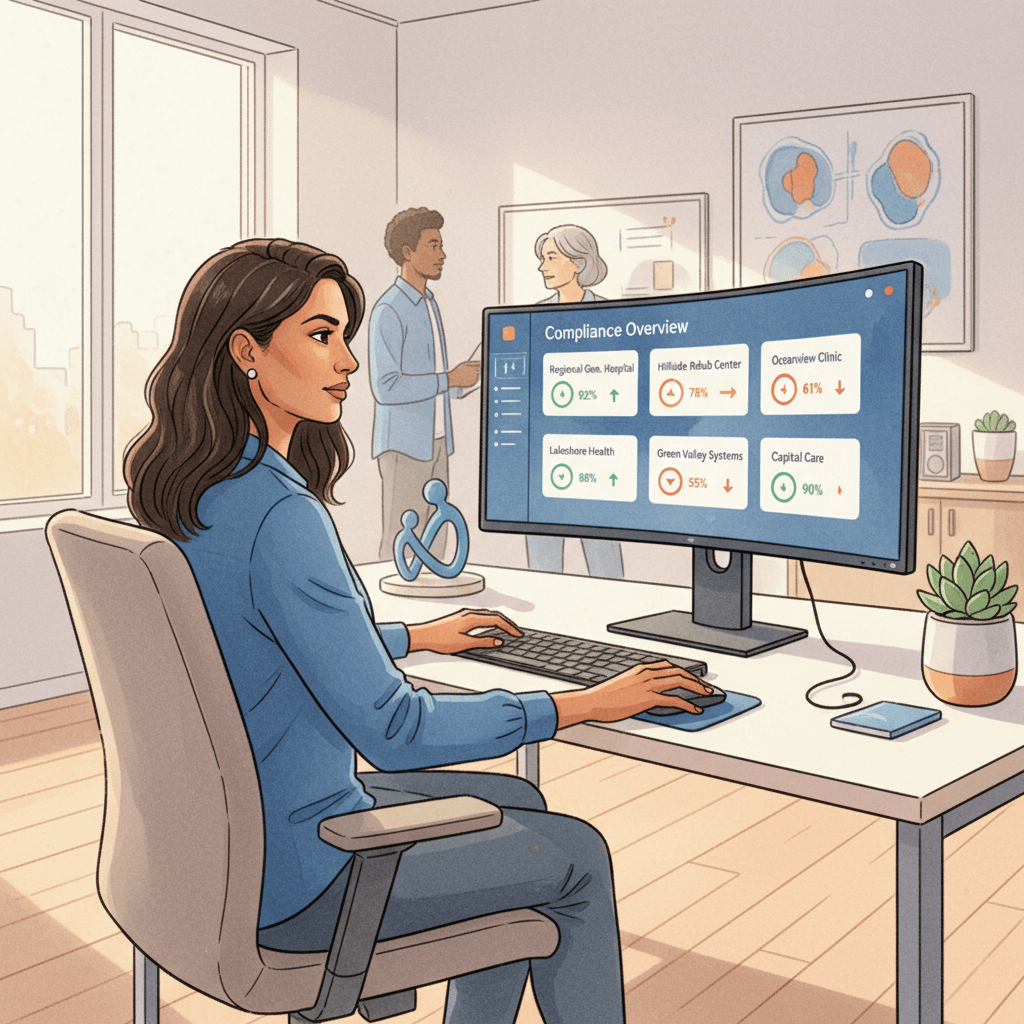
A CMS-ready documentation system should produce real-time compliance metrics: care plan currency rates, PRN documentation completeness, incident follow-up rates, assessment timeliness, and training compliance. These metrics should be available at the facility level and, for multi-facility operators, at the portfolio level. When a compliance officer can see that care plan currency has dropped from 94 percent to 82 percent over the past month, they can intervene before a surveyor identifies the same trend.
Audit Trail Integrity
CMS regulations and survey guidance require that clinical records maintain an audit trail showing who created each entry, when it was created, and any modifications made after the fact. The audit trail must be immutable — entries can be amended but not deleted, and the original text must remain visible alongside the amendment. This is not optional functionality. It is a regulatory requirement that affects the legal defensibility of every record in the system.
Managing QSO Memoranda as Operational Requirements
Effective CMS compliance requires a structured process for incorporating QSO memoranda into facility operations. The following framework ensures that new guidance is operationalized systematically rather than reactively.
Intake and Assessment
Designate a specific role — typically the compliance officer or the director of nursing — as the QSO monitor. This person reviews the CMS Survey and Certification website weekly for new memoranda, assesses each release for applicability to the facility's care population and services, and distributes applicable memoranda to the appropriate operational leaders within 48 hours of publication.
Impact Analysis
For each applicable QSO memorandum, conduct a brief impact analysis: What does this memorandum require? What current practice does it change? Which departments, workflows, or documentation templates are affected? What is the implementation timeline? Document the analysis and the implementation plan so that the facility can demonstrate to surveyors that new guidance was received, evaluated, and acted upon.
Implementation and Verification
Assign implementation tasks to specific individuals with deadlines. Track completion. After implementation, verify through a targeted audit that the new requirements are being met in practice — not just in policy. Document the verification results. This creates the evidence chain that demonstrates organizational responsiveness to evolving CMS expectations.
| QSO Process Step | Responsible Role | Timeline | Documentation |
|---|---|---|---|
| Monitor for new releases | Compliance officer | Weekly | Review log with date checked |
| Assess applicability | Compliance officer | Within 48 hours of release | Impact analysis document |
| Develop implementation plan | Department leads | Within 2 weeks of assessment | Written plan with tasks and deadlines |
| Execute implementation | Assigned staff | Per plan timeline | Task completion documentation |
| Verify implementation | Compliance officer | Within 30 days of implementation | Targeted audit results |
Common CMS Documentation Failures and Remediation
The following patterns represent the most frequently observed CMS documentation failures and the systemic fixes that address them.
Failure: Care Plans That Do Not Reflect Current Conditions
What surveyors find: Progress notes documenting significant changes — new falls, cognitive decline, weight loss, skin breakdown — with no corresponding care plan update. The care plan describes a resident who no longer exists because the clinical situation has evolved while the plan has remained static.
Systemic fix: Implement workflow triggers that flag care plans for review when specific clinical events are documented. Track the interval between the triggering event and the care plan revision. Establish a standard that care plan reviews are initiated within 48 hours of a triggering event and completed within seven days. Monitor care plan currency as a real-time compliance metric.
Failure: Medication Documentation Without Clinical Justification
What surveyors find: Residents on multiple medications, including psychotropics, with no documented clinical rationale in the progress notes or care plan. Pharmacy consultation reports are on file but show no evidence of physician response to pharmacist recommendations.
Systemic fix: Require documented clinical justification for each medication as part of the care plan medication section. Link pharmacy consultation recommendations to a response workflow that requires documented physician action (accept, modify, or reject with rationale) within a defined timeframe. Track pharmacy recommendation response rates as a compliance metric.
Failure: Incident Documentation Without Follow-Up
What surveyors find: Initial incident reports that describe the event and the immediate response, followed by silence. No documentation of neurological checks after a fall. No documentation of skin reassessment after a wound incident. No evidence that the care plan was reviewed in light of the incident.
Systemic fix: Design incident documentation workflows that automatically generate follow-up tasks with specific timelines. A fall generates scheduled neurological check documentation prompts at 1 hour, 2 hours, 4 hours, 8 hours, and 24 hours. A skin integrity incident generates wound reassessment prompts at 24 hours and 72 hours. Each follow-up task is tracked to completion, and overdue tasks are escalated to the charge nurse and then to the director of nursing.
Test your documentation with a tracer
Select one resident per week and trace their documentation the way a surveyor would. Start with the care plan. Follow each intervention into the daily clinical notes. Check whether PRN medications have documented indications and follow-up. Verify that incidents have documented follow-through. Check whether the most recent MDS assessment is reflected in the current care plan. This 30-minute exercise will reveal more about your documentation readiness than any self-assessment checklist.
Failure: Infection Prevention Documentation Gaps
What surveyors find: An infection prevention program exists on paper but is not supported by active surveillance documentation. No monthly infection trending reports. No documentation of hand hygiene audits. No evidence that antibiotic stewardship reviews are occurring.
Systemic fix: Build infection surveillance into the documentation system as a structured monthly report with required fields: infections by type, location, and organism; antibiotic utilization data; hand hygiene audit results; and trend analysis comparing current month to prior months and to the facility's baseline. Assign the infection preventionist specific documentation deliverables with monthly deadlines tracked by the compliance officer.
Case Scenario: Ridgewood Health and Rehabilitation
Ridgewood Health and Rehabilitation is a 96-bed skilled nursing facility in a mid-Atlantic state. The facility had maintained a pattern of deficiency-free annual surveys for three consecutive years — a streak that ended abruptly when a new survey team arrived in March 2025 and identified 14 deficiency citations, including two at the G level (isolated, actual harm) related to medication management and care planning.
What Happened
The survey team selected eight residents based on CASPER data that showed above-average antipsychotic utilization and a recent increase in falls. For the antipsychotic-related sample, the team traced each resident's medication from the physician order through the care plan through the MAR through the progress notes. In four of five sampled residents, the documentation showed the medication was being administered as ordered, but the clinical justification was absent from the care plan, there was no documented evidence of gradual dose reduction attempts, and the progress notes contained no assessment of ongoing therapeutic effectiveness or side effects. The pharmacy consultant had recommended GDR attempts in quarterly reviews, but the physician responses to those recommendations were not documented.
For the fall-related sample, the team found incident reports that documented the initial event and immediate interventions but lacked follow-up documentation. In two cases, neurological checks were ordered post-fall but no documentation of those checks existed in the record. Care plan revisions following the falls were documented — but they were all dated the same week as the survey, suggesting retrospective updating rather than timely response.
The Root Cause
Ridgewood's documentation practices had not changed. The facility had used the same documentation system and the same workflows that produced three deficiency-free surveys. What changed was the survey team and, more importantly, the evolving CMS emphasis on medication management documentation and the Critical Element Pathway methodology that new surveyors applied more rigorously than their predecessors.
The facility had been compliant with the letter of its documentation policies — but those policies had not been updated to reflect the QSO memoranda and survey guidance changes that had raised the bar for psychotropic medication documentation and post-incident follow-up. The three years of clean surveys had created a false sense of security that masked a gradually widening gap between the facility's documentation practices and the current CMS expectations.
The Recovery
Ridgewood's Plan of Correction addressed each citation with specific, systemic changes rather than individual performance corrections. For medication management, the facility implemented a structured psychotropic medication review workflow that required documented clinical justification, GDR assessment, informed consent verification, and pharmacy recommendation response for every resident on psychotropics — tracked as a monthly compliance metric visible to the director of nursing. For incident follow-up, the documentation system was reconfigured to generate time-triggered follow-up tasks that could not be bypassed, with escalation to the charge nurse and then the DON for overdue tasks.
Six months after the survey, the facility's internal audit data showed psychotropic documentation completeness at 97 percent (up from 42 percent pre-survey) and incident follow-up documentation at 95 percent (up from 61 percent). More importantly, the compliance officer had established a quarterly QSO review process that ensured new CMS guidance was assessed and operationalized within 30 days of publication — eliminating the root cause of the gap that the survey had exposed.
Building a Survey Readiness Culture
Technical documentation compliance — having the right fields completed in the right records — is necessary but not sufficient for sustained CMS readiness. The facilities that consistently perform well in surveys share a cultural characteristic: documentation quality is treated as a professional competency, not an administrative burden.
Making Compliance Visible
Staff cannot maintain a standard they cannot see. Compliance metrics — care plan currency, PRN documentation completeness, incident follow-up rates, psychotropic documentation compliance — should be visible to clinical staff in the same way that census, satisfaction scores, and staffing data are visible. When the documentation compliance dashboard is posted in the nursing station alongside other operational metrics, it communicates that documentation quality is a facility priority every day, not just during survey preparation.
Connecting Documentation to Resident Outcomes
The most effective way to motivate documentation quality is to demonstrate its connection to resident care. When a nurse sees that her documented observation of a behavioural change triggered a timely physician review and a medication adjustment that improved the resident's comfort, she understands documentation as a care tool, not a compliance exercise. Case examples — shared in staff meetings and huddles — that trace the path from a clinical documentation entry through a care plan revision through an improved resident outcome make the connection tangible.
Recognizing Documentation Excellence
Facilities that recognize and reward strong documentation create positive reinforcement cycles. Identifying a "Documentation Champion" each quarter, sharing de-identified examples of excellent documentation in team meetings, and including documentation quality in performance evaluations all signal that the organization values this skill. The inverse is also true: facilities that only mention documentation quality when something goes wrong communicate that documentation is a liability rather than a professional strength.
Conclusion
CMS compliance documentation readiness is not a project with a start date and an end date. It is an operational discipline that, when embedded in clinical workflows, produces survey-ready records as a natural output of daily care activities. The facilities that perform best in CMS surveys are not the ones that prepare most intensively before the survey team arrives. They are the ones where the documentation on the day the surveyors walk in is indistinguishable from the documentation on any other day — because the standard is the same every day.
The F-tag requirements that drive the majority of citations — care planning, medication management, resident rights, infection prevention — are not ambiguous. CMS has published the regulatory requirements, the survey guidance, the Critical Element Pathways, and the interpretive guidelines. What remains is execution: building documentation systems that capture the required elements at the point of care, designing workflows that connect clinical events to their required documentation follow-through, and monitoring compliance metrics in real time so that gaps are identified and corrected before a surveyor identifies them.
For compliance officers and directors of nursing, the immediate action is to evaluate your current documentation against the F-tag areas described in this article. Pull the charts for five residents who would likely be selected in a survey based on your quality measure data. Trace each resident's care through the documentation the way a surveyor would, using the applicable Critical Element Pathways. The gaps you find are the gaps a surveyor will find. The difference is that you have the opportunity to close them before the survey team arrives — and more importantly, to redesign the workflows that allowed them to open in the first place.
Frequently Asked Questions
How far in advance should we start preparing for a CMS survey?
The most accurate answer is that you should already be prepared. CMS surveys are unannounced within a 15-month window following the previous survey. Facilities that maintain continuous documentation readiness do not need a preparation period because their records are survey-ready at all times. If your facility currently relies on pre-survey preparation sprints, the goal should be to transition to continuous readiness over a 6 to 12 month period by embedding compliance documentation requirements into daily clinical workflows, implementing real-time compliance monitoring dashboards, and establishing routine internal audits that identify and correct gaps before they accumulate.
Which F-tags generate the most citations?
Citation data from CMS survey results consistently shows the highest concentration of deficiencies in care planning (F-655 through F-661), infection prevention and control (F-880 through F-886), quality of care (F-684 through F-700), medication management (F-755 through F-761), and resident rights (F-550 through F-586). Within these groupings, F-684 (quality of care), F-656 (comprehensive care plan), F-880 (infection prevention and control program), and F-757 (unnecessary drugs) are among the most frequently cited individual F-tags. Prioritizing documentation quality in these areas produces the highest return on compliance investment.
How should we handle documentation when a QSO memorandum changes existing practice?
Treat each applicable QSO memorandum as a regulatory change that requires a formal implementation response. Within 48 hours of publication, assess applicability to your facility. Within two weeks, develop an implementation plan that identifies affected workflows, documentation templates, and training needs. Execute the plan within the timeline specified in the memorandum (or within 30 days if no timeline is specified). Verify implementation through a targeted audit. Document every step of this process so that you can demonstrate to surveyors that your facility identified, assessed, planned for, and implemented the new guidance.
Can we use the same documentation standards for assisted living and skilled nursing?
CMS Requirements of Participation apply specifically to skilled nursing facilities and nursing facilities participating in Medicare and Medicaid. Assisted living facilities are regulated at the state level, and requirements vary significantly by state. However, building your assisted living documentation to CMS-level standards is a defensible strategy because CMS standards represent the most comprehensive documentation framework in US residential care. A facility that meets CMS documentation standards will generally exceed state-level assisted living requirements, which simplifies compliance for operators that manage both care settings. The risk of meeting only the minimum state-level standard is that those standards may not provide adequate documentation for clinical defensibility in litigation or for accreditation purposes.
What documentation should we prioritize if we have limited compliance resources?
If resources are constrained, prioritize the four F-tag areas that generate the most citations: care plan currency (ensuring care plans are updated after documented changes in condition), medication documentation completeness (PRN indications and follow-up, psychotropic justification), incident follow-up documentation (post-incident assessments, care plan revisions), and infection surveillance documentation (monthly trending, hand hygiene audits). These four areas account for the majority of documentation-related citations and represent the highest-risk gaps when surveyors apply the tracer methodology to sampled residents.