Key Takeaways
- CQC inspections are structured around five key questions — Safe, Effective, Caring, Responsive, and Well-led — and every piece of evidence your service produces must demonstrably connect to at least one of these domains, because inspectors do not evaluate documentation in isolation but as proof of whether your service meets the fundamental standards.
- The Provider Information Return (PIR) is not an administrative formality — it is the document that shapes the inspector's pre-visit hypothesis about your service, determines which Key Lines of Enquiry receive the deepest scrutiny, and establishes the narrative frame through which every subsequent observation will be interpreted.
- Regulation 17 (Good Governance) is the structural foundation that underpins all other CQC standards, because an inspector who finds robust governance systems — effective quality assurance, accurate records, and genuine learning from incidents — will approach other domains with a fundamentally different expectation than one who finds governance gaps in the first hour.
- The difference between a Good rating and an Outstanding rating is not the absence of problems but the presence of documented evidence that problems are identified proactively, addressed systematically, and that the learning from each problem improves the service for everyone — Outstanding services do not claim perfection but demonstrate continuous, evidence-based improvement.
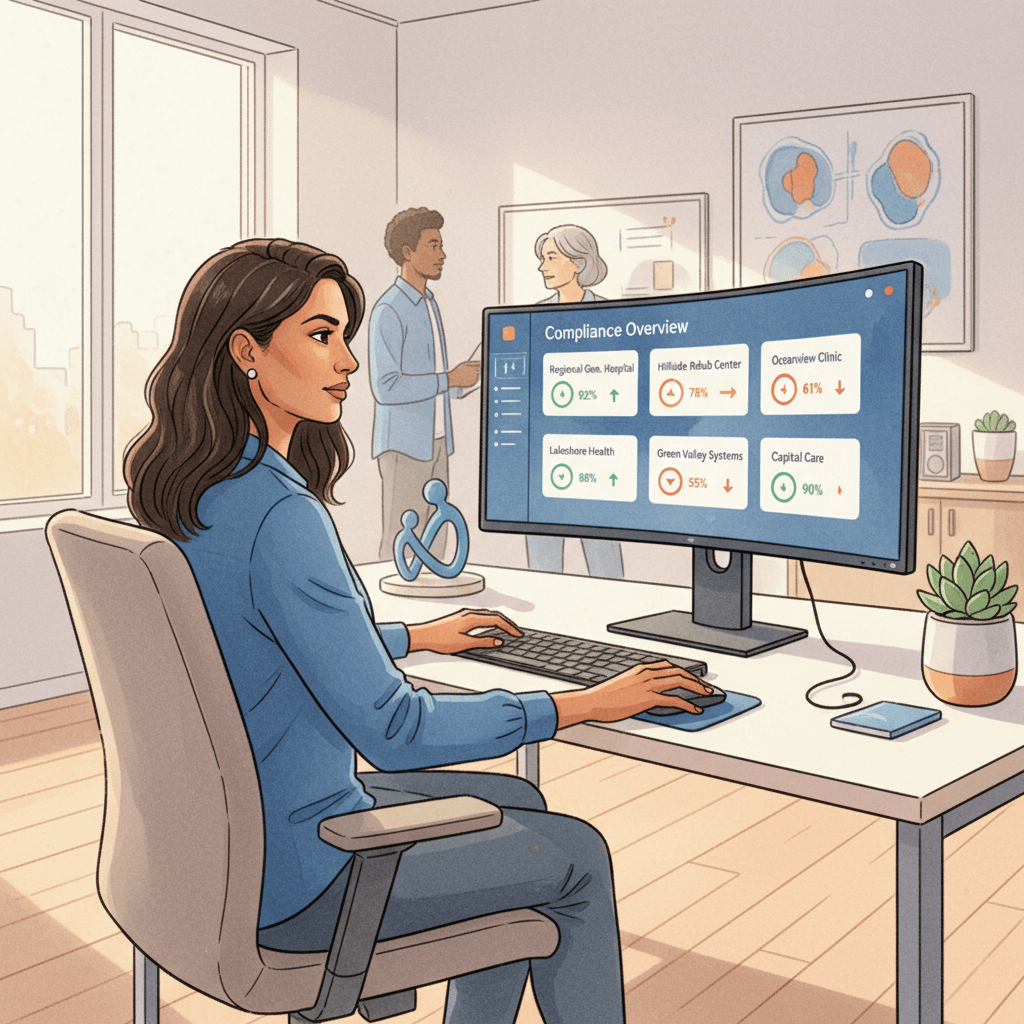
- Continuous compliance is structurally different from inspection preparation — services that maintain real-time compliance dashboards, conduct monthly self-assessments against KLOEs, and treat every shift handover as a micro-audit produce evidence that cannot be fabricated in the weeks before an announced inspection, and CQC inspectors are trained to distinguish between organic evidence and retrospective assembly.
Introduction
The Care Quality Commission inspects every registered adult social care service in England against a single framework — five key questions that have not changed since their introduction, though the evidence expectations beneath them evolve continuously. This stability is both an advantage and a trap. The advantage is that providers know exactly what inspectors are looking for. The trap is that familiarity breeds complacency: services that have been inspected multiple times begin to treat the five key questions as a checklist rather than as a lens through which every operational decision should be visible.
A CQC inspection is not an audit of your paperwork. It is an assessment of whether the care your service delivers meets the fundamental standards set out in the Health and Social Care Act 2008 (Regulated Activities) Regulations 2014. Inspectors use documentation as one source of evidence, but they also observe care delivery, interview staff at every level, speak with people who use the service and their families, and review outcome data. An organisation with immaculate files but poor care delivery will not achieve a Good rating. Conversely, a service that delivers excellent care but cannot demonstrate it through accessible, contemporaneous records will struggle to evidence its quality.
This guide is written for registered managers, compliance leads, nominated individuals, and operations directors in residential care homes and assisted living services who need their inspection preparation to produce results — not just during the inspection window, but as a permanent feature of how their service operates. It covers the CQC inspection framework in operational detail, maps evidence requirements to each key question, addresses the Provider Information Return, explains the ratings system and what distinguishes each level, identifies the most common findings and how to prevent them, and provides a practical framework for maintaining continuous compliance between inspections.
The CQC Inspection Framework: Five Key Questions
Every CQC inspection is structured around five key questions. Each question has a set of Key Lines of Enquiry (KLOEs) that define the specific evidence inspectors seek. Understanding the KLOEs at a granular level is essential, because the inspector's report is organised around them and every finding is mapped to a specific KLOE within a specific key question.
Safe
The Safe key question asks: are people protected from abuse and avoidable harm? This is consistently the domain that generates the most findings in CQC inspections of residential care services. Inspectors evaluate safeguarding systems, incident reporting and learning, medication management, staffing levels and deployment, infection prevention and control, premises safety, and the management of risk at both individual and service levels.
The KLOEs under Safe include whether the service has effective systems to identify and report safeguarding concerns, whether risks to individuals are assessed and managed with plans that are followed by staff, whether there are sufficient numbers of suitably qualified staff, whether medicines are managed safely, and whether the premises are safe and well-maintained.
Evidence that inspectors look for includes: safeguarding referral records with documented decision-making trails, individual risk assessments that are current and reflect the person's actual needs, staffing rotas that demonstrate safe staffing levels across all shifts including weekends and nights, medication administration records with no unexplained gaps, infection control audits with documented actions, and maintenance records showing timely response to environmental hazards.
Effective
The Effective key question asks: does the care achieve good outcomes and is it based on the best available evidence? Inspectors evaluate whether assessments are comprehensive, whether care plans are evidence-based and person-centred, whether staff have the skills and knowledge to deliver effective care, whether the service works with other organisations to ensure continuity, and whether consent is obtained in accordance with the Mental Capacity Act 2005.
Evidence requirements include: initial and ongoing assessments that inform individualised care plans, documented evidence of staff training and competency assessment, records of multi-disciplinary working (GP visits, specialist referrals, hospital discharge follow-up), Mental Capacity Act assessments and best interests decisions where relevant, and nutritional assessments with appropriate interventions for identified needs.
Mental Capacity Act compliance is non-negotiable
CQC inspectors routinely identify Mental Capacity Act failures as a key concern under the Effective domain. Every decision made on behalf of a person who may lack capacity must have a documented capacity assessment specific to that decision, a best interests decision record if capacity is lacking, and evidence that the person was supported to make their own decision before any determination of incapacity. Generic capacity assessments that cover "all decisions" are not compliant.
Caring
The Caring key question asks: does the service involve people and treat them with compassion, kindness, dignity, and respect? This is the domain where observation evidence carries the most weight. Inspectors spend significant time in communal areas watching how staff interact with residents — the tone of voice, the use of names, whether staff knock before entering rooms, whether choices are offered genuinely or performatively, and whether the overall atmosphere reflects warmth or institutional routine.
Documentary evidence for Caring includes care plans that reflect the person's preferences and life history, records of how people and their families are involved in care planning, complaint and feedback records showing responsiveness, and evidence that people's privacy and dignity are maintained during personal care.
Responsive
The Responsive key question asks: do services meet people's needs? Inspectors evaluate whether care is personalised, whether the service handles complaints effectively, whether end-of-life care is planned and delivered with sensitivity, and whether the service is accessible to all people who use it.
Evidence includes: person-centred care plans that reflect individual needs and preferences (not template-driven plans with minimal personalisation), activities programmes that are meaningful and inclusive, complaint logs with evidence of investigation, outcome, and learning, advance care planning documentation, and records showing how the service adapts to changing needs.
Well-led
The Well-led key question asks: is the leadership, management, and governance of the service effective? This domain is the one that most directly determines the overall rating, because an inspector who finds strong governance will approach concerns in other domains with the expectation that they will be identified and corrected internally. An inspector who finds governance failures will treat every other finding as evidence of a systemic problem.
Well-led evidence includes: a clear vision and strategy that is understood by staff, effective quality assurance systems (audits, spot checks, governance meetings), a culture of openness and learning, staff engagement and satisfaction evidence, regulatory compliance records (notifications submitted, registration conditions met), partnership working with local authorities and health partners, and documented continuous improvement activities.
The Provider Information Return
The Provider Information Return (PIR) is submitted before an inspection and is one of the most strategically important documents in the CQC process. It is the service's opportunity to present its own narrative — to highlight strengths, acknowledge areas for improvement, and demonstrate self-awareness. Inspectors read the PIR before they arrive, and it shapes their initial hypothesis about the service.
A PIR that is vague, generic, or obviously copied from a template signals to the inspector that the service lacks self-awareness. A PIR that is specific, evidence-based, and honest about both strengths and development areas signals a service that understands itself and is actively managing its quality.
PIR Best Practices
When completing the PIR, provide specific examples rather than general statements. Instead of writing "we provide person-centred care," describe a specific instance where care was adapted to meet an individual's unique needs and the outcome that resulted. Instead of writing "we have robust safeguarding systems," describe your safeguarding referral rate, the outcomes of recent referrals, and what your service learned from them.
Acknowledge areas where you are working to improve. Inspectors do not expect perfection — they expect self-awareness and genuine improvement activity. A PIR that claims everything is excellent is less credible than one that identifies specific areas of development and describes the actions being taken.
Reference data wherever possible. Staffing levels, incident rates, complaint volumes, audit results, training completion rates, and quality metrics all provide concrete evidence that supports narrative claims.
The Ratings System
CQC rates each key question and provides an overall rating on a four-point scale: Outstanding, Good, Requires Improvement, and Inadequate.
Outstanding
Outstanding is not the absence of findings. It is the presence of exceptional, innovative, or creative practice that goes beyond what is normally expected. Outstanding services demonstrate proactive identification and resolution of problems before they affect people, evidence of innovation that improves outcomes, a culture where learning from mistakes is genuine and systemic, and outcomes that consistently exceed what would normally be expected.
Fewer than 5% of adult social care services in England are rated Outstanding overall. The distinction from Good is not primarily about what the service does but about the depth of evidence that the service learns, adapts, and continuously improves.
Good
Good means the service is performing well and meeting expectations. The majority of adult social care services are rated Good. A Good service has effective systems in place, delivers safe care, employs competent staff, responds to people's needs, and has functional governance. Good is the target for most services, and maintaining a Good rating requires consistent operational performance between inspections.
Requires Improvement
Requires Improvement means the service is not performing as well as it should and the CQC has identified areas where improvement is needed. This rating triggers an increased inspection frequency and may result in conditions being placed on the service's registration. Services rated Requires Improvement typically have identifiable systemic gaps — not isolated incidents but patterns of non-compliance that indicate the service's systems are not functioning reliably.
Inadequate
Inadequate means the service is performing badly and the CQC has taken enforcement action or will do so. Inadequate ratings can result in special measures, conditions on registration, suspension, or cancellation of registration. An Inadequate rating in any single key question can result in an overall Inadequate rating, particularly if the Inadequate domain is Safe or Well-led.
Regulation 17: The Governance Foundation
Regulation 17 of the Health and Social Care Act 2008 (Regulated Activities) Regulations 2014 requires that services have systems and processes to assess, monitor, and improve the quality and safety of the services provided. It is the regulatory backbone of the Well-led domain, and it is where most governance failures are cited.
Regulation 17 requires providers to maintain an accurate, complete, and contemporaneous record for each person who uses the service. It requires effective governance systems including quality assurance audits, risk management processes, and systems to identify and learn from adverse events. It requires that the registered person seeks and acts on feedback from relevant persons.
What Regulation 17 Compliance Looks Like in Practice
Compliant governance under Regulation 17 produces a documented trail of organisational self-awareness. Monthly quality assurance audits should cover medication management, care planning, incident management, infection control, staffing, and environmental safety on a rotating basis. Each audit should produce findings, assigned actions with owners and deadlines, and evidence of follow-up.
Governance meetings should occur at least monthly, with documented agendas, minutes, and action tracking. The minutes should demonstrate that the registered manager and senior team review audit results, incident trends, safeguarding activity, complaints, staffing data, and regulatory notifications. Where concerns are identified, the minutes should show what action was agreed, who is responsible, and what the deadline is.
Governance meetings are evidence gold
CQC inspectors routinely request governance meeting minutes for the preceding 12 months. Twelve months of documented monthly meetings — with consistent attendance, structured agendas, documented discussion of quality metrics, and tracked action items — is one of the strongest pieces of evidence a service can produce under Well-led. It demonstrates that governance is not a response to inspection but a continuous organisational function.
Common CQC Findings and How to Prevent Them
Analysing published CQC inspection reports reveals consistent patterns in the findings that result in Requires Improvement or Inadequate ratings. Understanding these patterns allows services to target their quality assurance activities at the areas of highest regulatory risk.
Medication Management
Medication findings account for a disproportionate share of CQC concerns under the Safe domain. The most common findings include: gaps in medication administration records without documented explanations, PRN (as needed) medication protocols that lack specific parameters for administration, medication storage temperature monitoring with incomplete or missing records, controlled drug registers with discrepancies, and topical medication application records that are inconsistent or absent.
Prevention requires daily medication administration record checks by a senior member of staff, monthly medication audits using a standardised tool, competency assessments for all staff who administer medication (not just at induction but annually), and real-time alerting when medication administration is overdue or a record entry is missed.
Care Plan Currency
Care plans that have not been reviewed within the required timeframe, that do not reflect the person's current needs, or that are so generic they could apply to any person are among the most frequently cited concerns under the Effective and Responsive domains. The most common pattern is a care plan that was comprehensive at admission but has not been updated to reflect changes in the person's condition, preferences, or circumstances.
Prevention requires a systematic care plan review cycle (monthly for stable residents, more frequently for those with changing needs), documented evidence that reviews involved the person and their family, and a process for triggering ad hoc reviews when significant events occur (falls, hospital admissions, changes in behaviour, new diagnoses).
Safeguarding Documentation
Safeguarding failures under the Safe domain typically involve one or more of the following: incidents that met the threshold for a safeguarding referral but were not referred to the local authority, referrals that were made but with inadequate documentation of the decision-making process, or a pattern of incidents that individually fell below the referral threshold but collectively suggested a safeguarding concern that should have been escalated.
Prevention requires clear safeguarding policies with specific thresholds and examples, regular safeguarding training that includes scenario-based decision-making, a documented decision trail for every incident that is considered against the safeguarding threshold (including decisions not to refer), and a culture where staff feel confident raising safeguarding concerns without fear of reprisal.
Staffing
Staffing findings under Safe typically relate to insufficient numbers of staff deployed to meet people's needs safely, reliance on agency staff who are not familiar with people's individual needs, or gaps in training records. The most common staffing finding is not a simple numbers shortfall but an inability to demonstrate that staffing levels are determined by an assessment of people's needs rather than by a fixed ratio or budget constraint.
Prevention requires a documented staffing needs assessment that is reviewed when the service's population changes, dependency assessments that inform staffing deployment, evidence that staffing levels are adjusted in response to changing acuity, and agency staff induction records that demonstrate familiarity with individual care plans.
Duty of Candour
Regulation 20 requires providers to be open and transparent with people when things go wrong with their care. Duty of candour failures typically involve a failure to notify the person (or their representative) when a safety incident has occurred, a failure to provide a written account of the incident, or a failure to offer an apology. These failures are often unintentional — the service addressed the incident operationally but did not follow the specific notification process required by Regulation 20.
Prevention requires a documented duty of candour procedure that is integrated into the incident management workflow, training for all registered managers and senior staff on the specific notification requirements (including the requirement for a written follow-up within 10 working days of the verbal notification), and an audit trail that demonstrates compliance for every notifiable safety incident.
Continuous Compliance vs. Inspection Preparation
The distinction between services that are always ready for inspection and services that prepare for inspection is visible within the first hour of any CQC visit. Inspectors assess organisational culture through observation long before they open a file. Staff who are relaxed, who continue providing care without disruption, who can answer questions about individual residents without consulting notes — these are indicators of a service where compliance is embedded in daily operations.
Building a Continuous Compliance System
A continuous compliance system has four components that operate concurrently:
Real-time monitoring identifies gaps as they occur rather than during periodic audits. When a care plan review is overdue, when a medication administration record has a gap, when a training certification is approaching expiry, or when a maintenance request has not been addressed within the required timeframe, the system flags it immediately.
Scheduled self-assessment uses the CQC's own KLOEs as the assessment framework, conducted monthly on a rotating basis so that every key question is assessed quarterly. Each assessment produces a documented score, identified gaps, and assigned corrective actions.
Corrective action tracking ensures that every identified gap has an owner, a deadline, and documented evidence of resolution. The system monitors not just whether the corrective action was completed but whether the correction has been sustained over time.
Trend analysis identifies patterns across individual findings that suggest systemic issues. A single medication recording gap is a minor concern. Medication recording gaps that correlate with a specific shift, specific staff members, or specific medication types suggest a training, supervision, or process issue that requires systemic intervention.
Case Scenario: From Requires Improvement to Good
Rosewood Manor, a 42-bed residential care home in the West Midlands, received a Requires Improvement rating in March 2025 with findings across four of the five key questions. The Safe domain cited medication management gaps — specifically, three PRN protocols that lacked clear parameters and 14 instances of unexplained gaps in medication administration records over the preceding three months. The Effective domain cited care plan reviews that were overdue for 11 residents, with the longest gap being seven months since the last documented review. The Responsive domain cited a complaint that had been received but not investigated for six weeks. The Well-led domain cited an absence of a functioning governance meeting structure — the previous registered manager had left four months earlier, and the interim management arrangement had not maintained the governance calendar.
The new registered manager, appointed in April 2025, implemented a structured recovery programme. In the first month, she established a weekly medication management spot check conducted by the senior carer on each shift, which immediately identified and corrected the recording practices that were producing MAR gaps. She implemented a care plan review tracker that flagged every overdue review and scheduled the 11 overdue reviews across the first three weeks, with the most clinically complex residents prioritised first.
By the second month, the governance meeting structure was re-established with a monthly quality and safety meeting, documented minutes, and a standing agenda that included review of incident trends, audit results, staffing data, and outstanding corrective actions. The complaints process was overhauled with a complaints log that tracked every complaint from receipt through investigation, response, and closure.
By the sixth month, the service had completed three full monthly self-assessment cycles, generated trend data for medication management, falls, and complaints, and addressed the specific findings from the Requires Improvement inspection. A focused CQC inspection in October 2025 re-rated the service as Good across all five key questions. The inspector noted in the report that the governance systems were "embedded and functioning" and that staff could describe the service's improvement journey with specific examples of what had changed and why.
The transformation was not the result of an extraordinary effort. It was the result of implementing basic governance systems — audit, track, review, improve — and maintaining them consistently. The registered manager's assessment was direct: "We did not do anything revolutionary. We just started doing the things we should have been doing all along, and we did not stop doing them."
Evidence Generation Strategies
Generating evidence for CQC inspections is not a pre-inspection activity. It is a byproduct of operating a well-managed service. Every shift handover, every care plan review, every governance meeting, every audit, every incident review, and every complaint response generates evidence. The question is whether that evidence is captured in a form that is accessible, coherent, and demonstrates the service's compliance with fundamental standards.
Organising Evidence by Key Question
Maintain an evidence portfolio organised by the five key questions and their KLOEs. This portfolio should be a living document that is updated continuously, not assembled before an inspection. For each KLOE, the portfolio should contain: the service's self-assessment rating (Outstanding, Good, Requires Improvement, Inadequate), the evidence that supports that rating (specific documents, records, and data), identified areas for improvement, and the actions being taken to address those areas.
Staff as Evidence
Staff knowledge and behaviour are evidence. An inspector who asks a care assistant about a resident's care plan goals and receives a confident, accurate answer has received stronger evidence than any document could provide. Invest in staff knowledge through regular supervision that includes discussion of individual care plans, team meetings that review changes in residents' needs, and competency assessments that test practical application rather than theoretical knowledge.
Resident and Family Voice
Inspectors actively seek feedback from people who use the service and their families. Services that systematically collect, document, and respond to feedback — through residents' meetings, satisfaction surveys, family forums, and individual conversations — generate evidence of a responsive, person-centred service. Services that do not collect feedback, or that collect it without acting on it, create a gap that inspectors will identify.
Preparing Staff for Inspector Interactions
Staff interactions with CQC inspectors are one of the most significant sources of evidence during an inspection. Staff do not need to be prepared with scripted answers — inspectors recognise rehearsed responses and treat them as a negative indicator. Staff need to be confident in their knowledge of the people they support, comfortable describing their daily routines and processes, and able to articulate what they would do in specific scenarios.
What Inspectors Ask Frontline Staff
Inspectors typically ask frontline staff about: the care needs and preferences of specific individuals they support, what they would do if they suspected abuse, how they would respond to a fire alarm, what training they have received and when, how they escalate concerns to management, and what changes have been made recently and why. Staff who can answer these questions from genuine knowledge — rather than from a pre-inspection briefing — demonstrate that the service's systems are embedded in daily practice.
What Inspectors Ask Managers
Inspectors ask registered managers about: how they monitor the quality of care, how they respond to incidents and what they learn from them, how they ensure staffing levels are safe, how they involve people in care planning, what their current priorities for improvement are, and how they manage regulatory notifications and duty of candour obligations. Managers who can answer with specific examples, data, and documented evidence demonstrate functional governance.
The honest answer is the best answer
If an inspector asks about an area where your service has had difficulties, the most effective response is honest acknowledgment followed by evidence of what you have done about it. "We identified medication recording gaps in our October audit, implemented daily MAR checks and additional training, and our November and December audits showed sustained improvement" is a response that demonstrates both self-awareness and effective governance. Attempting to minimise or deflect concerns that the inspector can verify independently damages credibility.
Notifications and Regulatory Communication
CQC requires providers to submit statutory notifications for specific events, including deaths, serious injuries, allegations of abuse, applications to deprive a person of liberty (DoLS applications), and police involvement. Failure to submit required notifications is itself a regulatory finding — and it signals to inspectors that the service may be underreporting significant events.
Maintain a notifications log that tracks every notifiable event, the date the notification was submitted, and confirmation of receipt. Review the notifications log monthly as part of governance activities to verify that all required notifications have been submitted and to identify any patterns that require attention.
Inspection Day: Practical Preparation
While the central argument of this article is that continuous compliance makes inspection-specific preparation unnecessary, there are practical steps that help the inspection day run smoothly without changing what the service does. These steps do not create evidence — they make existing evidence accessible.
The Evidence Portfolio
Maintain a physical or digital evidence portfolio organised by the five key questions. This portfolio should contain key documents for each KLOE — not every document the service produces, but the most relevant evidence that an inspector is likely to request. Update the portfolio monthly as part of the governance cycle. On inspection day, the portfolio means the registered manager can respond to document requests immediately rather than searching through filing systems while the inspector waits.
Staff Briefing
When an inspection begins, brief staff calmly and specifically: the inspection is happening, continue normal duties, answer questions honestly, and if you are unsure of an answer, say so and offer to find out. Do not attempt to coach staff on "correct" answers. Inspectors recognise coached responses and treat them as a negative indicator. Staff who answer honestly — including acknowledging areas they find challenging — present a more credible picture than staff who deliver polished but unconvincing responses.
Environment Walkthrough
The registered manager or a designated senior staff member should walk the building before or immediately after the inspector's arrival. This is not a scramble to fix issues — it is a final check that the environment reflects its normal state. If the building looks different than it usually does, that itself is information worth understanding.
Building a Defensible Inspection Record
When a CQC inspection concludes, the inspector produces a draft report that the provider has an opportunity to review for factual accuracy before publication. The provider cannot challenge the inspector's judgments or ratings during this process — only factual errors. Building a defensible record means ensuring that every operational decision, every quality assurance activity, and every corrective action is documented contemporaneously so that if an inspector's finding is based on incomplete information, the provider can point to specific records that provide the missing context.
Monthly Self-Assessment Framework
A monthly self-assessment cycle that mirrors the CQC inspection methodology provides the operational backbone for continuous compliance. The following framework rotates through the five key questions on a quarterly basis, ensuring that every domain receives structured attention at least four times per year.
Month-by-Month Assessment Calendar
| Month | Primary Focus | Key Activities |
|---|---|---|
| January | Safe (medication management) | MAR audit, controlled drug register review, PRN protocol review, competency assessment spot check |
| February | Effective (care planning) | Care plan currency review, Mental Capacity Act compliance check, multi-disciplinary engagement audit |
| March | Caring (dignity and respect) | Staff interaction observations, resident and family feedback review, privacy and dignity audit |
| April | Responsive (personalisation) | Activities programme review, complaint response audit, end-of-life care plan review |
| May | Well-led (governance) | Governance meeting effectiveness review, audit completion rate, corrective action tracking review |
| June | Safe (incident management) | Incident reporting audit, safeguarding referral review, trend analysis review |
| July | Effective (staff competency) | Training records review, supervision records audit, agency staff induction review |
| August | Caring (involvement) | Care plan involvement audit, advance care planning review, advocacy access check |
| September | Responsive (accessibility) | Service accessibility audit, reasonable adjustments review, communication needs assessment |
| October | Well-led (continuous improvement) | Quality improvement plan review, PIR preparation, regulatory notification audit |
| November | Safe (environment) | Environmental safety audit, infection control audit, fire safety review, equipment maintenance check |
| December | Comprehensive review | Annual self-assessment against all five key questions, year-end trend analysis, next year's improvement plan |
Each monthly assessment should produce: a documented assessment score for the relevant KLOEs, a list of identified gaps with assigned corrective actions, and a comparison to the previous quarter's assessment of the same domain. Over 12 months, this cycle generates a body of evidence that demonstrates continuous, structured quality management — precisely the evidence that inspectors look for under the Well-led domain.
Quantifying Compliance
Where possible, convert subjective assessments into measurable metrics. Rather than noting that "most care plans are up to date," calculate the percentage of care plans reviewed within the required timeframe. Rather than stating that "medication management is generally good," track the number of MAR gaps per 100 administrations per month. Rather than observing that "staff training is mostly current," report the percentage of required training completed within the required timeframe.
These metrics serve three purposes: they provide objectivity to self-assessment, they enable trend analysis over time, and they give inspectors the data-driven evidence they increasingly expect to see in well-managed services.
Conclusion
CQC inspection preparation is not a discrete activity. It is the visible output of how your service operates every day. Services that achieve and maintain Good or Outstanding ratings do not do so because they prepare better for inspections. They do so because their daily operations — care planning, medication management, safeguarding, governance, staffing, and incident management — consistently meet the fundamental standards that CQC assesses.
The five key questions are not a framework to be consulted before an inspection. They are the operating principles that should guide every decision, every process, and every interaction within the service. When a care assistant provides personal care with dignity, that is evidence under Caring. When a registered manager reviews incident trends and implements changes, that is evidence under Well-led. When a medication error is identified, investigated, and the learning is shared across the team, that is evidence under Safe.
The most effective CQC preparation strategy is not a strategy for preparing for CQC. It is a strategy for running a service that consistently delivers safe, effective, caring, responsive, and well-led care — and documenting that delivery as it happens, every day, on every shift. When that system is in place, a CQC inspection is not a test to pass. It is an opportunity to demonstrate what you already do.
Frequently Asked Questions
How often does CQC inspect residential care services?
CQC's inspection frequency is determined by the service's current rating and risk assessment. Services rated Good or Outstanding are typically inspected every 30 months, though this can be shortened if CQC receives information of concern. Services rated Requires Improvement are inspected more frequently, typically within 12 months. Services rated Inadequate or in special measures are inspected within six months. CQC also conducts responsive inspections at any time in response to safeguarding concerns, whistleblower reports, or other intelligence. The practical implication is that services should operate as though an inspection could occur at any time, because it can.
What is the difference between a comprehensive inspection and a focused inspection?
A comprehensive inspection assesses all five key questions and produces ratings for each question and an overall rating. A focused inspection examines specific key questions — typically those where concerns have been identified or where the service's performance is being reassessed following a previous Requires Improvement rating. Focused inspections do not always result in a change to the overall rating, but findings from a focused inspection can trigger a comprehensive inspection. Services should maintain evidence across all five key questions regardless of whether the next inspection is expected to be comprehensive or focused.
How should we handle a Requires Improvement rating?
A Requires Improvement rating requires a systematic response. First, analyse the inspection report to identify the specific findings under each key question and map them to KLOEs. Second, develop an action plan that addresses each finding with specific, measurable, time-bound actions and assigned owners. Third, implement the actions and gather evidence of implementation. Fourth, sustain the improvements through ongoing monitoring and audit. Fifth, self-assess against the relevant KLOEs monthly to verify that the improvements are being maintained. CQC expects to see sustained improvement at the next inspection — not just evidence that actions were taken immediately after the report but evidence that the improvements have been maintained over time.
What should we do if we disagree with an inspection finding?
During the factual accuracy review period, providers can challenge factual errors in the draft report. This process is limited to factual accuracy — you cannot challenge the inspector's professional judgment or the rating. If you believe a finding is based on incomplete information, provide the specific documents or records that the inspector did not see, with an explanation of why they support a different factual conclusion. If you believe the rating is unjust, you may request a rating review after the report is published, but this process has a high threshold and requires evidence of a significant error in the inspection process. The most effective response to a disputed finding is to address the underlying concern regardless of whether you agree with the specific finding, because the inspector identified a gap in your evidence even if the operational reality is different.
How can technology support CQC compliance?
Technology supports CQC compliance by providing continuous visibility into compliance status across all five key questions, automating gap detection and alerting when standards are not being met, tracking corrective actions from identification through completion and sustained implementation, generating trend analysis that demonstrates organisational learning, maintaining accessible evidence portfolios organised by key question and KLOE, and producing the data and reports that registered managers need for governance meetings and PIR submissions. The most significant contribution of technology is shifting compliance from a periodic assessment activity to a continuous monitoring function — ensuring that the registered manager knows the service's compliance status at any moment, not just after the next audit cycle.